Egyptian Aak: Week 17

Main Headlines

 Monday

Tuesday

Wednesday

Thursday

Friday

Saturday

Sunday

A Few Thoughts

 Revolving Doors

            Since the resignation of Justice Minister Mekki last Sunday, and the wave of resignation has continued: The president’s advisor, Fouad Gadallah; the Deputy Finance Minister, Demian; and here is another one that has not been documented much in English media—Essam Sharaf, the first Prime Minister of Egypt post-revolution. Sharaf has also resigned from his recent job as Chairman of the Suez Canal Developing Project and the entire consultative group, citing concerns about the project, and how it can serve interests of “other countries.” Also Moheib Abdel Satar has resigned from ministry of supply, again citing Ikhwanization of the ministry

            Ironically, as Khalil Al-Anani has written, the Muslim Brotherhood (MB) doesn’t seem to be much concerned with the growing resentment against its rule, as it enhances the MB’s unity and solidifies its leadership’s grip on the organization. The question still remains: Can unity be enough to save the Brotherhood as a ruling party? The answer would depend on the Brotherhood’s opposition and their capability to stir the anti-Ikhwanism into real steps on the ground to defeat the MB. Thus far, the opposition seems to rely on divine intervention, military intervention or economic collapse in their fight against MB, rather than formulating a coherent plan. This is precisely why the Brotherhood is not duly concerned. The MB is aware that their unity is enough for the survival of the group, but the unity of their opponents is the detrimental factor that can tip the balance against them.

 The Brotherhood and Iran:

            The senior Egyptian officials’ visit to Iran on Saturday and the proposed Islamic quartet to resolve the Syrian conflict may be baffling to some. Specifically, why would the Brotherhood’s Egypt risk upsetting the Saudis by its new rapprochement with Iran. It is unlikely that the Brotherhood is embarking on this mission without the approval of Qatar; particularly, the visit came following the Emir of Qatar’s visit to Washington.

            Morsi’s Egypt is content to play the rule of the sub-contractor that conveys messages and mediates between parties, while creating an illusion of regional rule that in reality doesn’t exist. I doubt the Saudis will be duly concerned; I also doubt that Essam el-Haddad’s mediation in Tehran will be successful. He may become Egypt’s next Foreign Minister but he is hardly a Kissinger or James Baker.   

 El-Shatergate

            According to the Egyptian newspaper, Al-Masry al-Youm (AMAY), Egypt now has a scandal that is similar to Irangate. The newspaper has published details of alleged transcripts of conversations between Hamas and the Brotherhood that not only incriminate Hamas in the opening of Egyptian prisons during the January 2011 revolution, but also claim that the State Security has decided not to reveal these incriminating transcripts and opted to hand it to the Brotherhood’s khairat el-Shater. AMAY has cited “sources,” yet it didn’t release the evidence or reveal the names of its sources. This is a pretty grave accusation but without backing it up with strong evidence, it will be part of the current web of delusions that include leaks and rumors without solid facts. Leaks are not enough to incriminate the Brotherhood or the State Security; they will only feed into the Brotherhood’s narrative that the media is against it and will reaffirm the sense of victimhood from the Brotherhood’s members. Unless AMAY releases the audio of this alleged scandal, it will lose any respect it has gained among the Egyptian public.

            AMAY’s lack of professionalism makes many miss Egypt Independent even more. This professional English paper was a shining example of reliable, objective journalism in comparison to its Arabic counter-part. As Egypt Independent goes out of print, many question the future of independent media in Egypt and the country’s freedom of expression. Local English media has struggled under Mubarak and this struggle has intensified under the Muslim Brotherhood’s administration, which seems to use economic hardship as a tool for censorship and intimidation.  I always argued that a bad economy does not necessarily mean bad news for the Brotherhood; on the contrary, it can be used to “purge” progressive minds and silence many opponents. The organization that is shamelessly tin-cupping abroad, trying to fill rapidly draining coffers so it can keep power stations running and bakeries churning out cheap bread for the country’s millions of poor, has no problem in using the struggling economy as a tool for domination. Ruling a poor, regressive society is, by far, easier than ruling a fluent, progressive one.

 Kefaya

            Kefaya, or enough in Arabic was a grassroots coalition movement that was launched n 2004 (23 years after Mubarak took over power) to protest against Mubarak’s presidency and the possibility he might seek to transfer power directly to his son Gamal. Now, it took only 9 months after Morsi’s election, for kefaya to be reactivated again, the movement will  launch a petition campaign called “Tamarod, or rebellion” to withdraw confidence from President Mohamed Morsi. They aim to collect 13 Million signatures. Can they do it? I think they can.

Good Read

Here are Jayson Casper‘s prayers for Egypt

Happy Palm Sunday.
Posted in Diary of Aak, Egypt | Tagged , , , , , , , , | 1 Comment

Lebanon’s New War of the Bearded Enemies

Assir photo

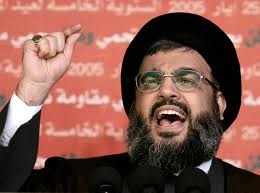
Nasrallah


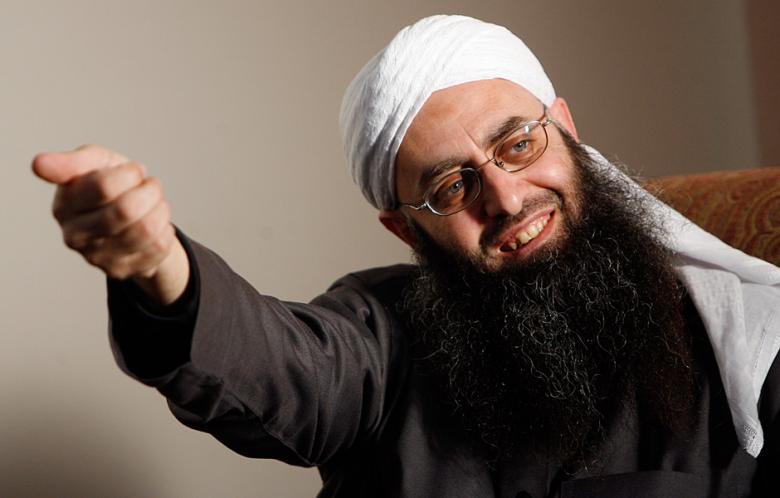
There was nothing more perplexing and confusing than watching the unfolding events of the Lebanese civil war. It was ruthless, ugly, and dirty, and it taught me as well as many Arabs the harsh reality that had been hidden under the veneer of elegance and glamour of Lebanon. Although the civil war was essentially a Christian versus Muslim conflict, the Lebanese Muslim religious identity politics of the ’70s and ’80s was different than what we are familiar with today. There were no religious slogans, no Takbeer, no black flags, and even no beards, with one exception: the Shiite group Hezbollah and its leader Hassan Nasrallah, the man who introduced Lebanese political Islam to the wider Arab world.

For a long period, Nasrallah succeeded in transitioning his party from a small Shiite group to the most dominant party on the Lebanese messy political scene. He also attracted a bigger Arab crowd to support his resistance against Israel. No more − the bearded man, with “God is Great” written on his flag, has new competitors, with even longer beards and fiercer Islamist slogans, but with one difference: they are Sunni, not Shiite Muslims, and Lebanon has started to taste stronger, more assertive Salafi movements.

On Monday, the Lebanese Salafi cleric Sheik ahmed al-Assir, the Imam of Sidon’s Bilal bin Rabah Mosque, announced the creation of the Free Resistance Brigade, urging all who are capable of heading to Syria to go and aid “the oppressed” in Qusayr and Homs. Asir called on “all the Lebanese who fear attacks by Iran’s party (Hezbollah) in Lebanon to arm themselves and form secret cells in order to be ready to exclusively defend themselves and their families, should the need arise.” Asir is not alone; other sheiks like Sheik Salem Rafii have called for “Jihad” in kassir on the Lebanese-Syrian border, where the Shiite group, Hezbollah, is allegedly involved in fighting along the side of the Assad regime in Syria.

Fighting Salafis is harder and trickier for Hezbollah for many reasons: For starters, the Shiite militia has gained most of its experience fighting a conventional Israeli army, with mostly hit-and-run tactics that aim to exploit the vulnerability of organized military units and inflict maximum damage and human causalities. It worked; Hezbollah operations forced Israel to withdraw from Lebanon in 2000 and to accept ceasefire in their war in 2006. However, Asir and his men are not Israel − his followers share many characteristics that Hezbollah offers his members: Jihad, resistance, paradise, and duty. The advantage of fighting a conventional army is gone, and now Hezbollah must accept the bitter truth that his men will face and, for the first time, other guerrilla groups that are equally determined and fearsome. They may not be equal in experience, but experience would be gained quickly within the battlefield. Not to mention that it will be harder for Hezbollah members to chant “Allah Akbar” while trying to kill others who are equally passionately chanting the same.

Second, the Hezbollah’s desperate attempt to save the Assad regime in Syria has cost the group dearly on the political front but also on the military front. For years, Hezbollah has stored rockets of various sizes, threatening Israel; first Haifa and beyond, then later Tel Aviv and beyond. Those rockets have been rendered useless in the current fight in Syria. Rockets are not the weapons of choice for inter-guerilla war. Denying Hezbollah the advantage of psychological impact of urban shelling of Israeli towns is a big setback for the movement. Now, the shelling of Assad forces of civilian areas is something the group has to deny any involvement in.

Third, the Shiite community that accepted martyrdom for its sons in the war against Israel may not necessarily accept the returned body bags from Syria; they may resent being dragged into someone else war. Although Hezbollah has portrayed the conflict in Syria as “the Western conspiracy against the resistance,” sooner or later, this slogan will do little to comfort bereaved Shiite families. Moreover, any ongoing fight with Salafi’s groups could result in revenge attacks on Shiite villages inside Lebanon, a risk that should not be under-estimated or dismissed.

For years, Hezbollah has treated the moderate Sunni group, the future movement as an enemy. From the death of Rafiq Hariri in 2005 to the death of Wissam al-Hassan in 2012—regardless of who was really behind their murders—Hezbollah has done nothing to bridge the wide Sunni-Shiite gap in Lebanon. In fact, it is arguable that the weakening of the Future movement has helped to strengthen the radical Salafism in Lebanon. Its leader, Saad Hariri, who couldn’t even attend al-Hassan’s funeral, still lives in self-imposed exile in Paris and is unable to curb the influence of Asir or other Salafi sheiks who are mysteriously well-funded and under no obligation to listen to a westernized leader like Hariri. Even the patron of Hariri, Saudi Arabia, its hand is limited in curbing the huge business empire that funds Salafism in both Syria and Lebanon.

Nasrallah’s shortsightedness on the internal front, and his stubborn insistence to support Assad may cost his group dearly. Now the genie is out of the bottle, the Lebanese Salafists are here to stay, and they should not be underestimated. The spillover from Syria may not necessarily lead to a full-blown civil war in Lebanon, but it would slowly undermine the already-fragile Lebanese state and damage Hezbollah’s internal interests. Welcome to Lebanon’s new war of the bearded enemies.

Posted in Lebanon, Politics | Tagged , , , , | 4 Comments

The Accomplishments of President Morsi

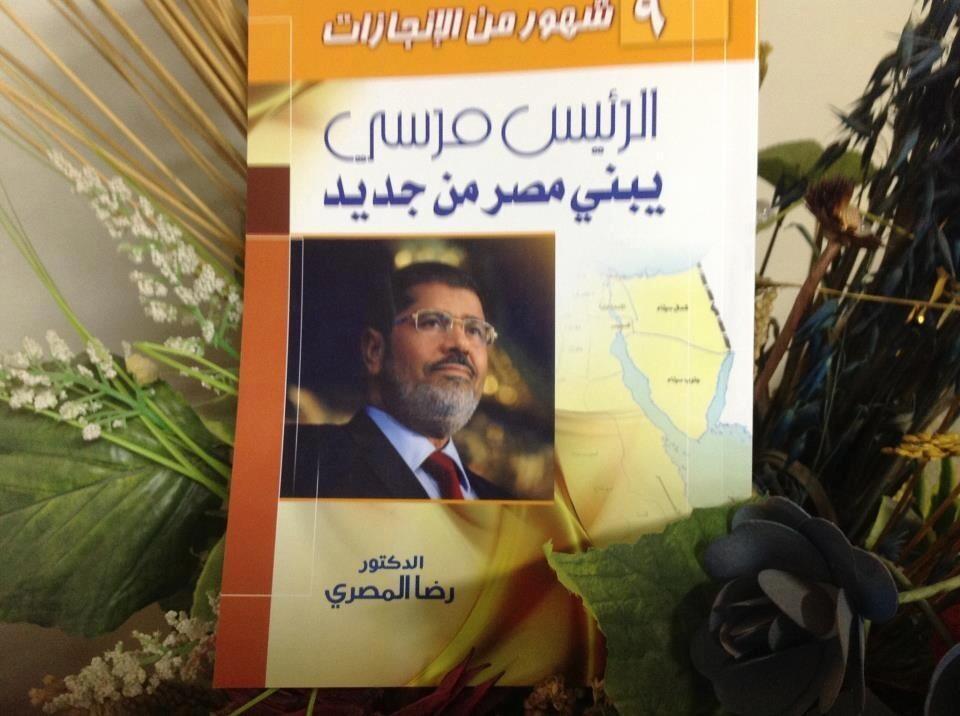
Morsi'sleaflet(Photo of Morsi’s achievements  booklet from FaceBook)

“Months of achievements…President Morsi builds Egypt anew,” is a 124-page booklet authored by Reda al-Masry, a so-called “educational expert” and the author of several educational articles on the Brotherhood and other Islamic websites. Apparently, the book is only being distributed to young members of the Brotherhood, and it lists the accomplishments made by President Morsi over his nine months in power.

Masry said he wrote this book because the media has been smearing Morsi’s image. “The recognition Morsi gets at the popular, regional and international levels causes envious people inside Egypt to seek to tarnish his image.”

According to the booklet, President Morsi is:

  • First civilian president
  • First elected president
  • First bearded president
  • First president to sue his enemies
  • First president whose convoy does not paralyse traffic
  • First president whose son gets less than 90 percent in high school exams.
  • First president to shake hand with the officer who imprisoned him
  • First president to pray every Friday in a mosque

In the spirit of highlighting President Morsi’s achievements, I would like to add a few extra:

  • First president to transform the fissures within Egyptian society into full-scale divisions.
  • The president with the worst record of minorities’ and women’s rights
  • First president to provide rich resources for satire
  • First president with weird political vocabulary
  • First president with tense relationship with his military establishment
  • The president with highest record of  travel in the first eight months of his rule, seeking loans from abroad
  • The  president with the highest record of violence during his rule
  • First president to lose the support of many in the Canal region, particularly in the city of Port Said
  • First president to contribute directly to the rising popularity of his deposed predecessor
  • First president to be resented by many who elected him
  • First president to be rushed out of a mosque barefooted (allegedly)
  • First president to take the definition of “uncharismatic” to a new level
  • First president to make Egyptians view enlightenment as an elusive bird

If I missed any of President Morsi’s achievements, or if you disagree with the above, please feel free to join in and express your views.

Posted in Egypt | Tagged , , , , , , , , , | 4 Comments

Egyptian Aak. Week 16

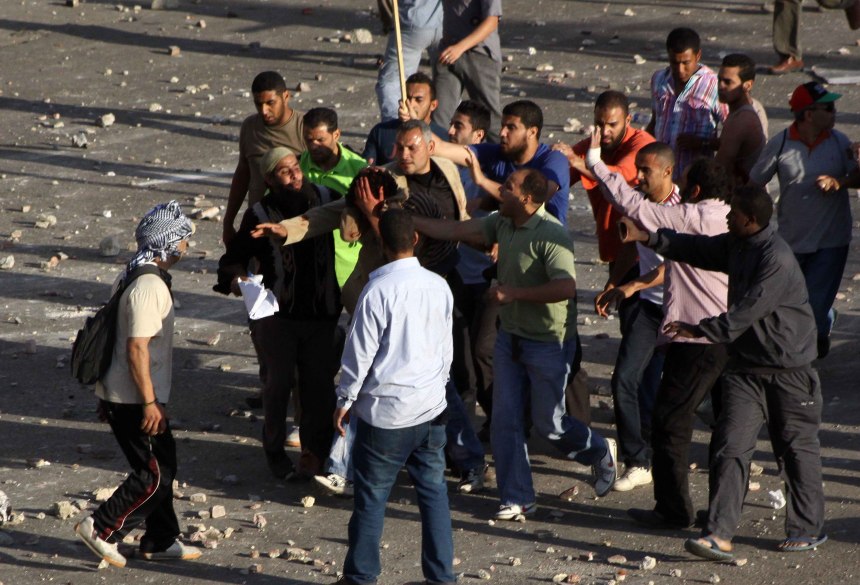
Friday clashes image

(Photo from Friday’s clashes via The Daily News Egypt)

Main Headlines

Monday

Tuesday

Wednesday

Thursday

Friday

  • Brotherhood‘s Friday demonstrations
  • Street battles in Cairo leave dozens injured after Islamist protest
  • Egypt rushes to update reform plan to match IMF expectations
  • IMF: Qatar aid to Egypt no substitute for the IMF’s plan
  • Egypt committed to fair distribution of Nile water

Saturday

Sunday

A Few Thoughts

My grandmother had a solution for any of her kids’ health issues; Castor oil, known  as a  laxative, it was ideal__ in her opinion__ to “purge” toxins out of the body. It seems that the Brotherhood’s magical solution to Egypt’s problems is a political version of Castor oil.  

 The Myth of purging:

Over the last few weeks, there has been rising rhetoric from the Muslim Brotherhood about the “purging” of Egypt’s justice system. As one Brotherhood affiliate has explained to me, it is like a detox recipe that could be uncomfortable but essential for the revolution to prevail. It sounds logical; particularly, as the Brotherhood views some judges as manipulative and trying to undermine the new Islamists leadership. However, regardless of whether the Brotherhood is right or wrong in their assessment of their opponents within Egypt’s judiciary, there are other aspects that make the entire concept of a “purge” closer to a flawed myth.

First, perception: There are deeper routes to the current antipathy between Islamists and judges; the judiciary, as well as police and army, have been a no-go profession for the Islamists since 1954, which is precisely why the Brotherhood flooded other specialties such as medicine and engineering. The judiciary was not just an elitist profession but also is, in the Brotherhood’s eyes, dominated by leftist Nasserites, who naturally reject political Islam. For most Islamists, a judge like Tahany el-Gibali is the perfect example of a snobbish elitist and a woman, too, which amounts to a double crime. This background should be considered to understand why the Brotherhood was always suspicious of every Supreme Court’s verdict. Islamists always fail to separate their perception from rational judgment, which is precisely why they easily embrace conspiracy theories.

Second, suggested solution: The problem with a “purge” lies in its collectiveness; without setting professional standards for independent investigation, a purge will be like a blind trimming process that would produce more harm than good.

Third, the definition of “good”: Rather than replacing non-professionals with professionals, the Muslim Brotherhood would rather replace anti-Muslim Brotherhood with pro-Muslim Brotherhood. Any disagreement would be viewed as siding with the “enemy,” even Judge Mekki, who stood by the Brotherhood since day one, has recently annoyed the Brotherhood because he rejected the “purge.” Ironically, the Muslim Brotherhood has previously praised the judiciary for its “professional” supervision of Egypt’s presidential election.

Friday clashes:

 Within the above context came Friday’s “demonstrations,” which were called by the Muslim Brotherhood, and other Islamist groups (although avoided by others like Salafi Nour party and Aboul Fetouh’s strong party). Regardless, whether a purge is the right course of action or not, the demonstrations were another miscalculated move by the Brotherhood:

– They behaved like an opposition movement that expresses “demands,” instead of a ruling party that take actions, and then call supporters to endorse them.

– The emerged videos, and photos of Brotherhood’s supporters wielding machetes and guns during the clashes, have stripped the Brotherhood from their alleged moral superiority. The group that once accused their opponents of “thuggery,” has decided to respond with an equal level of violence.

So was violence a goal? Probably yes, mainly to drain the anger of the young Islamists youth and to justify future decisions by Morsi (for example, arresting opposition figures and Christians, and charging them of organizing the violence).  The rhetoric against Christians has increased recently; currently, there is a Christian militia hashtag on Twitter (in Arabic), under which many Islamists are piling sickening accusations against Egyptian Christians and opposition figures, whom in their eyes are traitors, just like the Copts.

A coup?

 How long can Egypt tolerate this ongoing violence? Should we expect a coup d’état soon? I agree with Florence Gaub that it depends on capacity and opportunity. Morsi’s miscalculated moves provide increased opportunity for the military, but I still stand with my early prediction: that the military cannot save Egypt. One of the false assumptions that are prevailing among many Egyptians is that the current “balance of hate” would ultimately lead to consensus at some future stage. Highly unlikely, as the balance of hate is not coupled with a balance of power, or influence, as the weak divided opposition has fewer cards to play. That is why Egypt could continue sliding from weakness to a failed state, which would ultimately deem the country ungovernable, even if the mighty army finally decided to stop dithering and send tanks to the streets of Cairo.

Egypt is not too big to fail; it is, in fact, too big to save, which is a tragedy in itself. But what is more tragic is how the main players, particularly the Brotherhood, have opted to ignore this fact.

Vision and political will:

 The Muslim Brotherhood is lacking the vision and political will to save Egypt from its demise, and its leadership is failing to be true democrats. Moreover, the group, for many reasons, is not in a position that can enable its leadership to be complete autocrats.

The next few weeks are crucial to see whether the Brotherhood will persevere and “purge” the judiciary and police, or Friday’s violence would force them to backtrack. It is difficult to read the minds of the big names inside the Supreme Guide office of the Brotherhood, (met on Saturday to discuss the violence), however, it is also difficult to imagine that the current status quo could continue for much longer; something has to give. The question still remains, can the Brotherhood successfully sideline their opponents?

Today, Justice Minister Mikki has resigned, another alarming sign that the “purge” may start soon. Interestingly, the Brotherhood web site (Ikhwanweb) has announced today that Shura council will discuss  discuss proposed amendments to the Judicial authority bill, tomorrow (Monday, April 22). Interestingly, a report claims that Army General Mamdouh Shahin was trying to persuade Mekki not to resign. If true, then it is another indication that the army is trying to contain the trouble, and not escalate it.

If the Shura council approved the proposed amendments of the Judiciary bills, it could include forced early retirement of many anti-Brotherhood judges, but I doubt that they will go without a fight.

Good Read

Plus:

Finally, here are Jayson Casper‘s prayers for Egypt.

Posted in Diary of Aak, Egypt | Tagged , , , | 2 Comments

Essam el-Erian: Mr.Conspiracy

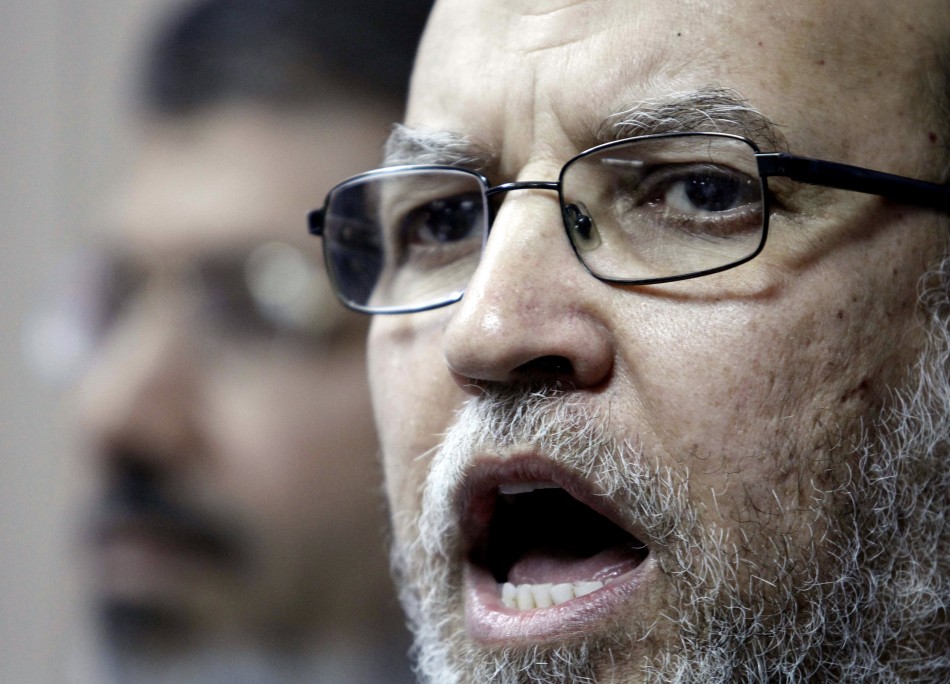
Erian photo

(Photo: Reuters)

In a contrast to the formal statement made by the Muslim Brotherhood condemning the Boston bombing, Essam el-Erian, the vice chairman of the Muslim Brotherhood’s Freedom and Justice party, sparked widespread controversy when he posted a long comment on Facebook, later translated into English, in which he connected the twin blasts in Boston to an alleged anti-Muslim conspiracy that spans the globe. He also linked the bombings to the French military action in Mali, the conflict in Syria, and what he described as the “faltering” peace process between Turkey and the rebels in the Kurdish Workers Party (PKK).  He then asked, “Who planted Islamophobia through research, the press, and the media? …Who funded the violence?” The Arab and Muslim worlds have a long history of indulging in conspiracy theories theories, most of which revolve around the West, Israel, and Zionism plotting against the Arabs. Islamist movements including the Muslim Brotherhood have consistently used conspiracy as a means to justify their views and political stance. I vividly remember when a Brotherhood affiliate explained to me that the Brotherhood’s leader, Sayyed Qutb, has witnessed ordinary Americans “celebrating the death of the Brotherhood’s founder, Hassan al-Banna.”  Even as a teenager, I found his story implausible; why would ordinary Americans, during the pre-television era, have heard about Banna, let alone celebrate his death? This is also not the first of such a claim from el-Erian, who has a record of controversial statements that are full of implicit or explicit accusations. Last January, he accused all  media, except Al Jazeera, of serving the former regime. In a recent tweet, Erian bizarrely linked “Jewish Passover with pilgrimage to Dubai and devilish inspirations.” It is unclear what he meant; he could have been alluding to the recent visit from ElBaradei or to Shafiq’s residency in the Gulf state known for its tense relationship with the Brotherhood. He also accused opposition figure El-Baradei of “facilitating the US invasion of Iraq.” Conspiracy has been linked to the core ideology of the Brotherhood since the assassination of its leader, Hassan el-Banna, an incident that enriched its members’ belief that the Muslim “Ummah” is always vulnerable to plots from the enemies of Islam. Gradually, conspiracy became a crucial pillar of the Brotherhood defense, and counter-attack when accused of wrongdoing.  The Muslim Brotherhood, despite many reliable testimonies, has consistently denied any role in the Cairo fire in 1952 or in attacking or harassing the Jewish community in Egypt. Its members also vehemently denied plotting against Nasser or forging any deals with Mubarak. They brush aside these accusations as part of the ongoing conspiracy against them, and of course, in a country like Egypt, where historical events are blended with propaganda, it is hard to collect concrete evidences to incriminate or vindicate the Brotherhood. Moreover, following its ascendancy to power after the January 2011 revolution, the Muslim Brotherhood has opted to use a two-faced rhetoric that varies considerably in language and tone between its Arabic and English versions, with more blunt statements full of hints and accusations in Arabic in contrast to the balanced, carefully crafted English statements. This policy was initially successful, with many analysts and observers embracing the English statements as the true reflection of the group’s moderate stance. However, recently, the Brotherhood’s dismal performance has prompted a closer scrutiny of its Arabic statements, with new emerging translations by the web site, “mbinenglish ,” which reveals hypocritical views and outlandish accusations. In one example, the Arabic freedom and Justice portal claimed that, “The events of the Coptic Cathedral began after the Egyptian opposition figure Abu Hamed met with Lebanese Christian militia leader Samir Gaegea.” In addition, pro-Brotherhood sites among the social media are full of lavish accusations against opposition figures, with allegations of Sabahi funded by Iran, El-Baradei funded by the United Arab Emirates, and the black Bloc led by Copts − the list of plots that aim to ruin the Brotherhood role in Egypt is endless. However, el-Erian’s Boston statement reveals a more sinister version of a conspiracy theory that rejects the existence of radical Muslim groups and their involvement in terror. The Brotherhood vehemently rejects the French interference in Mali and refuses to acknowledge the savage, grotesque behavior of its members and how they abused Sharia to justify their torture and destruction. In Syria, the brotherhood kept quiet when the radical group al-Nusra pledged allegiance to al-Qaeda. Even in Egypt, the Brotherhood is not confronting radical groups that turned Sinai into a lawless frontier. The Brotherhood, which consistently claims that it is the flag holder of “moderate Islam,” has yet to define terrorism or acknowledge that some Islamic groups use terror as a tool of their “resistance.” Now, el-Erian goes even further, hinting that some outside forces have infiltrated and are financing radical groups and encouraging them to commit savage acts of terror that tarnish Islam and Muslims. El-Erian‘s statement should not come as a surprise to anyone; the group’s makeover in recent years has proven to be only skin deep. Its recent mediocre performance, together with its odd statements, underscores the group’s immaturity, the inability of its members to accept responsibility for their own actions, and its twisted version of Islam. Unfortunately for el-Erian, the Arab awakening has aided the rise of many reform Muslims that reject the Islamists’ shameless use of religion in politics and has also rejected the justification of terror under any conspiracy theory. Regardless of who is behind the blasts in Boston, Islam as a faith will not be affected; in fact, the opposite is true, as the vast majority of Muslims in their stand against terror reject conspiracy theories, whether el-Erian likes it or not.

Posted in Egypt | Tagged , , , , | 1 Comment

Egyptian Aak: Week 15. The Week of Kheba

morsi Sissi

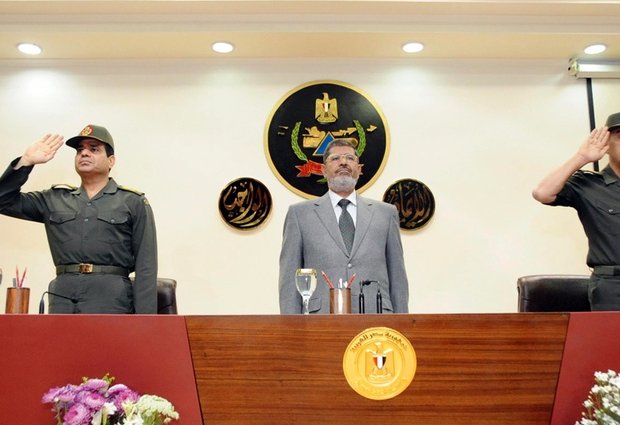
(Photo: President Morsi, and Minister of Defense Abdel el-Fattah el-Sissi AP)

Main Headlines

Monday

 Tuesday

 Wednesday

 Thursday

 Friday

 Saturday

Sunday

A Few Thoughts

 There is one Egyptian word that fits in well with this week’s events—from Mubarak’s cynical smile and the tense encounter between Morsi and Sissi, to the sick sectarian rhetoric and the Qatari loan to Egypt. That word is “Kheba” or epic failure.

 President and General al-Sissi

Watching the above video of President Morsi and the Supreme Council of Armed Forces (SCAF) is enough to give anyone a clear impression of how tense the relationship is between President Morsi and his Minister of Defense, General-al-Sissi. Although standing side-by-side, both avoided eye contact and didn’t look at each other while talking to the press. It was an awkward encounter, despite that both have said the “right” words. Defense Minister Abdel Fattah al-Sissi said, “I swear the Armed Forces did not kill or order any killing—betray or order any betrayal—since 25 January”; while Morsi said, “I will never allow any form of offense or assault on any personnel of the Armed Forces. Any insult to the Armed Forces is an offense to all of us.”

However, words are not enough to convince the public that that the chess game between Morsi and al-Sissi has ended, following weeks of speculations about the possibility of a return of the Egyptian army to politics; additionally, a partial leak by the fact-finding mission, appointed by Morsi, accused the army of human rights abuse during the revolution has surfaced. Timing couldn’t be more intriguing—why now? And why is Morsi still reluctant to publish the entire report that was submitted to him in December?

The only plausible explanation would be that the “facts” were used as ammunition in the ongoing political battle. If true, then it worked, for now; it seems that both sides are willing to have a lull in their on-going battle. Morsi promoted some army generals and declared his support to the military forces, while al-Sissi seems to be willing to accept Morsi’s appeasment, thereby allaying fears of a coup in the near future.

Mazhar Shaheen:

Readers of this blog are already familiar with this respectable Muslim cleric, the Imam of Omar Makram Mosque in Tahrir, who joined the revolution, preaches tolerance and actively works to promote harmony between Christians and Muslims in Egypt. He is also an open critic of the Muslim Brotherhood leadership, and for that, he was suspended this week by the Endowment Minister, allegedly for delivering a sermon critical of the president. This suspension comes from the same Minister who ordered all Imams to stop any contact channel with the Anglican Church, the same church in which Sheik Shaheen delivered a sermon last Christmas to promote harmony and tolerance. Ironically, many Islamists who criticize Shaheen for mixing politics with religion are the same bunch who advocates the use of religious slogans in election campaign. Halal hypocrisy?

Sectarianism

 The recent translation of many of the Muslim Brotherhood’s Arabic statements via the mbinenglish blog has exposed the party’s two–faced rhetoric that varies considerably in language and tune in its Arabic version translated from the English one. Undoubtedly, the Islamist parties’ rise to power has been accompanied by rising incendiary rhetoric against Egyptian Christians. However, the Brotherhood is now the ruling party, and any statement like the reckless statement by the President’s advisor, Essam Haddad, would rightly be viewed as the official government stance. Haddad is not alone—other Brotherhood senior cadres have voiced very sectarian sentiments and some of it is simply breathtaking.  In such, the stance against the Anglican Church that I mentioned above should also be viewed as part of this government’s new attitude.

Most of the Islamists have fixed views of what happened in Khosous but what is more interesting is how they blame the Pope for arranging the funeral of the slain Copts to be conducted in Cairo’s main Cathedral. They also advocate, without evidence, that there is a Coptic militia in Egypt and that many of them fired at the police from inside the Cathedral. It is clear that the Islamists are not wiling to wait for independent inquiry or a fact-finding mission; instead, they reached their own conclusions, and even more dangerous, are willing to spread it on social media as the ultimate truth. On the other hand, the Pope has made a set of five demands from the government; I doubt that any of them will be accepted, which means that for now, the current false calm may not last long and a new episode of violence could erupt at any time.

Baseera Poll:

The poll conducted by Baseera on presidential job approval ratings, and the performance of the opposition has revealed that the percentage of Egyptians who disapprove of Morsi’s performance has reached a record high of only a 37% approval rate; however, two-thirds of his opponents can’t name an alternative. It also shows that the percentage of supporters of the National Salvation Front decreased. That pretty much sums up the current situation in Egypt; yes, Morsi is unpopular but there is no better alternative to him. Even if the result of the next poll is 20%, it doesn’t really matter; as long as the opposition is scoring worse, the Brotherhood will be content with the poll results.

Beyond Satire:

There is some news in Egypt that is seriously beyond ridiculousness. Here is one example:  The president has issued his own constitutional declaration, triggering opposition outrage, and finalizing a constitution in a hasty manner amid widespread boycott.  In such, he has forced a referendum against the opposition’s wish, declaring the new constitution as legit. Then, a few months later, he decided to set an “expert committee” to amend 10-15 articles of the constitution “that lack general consensus.”  Now that is not even funny.

For Mubarak and Qatar (I hope I will cover them in separate pieces, but here is a quick comment): This is not a trial of Mubarak but it is a trial of the revolution that is being hijacked by some who are shamelessly happy to burden the country with debt in order to survive.

Good read

Finally, here are Jayson Casper‘s prayers for Egypt.

Posted in Diary of Aak, Egypt | Tagged , , , | 1 Comment

Understanding Sukuk

Sukuk Photo

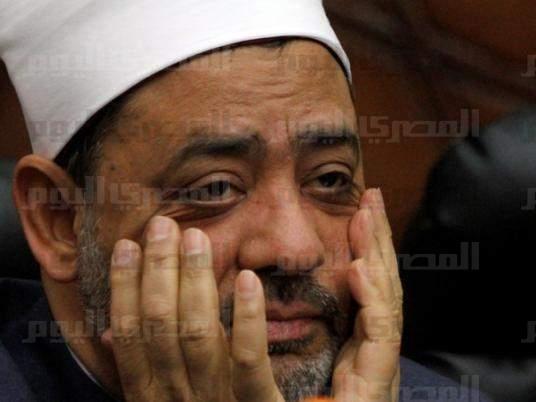
(Photo, Grand Sheik of al-Azhar: Egypt Independent)

In an effort to develop Islamic alternatives to conventional investments, Muslim scholars have advocated new economical instruments, which fit with Sharia prohibition of usury and encouragement of shared risks. Islamic banking is growing, not just in Islamic countries, a number of multinational banks in the European continent, have opened branches or windows dedicated to the practice of Islamic banking.

Sukuk, or Islamic bonds, is one example of what such banking can offer; it is the Islamic answer to conventional bonds, an assets-based investment that can provide sovereign governments and corporations with a huge liquidity pool, or in a simpler terms, it is a kind of remortgage deal, but 3with a profit-sharing scheme, instead of a debt with a fixed interest rate.

The word “bond” is misleading as sukuk offers the investor partial ownership of the assets, and represents shares in the underlying assets. While Western bonds are considered a safe form of investment with a guaranteed fixed rate, Islamic sukuk, as with any Islamic investments, holders gain a share of the profits and accept a share of any loss; also, holders share the costs related to maintaining the assets, which can potentially make sukuk a low return investment.

In general, there are different types of sukuk, but two types are most common: Musharaka sukuk, which give investors a share in a venture’s profits, and Ijara sukuk, which involves a transfer of tangible assets such as real estate from one party to another. Following the independence of South Sudan in 2011, the cash-stripped Islamic government of Sudan launched a sale of Islamic bonds in January 2012 offering higher than usual yield (annual return of 20%) to raise funds for the government. Now, Egypt, under the leadership of the Muslim Brotherhood’s Morsi, is trying to imitate the Sudanese experiment by using sukuk as a solution for the country’s budget deficit.  It is estimated that Egypt could raise around US$10 billion a year from the Islamic bond market; an international issue could help the government replenish its dangerously low foreign currency reserves.

For the Muslim Brotherhood, sukuk is an innovative instrument for the advancement of Egypt’s economy, while Salafist parties agree with the principle of sukuk, they want to ensure that all the details within the proposed law are designed in accordance of Sharia. Following a heated debate in the Shura Council (80 % of its members are from the Islamists camp), President Morsi later referred an amended draft of the law to al-Azhar, who approved the law after amending some of its articles.

While the religious debate over the law has now been settled, its economical implications have been overlooked under a barrage of accusations and counter-accusations between the Egyptian government and the opposition. Unfortunately, there was no proper public consultation or explanation of the law; consequently, the Egyptian public understands very little about its details, possible risks, and pitfalls. Leaks from al-Azhar ruling suggests that they prohibited the using of any government owned assets in raising Sukuk. If true, then it defeats the entire purpose of Sukuk, with the possible failure to raise the desired liquidity as the Brotherhood leadership aims to achieve.

There are also two other pitfalls to sukuk that the Egyptian public must understand: first, in sukuk, the initial investment is not guaranteed at the maturity date; the sukuk holder may or may not recoup the initial investment amount, mainly because, unlike bond holders, sukuk holders share the risk of the underlying asset. Second, sukuk owners may not have any more legal safeguards than their conventional counterparts in the case of default. Most sukuk are structured as asset-based instruments, rather than asset-backed securitisation, where “you always have a claim for that particular asset that has been sold to you as the investor.”

So, in short, the protection of owners could render sukuk un-Islamic, while the lack of protection could make its risks for investors much higher; this is a catch twenty-two for many Egyptian investors. Sukuk always catch headlines when it sells, and raises enough funds, but very few follow its progress and outcome at maturity date, and whether it was a rewarding investment or not. There are many reports about Sukuk defaults and its implications that aught to be studied before Egypt embark on this experience. Questions must be raised about how Egyptian courts will deal with any future cases of default, and whether the new law sanction any repurchase protection.

It is not enough for the Islamists to cite the success of Sukuk in other countries as enough reassurance for the Egyptian public; it is true that countries like Turkey and Malaysia have increased their sukuk investments, but the micro financial details varies in each country, with some aspects that can be considered un-Islamic in the eyes of some scholars. In addition, these countries are not solely dependent on Islamic investments for developing their economy; they have a huge conventional investor base. In fact, the world total Islamic finance is still less than 1% of the global banking assets, probably due to several problems being faced by Islamic banking.

Economy is the science of developing and effectively managing the country’s resources, and balancing it against the demands of its people. Not every “halal” measure is good to the economy; sukuk can be a useful way to generate cash, but it is a not the Holy Grail that will save Egypt. The new law may be acceptable from the religious side, but it should also be accompanied by transparent procedures that explain the risk and benefits to customers, robust bankruptcy laws that ensure the rights of investors, and a broader multi-modal approach that can solve Egypt’s economic woes.

Posted in Egypt, Islam | Tagged , , | 4 Comments

Egypt’s ‘Daily Show’ has provoked the worst in Islamist ideology

Bassem Youssef Photo

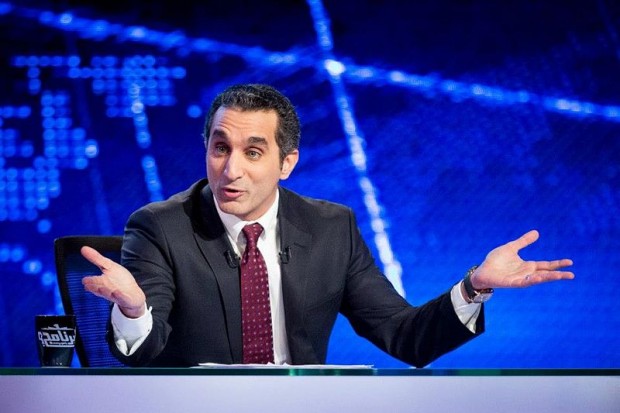
(Photo: YouTube Screengrab)

This piece initially published in The Globe and Mail

Many Egyptians still remember the eagerly awaited speeches of presidents Gamal Abdel Nasser and Anwar Sadat, and the intense debate that usually followed. Nowadays the eagerness and the debate are still alive. But now Egyptians are not waiting to watch their president, Mohamed Morsi, but rather the man who is poking fun of him – the satirist Bassem Youssef.

Mr. Youssef has become Egypt’s most popular comedian with his Friday night TV show El Bernameg (“The Program”). Modeled on Jon Stewart’s Daily Show, his merciless, biting jokesabout Mr. Morsi’s poor performance, bad English and Islamic fundamentalism have earned him million of fans – and also many enemies.

Last week’s arrest of Mr. Youssef for “insulting the president, denigrating Islam and disturbing the peace” has created a public outcry inside and outside Egypt, and even a tense Twitter exchangebetween the U.S. embassy in Cairo and the Egyptian presidency. Many rightly raised concerns about the future of freedom of expression and Egypt under the rule of the Muslim Brotherhood.

On Friday, Egyptians were glued to their seats watching the first episode of Mr. Youssef’s program after his discharge on bail pending investigation. It has already attracted more than 800,000 YouTube views.

The phenomenon of Bassem Youssef and the Islamists’ uproar against him has political, social and religious dimensions that must be explored to understand the current dynamics in Egypt.

First, the religious side: Mr. Youssef’s opponents cite a verse in the Koran (Soura of Hojorat, verse 11) that states “Don’t make fun of people” as proof that satire is wrong and that Mr. Youssef has broken the religious code. This view is part of a wider theme adopted by literal Islamists who inappropriately interpret the Koran to justify their views.

But their argument is fundamentally flawed, as Mr. Youssef did not ridicule the citizen, Mohamed Morsi, but rather the President of Egypt, who happened to be Mohamed Morsi. There is definitely nothing in the Koran to prohibit criticizing leaders; in fact, the opposite is true. God’s advice is to rule with justice, a quality that many Egyptians believe that Mr. Morsi is missing. It is also worth mentioning that Mr. Youssef was critical of other political and army figures before Mr. Morsi’s election and the Islamists never raised any concerns at that time.

There is also a social element to the conflict: Sayed Hamad, a lawyer who filed one of the complaints against Bassem Youssef, claimed that the show is “shattering… all the values and ethics that we are used to.” What are these values and ethics? If the vociferous debate in social media is any indication, it seems that Islamists have a problem with basic definitions such as “respect” and “honor.” They believe that Mohamed Morsi should be respected and honored because he is the president of Egypt.

Those who adopt this misconception forget that respect must be earned and not just given. Mr. Morsi will not be respected until he delivers his pre-election promises of freedom and justice. Being elected is merely a start of a long, winding road toward respect that may or may not be achieved.

On the political front, there are three elements of successful leadership: initiating a change, creating a positive environment and delivering the aspired results. Thus far, Mr. Morsi has failed on all three fronts: Egypt’s collapsing economy and poisonous political environment have created a negative, tense atmosphere and failed to deliver any of the revolution’s goals. For many Egyptians, Mr. Morsi is one of the worst leaders in their country’ contemporary history; others may have been more tyrannical but at least they delivered on other fronts, particularly the economy.

The Islamists’ growing anger with Bassem Youssef is a reflection of their failure, and of his success in exposing this failure with a magnifying glass. Mr. Youssef is a creative mix of vision, insight, depth and sharp Egyptian wit; he boldly challenges the Islamists’ rhetoric, exposing their hypocrisy. They never had such scrutiny before, and unsurprisingly, they feel pushed outside their comfort zone.

Mr. Youssef, a pious, practicing Muslim, is one example of the current ideological war that engulfs Egypt following the January, 2011, revolution: a war between a political Islam that claims to be the sole representative of the faith and another growing element consisting of proud Muslims who reject dogma and extremism and are willing to fight to protect their faith from exploitations.

On Saturday, an Egyptian court dismissed a lawsuit to halt Bassem Youssef’s show, a small victory for free speech in the country. However, there is still a long road ahead for the Egyptian revolution to prevail. Mr. Youssef blew much-needed, refreshing ripples into the toxic Egyptian political scene, and for that he should be applauded, and supported against those who are desperately trying to silence him.

Post Script

Here is one of Bassem Youssef’s  best episodes with English subtitles

Also, here is part of his latest episode, mocking Qatar (Song: My Beloved Qatar with English subtitles.

Enjoy…

Posted in Egypt, Qatar | Tagged , , , , , | 2 Comments

Egyptian Aak: Week 14

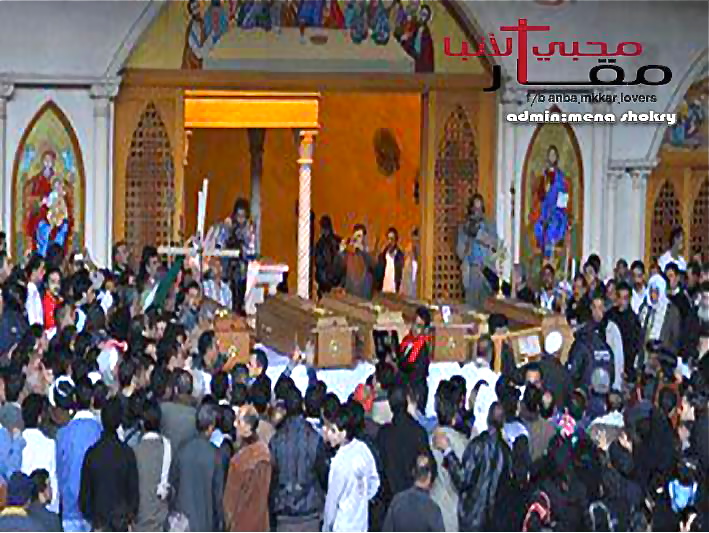
Coptic death (Coffins of dead Copts following Saturday sectarian clashes – Twitter  via @auscma)

Main Headlines

Monday

Tuesday

Wednesday

Thursday

Friday

Saturday

Sunday

  • Clashes erupted at the main Coptic Cathedral in Cairo
  • Morsi says Cathedral attack is like “attack against me.”
  • Report: Bullets from automatic weapons killed Copts in Khosous
  • Tourism minister stops Iranian flights to re-evaluate program

A Few Thoughts

 The poisoning at  Al-Azhar:

A new week, a new, subtle confrontation―this time between Al-Azhar, Egypt’s oldest Islamic institution, and the Muslim Brotherhood. The confrontation follows the poisoning of hundreds of students, an incident that understandably enraged many, but was exploited by pro-Brotherhood students who protested against Al-Azhar leadership. The protests prompted Sheik al-Azhar to dismiss the Azhar University chairman and also prompted counter-protests by pro-Azhar supporters.  To understand this saga, a few points are worth clarifying:

  • First, Al-Azhar has always been involved in politics; it organized resistance during Napoleon’s era, endorsed Mohammed Ali independence from the Ottoman role, and revolted in 1919 against British occupation.
  • There has always been subtle tension between Al-Azhar and the Muslim Brotherhood, probably  because the founder of the Brotherhood, Hassan el-Banna, was not a graduate of al-Azhar.
  • During the Mubarak era, many Brotherhood members were critical of Al-Azhar’s Sheik for agreeing to join the political committee led by Mubarak’s son Gamal.
  • Following the revolution, the tension between the two became more obvious as the Islamist parties proposed various laws that challenged Al-Azhar authorities.  Two ideas were floated earlier, mainly by Salafi groups: obligatory Zakat (Islamic tax) and had al-haraba – capital punishment for “brigandage” under Islamic law; the Brotherhood appeared to oppose the ideas, but did not say so outright.
  • Many non-Islamists sought the support of al-Azhar in stopping what they perceived as an invasion of radical ideas into Egyptian society.
  • Ironically, the last debate was about Sekuk law (Islamic funds); the Brotherhood strongly backs the idea, while Salafis and others want the Al-Azhar verdict first.
  • Among the many rumors that fill Egypt these days, one claim is that the Brotherhood wants to replace the Al-Azhar Sheik with its man in Qatar, Sheik Qaradwi, by limiting his term in office to four years.
  • Against the above backdrop came the mysterious poisoning case, exploited by the pro-Brotherhood as a weapon, which sparked Friday’s counter-protests

This controversy highlights the lack of transparency and accountability in Egypt where scapegoating is the easiest way to solve problems; rather than dismissing the chairman of the university, the right course of action was to establish first a fact-finding inquiry to investigate the incident, punish the culprits, and provide guidelines to prevent a future disaster. Nonetheless, the Grand Sheik has demonstrated canniness; his swift action has deprived his opponents of their weapons and granted his survival in the ongoing battle for the soul of Islam in Egypt.

The Ongoing Sectarianism:Coptic Cathedral

 Another tragic episode in the ongoing sectarianism in Egypt; “unknown assailants attacked the main Coptic cathedral in Egypt as thousands of mourners held a funeral for victims of Saturday “clashes” in the Qalioubiya region. Five Copts were killed on saturday, followed by one more death on Sunday and many more injured. This all came after the alarming report of a rising wave of kidnappings of Copts in the south of Egypt. Again, few points that is worth highlighting:

  •  The campaign against Copts has risen sharply within pro-Brotherhood newspaper and social media outlets; accusing the Copts of supporting the “counter-revolution” has added fuel to the already chronic tension, particularly in rural Egypt where any rumor of conversion or conflict is enough to trigger bloodshed.
  • This is the first ever attack against the Coptic cathedral since its opening in 1968
  • Sunday’ s events bear a striking similarities with the attack of Port Said mourners. The ministry of interior has not learned any lesson. The statement by President Morsi will unlikely calm Copts who today feel raped in their own home, and the Brotherhood’s narrative of “plots” behind the current events is counterproductive
    It is no exaggeration to say that if the remaining tension continues without radical solutions Copts in Egypt will be the new Jews and may soon disappear from the country (by death or immigration). The tragedy of the Copts has religious, social, political, and security dimensions and will not be resolved without addressing all of them.

 Toppling el- Sissi?

 The new buzz in the local media is the rumors of growing tension between Egypt’s army and the Muslim Brotherhood. I think it is safe to say that the longstanding lack of trust between the two has never been resolved. Despite the façade of patriotic rhetoric, both sides are unwilling to bridge the wide gap that currently exists between them. Nonetheless, el-Sissi seems to know how to pick his battles, and to send a prompt veto whenever a red line is about to be breached. The question is not whether the rumors are true or false, but, as I have written before, it depend on whether Morsi view “el-Sissi” as a “spoiler”? Also and can Morsi remove el-Sissi ?

Replacing West with East

 The local McDonald’s in Egypt has announced a new “Turkish” burger. This may sound trivial, but it isn’t.  It is a reflection of the growing Turkish influence in Egypt―from Turkish soap operas, to the Anadolu news agency that is currently the closest and most trusted by the presidential team, to the spread of Turkish supermarkets in Cairo. Following decades of Ottoman occupation, now Egypt is experiencing a new, emerging Ottoman soft power, and hence the ottoman burger! It is a reflection of a new policy by Morsi’s leadership that seems eager to head East, not just toward Turkey, but also toward Iran, Pakistan, and India in a hasty way without much attention to quality or risk. The new warmer relationship with Iran is a good example; Morsi’s Egypt wants to improve economic bonds with Tehran, but doesn’t want the “Shia” visiting Cairo mosques or Turkish investment without Turkish secularism. This does not work, Mr. President.

Burning Egypt’s Heritage:

 The elegant South Cairo Court building, one of the oldest court buildings in the country, was the most recent casualty in a tragic trail of destruction that has plagued post-revolution Egypt. The outcome of the mysterious fire in the building’s third floor was the disappearance of many sensitive and crucial files, including the one on Gaddafi’s cousin.  Pity the nation that destroys itself to bury the truth. However, since when have we cared about heritage? It is systematically looted, Dahsour is the recent example.

Sudan

 Like Mubarak who felt uneasy in Cairo and sought refuge in Sharm-el Sheik, Morsi seeks refuge in his various trips outside the country, particularly to other Muslim nations like Sudan that greet him warmly.  Morsi’s attitude toward Sudan symbolizes what is wrong with his entire leadership; he refuses to see Bashir as a war criminal, fails to appreciate the impact of Bashir’s disastrous policy that led to the division of Sudan, and deliberately turns a blind eye to the failure of Islamists in Sudan.

For Egyptians, Sudan is the experiment they dread and do not want to replicate; for Morsi, Sudan is an example to cherish. No wonder Morsi cannot reconcile with his people. The disputed border between Egypt and Sudan is another crucial test for him. I doubt he will pass it successfully!

For Bassem Youssef, hopefully, I will write a separate piece soon.

Good Read

Finally, here are Jayson Casper prayers for Egypt

Posted in Diary of Aak, Egypt | Tagged , , , , | 1 Comment

In Egypt, Brotherhood may ‘spoil’ everything

Spoilers photo

Egyptian president Morsi orates last year in Germany. (AFP photo)

This piece was initially published in NOW.  Look forward to your feedback

Whenever there is a regime change, there are those who carry the potential to ‘spoil’ it. This idea has long been entrenched in the minds of many leaders in the Middle East. Each new regime has viewed the remnants of their predecessor as possible spoilers.

Egyptian President Mohamed Morsi and his ruling party, the Muslim Brotherhood, have opted to view the violence that continues to dominate the political scene in Egypt through the spoiler prism, and treat their opposition as ‘spoilers’ of the democratic process. Wasat Party leader Abul-Ela Madi’s recent insinuations that Egypt’s intelligence apparatus is engaged in destabilizing the Morsi-led government illustrate the obsession of many, particularly Islamists, with the idea that various security and administrative apparatuses have links to the old regime, and may include spoilers plotting to ruin the newborn democracy. Morsi himself voiced concern about what he described as “certain loopholes within the intelligence apparatus.”

The concept of spoilers is indeed plausible; resisting change is part of human nature. The rise of political Islam has much potential for radical change, not just on the political level but also in the social and cultural spheres; this is bound to be threatening to many. As Omar Ashour has written, it can apply to many forms of transitions, including democratic ones.

The pertinent question in the Egyptian case is, who are the spoilers? Are they the non-Islamist opposition, many of them who were arrested and oppressed by the Mubarak regime? Are they the activists, who have relentlessly fought for freedom before and after the January 2011 revolution? Or are they the civil servants within Egypt’s various governing bodies? Also, are the ‘spoilers’ deliberately attempting to foil democracy, or are they just a exercising a different approach? Thus far, Morsi and his supporters have refrained from naming who they believe to be threats, instead resorting to the very old Egyptian habit of tanbeet, or passing hints within speeches, without direct allegations. Morsi repeatedly claims credible reports of “plots” and “fingers,” yet he has never released any details of those alleged mysterious plots.

The hints about the spoilers’ identities have inspired a new game in social media. Take the bizarre tweet by the Muslim Brotherhood leader Essam El-Erian, linking Jewish Passover with devilish plots in Dubai; the hint here could be about ElBaradei’s visit, or regarding Shafiq’s residency in the Gulf state which already has strained relationships with Egypt due to alleged Muslim Brotherhood cell. Who knows?

And that is the problem. Whether deliberate spoiling exists or not, the subversive hints have launched a reckless game that has reduced the political scene in Egypt to a personality clash between the Islamists and those within the state’s traditional pillars, including security, judiciary, and military branches, political parties and the media, in addition to various activists and opposition figures. Hints ultimately breed rumors and even wild allegations, and smear campaigns have been concocted on social media against many opposition figures, including Sabbahi and ElBaradei, and even young activists like Ahmed Doma. The results of this approach are more polarization, more resentment, and more violence.

Rather than improving his mediocre approach, face the Egyptian public, and give evidence as to who are the ‘spoilers,’ Morsi has opted for a new policy of ‘soft’ coercion as the ultimate solution. The arrest of political activists like Alaa Abdel Fatah and Mahienour el-Massry, and the recent arrest and five-hour interrogation for satirist Bassem Youssef, followed by his release on bail seem to be the first step in this new approach. The adoption of soft coercion raises the alarm bells about Morsi’s leadership abilities, since he lumped all his opponents in one bag as total spoilers; the clear demarcation between Anti-Mubarak opposition and pro-Mubarak “felool” has become increasingly blurred—now they all anti-Morsi “spoilers.”

Moreover, by being unspecific, Morsi has got himself into a tricky spot; on one hand, can the recent wave of arrests stop the violence? If not, what else can Morsi do? Arrest more activists and politicians? What about the other alleged spoilers within the security apparatus or even the military? Can Morsi arrest them too? If the answer to the above questions is ‘no,’ then the rumor that he is not fully in control of the state is bound to be whispered again. There is already a growing fear among many Egyptians of a dangerous asynchronization of the main pillars of the state due to the current zero-sum power-struggles between pro-Morsi and anti-Morsi members within them.

On the other hand, Morsi has raised the stakes among his supporters; failure to meet the Islamists’ growing demands to ‘purge’ the entire system could lead to resentment or even revolt among the junior Brotherhood cadres, who believe their opponents to be traitors. This could easily translate into more violence in the streets.

In their quest for power, the Muslim Brotherhood has committed two fatal strategic errors: they rushed to lead, and then they failed to lead. The outcome was neither refurbishment of the old system nor the erection of a new one that provides meaningful change. Egypt does not have a problem with spoilers, but groups with important differences in narratives and outlooks. These groups need wise leadership with impeccable navigation skills that can heal the wounds of the revolution. Coercion will never provide Morsi and the Brotherhood with the control they aspire to achieve; instead, it will ultimately lead to the collapse of the democracy that they persistently claim to defend.

Posted in Egypt | Tagged , , , | 2 Comments