Twitter Thread: A critical look at Ahdaf Soueif’s piece on Red Sea Islands

Egyptian writer Ahdaf Soueif has written an opinion piece about the transfir deal of two Red Sea islands Tiran and Sanafir to Saudi Arabia. Many in Egypt, myself included, share Soueif’s overall views. Her post was widely shared on social media.  There are, however, some critical comments about it. Here is an interesting Twitter thread by Samual Tadros, Senior Fellow of the Hudson Institute:


Posted in Diary of Aak, Egypt | Tagged , , , , | Leave a comment

This Week in Egypt: Week 26 ( June 26-July 2)

Top Headlines

  • Egypt raises fuel prices for second time in less than a year
  • Egyptian Air Forces air forces foil arms smuggling attempt in Western Desert
  • Tiran and Sanafir to be located within Saudi territories without a handover ceremony
  • Egypt’s UN delegation blames Qatar, other unnamed country in the region for terrorism in Libya
  • Hamas to create buffer zone with Egypt to improve ties
  • Egyptian court sentences 20 to death for killing policemen for killing policemen
  • Egypt property mogul back in charge after a presidential pardon
  • Egyptian filmmaker Mohamed Diab to join the Academy of Motion Picture Arts and Sciences

 Main Headlines

Monday

Tuesday

Wednesday

Thursday

Friday

Saturday

Sunday

 Good Reports

Good Read

 From Twitter

https://twitter.com/iraqi_day/status/880866783011512321

https://twitter.com/BTelawy/status/879720405002571778

https://twitter.com/spectatorindex/status/880886162851848192

Sports

Plus

Finally, here are Jayson Casper’s prayers for Egypt


Posted in Diary of Aak, Egypt | Tagged , , , , | 1 Comment

Twitter Thread: Jenan Moussa and ISIS desperate house wives

Here are a selection of twitter posts by Journalist Jenan Moussa on ISIS house wives are definitely worth reading. A rare insight into the mind of those women.


Posted in Terrorism, Twitter Thread | Tagged , , | Leave a comment

This Week in Egypt: Week 25 ( June 19-25)

Top headlines

  • Egypt to extend state of emergency for three months
  • Egypt’s Sisi ratifies contested deal handing Red Sea islands to Saudi Arabia
  • Egypt’s constitutional court temporarily halts all verdicts on islands transfer deal
  • Interior Ministry kills three leading figures of ‘Hasm’ militant group
  • Egypt’s police repel major militant attack in North Sinai
  • Egypt says 7 militants in connection with recent attacks on Christians were killed in raid on desert camp

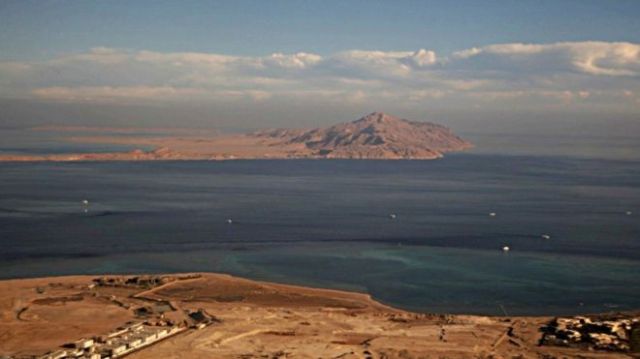
 Tiran and Sanafir via BBC

Tiran and Sanafir Red Sea Islands via BBC

Main headlines 

Monday

Tuesday

Wednesday

 Thursday

  • Egypt to extend state of emergency for three months for three months
  • Egypt says 7 militants in connection with recent attacks on Christians were killed in raid on desert camp
  • Interior Ministry kills three leading figures of Hasm militant group
  • Sisi arrives in Entebbe for Nile Basin countries summit
  • Al-Azhar prepares bill to counter hatred, violence in the name of religion
  • Cairo to host political consultations with Sudan

Friday

Saturday

  • Egypt’s Sisi ratifies contested deal handing Red Sea islands to Saudi Arabia
  • Egypt strongly condemns ‘vile’ attempt to attack Grand Mosque in Mecca
  • UN and international organizations condemn death sentences against 6 people in Egypt 

Sunday

Good Reports

From Twitter

Plus

3Finally here are Jayson Casper’s prayers for Egypt

Posted in Diary of Aak, Egypt | Tagged , , , | 1 Comment

Good readings on the Qatar crisis

In my latest piece, I wrote about western media’s imbalanced coverage of the recent crisis between Gulf states and Qatar.  There are, however, some balanced pieces about Qatar  that are worth reading:

First, here is Richard Spencer’s very detailed piece  published in Britain’s The Times Magazine

“It is this willingness to dally with all sides that has led to the recent rifts with its neighbours, and President Trump’s apparent preference for siding with them against the host of his own Central Command. Despite Qatari denials about terrorist funding, allegations of a relationship with al-Qaeda persist. As the group, now separate from Isis, grew prominent in Syria’s civil war through its local branch known as the Nusra Front, a similar pattern emerged. Its leader gave interviews to Al Jazeera. The group seemed suspiciously well funded – America alleged that some of the money was coming from an influential Qatari called Abdulrahman al-Nuaimi, who has connections with a human rights charity known as al-Karama. Despite his US listing as a terrorist fundraiser, a claim Nuaimi denies, he continues to operate in the country. Nuaimi is a past president of the Qatar Football Association, too: those circles remain small.”

To read the whole piece  click here   You have to register first.


The second piece is by Gregg Carlstrom on Qatar’s based Al-Jazeera channel published in The Atlantic

“The climate changed in the summer of 2013, after the Egyptian army overthrew Mohamed Morsi, the elected Muslim Brotherhood president. On August 14, as security forces were brutally clearing a pro-Morsi sit-in, an Al Jazeera English presenter asked a Brotherhood spokesperson a valid question: why were women and children still present at a protest that would inevitably be targeted by the authorities? The anchor was almost immediately pulled off the air and reprimanded for being insufficiently sympathetic to the group. For months, she was barred from presenting the news and relegated to a pre-recorded chat show. There was also an internal struggle over how to cover that summer’s protests against Turkey’s Islamist president, Recep Tayyip Erdogan.”


To continue reading click here  No registration is needed


Posted in Middle East, Qatar | Tagged , | 1 Comment

The Western media’s imbalanced portrayal of the Qatar crisis

The crisis in the Gulf has entered its third week, since a number of Gulf States including Saudi Arabia, United Arab Emirates, and Bahrain together with Egypt have cut diplomatic ties with Qatar, accusing it of destabilising the region. The crisis in the Gulf is complex and multilayered, and has understandably triggered varied responses inside and outside the region. What is baffling and frankly disappointing is the manner in which prominent Western media outlets have decided to take sides in the crisis.

The Economist wrote an incoherent article saying that American President Trump’s support for Saudi actions also damages America’s credibility. The article also claims “the accusation that wealthy Qataris fund terrorism is unproven.”

The New York Times (NYT) went even further, writing an editorial claiming that attacks on Qatar- based Al-Jazeera channel are “misguided.” The editorial said that “Qatar’s critics accuse the station of supporting Sunni Islamist terrorism and Iranian ambitions, but Saudi Arabia is hardly innocent when it comes to spreading Islamist extremism or supporting terrorist groups.” The editorial also assertively described the Islamist group the Muslim Brotherhood as a “loose political network” that renounced violence, basing its argument on a link to another editorial defending the Muslim Brotherhood without providing solid evidence for such a passionate defense.

The Guardian has also joined the chorus, describing criticism of Al-Jazeera as “muzzling journalism,” part of an assault on free speech that should be condemned and resisted.

Moreover, these editorials are taken by Al-Jazeera and other Qatari outlets as certificates of “good behaviour” from the West. I stopped counting the number of times Al-Jazeera quoted those pieces in its 24/ 7 Arabic coverage of the Qatar crisis. In addition, such editorials are used deviously and indirectly to loosely blame the West collectively, not just the Trump administration, for the ongoing Gulf crisis. Those manufactured perceptions will fan more flames and feed existing hatred among many devoted Al-Jazeera Arab followers.

The behaviour of those Western media outlets reminds me of a similar pattern in Arabic media that I have witnessed from a very young age. Whenever a crisis emerged in the region between Arab states, Arab pundits and newspaper editorial boards took sides and started to shower opponents with accusations. The result has always been a constant state of polarization and confusion in which public opinion is shaped by distorted truth. I grew up yearning for the day I could read Western editorials and opinion pieces, assuming (rather naively) that the level of depth and professionalism would be much better. And it was; when I first moved to England, reading the printed editions of most prominent American and British outlets was simply a pleasure. Depth and nuance and covering various angles of conflicts have always been the staples of Western journalism.

Not any more. Recently a new trend has emerged, in which liberal journalists seem to think that defending Islamism, particularly after the failure of the various Arab uprisings, is a moral duty against the various autocratic leaders in the Middle East. Editorials defending political Islamist groups like the Muslim Brotherhood and its patron nations like Qatar has become a recurring theme. Legitimate accusations against Islamists are downplayed, dismissed, or ignored altogether. Balance, nuance, and depth in covering the region’s complex crises have become a rarity these days; shallowness, instead, is now the journalistic neo-norm. The easy way to defend the Brotherhood Islamism and its patron Qatar is to write about Saudi Salafism and Egypt’s Sisi oppression. Both are indeed facts, but both are also part of a complex and intertwined net of events in which Islamists are not innocent victims.

Qatar’s support of the Brotherhood’s style of Islamism is problematic mainly because of its deceptive faux moderate veneer and its disingenuous support of democracy, while it is as autocratic and oppressive as the autocratic leadership they claim to oppose. If Qatar is truly moderate, it will not tolerate Al-Jazeera Arabic’s open sectarian tone, and it will not allow its Doha- based anchors and scholars to spread hatred and xenophobia. Since 2011, none of the Qatar-based activists, pundits, or scholars has once advocated harmony or reconciliation; instead they feed more anger, hatred, and division.

In 2016, well before the current crisis, an opinion piece in the Guardian highlighted what is wrong with Al-Jazeera, and how it is now a shadow of its former idealistic self. Sadly, Al-Jazeera has ignored calls for balance and continued with partisan venom in its coverage of the region’s crisis Western media defend an Al-Jazeera that once was, not the current channel, which is an ugly version of its earlier form.

As much as I respect all the above Western outlets, I hope they reconsider their stance. The last thing Western media should do in handling the poisonous climate in the Middle East is to be seen as taking sides. Standing with Al-Jazeera or against boycotting Qatar may sound moral to the editorial boards of the top liberal Western outlets, but it is not; it is actually an act of counter-muzzling of the truth in a region where the shades of grey are not that distinctively lighter from each other. One can stand with free speech, but also against hatred, dualism, and deception.


Posted in Middle East, Qatar, Terrorism | Tagged , , , , , , | Leave a comment

Twitter Thread: The Sectarianism of Al-Jazeera Arabic

Amidst an intense debate about Al-Jazeera news TV station, many western media editorial defending the channel, claiming it is a voice for free speech, and ignoring the channel’s sectarian agenda. Hayder al Khoei, an Iraqi -focused MiddlE East watcher has compiled an interesting examples of the sectarian tone of Al-Jazeera Arabic anchors. There are many more examples of Al-Jazeera ugly language of hate, but those tweets are enough for non-Arabic audience to understand why many in the Middle East currently oppose this media outlet.

https://twitter.com/Hayder_alKhoei/status/878496686120763393

https://twitter.com/Hayder_alKhoei/status/878497626567700480

https://twitter.com/Hayder_alKhoei/status/878511727452844032

https://twitter.com/Hayder_alKhoei/status/878522071730589696

https://twitter.com/Hayder_alKhoei/status/878523159338766336

https://twitter.com/Hayder_alKhoei/status/878532524003209216

https://twitter.com/Hayder_alKhoei/status/878555501058981888

https://twitter.com/Hayder_alKhoei/status/878556980884983808

I also add to this list:

https://twitter.com/DavidAWeinberg/status/811003037481365504

https://twitter.com/amelscript/status/878724708463771648

A new post on the crisis in the Gulf to follow

Posted in Middle East, Qatar, Terrorism | Leave a comment

This week in Egypt 2017 – Week 24 ( June 13-18)

Top Headlines

  • Egyptian lawmakers approve Red Sea Islands transfer to Saudi Arabia 
  • Egypt bans fishing, diving at Tiran island in preparation for handover
  • Al-Wafd MP declares resignation over Parliament’s approval of Red Sea Islands deal
  • An Egyptian court sentences 31 to death in public prosecutor’s case
  • Egypt bans scores of news websites in growing censorship crackdown 
  • In long-awaited move, Egypt’s central bank scraps currency transfer limit
  • An Egyptian policeman was killed and four wounded by a roadside explosive near the Cairo suburb of Maadi 
  • Egypt removes mention of 2011 and 2013 uprisings from school curriculum
  • Spokesperson for the Egyptian presidency denies Egypt sponsored agreement between Hamas and Dahlan
  • Egypt weightlifting doping scandal deepens as new cases are revealed

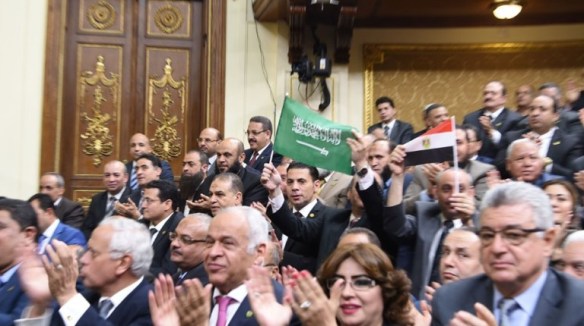
Salman-in-Paraliment-8

Photo via Daily News Egypt

Main Headlines

Monday

 Tuesday

Wednesday

Thursday

Friday

Saturday

Sunday

  • Roadside bomb kills Egyptian police officer in Cairo suburb of Maadi
  • Hamas: War with Israel is unlikely and relations with Egypt were improving
  • Spokesperson for the Egyptian presidency denies Egypt sponsored agreement between Hamas and Dahlan
  • Dostour Party member and lawyer Tarek Hussein was released on bail
  • An Egyptian court acquits 17 striking workers, criticizes absence of legislation regulating public sector workers’ strikes
  • Egypt blocks access to Turkey’s Hürriyet Daily News website
  • Government to decide on electricity price increase by end of June

Good Reports

  • Excerpts from Parliament’s landslide vote on Tiran and Sanafir. Rana Mamdouh
  • Egypt steps up efforts to extradite Brotherhood fugitives from UK. Ahmed Fouad

Twitter

https://twitter.com/basildabh/status/874969895603195904

https://twitter.com/Mokhtar_Awad/status/876540623574183937

Plus:

Egypt woman breaks into men-only Ramadan wakeup call job

Finally, here are Jayson Casper’s prayers for Egypt

Posted in Diary of Aak, Egypt | Tagged , , , , , , , | 1 Comment

The Week in Egypt: Week 23 ( June 5-11)

Top Headlines

  • Egypt will transfer sovereignty of two islands to Saudi Arabia, which had been blocked in court, following parliamentary approval
  • Arab powers, including Egypt, list 59 individuals as Qatar-linked terrorism supporters
  • Egypt authorizes Greece to sponsor Egyptians expats in Qatar
  • Egypt inflation eases for first time since currency float

Main Headlines

Monday

Tuesday

Wednesday

Thursday

Friday

Saturday

Sunday

Good Reports

  • Egypt’s role in the push to cut off Qatar. Ayah Aman
  • Qatar: A long-standing thorn in Egypt’s side. Gulf News
  • With eyes on Libya, France cements security ties with Egypt. Reuters- John Irish
  • Dilemma for Uber and Rival: Egypt’s demand for data on riders. Declan Walsh
  • HRW: Egypt should cancel military court death sentences

Good Read

From Twitter

https://twitter.com/spectatorindex/status/873881134068781056

https://twitter.com/DavidAWeinberg/status/873021423467589632

https://twitter.com/NouraAlKaabi/status/873163244885741568

https://twitter.com/worldpoliticsin/status/873171176264282112

https://twitter.com/gaza_report/status/873920677971193856

https://twitter.com/HosamDakhakhni/status/872512257464381442

Photo Essay

  • Families of the Christians who were killed by ISIS in Minya. Jonathan Rashad

Plus

Posted in Diary of Aak, Egypt | Tagged , , , , | 1 Comment

London Attacks: Five myths about Terrorism

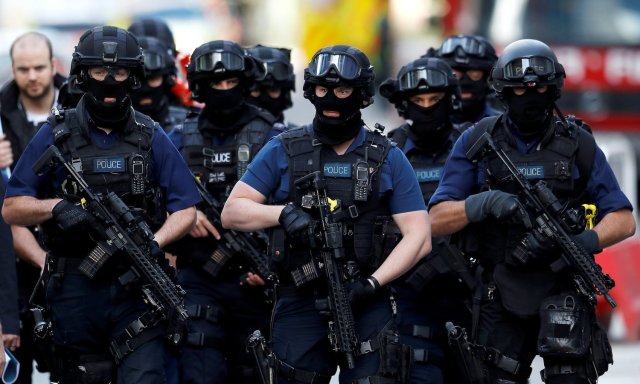
London terror Reuters.jpg

Photo via Reuters

Westminster, the Manchester Arena, and London Bridge ____ three terrorist attacks in three months in my adoptive country, Britain. Those gruesome crimes, however, have not changed the response to terror. Politicians, journalists, and commentators are still harping on the same bankrupt clichés that are used after every attack. A proliferation of flimsy myths has chronically dominated the debate about terrorism. Here are some of the stubborn ones:

Myth NO. 1

The Muslim “community”

A widespread distortion of the truth is the belief that Muslims are one community. Nothing could be further from the truth. Muslims are individuals living in Britain, and are not necessarily united under one ethnic or religious umbrella. The generalization of Muslims as one single entity has been compounded by the rise of social media and the ability of radicals to spread their poison away from mainstream Islamic institutions.

It is good to see groups such as the Muslim Council of Britain condemning the London attacks and appropriately describing them as an affront to the religion of Islam. Nonetheless, those groups are suffering from clear duplicity. They like to portray themselves as representatives of a mythical community, “Muslims,” that hardly exists. At the same time, they wash their hands of radicals as if they were outsiders, which is simply not true. It may be tough to acknowledge, but in reality, ISIS sympathizers exist in every brand, group, and nationality of Muslims.

Myth NO. 2

We are united against terror

Although the horror of terror unites humans in their condemnation of atrocities and their grief for the victims and their families, this unity has always been fragile and temporary. Within days, even hours of terror events such as those that have hit London in the past three months, differences, bickering, and exchanges of accusations and counter-accusations have emerged. Different explanations are given, blame is apportioned, and solutions are postulated by liberal Western leftists and the radical right. Within this war, the liberal left opts to defend not just ordinary Muslims, but even political Islamists. Unfortunately, the liberal elite prefers to avoid scrutinising Islamists on those controversial aspects, and tends rather to deflect the matter as political grievances against dictatorships in the Middle East. Our disunity is the most important reason behind our collective inability to stop terror.

Myth NO. 3

Terror is the result of Western foreign policies.

Only a few days after the Manchester attack, Labour leader Jeremy Corbyn blamed the UK’s foreign policy for terrorism at home. Nicola Sturgeon, the Scottish First Minister, has defended Jeremy Corbyn’s views. Although a survey conducted by YouGov has found that 53 per cent of people support that view, it is misguided and counter-productive. If injustices and grievances lead to terror attacks, then non-Muslim minorities in the Middle East would be the first to adopt terror. Thousands of minority Iraqi Yazidis were butchered and enslaved by the so-called Islamic State, yet there is no single Yazidi terrorist. Radical Islamists have attacked Copts in Egypt for decades, yet there is not a single Coptic terrorist inside or outside of Egypt. This argument infantilizes Muslims, portraying them as angry, irrational, easily seduced by radicalism; it also offers radicals a handy tool to lure more youth into their ranks.

Myth NO. 4

Political Islam is a peaceful ideology

While many non-Islamist Muslims live peacefully in Western countries, a subsection of Muslims has religiously built their political Islamist agenda on resentment of Western values such as freedom and equality and have advocated regressive values, exploiting the freedom of expression offered to them in the Western world.

Some Islamists are crafty and write polished posts about democracy, peace and unity. In reality, however, followers of political Islam deliberately conceal the controversial aspects of their ideology, specifically the common values they share with violent radicals. They prefer, instead, to vent that ugly side on Arabic posts on social media shared by their followers across the globe. Many of those posts glamorize violence, incite hatred against the West, and occasionally mourn violent radicals killed in Iraq or Syria.

Myth NO. 5

We cannot stop terror

The endless barrage of terror attacks in the past few years has created a fatalistic sense of resignation among many. Some now see terror as inevitable as cancer, electric shock, or car accidents. The London Bridge attack may support such an outlook, especially after it was revealed how knives and cars in the hands of criminal terrorists determined to kill, can lead to severe loss of life, disruption, and panic. This defeatist attitude may be comforting, but it is simply suicidal. It is like lying helplessly on railway tracks, waiting for an approaching high-speed train.

It is easy to distract the public by digging for the complex roots behind the original rise of radicalism in the Middle East, and how it spread to Britain. But that is a disingenuous approach, which will only make counter-terrorism an impossible task to achieve.

Groups that use the dynamism of politics to justify an ideology will always find reasons to generate grievances. Regressive barbarians hate the basic core of Western modernity and aim to destroy it, regardless of the moral or political rectitude of Western foreign policies. The terror attacks in Britain are an unfortunate outcome of complacent and divided politicians and an intellectual elite allowing political Islam to flourish in Western societies for decades.

Terrorism is not a mysterious disease, but a treatable malignancy. Dispelling myths is the first step towards eradicating this cancer and its devastating consequences.


.



Posted in Britain, Islam, Terrorism | Tagged , , , , , , , , , , | Leave a comment