Why do Islamists hate Valentine’s Day?

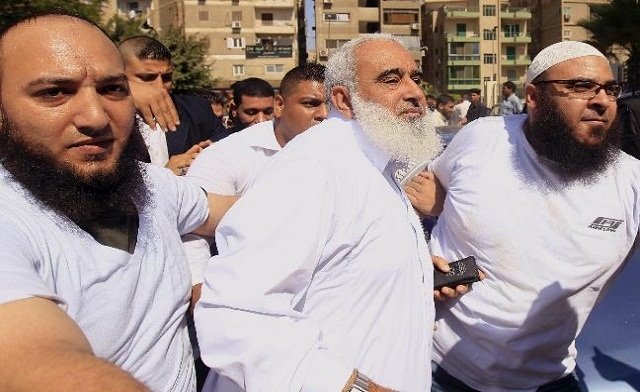
Abu Islam

(Photo of Egyptian Preacher Abu-Islam via Reuters)

Originally published in the Daily News Egypt

“Valentine’s Day represents for the Christians, a celebration of adultery and prostitution, and those who go out on this day are prostitutes.” That is how Abu Islam, a radical Egyptian preacher has described Valentine’s Day. He took the hatred that many radicals share for this day to brand it with a new label and link it to Christianity, a faith that Muslims acknowledge and respect.

It is easy to dismiss Abu Islam as a marginal extremist whom none should take seriously, but I think we should take a look closer at his case as it is a perfect example of the flaws and the dangers of literal Islamism.

I still remember the remarks made by the Egyptian thinker, Mustafa Mahmoud, about love and Islam. He noticed that love was only mentioned once in the Quran as part of the story of Joseph and the Pharaoh’s wife, who tried to seduce him.  Within that context, love had a negative connotation; it reflected lust, unlawful passion and adultery.

Mahmoud compared that story with the Quranic description of marriage, particularly verse 21 from Al-Rom Soura, as a relationship that is based on “mawada and rahma”.  Though rahma can be easily translated as “compassion”, many wrongly translate mawada as “love”. Well, simply put, it isn’t. The best way to describe mawada is “a semi-platonic subtler form of love that is more controlled and less passionate”.

Mahmoud was not alone in his analysis of the holy book of Islam. Many literalistic scholars have gone even further to advocate that love is not what Muslims should aspire to achieve within marriage but that “mawada” is the desired goal. They based their conclusion on the maqasid (goals) of Shari’a.

As I have written before, the fundamental goal of Shari’a is to preserve the five essential elements of Islamic society: religion, life, intellect, lineage, and property. Those scholars believe that protecting the intellect requires not just the banning of alcohol but also the banning of any emotional imbalance that prevents rational thinking. Therefore, love and passion, in their view, falls into that category. No wonder they despise Valentine’s Day and view it as a holiday advocating adultery and decadence.

The problem with literal Islamism is twofold. First, it involves an inappropriate interpretation of the Quran: they read too much into verses that simply tell a story and they extrapolate its narrative concepts into wider, often unrelated subjects. Second, such an interpretation creates an inaccurate diagnosis of social problems, as many of those scholars wrongly link sexual violence, rape, adultery and secret marriage to an “imported” Western phenomenon like Valentine’s Day, romantic movies and liberalism in general.

Abu Islam has gone even further; like many radicals with whom I have spoken in the past, it seems that he looks at the main Christian belief that “God is love” and makes an unfounded leap to link Christianity with Valentine’s Day. Of course, they spice things up with their stereotype of Western women as wanting to be exploited.

Their twisted views overlook the core issues behind the dysfunctional moral code that currently plagues Muslim societies, issues such as economic problems, corruption, bad education and a lack of role models are not what Abu Islam likes to reflect upon, he would rather play the easy game of blaming the West.

Not to mention, those radicals ignore the simple fact that nowhere in the Quran has God stated that passionate love is forbidden; it was only mentioned when those feelings developed into passion and caused the actors to get carried away in actions like affairs and adultery.  Only then did love become un-Islamic.

In other words, this teaching is about controlling the feelings rather than banning them. Also, their favourite prescriptions will not solve the problem but only compound it. Lust will not disappear when segregation is imposed; the children of literalism will become weak, insecure adults who may not be able to exercise self-control and may grab every opportunity to chase after their forbidden fantasies.

Banning romance is as impossible as banning breathing, and the Islamic republic of Iran is living proof. As reported by The Economist: “Despite the government’s best efforts, the romantic holiday [Valentine’s Day] has, in recent years, found a place in the hearts of many Iranians.”

However, it is not just Valentine’s Day; a visit to the tomb of the great poet Hafez in Shiraz, the poetic capital of Persia, was enough to prove to me that no one can ban emotions. There was something deeply touching, even inspiring, about the many Iranian couples who visited the tomb seeking blessing for a life of love and togetherness, according to Iranian traditions. For me, it was a magical scene, although it would probably elicit an angry shrug from many fundamental Islamists.

Romance was always alive in Egypt in an honourable way that preserved Islamic dignity and traditions. The best example of this is the legendary Om Kalthoum; she stood, even in her seventies, gracefully singing passionate love songs while a mixed crowd of women and men listened in awe. While she was respected by many religious scholars, others despised and bitterly attacked her.

One such detractor was Sheikh Kishk, who used to sarcastically denigrate and dismiss her as a silly old woman. Sadly, while Kishk was a minority in the 60s, the Muslim world is currently full of radicals who have fallen into the deep end with their obscene views.

For the record, I found Valentine’s Day to be a meaningless day that neither reflects nor advocates true love. Nonetheless, I see banning it as an even sillier, futile exercise that only reflects the shallowness of those who advocate it. Romance has lost its way in our country because we have lost our comfort zone and were pushed to the edge of insanity by the chronic decline of our society.

The court order against Abu Islam was a perfect decision, but it will not make his views disappear. Unless we regain our empathy, rationalism and values as true Muslims who practice religion with an equal balance of faith and rituals, body and soul, and materialism and feeling, the like of Abu Islam would be irrelevant. And, yes, it is true, God is love, just ask Rumi.
Posted in Egypt, Islam | Tagged , , , | 8 Comments

Egyptian Aak: Week 7

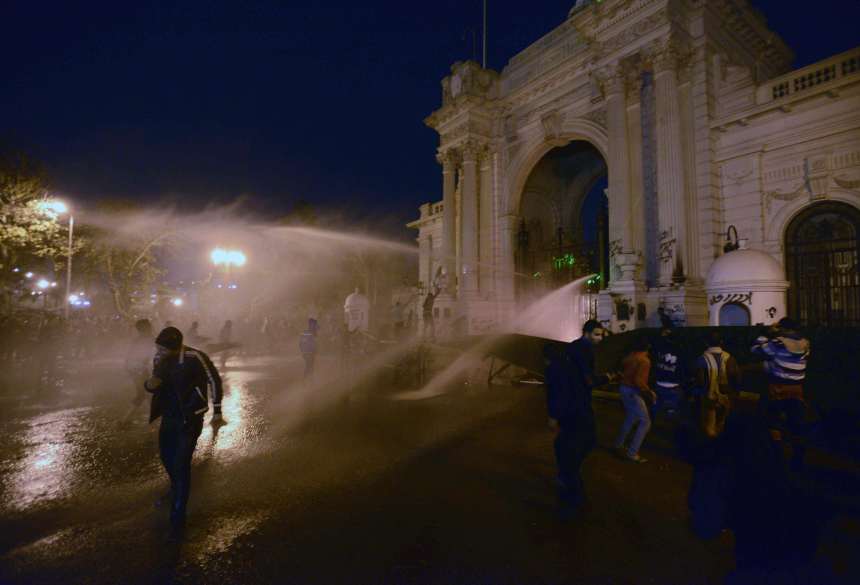
EGYPT-POLITICS-DEMO

(Cairo, Qubba Palace clashes by AFP’s Mohamed El Shahed and DNE’s Ahmed AlMalky)

Main Headlines

Monday

 Tuesday

Wednesday

Thursday

Friday

 Saturday

 A  Few Thoughts

Defiant Brotherhood:

In an interview with CNN, opposition figure El Baradei said, “I don’t want Morsi to step down.” El Baradei added, “ he [Morsi] can reform himself.”

While El Baradei urges Morsi to “reform,” The front page of Freedom & Justice Party paper on the February 11 summarizes the Muslim Brotherhood’s mindset: “2 years after Mubarak stepped down,the counter revolution fails.” In other words, “We are here to stay.”

In addition to the ongoing Brotherhoodization of Egypt, President Morsi and the Muslim Brotherhood wanted to send a strong message that they  were not willing to compromise. Support from Prime Minister Qandil and the current government and Friday’s rally “against violence” are part of this strategy. Although the Brotherhood announced only a symbolic support for the rally, a prominent member of the Brotherhood Al-Beltagy spoke at the rally. The aim of this rally was not just to blame the opposition, but Islamists also wanted to create a perception of “perfect protests” that are well organized, peaceful, and thug free.

 This perception is fundamentally flawed; Islamist rallies are non-violent because they are member-only rallies. Each participant is expected to conform to a desired code of conduct (which is currently non-violent). Non-members are welcome to join only if they adhere to the same code; otherwise, “informal thugs” within the organized group will deal with them promptly. Opposition rallies by nature are completely different, as they focus on enticing all of the non-Morsi protestors to join in; many are angry, unemployed youth with simmering grievance, exactly as Islamists youth were during the Mubarak era. In short, the Islamist rally mainly aims to show off, while the opposition rally tries to force a change.

 The problem for the opposition is not just that their rallies have become synonymous with violent confrontation, but also the dwindling numbers of participants and the changing dynamics among the various groups that participate. Both Monday’s demonstration on the anniversary of the overthrowing of Mubarak and Friday’s protest at Qubba palace were marked by minimal participation, and I also find Wael Eskander’s account about the Ultras very disturbing. Whether they like it or not, the stigma of violence and unpopularity has started to catch the opposition, and it will be difficult to shake it up. They have fallen into the Brotherhood’s trap, and ordinary Egyptians will think twice before joining a violent protest.

The future of protest

It’s time for the opposition to give protest a tactical rest – it is overused and, frankly, pointless. Instead, it should focus on forging a wider alliance against the Brotherhood, even if that includes agreement with Salafi parties, like Nour, whose members are no longer willing to give Morsi an easy ride. The political outcome of this is by far more substantive than what protests can achieve at this stage of the struggle. As Ibrahim El-Houdaiby aptly explain: “opposition forces should focus on what they would do if the Brotherhood didn’t exist, to present an alternative the people can believe in.” I think we should not be over optimistic about today’s meeting between the Brotherhood’s Katatni and ElBaradei. I doubt that one meeting will bridge the wide gap between the two sides. If anything, this meetings indicates that the brotherhood leadership is worried by the ongoing deliberations between Nour party and the non-Islamist opposition.

A question of narrative?

I read several interesting remarks this week about Egypt, one of which was made by Marc Lynch. In his piece about Egypt’s policy challenge, he described (within a different context), a “liberal narrative.” Aside from my pedantic insistence that the opposition bodies in Egypt are non-Islamists rather than liberals, I genuinely think the problem is not in the narratives, but in core definitions. Islamists and non-Islamists disagree on what is black and what is white; no wonder consensus is a mirage. The struggle is confrontational in nature until one side scores a clear winner.

 Economy

The main serious obstacle Morsi and the Brotherhood face is the economy and its steady decline. What remains to be seen is how they will solve the economic conundrum ahead of a parliamentary election that they aim to win in an outright majority. The government’s plan B look very unconvincing. The U.S. Ambassador Patterson highlighted many of Egypt’s Complex issues, she rightly pointed out that Egypt needs to make peace with its past. judging with how our politicians and “scholars” behave, and bearing in mind that there are very few pigs in Egypt, I think it is fair to say “when camels fly.”

Good Read

Finally, here is Jayson Casper’s prayer for Egypt

Posted in Diary of Aak, Egypt | Tagged , , , | 2 Comments

Egypt and Iran—odd bedfellows?

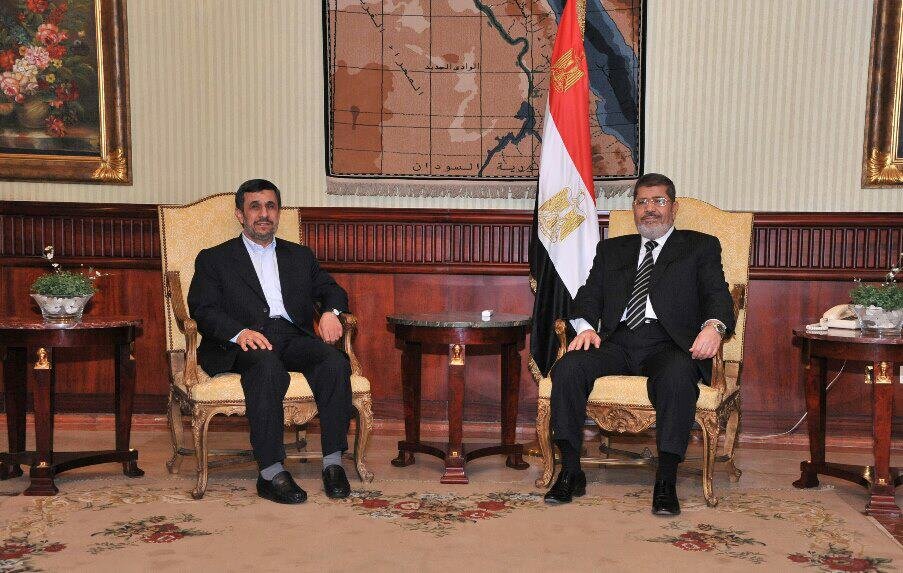
Ahmadinejad in Cairo(Photo: Ahmadinejad and Mohamed Morsi- via Twitter @PoliticallyAff)

This piece is published in the Daily News Egypt

The extraordinary and well-organised funeral procession of the deposed Iranian Shah in 1980 marked the first state funeral to be held in Old Cairo in modern Egypt’s history.

The Egyptian president Anwar Sadat had done his best to give the Shah a dignified burial. Sadat had chosen the beautiful Rifa’i Mosque, where the Shah could be buried next to his ex-brother-in-law, the late Egyptian King, Farouk.

Sadat’s decision to receive the ill Shah had not been a political move; it had been prompted (rightly or wrongly) by his sense of religious duty. He had felt the need to highlight a different side of Islam that promotes compassion and mercy—the two qualities Muslims recite in their prayers five times a day. These qualities stood in sharp contrast to the revenge and vengeance Iran had pledged in the 1979 revolution.

But not everyone in Egypt shared Sadat’s vision; many Islamists who despised Sadat for his peace treaty with Israel and his warm relationship with the US did not view the Shah’s funeral through the prism of compassion.

For them, the Iranian Islamic Revolution was an inspiring event, a template with which they could work to fulfill their dream of an Islamic state, a dream that, at the time, overrode the sectarian divide between the Shi’a Iranian regime and the Sunni Egyptian Islamists. The two Islamist factions shared a deep sense of disgust toward Sadat, and viewed him as a traitor who had sold his soul to the “Zionists”.

Today, 33 years later, the current president of Egypt, Mohamed Morsi, has received the Iranian president, Mahmoud Ahmadinejad. The leaders hugged and kissed at the airport and expressed a desire to open a new chapter in the relationship between the two countries. To continue reading click here

Posted in Egypt, Iran | Tagged , , , | Leave a comment

Egyptian Aak: Week 6

Egyptian women

(Anti-sexual harassment march in Cairo 6th of February. Twitter via @_amroali)

Main Headlines 

Monday

Tuesday

Wednesday

Thursday

Friday

Saturday

A Few Thoughts

The most appropriate descriptor for the current state of affairs in Egypt is delirium; a severe confusion that develops quickly and often fluctuates in intensity. Once confusion prevails, rationality disappears, and a trail of misguided decisions and behaviors dominate the public sphere. Events of week 6 on various fronts fit in with this confused scene.

Foreign Policy:

Perhaps Ahmadinejad’s visit to Cairo will be written in history books as the most strategic blunder in the joint history of Egypt and Iran. A statement on the official Twitter account of the Muslim Brotherhood read the following: “We value President Morsi’s efforts to restore Egypt’s regional role through balanced diplomacy based on mutual respect.”  The two attacks against Ahmadinejad in Cairo and the scolding he endured by the Grand Sheik of Al-Azhar indicates that neither balance nor respect has been achieved, not to mention the failure to secure any progress on the Syrian front.

 Police and Security:

Although in a dictatorship, the society suffers from police brutality, torture, and humiliation, but at least dictators maintain law and order and provide some sort of functionality and security to the state. Currently, Egypt is in a lose-lose situation in which police brutality is rife and is coupled with chaos and lack of security. Organized, horrific violent attacks on women is one of the manifestations of this tragic and alarming deterioration of security that is also infused with the misogynic, pathological thinking  from the clerics of hatred and backwardness.

Judiciary:

In Pakistani style, the administrative court was ordered to ban access to YouTube for 30 days in Egypt. This is a clear example of a politically motivated verdict that will serve nothing; it is aimed to bully and initiate fear, but will certainly fail to prevent further insults to the prophet or make non-Muslims respect Islam more. Ironically, the leadership of the Brotherhood has done nothing so far to stop the endless fatwas that incite and legalize murder in the name of Islam.

A unique Prime Minister:

One can only imagine how Egypt’s previous prominent prime ministers, including Saad Zaghloul and Nahaas, would react if they heard Qandil’s remarks about unclean breasts and diarrhea. They would undoubtedly shudder in disgust, like many Egyptian citizens who were furious by their prime minister’s reckless, ignorant, and snobbish remarks.

Meanwhile, the economy continues along its steady decline, without any indications of comprehensive future solutions.

So What’s Next?

One of the most alarming factors experienced in Egypt now is how many are hoping that the army will “do something”; I find this deeply disturbing. The army alone will not be able to save the country from chaos without a political solution. Yes, it can secure vital institutions of the state, but the army cannot play the role of the police, and it is not designed to deal with long-term anarchy and chaos.

It a big topic that I hope to discuss in upcoming pieces.

Good Read

Finally, here is Jayson Casper’s prayer for Egypt

Posted in Diary of Aak, Egypt, Iran | Tagged , , , , , , , | 1 Comment

Egyptian Aak: Week 5

Police BrutalityA photo of police brutality in Egypt tweeted by Rana Allam, editor of Daily News Egypt @Run_Rana

Week 5

Main Headlines:

Monday

Tuesday

Wednesday

Thursday

Friday

 Saturday

A Few Thoughts:

State Prestige:

 One of the most amusing slogans that were circulated by the Muslim Brotherhood’s supporters is “state prestige.” The defiance against the emergency law in the canal region and the battle scenes in front of the presidential palace are indications that, currently, Egypt is neither a functional state nor has any prestige. This tired statement is as empty as the minds of those who repeat it day and night, and it has failed drastically to stop the spiral of violence.

 Police brutality?

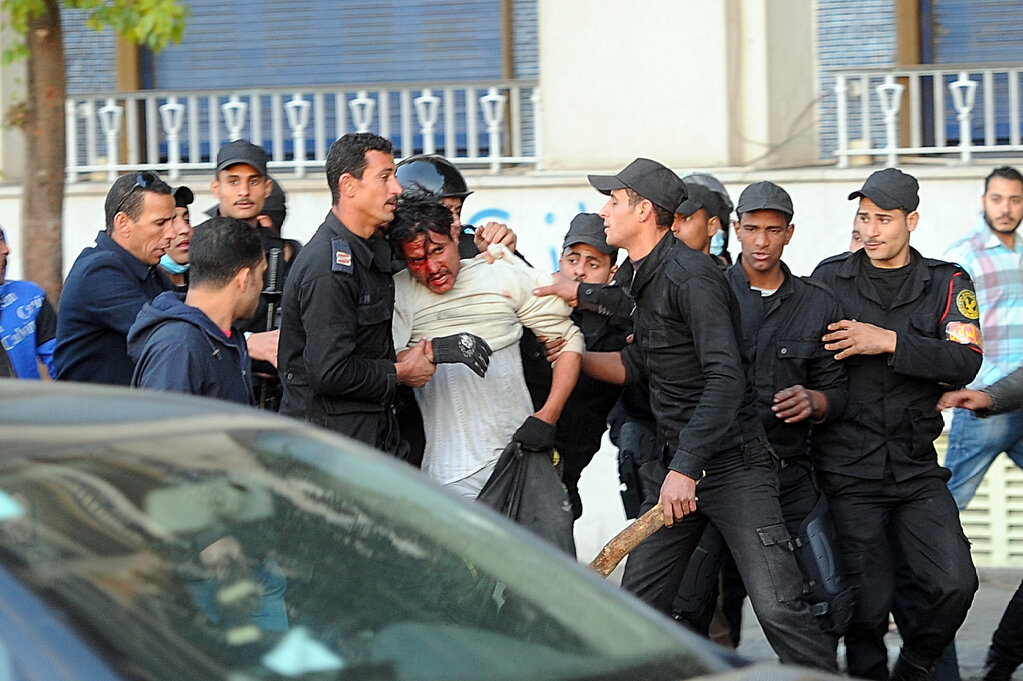
 Less than 24 hours after millions watched central security officers beating and dragging him naked in the anti-Morsi protest, victim Hamada Saber, in police custody without lawyers, told prosecutors on Saturday that protesters, not security forces, initiated the assault against him.

I listened to Hamada’s testimony closely; his interview in the police hospital sound bizarre, illogical, and reminiscent of similar interviews conducted in the past in many authoritarian Arab states: “The protesters fired a bullet at me and robbed me. When I saw the CSF soldiers coming at the crowd, I was scared and I ran. The soldiers chased after me, yelling that they wanted to help me. When I fell, they caught me and said, ‘You gave us a hard time, man.’” In another twist, his daughter claimed that both her father and mother were threatened by the police.

 On her Twitter account, Journalist Bel Trew wrote, “No way that man was not beaten and dragged. I saw it.” She also wrote on her FB page, “During the last week in Egypt, I’ve personally witnessed a girl violently mobbed, stripped and sexual assaulted, a bystander gunned down close range by police with birdshot, a prisoner stripped, dragged and brutally beaten and 1000s badly tear-gassed.”

 Hamada’s case is another ugly reminder that no one has changed; the police haven’t changed, the leadership hasn’t changed, and many ordinary Egyptians haven’t changed. We will never know what really happened to Hamada, even if he later appeared on TV to tell a different story. Egypt is now a country in which truth is as elusive as its newly born democracy. Hamada is a symbol of what went wrong; in other words, we as a society haven’t changed. I don’t blame him as some do − he is not a celebrity that citizens and foreign embassies will rush to save. He is just a human being who thinks humiliation is his only method of survival.

 Fair Media?

 On his Twitter account, Marc Lynch commented on the appointment of Abdel Moneim Said as the new chairman of Al-Masry Al-Youm. “What a statement on evolution.”  He is right; we are not evolving. We run through one cycle and intentionally − or un-intentionally − refuse to break it and progress in a linear pass. I respect Said, but Egypt needs an independent news outlet that is non-partisan and not dedicated to be for or against the ruling party, an essential step to regain balance in a society that is dangerously close to the edge.

 Solutions?

 Many have rightly pointed out that, in my last two pieces, I did not offer solutions to the current crisis. They are right; I did not, mainly because I doubt that solutions are what Egypt needs. Egypt must first change its attitudes of vengeance, anger, paranoia, denial before any solutions can take hold. Case in point: The way that the Ahly fans celebrated the Port Said case verdict indicates, in my opinion, a lust for vengeance rather than justice. It seems to me that they wanted to see death in response to death, regardless of whether the 21 defendants are the true culprits or not. Frankly, I think tricky court cases and political tension are an explosive mix. The country can live with one, but not both.

 Egypt needs to break free from its current endless cycle of bickering to reach a more linear progression toward true democracy. Our old attitudes will not change unless our leaders adopt it first. The meeting between head of the Nour party and opposition was a step in the right direction. If the left and right can find common ground, it can pave the way toward breaking the dead lock. Sadly, many did not appreciate this gesture, which indicates shortsightedness, in my opinion.

Good Read

Finally, here is Jayson Casper’s  prayers for Egypt

Posted in Diary of Aak, Egypt | Tagged , , , , , | 1 Comment

Egypt: A Twilight Without A New Dawn

Port said protestEgyptian protesters demonstrate in Port Said, where some people are calling for the city to secede. (Mohammed Abed / AFP/Getty Images / LA times/ February 1, 2013)

Egypt has always been portrayed in folk history as a woman with eternal youth, defiant and graceful. But the state that has been proud of its iconic past is currently crumbling at a surprisingly fast pace, and no one seems to be able to stop it.

The chaotic scenes witnessed in Egypt at the presidential palace on Friday, with rioters attacking the symbol of the state with such ferocity, are unprecedented in our history. These are the result of three factors: the broken barrier of fear from a leaderless revolution, the lack of responsible leadership, and the lack of political stability in light of the current deadlock.

In the past, I have witnessed several curfews enforced in Cairo; the declaration alone was enough to send people home. This is no longer the case. People have defied the curfew in the canal region and are consistently defying the police in Cairo. The state has lost its monopoly over the use of “legitimate” violence. Many youth believe they too have the right to use violence to express their grief, resentment, and deep sense of injustice. These youth have more than enough reason to be angry; they have no voice in any political party, yet both the ruling Islamists are expected them to discipline just for the sake of the “state prestige.”

A succession of misguided statements from the ruling party, the Muslim Brotherhood, has not helped the situation. The ruling party insists on labeling these youth as “paid thugs” by organized groups with a possible Israeli connection, which reflects only their thinking process, not necessarily the facts on the ground. Thus far, the Brotherhood has failed to link anyone with any foreign plot.

Yes, Egypt faces thugs, a legacy of chronic state of poverty, and successive political elites who pay criminals to ruin their opponents’ election campaigns. However, it is crucial to differentiate between the paid thugs and the angry youth who are legions, angry young men, and grade school dropouts. Recruitment of those kids doesn’t take massive, sophisticated organization; small groups are enough to produce chaos with minimum skills.

It is important to state that I do not, and neither should anyone else, condone these actions. Any act of violence from any side is unacceptable. Nonetheless, if we really want to stop it, we have to understand the roots and the cause of such a scene. Pointing fingers at opposing parties or forming an Israeli plot are cheap ways to score political points, but they will solve nothing.

I doubt that the Muslim Brotherhood would label as thugs those who tried to climb the presidential palace wall, if Mubarak were still in power; in fact, they would probably describe them as the heroes of the revolution. Sadly, this double standard is what has led to the current crisis. Violence has been a recurring theme during the last two years, and the Muslim Brotherhood turned a blind eye when the violence was aimed at the ruling military council, and it never used clichés such as “State’s prestige” at that time.

The rise of the angry youth is new game changer in Egypt’s already-murky political stage. It has cast doubt on the potential success of any political deal between the ruling brotherhood and the opposition. The leaderless revolution that many considered a blessing could easily become the leaderless chaos that no one can afford.

Egypt is currently a dysfunctional state that is edging toward failure. It is facing the biggest test of its contemporary history, as its elite is losing legitimacy and ability to control. The bridge between weakness and complete failure may take a while, but in a heavily populated country like Egypt, full of unlicensed weapons, a fast decline can easily happen.

It’s time for Egypt ruling Islamists and opposition forces to swallow some humble pie, admit mistakes, and stop treating fire with fire, otherwise the lava from the current volcanic eruption will burn what is left of our country.

Posted in Egypt | Tagged , , , , , | 6 Comments

Will Egypt Reach a Consensus?

This piece initially published in Al-Monitor

There was something almost ecstatic about Egypt during its uprising against Mubarak. A nation that was once dismissed as old and submissive had risen up against its dictator and managed to do it in style. It was a perfect political tale, and it’s no wonder that hopeful descriptives like “spring” and “awakening” flooded the media. Two years later, however, the scene in Egypt could not be more different from that ebullient time. The forces that were once united against Mubarak have turned out to be a coalition of enemies that has disintegrated. Instead, they are now fighting a dirty war to dominate the political scene.

Egypt’s current political chaos has to be seen within the perspective of its contemporary history. Despite its different phases and themes, there was one prevailing conception that was consistently shared by the country through each successive leadership regime. All Egyptian rulers, from Muhammad Ali to current President Mohammed Morsi, have perceived local Egyptians as falling into three subgroups: the loyal, the opponents and the “ignorant.” The apolitical general public (generally known as the Kanaba Party) has always been viewed as ignorant of its own best interests.

Amr Ibn Al-As, the Arab conqueror of Egypt, allegedly described Egyptians by saying, “Their loyalties are always to the winner.” His statement has lingered in the minds of each of Egypt’s leaders. This belief translated into a political game composed of a mixture of submission and seduction. The leaders of Egypt learned to start their tenure by enforcing loyalties, crushing opponents and seducing the public before embarking on any real governance. To continue reading click here

Posted in Egypt | Tagged , , , , | 1 Comment

Egyptian Aak: Week 4

Aak photo

The picture  by Al-Masry Al-Youm truly reflect Egypt’s surreal reality. Twitter via @tomgara

Main Headlines:

Monday

Tuesday

Wednesday 

Thursday

Friday

Saturday

A Few Thoughts: 

Week 4 of 2013 has seen enough events to fill a book. 36 dead in response to 21 death sentences over football riot that killed 76, in addition to 4 died in Suez yesterday. The flaws of post-revolution Egypt has come back to haunt the country in a big way.  Words like stability, renaissance, and legitimacy have been reduced to a meaningless clichés that mock their original meaning. One can easily write volumes on what went wrong and why we are struggling at this critical juncture of our history, but for the sake of brevity, my opinion will be limited to four events that in my opinion summarize the current surreal scene: A court verdict and a presidential trip to Ethiopia that was scheduled one day after the anniversary of the revolution, a ruling party that decided to celebrate by selling cheap clothes and vegetables, a president who sent his condolences to his people with 40% illiteracy through Twitter, and a sentence sending 21 young Egyptians to their death. These events indicate that we have a leadership that can neither think ahead nor demonstrate willingness to act decisively when crisis looms.

However, the opposition are not saints; they share a huge share of the blame. They are fully aware of the problem and the violence that became a prevailing theme in most demonstrations these days, yet they offer no clear plan or alternative. They desire to show their strength, overriding their critical thinking abilities. In fact, I think they partly considered violence as desirable in order to expose the weakness of the government.

In Egypt, proactivity is an alien concept that has been neither used nor appreciated. We love our knee-jerk reaction, as if we want to negate thousands of years of frustration as a result of oppression and submission. Violence became addictive, an easy way to prove our relevance and satisfy our egos through our angry youth.

Yes, our youth are angry. They are the kids we didn’t raise, the students we never teach, and the citizens we like to abuse to reach power.

Now many are talking about the possibility of Egypt becoming a failed state; with a bad economy, a fractured political scene, and weak leadership, this is not an unrealistic possibility. Currently, both the brotherhood and the opposition are pointing fingers at each other, pathetically exposing the immaturity of both.

I have one message to both groups: Grow up. To the Brotherhood I say, either lead or leave, and to the opposition I suggest you either come up with a realistic plan (not just abstract, academic suggestions), or simply (with all due respect) shut up.

 As for the rest of us Egyptians and for the specific events of the revolution anniversary and the Port Said verdict, I will try to write a piece in due course, hopefully when I have calmed down, as frankly the events we currently face are too overwhelming to describe.

I also leave you with this Friday prayer for Egypt by Jayson Casper.

Good Read 

Posted in Diary of Aak, Egypt | Tagged , , , , , | 5 Comments

A Surreal Anniversary: Photo Essay

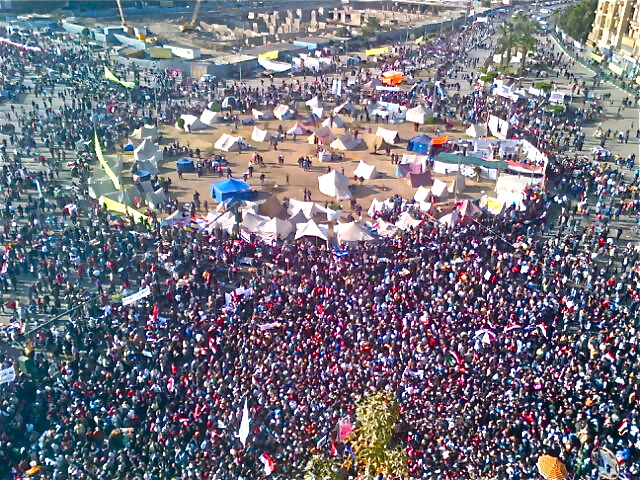
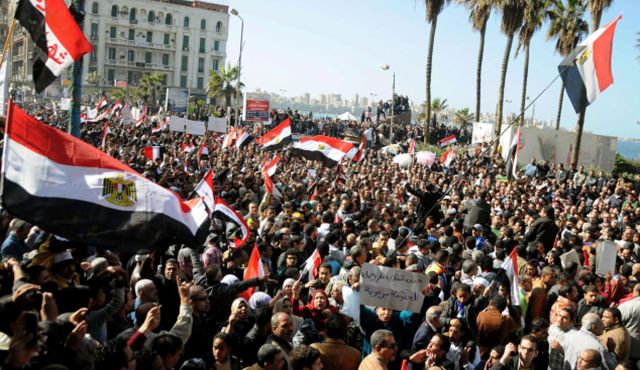
This is a collection of photos from Egypt, from  various sources, as the country mark the second anniversary of its revolution.  To me, it was a surreal, poignant, and sad event. These photos powerfully reflects what is good and also what is badly wrong about Egypt now.


Tahrir early FridayTahrir. Twitter via @Beltrew
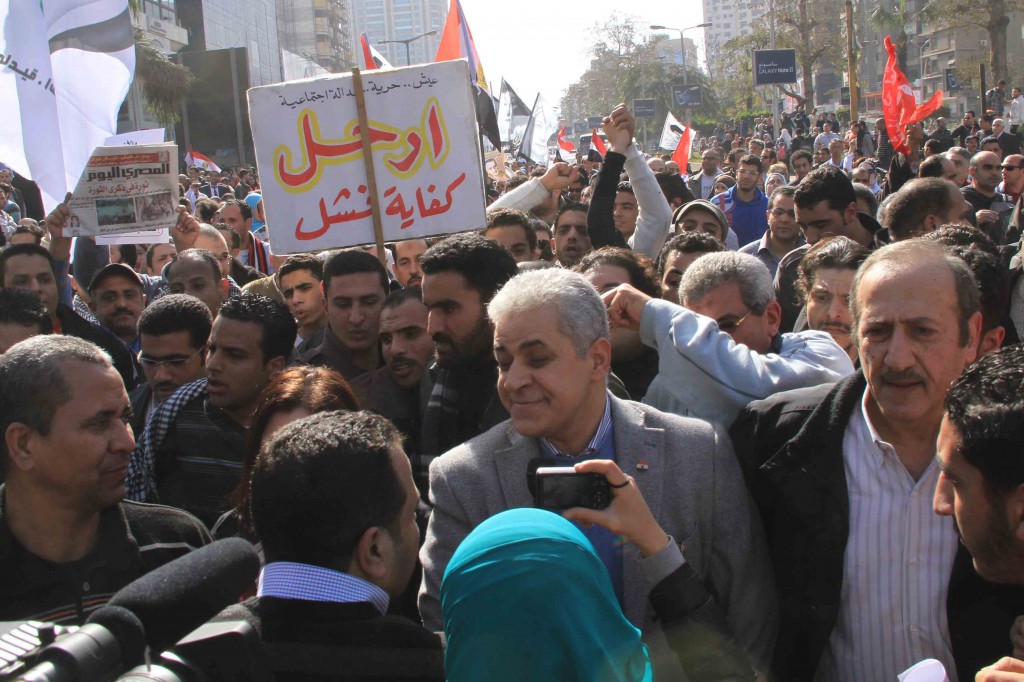
Sabahi

Egyptian opposition leader Sabbahi ( Daily News Egypt)

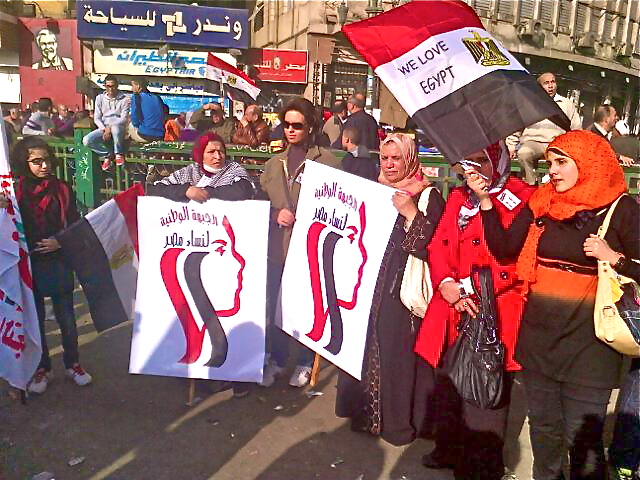
National  Front of Egypt women National Front of Egypt’s women. Twitter via @ Beltrew

Tahrir again1

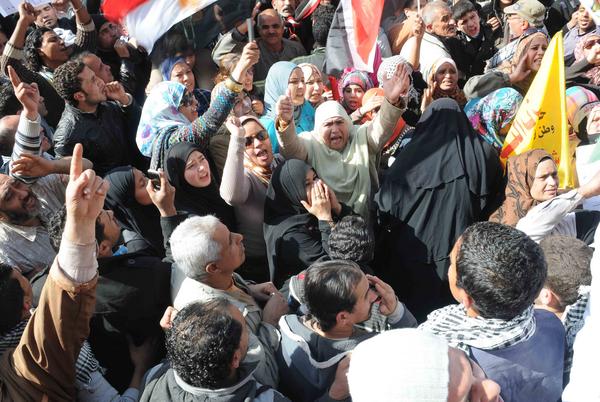
Women with Hijab and niqb protesting in Tahrir. Twitter

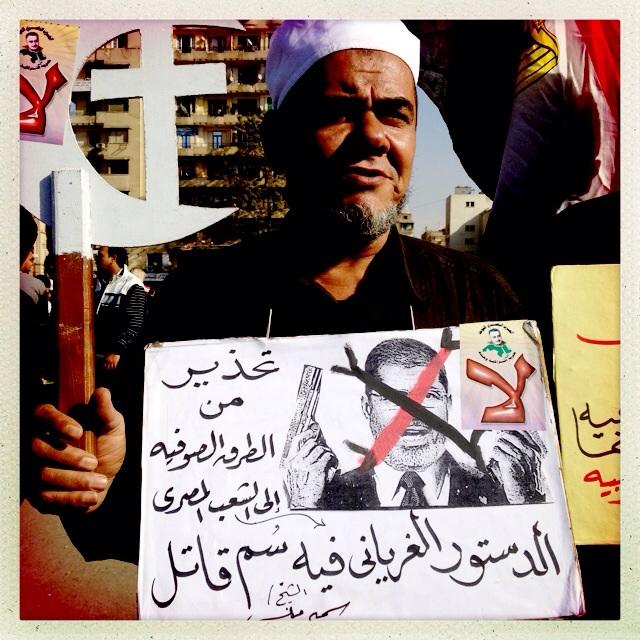
Sufi socialistSheikh Samir Mansi, a Sufi- socialist who thinks the consititution is poison. He bears the crescent and the cross. Twitter via @erincunningham

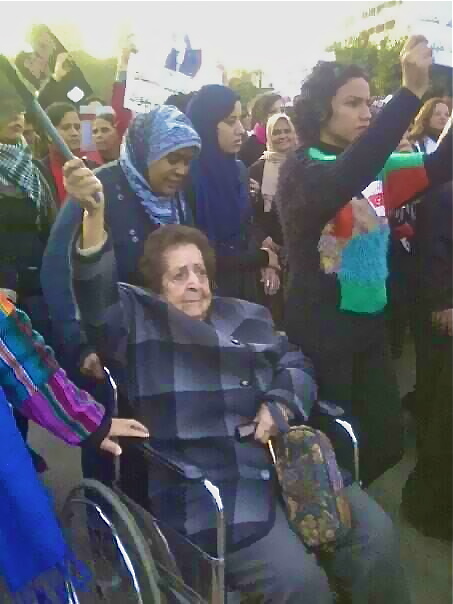
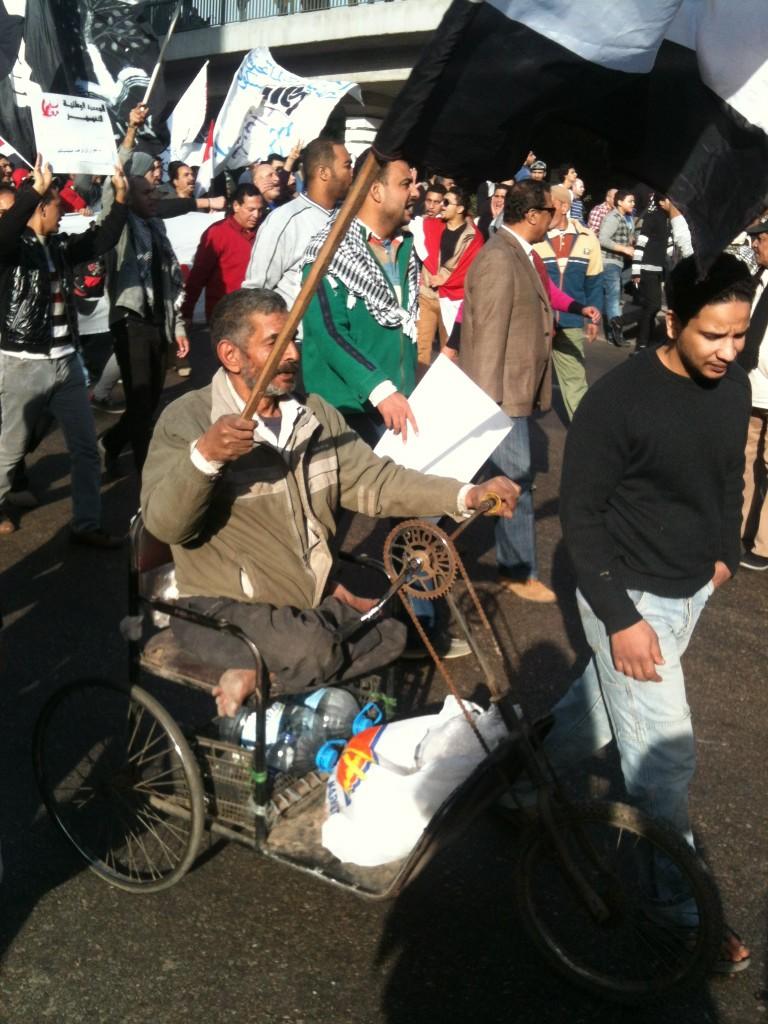
wheelchair A disabled Egyptian joins the march. Twitter via @Egyptocracy

Who rule EgyptProtestor hold a sign” who rule Egypt? Morsi, Supreme Guide, or Obama?” Twitter via @betsey_heil

US tahrir

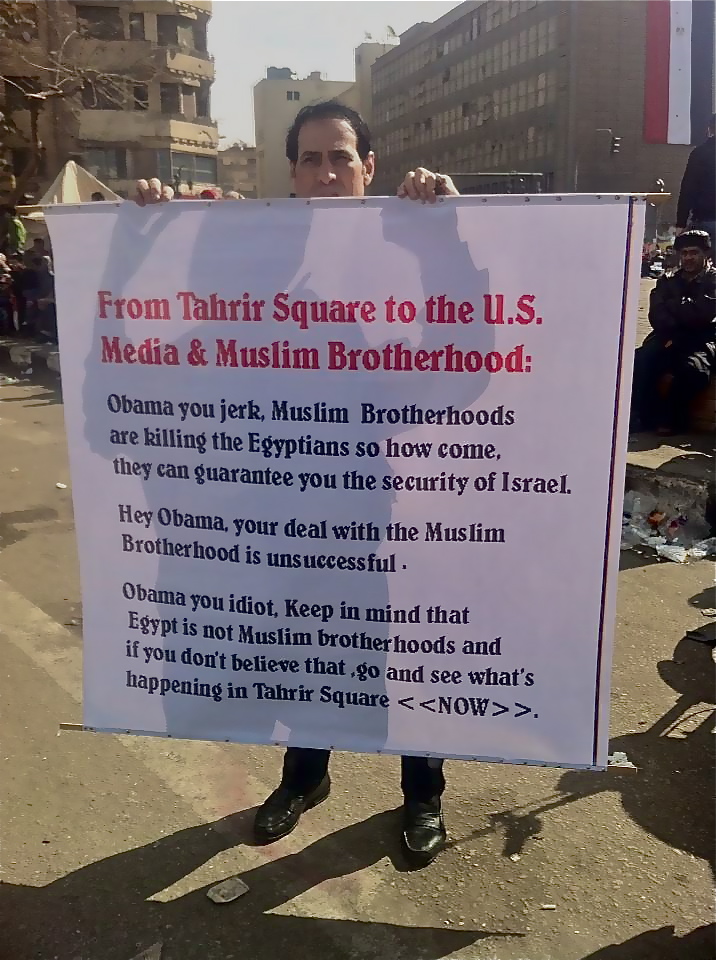
A man holding a sign asking for the U.S. to stop supporting Morsi.Twiter via @betsey_heil

Qasr-El-Aini-3

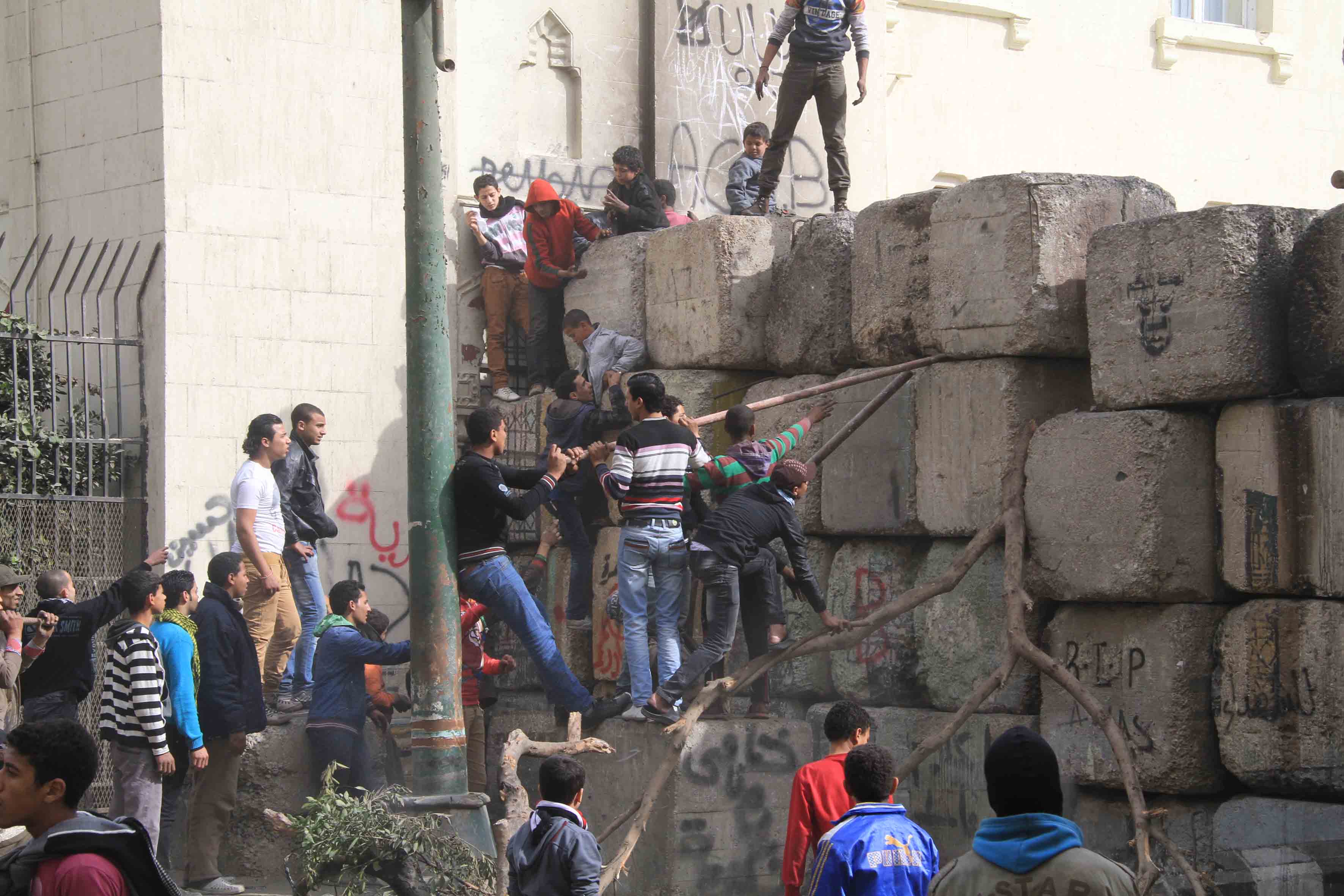
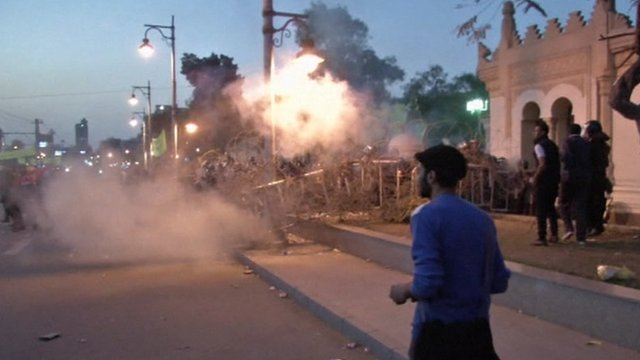
Protestors attempting to tear down the security wall in Cairo. Daily News Egypt

Alexandria 3

Demonstration in Alexandria. AFP

Arish

Demonstration in Arish. Daily news Egypt

 Tahrir Reuters

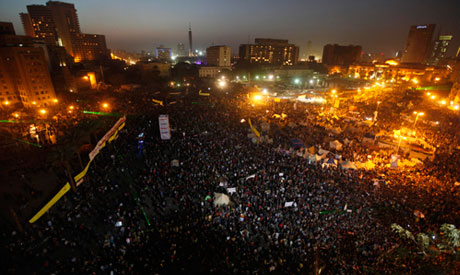
Tahrir by evening by Reuters

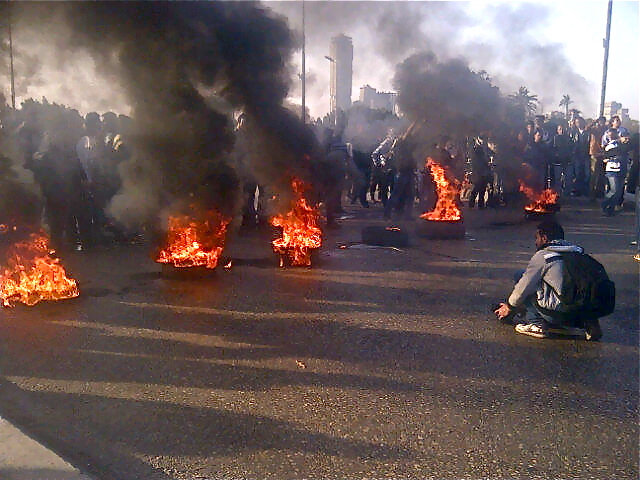
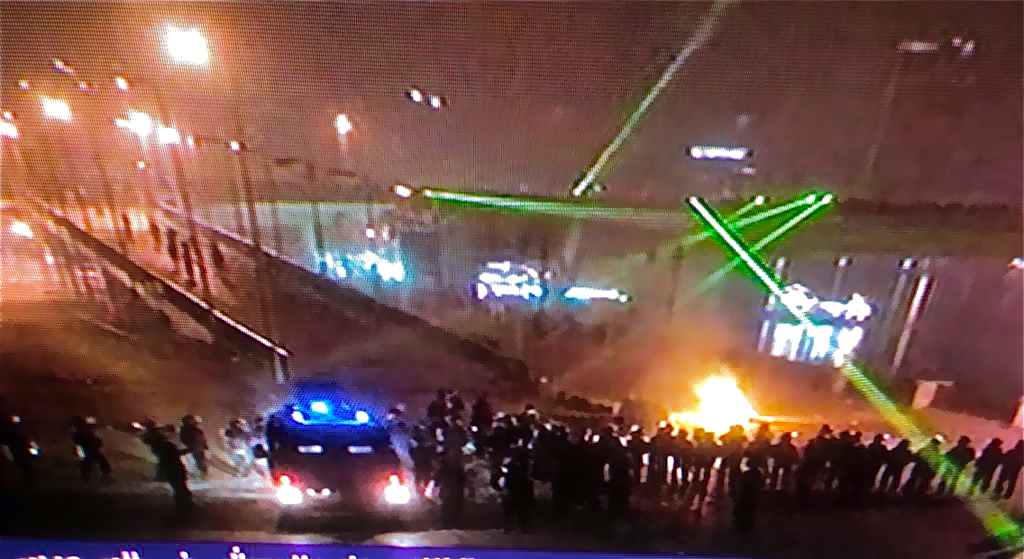
6th of October Burning tyres on the 6th of October bridge to block it. Twitter via @RanaMuhTaha

security forces

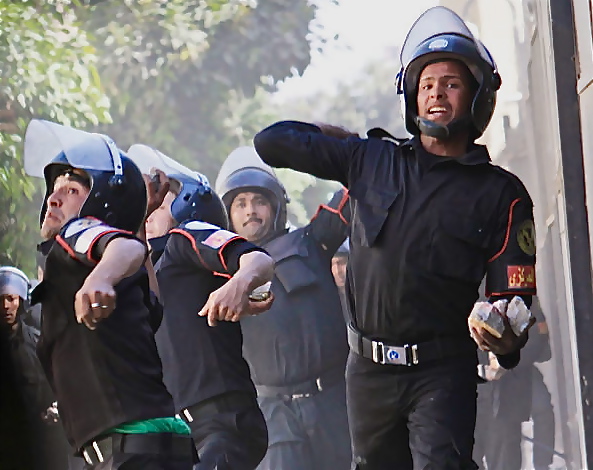
Not just protestors throwing rocks, security forces are also throwing rocks.

Twitter via @dark_back


Metro station Bel Trew

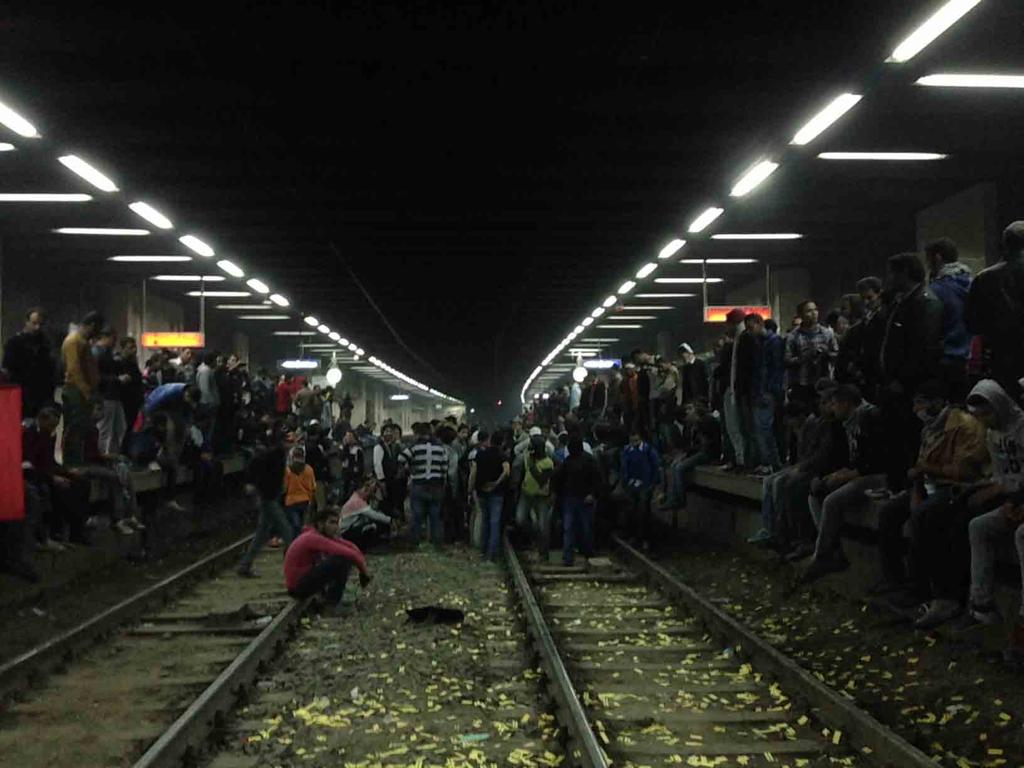
Underground metro station blocked by protestors. Twitter via @Beltrew
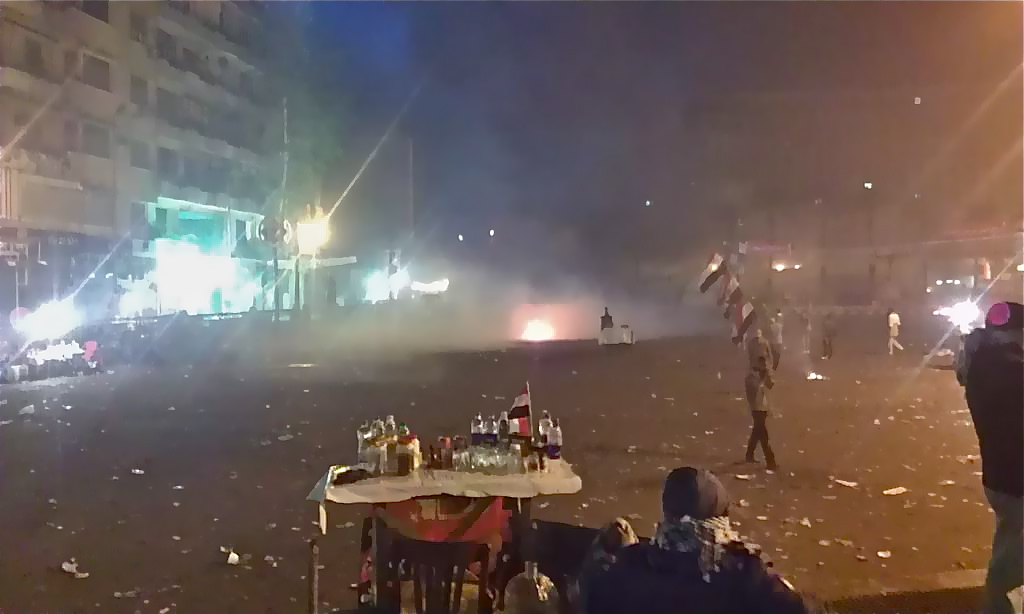
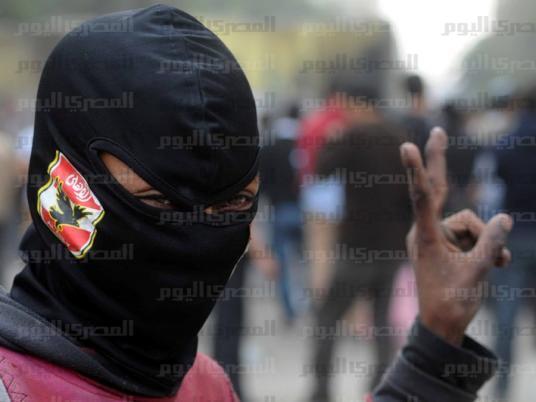
Black RockA masked protestor. Egypt Independent

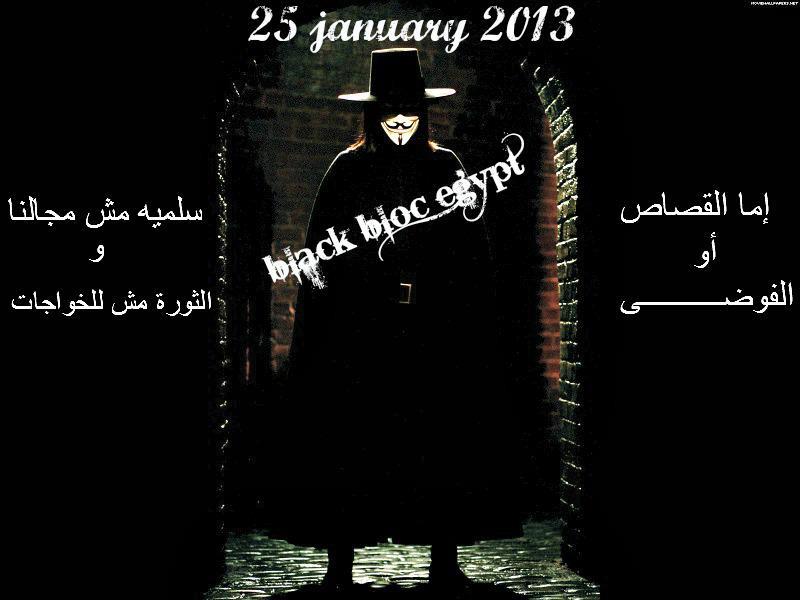
Black BlockBlack Block Face book page

(A group of protestors clothed in black and wearing face masks)

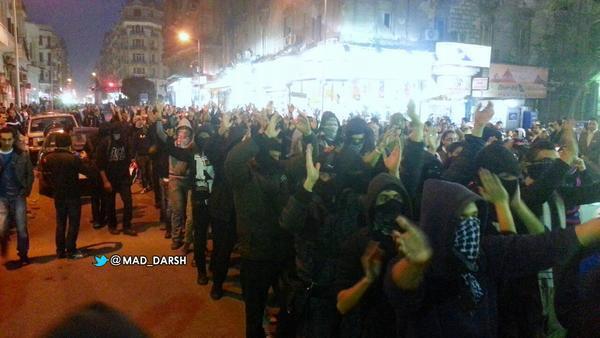
Black Block

Black block Marching in Tahrir from late night 24th January . Twitter via @Mad_Darsh

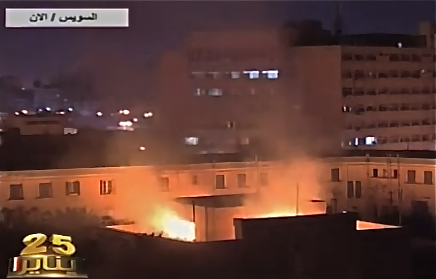
suez2Suez, 8 death confirmed so far. BBC News

Tear gas

 Tear gas in Tahrir  via @Kandily

masperoSecurity forces block road to state TV building. Cairo. al-Arabyia TV

Posted in Egypt, Photo Essay | Tagged , , , , , | 1 Comment

Mali, a victim of a toxic mix

Mali image(Photo, the Atlantic)

Initially published in the Daily News Egypt.

The history of Mali is heartbreaking to read. The land that had once been a prosperous empire and one of Africa’s most stable democracies has fallen victim to locusts, hunger, and rebellion.

The year 2012 was a turning point in the history of this unfortunate nation; a military coup in March 2012 has led to the fall of the nation’s democratically elected government at the hands of a group of disgruntled junior soldiers. This event ultimately destroyed the military’s command-and-control structure and created a void of power that was filled by rebel groups.

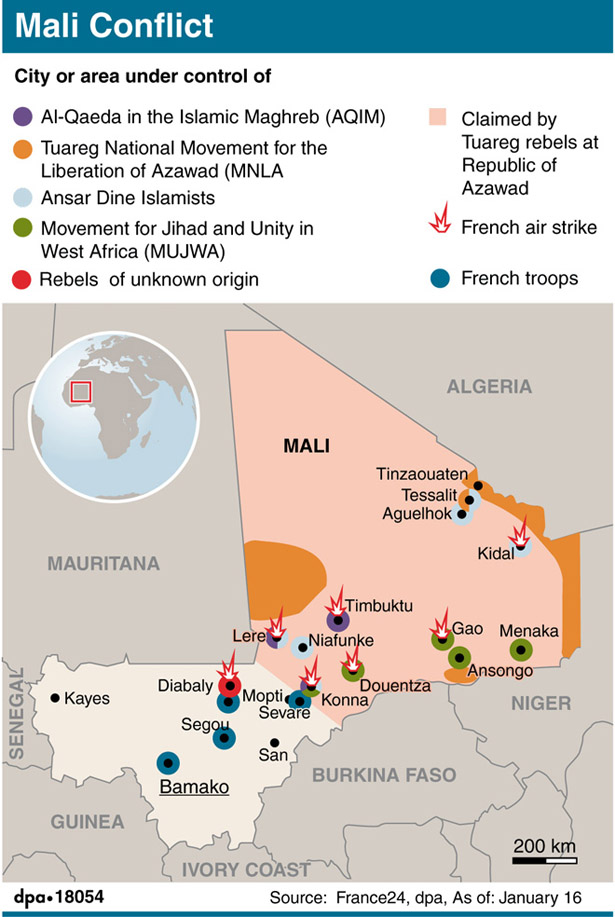
Several rebel groups in Mali have a long, complex history. The recent crisis is mainly triggered by radical, Islamist groups, including Ansar Dine, the Al-Qaeda organization in the Islamic Maghreb AQIM, and Movement for Unity and Jihad in West Africa (MUJAO).

In July 2012, this coalition succeeded in controlling all major towns in the north. Their absurd, cynical interpretation of Sharia led to amputations, flogging of women, and other abhorrent acts. These groups’ total disregard for Islamic heritage has motivated them to embark on a systematic campaign to destroy many of Mali’s Islamic heritage sites (specifically mausoleums).

Mali is a victim of the toxic mix of weak state, well-funded militant groups, neglect from moderate Muslims, and Western countries’ attempts to advance their own interests.

There are reports that rebel groups have a rich supply of weapons and cash, thanks to the downfall of Gaddafi in Libya and the millions of dollars they have collected as ransom for European hostages. Another alarming event raises questions about Qatar’s  link to those groups; Qatar already has a network of funding projects, which include madrassas, religious schools, and charities, which date back to the 1980s and 1990s in Mali. In addition, those radicals are also armed with Fatwas from many Salafi clerics who sanction a puritan version of Islam and label Mausoleums as un-Islamic.

Radicalism would cease to spread if the forces of moderation fought it. The mainstream Muslims have shown minimum interest in Timbuktu and its heritage; apart from some empty verbal condemnation, no steps have been taken to discredit the radicals. Prominent scholars in the Arab world who would shudder in disgust if a mosque was destroyed in a non-Muslim country have turned a blind eye to the violence in Mali. Timbuktu and other places of heritage were in desperate need for a fatwa from Moderate Islamic institutions to forbid its destruction; none was issued.

Even the hundreds of thousands of innocent, displaced refugees were given insufficient attention among the Arabic formal and social media (having received less coverage than the crisis of the Rohingyas Muslims in Burma, for example). Many non-Islamist leftists, socialists, and liberals, despite their loathing for the radicals, have never paid enough attention to the fight against the spread of radical ideology in Mali − not even starting a campaign on social media to raise awareness about Timbuktu or creating a hashtag on Twitter.

The silence in the Muslim world was also coupled with the initial reluctance from the Western world to intervene. Western nations were initially willing to pay ransoms to kidnappers rather than join the muddy conflict. No wonder the Islamists rebels gradually gained strength and felt confident enough to march south toward the Capital Bamako. The move toward the city of Mopti, a crucial trading post in the Saharan desert, has finally triggered the recent French military mission. The southern march by the rebels also softens the opposition to intervention from Mali’s neighbors, mainly Algeria.

The French campaign has finally raised awareness among the many living in the Arab world about the conflict in Mali. Some are rightly concerned about the impact of the military operations on civilians; others opt to use the convenient narrative of “crusaders versus Muslims,” or “Imperialists versus Africans.”

The apple-and-orange comparison of Iraq and Syria also starts to creep in, mainly based on sketchy, misinformed assessments of the situation. On the other hand, Salafis, who are currently important players in many post-Arab wakening countries like Egypt and Tunisia, seem to be siding with the rebels, forcing their governments to take a cautious or even negative position against the French mission.

These narratives, in my opinion, will not help Mali; on the contrary, they could send the wrong message to the radicals that we, Arabs, would rather see innocents Malians killed and tortured by thugs than see the Western world involved in conflict. It also raises questions about the Arab Salafis’ commitment to democracy and non-violent means. The Arab stance is in stark contrast to Turkey’s more rational position; the Islamist AKP government in Turkey has formally announced that it backs the military operation against the rebels.

It is still unclear how the situation will evolve; the French campaign would not be easy, and the hostage siege in Algeria is just one example of the challenges ahead. Nonetheless, the Arabic public must understand that the conflict in Mali has implications for the national security of many Arabic countries (including Egypt), which illustrates the importance of involvement among Arabic states to help Mali.

Military intervention alone will not fix the problem; the complex reality needs a multiple approach. There are many prospects for successful Arab input, from negotiating a political solution and reconciliation to the implementation of a long-term strategy of spreading a more tolerant Islam and discrediting the radicals in the West of Africa. Mali faces a conflict that Arabs should not ignore or leave to the West to handle alone.

Posted in Palestine | 6 Comments