Egyptian Aak: Week 20

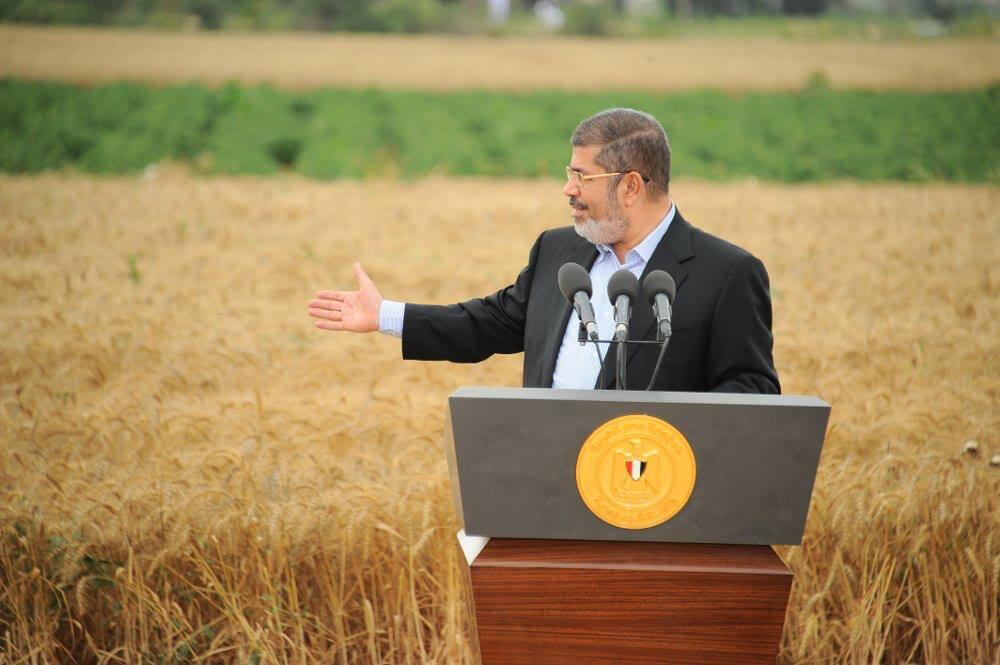
Morsi:Wheat

(Photo via the Brotherhood’s website, Ikhwanweb)

Main Headlines

 Monday

Tuesday

Wednesday

 Thursday

Friday

Saturday

Sunday

A Few Thoughts

 Tamarod

Last week, I wrote about “Tamarod,” a rebellion grass root campaign calling for withdrawal of confidence from president Morsi. Today, the campaign has announced a total of 3 Million signatures. Initially, Islamists were indifferent, even dismissive, however, the campaign has started to attract the wrath of the Islamists. Many doubt the legality and even the morality of the campaign; Salafi Assem Abdel-Magid has correlated it to “the rebellion of the devil against the Almighty.” Other Islamists cast doubt on the numbers, claiming that they are overinflated by the campaigners and some have even accused the campaign of fraud by either tricking Egyptians to sign the petition based on false information or by bribing them. Ironically, and despite the opposition of many Islamists, many Salafists have joined Tamarod and signed the petition, citing their frustration with Morsi and his failed leadership. Campaigners also reported various incidents of intimidation and dome brief arrests by authorities.

Tamarod is a good example of political entrepreneurism, which clearly caught Islamists by surprise. If anything, these accusations not only reflect the success of the initiative, but also the small-minded, mediocre, silliness of many Islamists.

 I totally agree with The Big Pharaoh on the significance of Tamarod; however, as the campaign has started to enter its crucial phase, organizers need to be careful in planning their next steps, which could be detrimental to the final outcome.

 First, I doubt the wisdom of Friday’s protest, although the gathering reflected the positive spirit of the movement, the relative low turnout handed over some credibility for the Islamists’ false claim that the campaign is not that popular.  The demonstration also turned violent in the end with another episode of rock throwing between kids joining in and the police. The movement should plan future protest more carefully to prevent any rioters from joining and spoiling the scene.

Second, the ex-presidential candidate, Shafiq, and his endorsement of the campaign is a thorny, double sword issue. If the movement really means to serve all Egyptians, “regardless of their political affiliation,” then those who are pro-Shafiq should be allowed to join in.

 Third, mainstream opposition parties who have repeatedly failed to articulate a clear vision or policy should not hijack the movement or try to capitalize on its gains for their own interests. Tamarod is not a replacement to other much-needed groundwork by non-Islamists political parties to rejuvenate their support, particularly in rural Egypt.

 Finally, organizers should carefully consider their next step; surely, no one really expects Morsi to leave just because Tamarod mange to collect the desired  (and ambitious) 13 million signatures. In fact, possible scenarios are either a legal battle to stop the campaign or a bloody violent day on June 30 (the date of planned march onto the presidential palace); both of which are nightmarish scenarios that the movement should prepare to avoid.

 Harvest Day, Morsi’s style:

 The story of Egypt and wheat as old as the pharaoh; harvest day was always an occasion of joy and celebration. This year, president Morsi has decided to celebrate wheat harvest by adding a political spin to a very tricky issue; self-sufficiency.

“Egypt can reach self sufficiency in wheat within four years after which it will not need to import wheat again,” said President Morsi last Wednesday.

He also claims that wheat production has increased by 30% this year. The reality on the ground does not really match the president’s rosy numbers;  shortage of fuel and fertilizers are undermining Morsi’s strategy for Africa’s biggest wheat grower and consumer, and there’s mounting concern that farmers don’t have enough of either to deliver the grain needed to replenish silos. As of April 28, stockpiles were down to a 64-day supply, which is less than during the 2008 global food crisis that triggered riots.

 President Morsi conveniently ignored that the government has expanded the allocated land to plant wheat in the hope of increase productivity, but productivity did not match the expansion. The storage problem is also a big issue that still has not been addressed properly.

Here is an interesting Arabic piece about wheat production and Morsi’s spin by Ahmed Esmat.

 I heard this rosy promises of increases in productivity since I was very young, thus far, what seems to increase is the population of Egypt, rather than wheat production. Yet, our leadership is still singing a bad version of the legendary Abdel Wahab’s song “ May God Bless our Wheat.”

Sinai

Yesterday, I have written few thoughts about Sinai, you can read it here.

I would like to add one more comment, General al-Sissi should consider any military operation carefully; any hasty plan that put the life of the kidnapped soldiers in danger or fail to secure their release will have enormous counter-productive impact on him as a leader, and on the moral of the Egyptian army.

Sabbahi’s daughter:

As the political war in Egypt has gotten dirtier by the minute, the daughter of the leftist leader Sabbahi has grabbed attention by a stream of accusations against her of Internet marketing fraud, clearly apolitical charges that still have not been proven, yet, Islamists are using it as a weapon to discredit Sabbahi and his eligibility as a leader. The Islamist’s abhorrent misuse of the case contradicts their previous sympathy with other Salafi figures arrested for various crimes. This kind of hypocrisy is yet additional proof of their small-minded, mediocre, religiously unethical behavior.

Good Read

Interesting reports

Finally here are Jayson Casper’s prayers for Egypt
Posted in Diary of Aak, Egypt | Tagged , , , , , , , , | 7 Comments

Sinai and the New Naksa

Forty-six years ago, in what Egyptians describe as the Naksa, Egypt lost Sinai to Israel during the 6-Days War. Egypt is now witnessing a new Naksa episode. Naksa 2 is unfolding in which Sinai is gradually slipping out of control of the central authority and falling under the influence of non-state players. These players are a ghostly bunch that hide in the mountains and commit various act of terror under various pretexts. Ironically, the attackers are not really “enemies,” but they are brothers of the “Brothers,” and part of the large Islamist tribe that currently rules Egypt.

This probably explains the following statement published in the official FB of the Egyptian presidency following the kidnapping of three policemen and four soldiers in Northern Sinai early this week, “The President gave his order to continue the efforts to release the kidnapped soldiers and is keen on keeping both the kidnapped and kidnappers alive.”

As such, the supreme leader of Egypt’s armed forces is actually Mr. Neutral who wants both sides to be happy.

The kidnapping incident, like all the current events in Egypt, was immediately enriched with rumors, accusations and counter accusations, and subjective views and speculation, making it very hard to separate fact from fiction. There were, however, a few facts and some observations that are worth highlighting:

Sinai has become increasingly lawless since Mubarak was ousted in 2011, in a previous post in2012 as surreal, while in 2013 alone, there were several episodes, (Check the diary of Aak: week 3,11, 12, 13, 15, 16 and 19). There were some security problems in Sinai during Mubarak’s time, but they were never at this scale or frequency, and were promptly dealt with, albeit mostly in a very ruthless and often unjust way. In addition, the 2012 brutal attack that killed 16 Egyptian soldiers is still shrouded in mystery, with the murderers still at large.

 The relationship between security forces and people of Sinai of Sinai is one of deep animosity and a desire for vengeance. The kidnapping of soldiers, however, as well as policemen, undermines that claim to a certain degree. It raises bigger questions, particularly, whether the interests of Sinai tribes contradicts the national security interests of Egypt as a state. There are reports that claim the families of Salafist prisoners in Tora prison have protested against their alleged torture in the prison, but the demand of the kidnappers is to release members of the Islamist group Al-Tawhid-wal-Jihad (convicted of killing six members of the security forces in Sinai 2011), and not to stop their mistreatment.

In this week’s incident, the kidnappers deliberately looked at the IDs of everyone inside the minibus. Civilians were spared and soldiers/policemen were taken. No wonder, Police in Sinai feel resentment and injustice. Their closure of the Rafah border indicates the depth of their anger and also indicates whom they blame for the entire crisis.

• Since the revolution, Sinai has been dragged in the dirty power politics of Cairo. Politicians on both sides are using it to score points in the ongoing battle for dominance and control.

  • The Islamist camp is collecting evidence against Sissi, at least to incriminate him in front of the public. Sissi was the head of military intelligence during the 2012 Rafah massacre of Egyptian soldiers. Now others have been kidnapped under his leadership as the General Commander of the Army. This is more evidence of his “incompetence” and even “negligence.”
  • Both the Interior and Defense Ministry are viewed with suspicion, even with hatred by Islamists for various reasons. The Islamists, however, are more rattled by Defense Minister General Sissi due to his growing popularity, and meanwhile they regard the Interior Minister as their loyal man. This is precisely why the non-Islamist camp views the kidnapping as part of a plot to undermine Sissi.
  • Two unfounded rumors are spreading among opposition groups, and among the Egyptian public. One claim is that Hamas is behind the kidnapping. The other claim is that radical jihadists have been recruited by the Israeli Mossad. The rumors are mostly inaccurate, neither Israel, nor Hamas has any vested interest in inflaming Sinai at this stage, but there are many other players, particularly radical Salafi groups in Gaza who may have different interests.

The handling of the crisis in Sinai will have a huge impact on Egypt’s future security and political scene. Like any non-state players, Islamists groups in Sinai have mixed just and unjust grievances. Sinai is neglected, but the army’s quest to regain control of Sinai is unwelcome for various reasons. As the leadership in Cairo is infested with rivalries and mistrust on a wider scale, it is worse than 1967, and many are using the “just” to justify the “unjust.” This must end if the Egyptian leadership wants to stop Naksa 2 from unfolding.

Posted in Egypt, Sinai | Tagged , , , , , , | 1 Comment

Rise of Radical Jihadists Setback for Syria

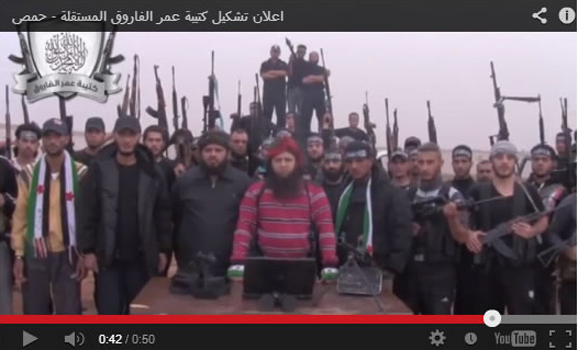
Omar-al-Farouk-Brigade

This image of the Omar al-Farouq brigade was taken from the group’s website; Syrian Sunni rebel Khalid al-Hamad, who mutilated a corpse, is a member of the brigade.

I wrote this piece for  Al-Monitor, look forward to your comments.

The recent gruesome video of a Syrian rebel soldier, Khalid al-Hamad, mutilating a corpse has triggered shock and outrage, fueling a tense debate over the wisdom of supporting the armed uprising against President Bashar al-Assad. While some consider the video as the ultimate proof that backing the rebels is a bad idea, others view the radicalization and increasing brutality of the armed opposition as a direct result of the weak Western response and US dithering. This later opinion is based on the assumption that an early and decisive intervention in support of the moderate factions of the Syrian rebels would have marginalized the radicals and reduced their recruiting abilities.

While debating the brutal war in Syria — and the possible solutions and the inherit risks associated with each option — there are a few issues to consider about radical groups, the factors that help increase their power, and, more important, whether early military intervention would have prevented the radicalization of the Syrian opposition.

Collapse of the state

Undoubtedly, the collapse of law and order has had an enormous impact on the rise of non-state players, particularly radical groups. Even the short-term security vacuum has created enough of an opportunity for jihadists to pour in. For example, the January 2011 revolution in Egypt has compromised security and helped jihadists to build their own safe haven in the mountains of Sinai. Syria is no different; in fact, it is easier to get into Syria due to its porous border security, particularly along the borders with Iraq and Lebanon. The lack of intervention in Syria has resulted in a chronic collapse of law and order. Any military intervention, however, would also cause law and order to crumble, and result in a more acute form that would encourage (rather than discourage) radical groups to pour into Syria under the pretext of helping the rebels. Continue reading here

Posted in Syria | Tagged , , , , , | 4 Comments

Egyptian Aak. Week 19

Main Headlines

Monday

Tuesday

Wednesday

Thursday

 Friday

Saturday

Sunday

 A Few Thoughts

Ahmed Maher

One of the ironies of Egypt is to see a high-profile activist like the arrest of cofounder of April6, Ahmed Maher by a government backed by the winning party, the Muslim Brotherhood, and then later, the political wing of the Brotherhood released a statement demanding his release, as if he were being held by enemy forces or opposition parties. Another and even more tragic irony is that Maher was sent last night to Tora prison, the same prison where ex-president Mubarak is held.

 Two years after the ousting of Mubarak, Egyptian prisons are full of revolutionary activists who fought against him in the January 2011 revolution; however, each activist has a different reason behind his detention that can shed some light on the opaque dynamics of Egypt these days.

 Remember that, when the April 6 movement first took place in 2008, it was initially dismissed by the Muslim Brotherhood as the work of a bunch of “crazy boys.” It was only later in 2010 that the Brotherhood started to accept April 6 as a real political player. However, April 6 considered its alliance with the Brotherhood as a deal between two equal political partners, but the Brotherhood considered April 6 as a junior partner, with only relative rights, which they didn’t see as permanent or binding.

 If April 6’s stance against the Brotherhood following Morsi’s November decree was not surprising, its innovative approach to protesting has taken the Brotherhood by surprise. April 6 has organised several unannounced, usually peaceful protests in various places including Morsi’s home and the ministry of interior. The turning point was what later became known as “the underwear protest,” held on March 29 outside the home of Interior Minister Mohamed Ibrahim, during which Protesters waved the underwear and held banners that accused the Interior Ministry of “prostituting” itself to the Morsi government.

The peaceful yet provocative nature of this protest was proven too much for an “Islamist” party like the Muslim Brotherhood and for their loyal Minister of Interior. Members of the Brotherhood started to attack members of April 6 on local media since that protest, accusing them of taking an indecent approach to politics.

 Maher’s release on Saturday, after just one day in detention instead of the initial planned four days’ detention, has two possible explanations: Either it was a balloon test that had to be abruptly terminated following a public outcry or a mediocre gamble from the Brotherhood to prove their “impartiality” toward the government.  It is highly unlikely that the Ministry of Interior has arrested a high-profile figure like Maher without a nod from the Islamist leadership, but if this was the case, then his abrupt release kind of proves the point that the leadership is actually intervening in government work. Also, his release does not mean a non-guilty verdict; just as with Bassem Youssef, it will be a long process involving a grueling investigation.

 The Islamist leadership in Egypt has opted for legal harassment to fight its opponents. Such a policy has two goals: First, it drains the opposition mentally and physically. Second, it distracts them from core battles like the election campaign, particularly in rural Egypt. However, it is a policy that has proven to be risky and counter-productive, and it can be costly for the Brotherhood in the long term. In his last piece before his arrest, Maher reminded his readers that the Brotherhood during the Mubarak era only sought to reform the system and not revolt against it. In fact, the Brotherhood is neither a group of reformers nor revolutionary, and that is precisely their problem.

 Tamarod (rebellion):

 One of the new and most intriguing developments on the Egyptian front is the Rebellion campaign, which aims to collect 13.5 million signatures to withdraw confidence from President Mohamed Morsi and to call for an early presidential election. The movement seems to gather momentum with very enthusiastic participation, particularly in cities like Port Said and Mahalla. Up to this point, the Brotherhood seems to be in its usual dismissive mood, doubting that Tamarod will reach its target. However, the strength of Tamaroud lies not just in its numbers, but also in its innovative approach that replaces the current opposition’s hollow ranting with an actual campaign on the ground that re-ignites the memory of the 1919 civil campaign and can potentially challenge Morsi’s legitimacy.

 The mysterious Suez Canal project:

Two weeks ago, I reported on the resignation of ex-PM Essam Sharaf from leading the Suez Canal development project. Interestingly, this week, prominent judge Tarek al-Bishry wrote a strongly worded critical piece in Arabic newspaper el-Shorouk, describing the project as aiming to convert the Suez Canal area into a “privately owned, independent region under direct control of President Morsi.” Although these accusations have been raised before by many opposition figures accusing the Brotherhood of planning to sell the Suez Canal to Qatar, triggering the satirical song “My Beloved Qatar” by Bassem Youssef, the fact that a respected figure like Bishri confirms these allegations adds more weight to the situation and raises alarm about the project. Again, as usual, the Brotherhood’s figures reported on local media were dismissive, claiming that Bishry’s judgment is based on a false document released by the Egyptian Arabic newspaper Al-Masry-el- Youm. Thus far, however, neither the government nor the presidential team has revealed any details about the project or issued a formal rebuttal of Bishry’s piece.

Here are my thoughts about the new Cabinet in case you  missed it.

For the statement of General el-Sissi and Al-Qaeda cells in Egypt, I hope will cover them in separate pieces.

Good Read

Article I disagree with:

Morsi and the Muslims Shadi Hamid

Shadi’s statement: “The real ideological battles haven’t really started yet, ” is not entirely accurate, the process of Islamisation has started and is already in second gear.

Finally, here are Jayson Casper’s prayers for Egypt
Posted in Diary of Aak, Egypt | Tagged , , , , , , | 3 Comments

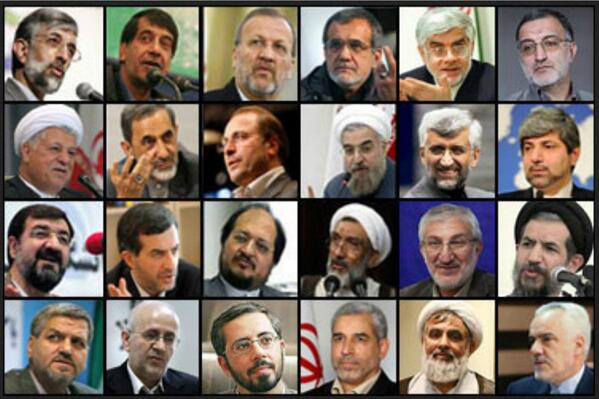
A Brief Introduction To The Iranian Election

Iran election

(Photo of Iran’s presidential candidates via Twitter)

For many Arabs, Iran is an Islamic dictatorship that is deviously trying to manipulate the internal politics of many Arab countries from the Gulf States, particularly Bahrian to Iraq, Lebanon, and Syria. For others, it is a Muslim country, a patron for the “resistance” against Israel that Arabs should build bridges with to counter the US influence in the region.  There is also a third group that has a very ambivalent attitude toward the Persian state. This group shares the anti-Israeli feeling of the Iranian leadership and want to seek a balanced relationship with Iran, but are afraid of the spread of Shia Islam and resent Iranian support of the Assad regime in Syria. Egypt falls in this third category.  Despite that many Arabs talk about Iran in one way or another on a daily basis, many have actually put fourth efforts to follow the internal politics of Iran, and its coming presidential election.

This Arab, and particularly Egyptian indifference is unwise to say the least for two reasons. First, the upheaval in the Levant, in which Iran is a main player, will have direct ramifications on the entire Arab world as well as on Egypt. Second, Iran, which had its Islamic revolution 36 years ago, is evolving quickly and experiencing many micro changes on the social and political levels. Although the 2009 green revolution has failed to produce the desired change, society has moved on to a post-Islamism era that is full of power struggle behind the closed doors of the Mullahs and revolutionary guards.

Therefore, I think we all should pay attention to the Iranian election as its outcome will contribute to the future of the Middle East immensely.  This contribution will either flam the already explosive situation and cement the big Sunni-Shia divide or calm the flame of hatred and reach a possible compromise particularly on the Syrian front, which in return will affect future relationships with Egypt and many Gulf states.

As an introduction, here is a Fact box of the contenders in the June 14 Iranian elections by Reuters

AKBAR HASHEMI RAFSANJANI: The centrist Rafsanjani, an important figure since the 1979 Islamic Revolution, was president from 1989 to 1997. He earned the ire of hardliners after he sided with reformists during the unrest that followed the disputed 2009 election, and has seen two of his children jailed in recent months. Here is an in-depth BBC profile of Rafsanjani, the “pragmatic conservative,” who was featured in the Millionaire Mullahs section of the Forbes Rich List in 2003, also another Reuter’s piece about him.

ESFANDIAR RAHIM MASHAIE: Former chief-of-staff to outgoing President Mahmoud Ahmadinejad, he is viewed with intense suspicion by conservatives who say he leads a “deviant current” within Iranian politics that seeks to sideline the ruling clerics. They consider Mashaie and Ahmadinejad to be right-wing populists. Here is another interesting piece about Mashaie by Meir Javedanfar

SAEED JALILI: Iran’s nuclear negotiator since 2007 is a veteran of the Iran-Iraq war and seen as a hardline conservative close to Supreme Leader Ayatollah Ali Khamenei. Also here is a more in depth profile of Jalili again by Reuters

HASSAN ROHANI: A moderate Muslim cleric, he also served as Iran’s nuclear negotiator, presiding over talks with Britain, France and Germany that saw Tehran agree to suspend uranium enrichment-related activities between 2003 and 2005. He is seen as close to Rafsanjani. (There were reports earlier today that Rohani may quit , but it was later followed by firm denial from his election campaign). Here is a Huffington Post’s piece about Rohani.

ALI AKBAR VELAYATI: Served as foreign minister from 1981 to 1997 and advises Khamenei on foreign policy matters. He is seen as a traditional conservative, with ties both to ‘principlist’ factions – loyal to the supreme leader – and to Rafsanjani’s camp. I also found  another interesting look at Velayati by Irdiplomacy

MOHAMMAD BAQER QALIBAF: A former police chief, he is the current mayor of Tehran and has a reputation as a competent, charismatic manager who could attract Iran’s sizeable youth vote. He is viewed as a pragmatic conservative.

GHOLAM-ALI HADDAD-ADEL: A former parliament speaker and relative of Khamenei by marriage, he is a close adviser to the Supreme Leader.

MOHSEN REZAIE: The veteran politician and former Revolutionary Guards commander ran in 2009 against Ahmadinejad and lost. He is the secretary of Iran’s Expediency Council, which advises Khamenei.

There are also other candidates, including  Ebrahim Asgharzadeh considered as a reformist, and an advocate of  improved relationship with the United States.

So many candidate to follow in the Iranian election, however, Rafsanjani is seen as a strong contender, and, if he wins, the June election (still a big if) it could potentially be a true “game changer” in the wider Middle East and the Levant. His pragmatism, and long experience will have a major impact and “could” help break the current deadlock in Syria.

Posted in Iran | Tagged , , , , | 1 Comment

Egypt’s New Cabinet: More of the Same

I wrote this piece for  Al-Monitor

Tuesday’s Cabinet reshuffle [May 7] shed little light on Egyptian President Mohammed Morsi’s leadership and what the Muslim Brotherhood’s plan is for Egypt, at least for the next few months.

In the eyes of many, Morsi has not improved the government; he kept his much-criticized, colorless Prime Minister Hesham Qandil, then he appointed some new faces who were neither qualified nor experienced enough to run the country at this critical juncture. In addition, the premature leaks of “imminent reshuffle,” before cementing any deal with the proposed candidates for ministerial changes, has exposed the reluctance of many technocrats and politicians to join this government, and also reflected the current state of uncertainty in Egypt.

This view is based on the assumption that the reshuffle is aimed at addressing Egypt‘s political and economics woes. It is not — the current leadership has three goals from the new reshuffle: 1) to create a false perception that it is tackling Egypt’s problems, particularly on the economic front; 2) to portray the opposition as uncooperative by keepingQandil as prime minister and thus successfully managing to put many off from joining the government, justifying appointing more Muslim Brotherhood cadres as ministers; and 3) as Issander el-Amrani argues, the Freedom and Justice Party (FJP) is working according to party logic, where members want to maximize their personal power that correlates with the Muslim Brotherhood’s wider logic of placing its faithful in positions of influence. To continue reading click here

Posted in Egypt | Tagged , , , , | 1 Comment

Hezbollah and the Golan

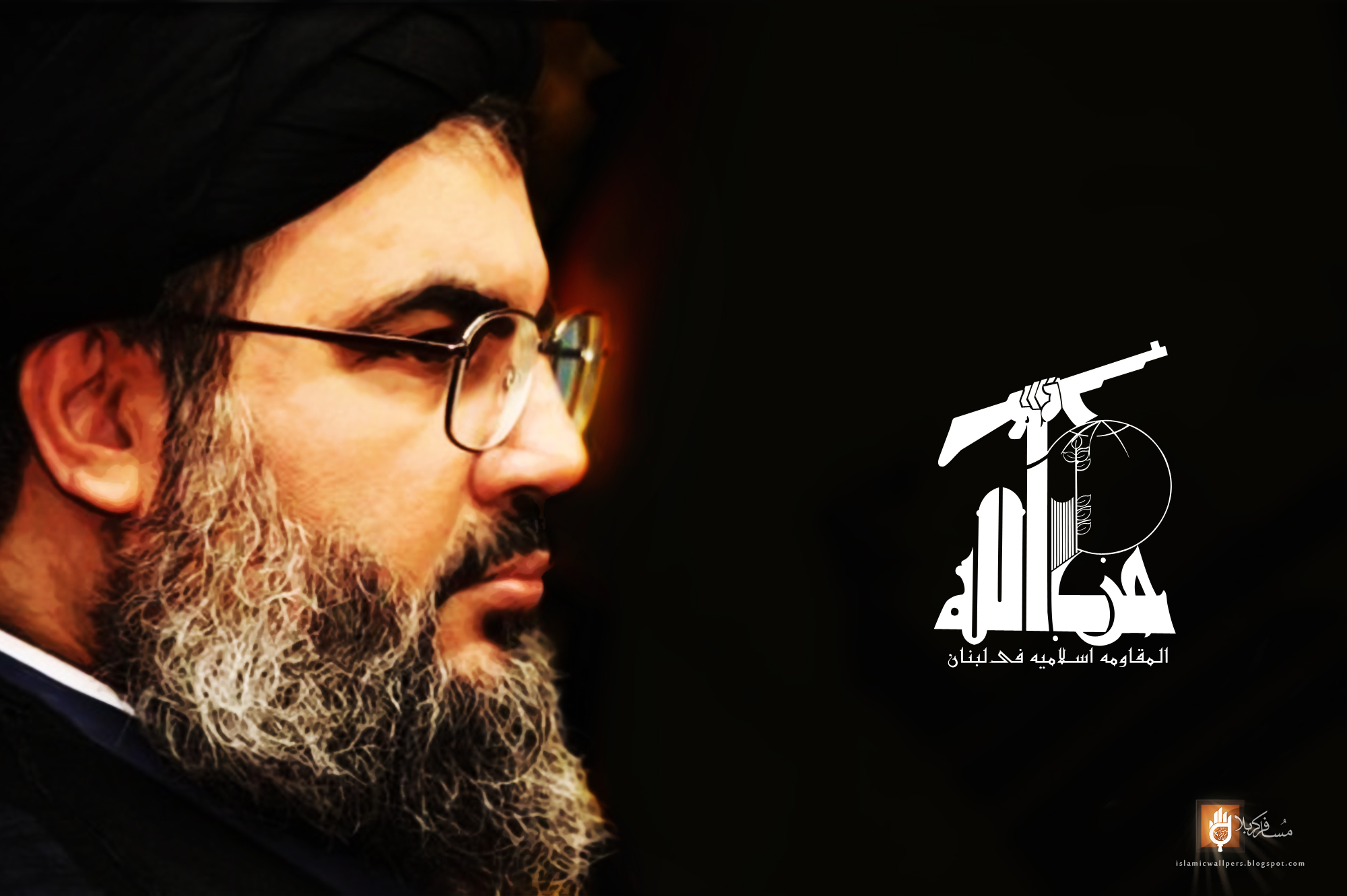
nasrallah image

(Photo of Hasssan Nasrallah, via Kabobfest.com)

In his first televised speech after the Israeli strikes on Syria, Hezbollah leader, Hassan Nasrallah, made two interesting remarks.  First that Syria will supply Israeli arch enemy, Hezbollah, with “game changing arms.”  Second, “the resistance is ready to assist and cooperate to liberate Golan Heights.”

Nasrallah’s speech met with mixed response; some dismissed it as far-fetched, implausible rhetoric while others urge caution, and recommend taking Nasrallah’s word seriously.

Followers of Lebanon and Hezbollah leaders know that Nasrallah is known for his loud rhetoric; however, he is also known to be precise, calibrating his speeches carefully, and is usually accurate in his threats. Hence, a legitimate question is: What Nasrallah is truly after? Although it is not easy to read the true intentions of Hezbollah’s leaders, however, we can read in-between the lines, and draw some conclusions, and potential possibilties:

First, Nasrallah had to say something.  All the leaks suggest that the Israel strike was meant to prevent Hezbollah from acquiring advanced Iranian weapons; therefore, a defiant message from Nasrallah is the least he can do to keep Israel on edge and paint the perception that he is unfazed by Israel’s aggression.

Second, It is crucial to view Nasrallah’s speech within the context of the unfolding dynamics in the Syrian crisis. The U.S. and Russia have pledged to work together for a Syrian transitional government. Speaking at a joint news conference Tuesday in Moscow, U.S. Secretary of State, John Kerry, said that he and Lavrov agreed, “as soon as is practicable, possibly and hopefully, by the end of this month” to “seek to convene an international conference.” Nasrallah’s message is aimed mainly to raise the stakes and clinch a better deal for Assad. In today’s statement, Kerry reaffirmed the U.S.’s position that Assad will not be a component of a transitional government. This is a stance that Nasrallah will want to challenge. Assad did not fight this bloody, dirty battle to leave at the end because Kerry thinks that it is ultimate solution.

Third, Nasrallah want to deter Israel from launching more attacks on Syria. The Druze population of the occupied Golan Heights is not as loyal to the Jewish state as are the Druze of Carmel Mountain. Any tension in Golan could trigger unpredictable response from local residents, could prove costly for Israel.

Fourth, Nasrallah also probably has a plan B scenario. Thus far, Nasrallah has clearly preferred to focus his energy to save his ally, Assad; however, if he senses any military intervention in any form, either by properly arming the Rebels or imposing a no Fly zone, he may revert to his plan B, which could mean dragging more Israelis directly into the fighting. This option is favorable to Nasrallah for two reason

  •  It will revive the concept of resistance by directly fighting the Israelis rather than fighting other Islamic group
  •  It will shift the confrontation with Israel into another front in Syria, thus, will limit the Israeli retaliation option inside Lebanon. Nasrallah will create his own proxy war by using Palestinian groups inside Syria in his quest to confront Israel.

I doubt that Nasrallah has finalized a cohesive plan, rather he just testing the water and waiting to see the response. I also doubt that he will rely on the aging, incompetent Palestinian groups as he claims. They will be just puppets in the war.

It is also worth noting that Golan is not south Lebanon; it took Hezbollah years to build his underground bunkers in the south of Lebanon; therefore, fighting in Golan could prove to be harder and trickier. However, if Nasrallah manages to drag the Israelis into the fight, the rest of his job would be a lot easier. Any deeper Israeli involvement would force the international community to favor a less-than-favorable settlement that could help Assad survive in one way or another.

Nothing is certain about Syria, but it is highly probable that we might listen to and hear from Nasrallah in the near future, and I doubt that what we will witness or hear will be pretty or peaceful. The fight in Syria has more to do with the selfish interests of each player involved, and less to do with the real interest of Syria or the Syrian people.

Posted in Israel, Lebanon, Syria | Tagged , , , , , , | 3 Comments

By snubbing Copts on their holiest day, Egypt’s Morsi failed as President

Pope Image(Coptic Pope Tawadros II, as he arrives to celebrate Easter mass at Cairo’s main cathedral on May 4, 2013. Reuters)

This piece was published yesterday in The Globe And Mail, here is another copy in case you missed it.

On late Saturday, Pope Tawadros II led his first Easter Mass as head of the ancient Coptic Christian Church in Egypt by praying for security and prosperity in the country. It was the most important event of the year for Egypt’s Christian minority. Many Muslims attended the service, including various figures from the opposition parties. However, President Mohamed Morsi and Prime Minister Hesham Qandil were conspicuously absent; their Muslim Brotherhood government effectively snubbed the mass by sending a low-level token representative – the country’s housing minister.

Many voices in Egypt had pressured the President to attend the mass as a gesture of support to the Copts, particularly after the recent violent attack on the main Coptic Cathedral , the first such atrocity in the history of Egypt. Sadly he decided to snub Egypt’ s Coptic Christians, who make up 10 per cent of the country’s 90 million people.

To greet or not to greet Copts – that is the current debate among Islamists in Egypt. It may seem a trivial issue, a courteous gesture that should not be sullied by theology. But in Egypt, the rise of political Islam into power has pushed theology onto the fault line of politics and inflamed the already growing sectarianism in a society that was once known for its harmony and tolerance.

Although Islam reveres Jesus, it does not acknowledge his divinity, crucifixion, and resurrection. So even though a feast in celebration of Easter contradicts Islamic beliefs, for most Muslims (including the Egyptian Mufti), greeting Christians and sharing in their joy and festivities is a customary and welcome gestures of brotherhood and partnership. This view is vehemently disputed by many Islamists.

Political Islam is more about dominance than sharing and about relative rights rather than equal rights. Theologically, the Islamists’ dogma considers greeting Christians for Easter as an indirect acknowledgment that their beliefs could possibly be right – a slippery slope, in their opinion. Politically, Islamists’ distorted majoritarian view of democracy considers minorities as having less than equal rights. In other words, it is the minority who should show respect to the majority and avoid offending them. Such an absurd mix of theological and political dogma has led Egypt to be ranked as one of the most egregious violators of religious freedom in the world, even worse than Afghanistan.

For decades, sectarianism was slowly brewing in Egypt, yet very few efforts were made to tackle the root of the problem. President Hosni Mubarak viewed sectarianism as a migraine he could not treat, but one he could contain and even abuse. His containment strategy was a mixture of appeasement and periodic suppression, a kind of carrot-and-stick policy that was applied to both sides, the Islamists and the Copts.

To avoid the fate of his predecessor, Anwar Sadat (who was assassinated by radical Islamists), Mr. Mubarak opted to avoid any confrontation with political Islam and its ideology, and he ignored the growing social networks of Islamists and their dominance of unions and syndicates. Instead, he ruthlessly cracked down on Islamist insurgency, outlawed many Islamist groups, and denied their members access to sensitive government, military, and police positions.

Mr. Mubarak also applied this dual approach to the Copts: he re-instated the Coptic Pope, played the patron of the Copts, and allowed the church to assert the Coptic identity among the Coptic public, again by expanding the supportive church’s social networks, and allowed it to maintain its special, often strict religious laws. On the other hand, he did not amend any of the laws that prohibit building new churches, he turned a blind eye to the discrimination of Copts in public services, and failed – often deliberately – to stop the hate campaign unleashed by Islamists against Copts. In fact, Mr. Mubarak used the rise of Islamism as a tool to earn the loyalty of the Coptic Pope.

Despite the discrimination against the Copts, Islamists viewed them as a devious, privileged group, a state within the state, citing (often with exaggeration) the direct channel between Mr. Mubarak and Pope Shenouda, the relative success of Copts in business, and their links and contacts with groups of influence in Europe and the United States via the vast Coptic diaspora. Furthermore, Islamists view Copts as a competitor faith, one that rejects the “right path.”

The debate about greeting the Copts is not new; Islamists have held these views for a long time. What’s new is the Egyptian revolution that finally removed the carpet of suppression and allowed these regressive views to be aired in public. Also new is the rise of Islamists into power; Islamist scholars who banned Easter greetings before the revolution now find it difficult to swallow their pride and sanction them.

President Morsi has a lot to learn about the art of political gymnastics. Perhaps he should learn from his “enemy,” Israeli Prime Minister Benjamin Netanyahu, who relished the opportunity of the Druze feast of Nabi Shueib to score few political points with the Druze community in Israel.

President Morsi seems to be stuck between a rock and hard place: any compromise with the Copts would be viewed negatively by his supporters and could be exploited by rival Islamists, particularly the Salafis. A successful Egyptian leader is one who demonstrates shrewdness and the ability to navigate between rivals to secure harmony in society.The Egyptian president has a historic opportunity to amend the religious discourse in Egypt, fight extremism, ensure equality, and celebrate diversity. Thus far, however, he has consistently failed to grasp the opportunity.

Posted in Egypt, Islam | Tagged , , , , , , | 1 Comment

Egyptian Aak. Week18

Week 18 image

(Photo: May Day protest in Cairo, via Daily News Egypt)

Main Headlines

Monday

Tuesday

 Wednesday

Thursday

Friday

Saturday

 A Few Thoughts

Elasticity is the new policy

As a former engineer, Morsi is undoubtedly aware of elasticity, a term in physics that describes the continuum mechanics of bodies that deform reversibly under stress. In fact, it seems that he has decided to utilize this approach ____ rather unsuccessfully____ as a part of his new political maneuvers to outgun his opponents.

Labor Day

A day before Labor Day (a national holiday in Egypt and a legacy of socialist Nasserism), President Morsi spoke to workers at a new steel plant in Helwan. In his address, he emphasized the importance of workers in bolstering the Egyptian economy. “It is essential that we produce our own food and weapons, and the Egyptian worker is the foundation of this production,” said the president. “You are all true partners in achieving industrial and economic development.”

It is hard to take president Morsi’s words seriously when the reality is completely different. At least 4,500 factories have been shut down since Jan 2011, with hundreds-of-thousands of workers laid off. According to a local media report, 23 were shut down just last month.

The only explanation would be in the motive, as Morsi is trying to play an Islamist Nasser in an effort to strip Sabbahi of his most powerful tool, the socialist rhetoric that appeals to a wide selection of Egyptians. Egyptians feeling squeezed by the deteriorating economy has helped Sabbahi to earn a third position in the presidential election, and continued to feed his popularity under Morsi’s rule.

It is worth mentioning, that while playing Nasser, Morsi has opted to adopt other Nasser tactics, including arrests of activists. Movements by 6th of April and other groups have recorded many arrests and disappearances of their cadres. In addition, there is a clampdown against the Black Bloc group, which recently became an obsession of the Islamists. I have yet to see any interview by an Islamist that doesn’t push the Black Bloc into the conversation. The mysterious underground organization has started to get under the Islamists’ skin, possibly because it is remarkably similar in its underground activities.

Sawiris    

Following months of demonizing the Egyptian Coptic billionare Sawiris and his family, a well-known critic of Morsi and his Muslim Brotherhood, and accusing him of tax evasion, Sawaris was greeted at Cairo airport by an envoy of the Islamist president who presented him with flowers. Sawiris was accused of everything from hunting down media to evading taxes. Last March, Egypt’s general prosecutor placed the country’s wealthiest man, Onsi Sawiris and his son Nassef on a no-fly list, sending the main stock index tumbling by 2.3%—the worst drop in a month.

I agree with the Big Pharaoh, Sawiris who was the major financier behind the Egypt Bloc, the loose coalition of liberal parties that ran against the Islamists during the last parliament elections, was the target of the whole ordeal that his family had to endure, and the recent tax deal. The return of Sawiris could be part of an unwritten understanding with Sawiris to stay away from politics, but I doubt that he will relent. Sawiris may stay away temporarily, but not over the long term.

Syria

 Al-Jarida, the Kuwaiti newspaper, published a report Saturday saying that Iran has been exerting pressure on the Egyptian government to renew relations with Al-Assad’s regime, which led “to the return of the Egyptian acting ambassador” to Damascus. The reports coincide with leaks that the Muslim Brotherhood leadership has decided to resume diplomatic ties with Damascus. This was later denied by Egypt’s Ministry of Foreign Affairs, but read between the lines and you will see elastic politics in full play. “When Egypt withdrew Ambassador Shawqi Ismail (in February 2012) from Damascus, the acting ambassador (Alaa Abdel-Aziz) remained in place,” Nazih El-Naggary, deputy spokesperson at the ministry, told Ahram Online. In other words, Egypt implemented a symbolic act, but kept the door semi-open so as not to upset the Iranians. It is worth mentioning that last month, Syrian opposition sources said Egypt refused to acknowledge an opposition-issued passport carried by an injured FSA soldier arriving for treatment.

Political elasticity will not help Morsi much, like in physics, the object will sooner or later return to its original shape; Morsi will revert to his old style. The unharmonious contradictory mix of borrowing a page from Nasser and bribing his opponent like a Mubarak will not work, and can be counter-productive. Other Islamists parties, particularly the Nour party will use it as a weapon in the next parliamentary election. They will paint themselves as straight-trustworthy Islamists, unlike the “hypocritical” Brotherhood.

Easter

Amidst the debate about religious freedom in Egypt, many Egyptians seem to lack basic knowledge about basic Coptic heritage and culture, which mostly stems from old pharonic traditions. Ignorance is the basic fuel of sectarianism; it empowers the voices of hatred, breeds suspicion and eventually enriches social divisions. Coptic Easter is one example. Many in Egypt celebrate Easter Monday as “spring day, Sham el-Naseem,” an ancient feast, as old as the pharaohs. Yet many Muslims also celebrated it without making any link to Copts. This is a legacy of years of systematic neglect of Coptic culture and traditions by the Egyptian leadership from Sadat until now. Teaching religious study and Coptic history is a must if Egypt is serious in eradicating sectarianism. It is highly unlikely it will happen under an Islamist leadership that directly, and indirectly fans the flame of sectarianism, and uses it as tool to fight opponents.

Good Read

Plus:

Posted in Diary of Aak, Egypt | Tagged , , , , , , | 1 Comment

‘Non’- Romantic Sectarianism

If your Lord had pleased, surely all those who are on the earth would have believed, all of them; will you then force men till they become believers?

__ Quran 10.99

Originally published in Daily News Egypt

Beni Suef– A story of romance has turned ugly and led to eruption of another round of sectarianism in Egypt. Rana El-Shazli, a 21-year-old Egyptian Muslim woman, is believed to have converted to Christianity and fled to Turkey with a Coptic Christian man.

Although interfaith relationships are common across the globe, it is a taboo in Egypt, conversion to and from Islam is always a tricky, sensitive topic in Egypt; however, in the current tense atmosphere, the situation has turned into a tragic story of exploitation. Angry Islamists attacked St George Church in Beni Suef, occasionally with Molotov cocktails, and forced Christians to close their shops for nearly eight days last month. Members of the Christian man’s family have been arrested, including his mother and father, after a prosecutor accused them of collaborating in hiding the woman.

The details of this ongoing tragedy reflect the wider ills of the Egyptian society and why sectarianism is on the rise. 

First, the rumours: There are conflicting reports about the story, and whether Rana has run away with a Muslim or a Christian man. Some suggested that Rana has contacted her family to reassure them that she is safe, and she left out of her free will, and denied any pressure from any one, yet her family, together with a wider support group by some Islamist groups, has refused to accept this narrative and insists that she has been kidnapped by the church.

Second, the exploitation: Many Islamic groups have taken advantage of the anger and grief of Rana’s family to stir troubles. Leaflets were distributed across town giving the church an ultimatum; either to return the girl or face “consequences”.

Third, collective blame: To the Islamists, the church has controlled, plotted, and facilitated the kidnapping. None of them asked the simple question: why? Why would any church, after endless attacks on many Christians over the last few years, embark on such endeavours for the sake of one girl? Islamists’ irrationality has led them to demonise churches, regardless of logic or common sense.

It is worth mentioning that there is a record of Coptic girls who were converted to Islam, some out of their free well; others were “allegedly” forced to convert. Ironically, for the Islamists, it is always a one-way street; Coptic girls (single or married) are welcomed to join Islam, even after unsanctioned romance without the consent of their families, but the same rules are not accepted by the Islamists to be applied to Muslim girls. Such hypocrisy is another reason behind this tragic type of sectarianism.

Fourth, the authority: Everyone in the town knows exactly who distributed anti-Coptic leaflets, inciting violence against the Coptic Church, yet no arrest has been made. The government also decided to adopt the kidnapping narrative and informed Interpol to try to arrest the couple, despite the fact that Rana is 21, has travelled legally to Turkey and is fully responsible for her own actions.

Violence triggered by rumours, stirred by exploitation and collective blame has become the new-norm in Egypt, and it is compounded by the government’s unprofessionalism, incompetence, and even complicity.

If Rana has indeed converted to Christianity, then she is not the first Muslim to convert and will not be the last; cases of conversions to and from Islam happen frequently. The reasons behind Rana’s tragedy probably lie inside her family home. Rather than stirring the flame of sectarianism, her family should ask themselves serious questions before they start to blame others: Did they support their daughter enough? Were they willing to listen, or did they threaten and intimidate her?

Furthermore, Islamist groups must understand that only the love of God can protect Muslims against leaving Islam. If Islamists teach love, they would be rewarded with love, but teaching hate could bring desertion and vulnerability. Most Muslims who leave the Islamic faith usually have struggled with questions about their religion that most scholars forbid even discussing, and the climate of intimidation, particularly against women.

Freedom from Islam is entrenched inside Quranic teaching: “So let him who please believe, and let him who please disbelieve.”  It is hypocritical to force anyone to be a Muslim while his/her heart is somewhere else. Individuals are responsible for their choices, and for any consequences or future regrets. Patriarchy strips people from their individual responsibility; it is about time to treat Egyptians as mature adults.

Nonetheless, the Egyptian government must also help to solve the crisis. First, it must stop the tension in Beni Suef; radical groups must understand that inciting violence is a crime that should be punished. The soft, diffident approach toward Islamists will not work. Second, the Egyptian embassy in Ankara can offer counselling services and logistic support for Rana, should she decide to return to Egypt at any time, as honour killing could easily be her fate, despite her family’s “kidnapping narrative”.  This is precisely why the family also needs counselling: The bereaved parents are understandably shocked and angry, but also under the influence of many radical groups that may inspire them to blame and even murder their own daughter if she returns to Egypt.

There is already a lot of hypocrisy, confusion and anger in Egypt; let’s not add more. Egyptian women should not be used as weapons in the ongoing, dirty sectarianism. Enough is enough.

Posted in Egypt, Islam, Politics, Uncategorized | Tagged , , , , | 7 Comments