Nibras Kazimi On How Jihadists Weoponize History

Earlier today, I wrote on Twitter how political Islam’s cherry picking of history is wrong and help feeding radicalism. I later received a link to this interesting video of Nibras Kazimi a Visiting Fellow at Hudson Institute, in which he elequontly explain how Jihadists weoponize history published on his blog Talisman Gate blog. It is definitely worth watching

A lecture I gave on June 1st at the Westminster Institute in McLean, Va., on how religious extremists in the Middle East, both Sunni and Shia, have succeeded in weaponizing memory. They wield historical precedence to inform and legitimize their actions and strategies. I also discuss what can be done to undermine their legitimacy by de-weaponizing […]

via Remarks on how jihadists weaponize history — Talisman Gate, Again

Posted in Islam, Middle East, Politics | Tagged , , | Leave a comment

Three Questions for Tunisia’s Ennahda Party

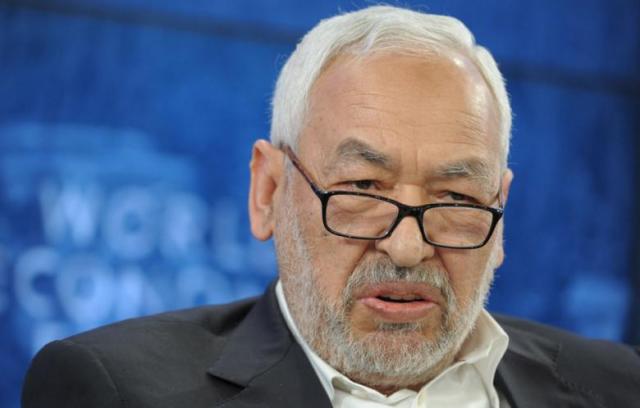
Ghannouchi 2

Rachid Ghannouchi – Via AFP

Last month, after a three-day party conference, Tunisia’s Ennahda party has re-elected its leader Rachid Al-Ghannouchi. The 74-year-old thinker and politician had tears in his eyes as he embraced his rival in the party vote, which he won with 800 of the 1,058 ballots cast. His crowning coincided with his bold new vision of moving away from political Islam and embracing what he described as “democratic Islam.”

As I wrote in my previous post, I am skeptical that Ennahda can and will divorce itself from political Islam. As I explained, it is, in my opinion, just a replacement of an overt version of political Islam with a more insidious version that fits in with the current dynamics in Tunisia and the broader Middle East.

 Some are less skeptical. For example, one of the most vocal opponents of Islamism, Maged Nawaz, despite endless accusations, mockery, and insults showered on him by various Islamists and their followers, wrote how he is optimistic about Ghannouchi’s new approach.

Nawaz rightly highlighted “how the party remained highly unified despite the unprecedented reforms: 80.8 percent of delegates voted in favor of separating the political from social work, and 87.7 percent voted in favor of Ghannouchi’s new intellectual vision for the party. Ghannouchi himself easily regained his presidency with a whopping 75 percent of the delegates’ votes.”

Those numbers are encouraging; nonetheless, they do not reflect the future challenges facing Ghannouchi’s Ennahda party. Again, as I explained in my previous post, years ago in Turkey, President Erdogan’s AKP party cheered Erdogan’s embrace of secularism. But only a few years later, the tune of the party has changed dramatically, and the cadres of overt Islamism have started to reassert themselves.

The debate over the intentions of Ennahda, however, will remain theoretical until the party one-day reaches power. It is already looking ahead to Tunisia’s municipal elections, which are scheduled for May 2017. Only then will its rosy words either translate to actions or vanish like a nice dream, to be replaced by a nightmarish reality. As Hussein Ibish wrote: “Even if the rebranding as “Muslim Democrats” is a cynical ploy, the party will have to follow through to gain power in a Tunisian society that won’t accept old-style Islamism.”

Therefore, to test Ghannouchi’s new approach to politics, here are three questions that I hope the leadership of Ennahda reflects upon and answers.

Can Ghannouchi democratize his party and prevent another “eternal leader,” a la Erdogan?

Personally, I would be more impressed with Ghannouchi if he opted to remain as a spiritual leader to Ennahda and not run again for its presidency. Isn’t it about time for the party to have a fresher, younger leader? Ghannouchi has not deviated much from his beloved Erdogan and remains in full control of his party. That is not an encouraging sign. Democracy is more than a ballot box exercise. If Ennahda is really democratic, it should refrain from concentrating power in the hands of one man. Only then can it convince others of its good intentions.

 Will Ennahda’s social Islamic movement (Harka) openly embrace secularism in its social program?

Secularism is not just a political slogan that can only be embraced by politicians; it is a thinking process that should be taught to young followers. Unless Ennahda harmonizes both its political and social messages, it risks contradiction and betrayal of its new rebranding as “democratic Muslims.” How its social movement handles its message, teaches its youth, and preaches in mosques will have profound impacts on its grass-roots relationship with political Islam. An illiberal social program would impede Ennahda’s democratic tendencies and will reduce the party to another failed model—again, just like Turkey’s AKP.

 Will Ghannouchi denounce publicly the father of radical Islam Sayyed Qutb?

 One of the biggest problems the Muslim Brotherhood faced in Egypt was its inability to divorce the father of non-compromising Islamism, Sayyid Qutb, from its psyche and teaching. Ghannouchi had a long journey with Qutb, who has influenced him, but he was also influenced by other Islamic thinkers like the Algerian Malek Bennabi, who was not a big adherent of Qutb.

Both Qutb and Bennabi had different views and attitude towards the West, but both were definitely not pro-secularism. Bennabi wrote extensively about how weak vulnerable Muslim societies became “easily colonized” by the West. One way of describing Ghannouchi’s recent cosmetic changes is a counter-colonization approach, a kind of new update of Bennabi’s philosophy. He wants to borrow some Western democratic values in an effort to prevent a total “colonization” of secular principles in Tunisia. Therefore, it is up to Ghannouchi to illustrate to outsiders the difference between his new approach to politics and those of both Qutb and Bennabi. A clarification of Ennahda’s religious outlook is essential to understand and assess the sincerity of its brand of “democratic Islam.”

Ennahda has still a lot of explaining to do. Like any divorce, leaving political Islam means total departure from many of the theological and social beliefs and understandings that were embraced for years, and a less tight grip by Ghannouchi on the party’s main pillars. An illiberal party cannot produce liberal democracy. Therefore, for now, I remain skeptical.


Posted in Islam, Middle East, Politics, Tunisia | Tagged , , , , , | Leave a comment

Can Tunisia’s Ghannouchi divorce political Islam?


Ghannouchi

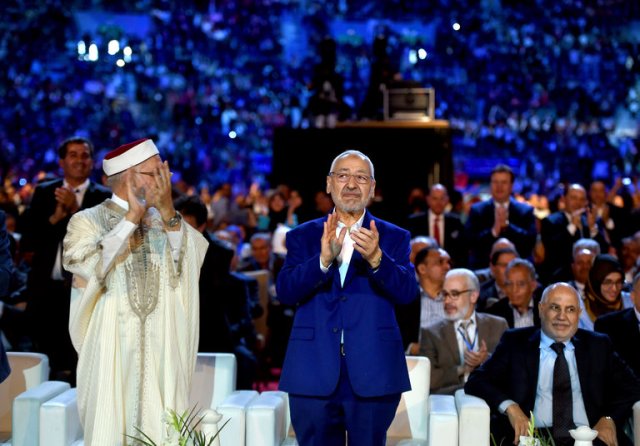
Leader of Tunisian political party Ennahda, Rachid al-Ghannouchi. (Photo: AFP)

The rebranding of political Islam has just started. In an interview with the French newspaper Le Monde, Ennahda leader and founder, Rached Ghannouchi, announced that Ennahda would no longer be campaigning on a foundation of “political Islam.” “We are leaving political Islam and entering democratic Islam,” he said. Ghannouchi, one of the smartest Islamist leaders in the Muslim world, is right to look for a new image of Islamism, a term presently tarnished by failure and disappointment. The term “democratic Islam” is new, appealing, and has already gained the attention of many sympathizers in the Western world. The question, however, is: Can Ghannouchi’s new benevolent approach work?

 Writer Abdulrahman Al-Rashed is already skeptical. Al-Rashed wrote that in his opinion, there are “two Ghannouchis” – the one who addresses the West, and the one who leads Ennahda. Al-Rashed highlighted how Ghannouchi had made contradictory statements. During an Ennahda Party congress in Tunisia, Ghannouchi had said, “We’re surprised by some parties’ insistence to eliminate religion from national life, although the leaders of the national movement have historically adhered to our Muslim religion.” That statement clearly differs from his bold views expressed in Le Monde.

Despite this perceived contradiction, to judge Ghannouchi’s new brand of “democratic Islam” objectively, it is crucial to look at his proposed manifesto, his working plan, and not just his words. Monika Marks, a Visiting Fellow at the European Council on Foreign Relations (ECFR), says the key change Ghannouchi advocates is separating the political party (Hizb) from its Islamic movement (Harka) that has traditionally been associated with charity, religious education, and preaching, and defines the political party as a national, civil, and democratic organization open to all Tunisians. Ghannouchi clearly wants to go in the same direction Turkey’s AKP went in the early 2000s, when it transitioned from an Islamist movement to a broad, national party that attracted many Turks for secular reasons, such as supporting the AKP’s economic program, as Monika Marks has explained.

Nonetheless, there are many political and religious challenges to this new approach by Ghannouchi and his Ennahda Party.

Politically, Turkey has experienced an evolutionary path that differs fundamentally from Tunisia and the rest of the Arab world. In Turkey, the AKP Party has managed to mix Islam as a religion with the country’s rich Ottoman history to create a new Islamo-nationalist identity that appeals to many in Turkey. In contrast, it will be hard for Ghannouchi to export the belief that Islamist nationalism appeals to loyalists outside Ennahda and attracts non-Islamist Tunisians, who are already skeptical about political Islam.

Moreover, Turkey in 2000 differs radically from Turkey in 2016. Erdogan has tightened his grip on power and silenced all his opponents. Even Erdogan’s friend, ex-Prime Minister Davutoglu, one of the main architects of the Turkish model, was forced to resign recently as part of Erdogan’s road to total autocracy. It will be tough for Ghannouchi to promote the so-called Turkish model, while ignoring its outcome: a tyranny via the ballot box.

Some Islamists have already started to distinguish between Erdogan’s autocratic manners and their new brand of “democratic Islam.” It would be naïve, however, to separate the two. Erdogan is the outcome of Islamism and not an aberration of it. The AKP’s other prominent figures, such as ex- PM Davutoglu and ex- president Abdullah Gul, have opted to drift into the shadows, only because they want to keep the party united. In another words, in Turkey the cultish nature of political Islam has overridden its democratic values and led its leaders to betray democracy and allow autocracy to creep into the party. Does Ghannouchi understand those risks? Unlikely. Ghannouchi, like many Islamists, sees Turkey as a model for power, not democracy.

Furthermore, the separation between Ennahda as a party and its social movement may alienate many of its junior cadres. For some Nahdaouis (Ennahda members) the split is another sign that the party is sacrificing principles “on the political alter of pragmatism.”

In fact, this pragmatism could force some to drift towards stricter Islamists groups. A myth currently circulating among many Western pundits is that moderate Islamists can turn the tide against radicalism in the Muslim world. However, the opposite, in fact, is true. A late pragmatism in a political Islamist party that campaigned for years under slogans such as “Islam is the solution,” will struggle to maintain its appeal without digging for a strong religious argument that convinces its followers. Otherwise, it will only lose its engineered authenticity and may force many of its youth to search for other, stricter, puritanical versions of Islamism.

What Ghannouchi is doing amounts not to a divorce of political Islam, but a temporary freeze of its overt nature. Many Islamists distinguish between what they perceive as areas of weakness and vulnerability (“Istidaaf”) when they sense that their appeal is waning within their societies and areas of strength (“Tamkin”), in which Islamism is powerful and expanding. Therefore, Islamist theologians advocate a “temporary” pragmatism where weakness and vulnerability are endured until circumstances change and empowerment becomes possible. In a way, that is what Erdogan has done in Turkey; he was patient and waited until he gained control and then forced his way to further entrench his power.

Ghannouchi simply enacted the above dualism because he [rightly] sensed how political Islam is currently struggling to gain popularity among Muslims; hence the need for a softer, gradual approach toward ruling Tunisia. He is indeed a fox, as Abdelrahman Al-Rashed described him, with a sharp, canny political awareness. He is following in the footsteps of Erdogan with his initial soft approach that, in Erdogan’s case, changed to a bolder, aggressive consolidation of power. Ghannouchi is in no rush to rule Tunisia and is willing to wait until he can transform Tunisia into his desired Islamist haven.

Unfortunately for Ghannouchi, his record of pragmatism among Arab Islamist groups has not been successful. One of the biggest problems the Muslim Brotherhood faced in Egypt was its inability to divorce the father of non-compromising Islamism, Sayyid Qutb, from its psyche and teaching. Until Ghannouchi solves this conundrum, Qutb will continue to haunt him. On the one hand, it will be problematic for Ghannouchi, who previously praised Sayed Qutb, to convince his junior cadres to forget Qutb, even temporarily, and accept non-Islamists, whom they despise, within the party. On the other hand, without abandoning Qutb openly, many non-Islamists will raise questions about his sincerity towards democracy.

So, in short, it is highly unlikely for Tunisia’s Ghannouchi to successfully divorce his party from political Islam___and he probably knows it. What will happen in reality is just the replacement of an overt version of political Islam with a more insidious one that fits in with the current dynamics in Tunisia and the broader Middle East. Some observers in the West may welcome such a softer approach to power, but its success in Tunisia is questionable. Ghannouchi may end up failing to appease the ultra-conservative elements of his party, and equally fail to convince the skeptics among his rivals. For now, however, he will try to enjoy his new brand as the Arab world’s first Muslim democratic leader.
 

Posted in Islam, Middle East, Politics, Tunisia | Tagged , , , , , | 4 Comments

Egyptian Aak 2016- Week 21 ( May 23- 29)

Top Headlines

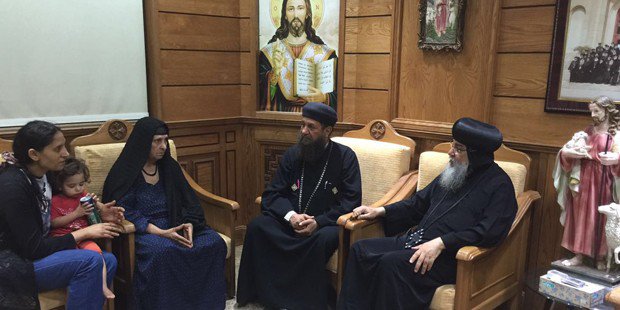
  • Elderly Christian woman was stripped naked and paraded through streets by mob in southern Egypt. Thursday
  • Search teams have picked up a beacon possibly from Egypt Air Flight 804, narrowing the search radius. Friday
  • Egypt deported a French journalist without explanation. Wednesday
  • Egyptian military court sentences 8 Brotherhood members to death. Sunday


Coptic woman

An elderly Coptic woman was stripped naked and eight houses were set on fire by mobs in Upper Egypt’s Minya

( Photo via The Cairo post)

Main Headlines

Monday

Tuesday

Wednesday

 Thursday

 Friday

Saturday

 Sunday

 Good Reports

Good Read

Interview

 From Twitter

https://twitter.com/basildabh/status/735870485695713280


https://twitter.com/DannyNis/status/736798741278130177

https://twitter.com/hahellyer/status/736612270843822080


https://twitter.com/intlspectator/status/737025799656611841

https://twitter.com/leithfadel/status/736731488998264832

Plus


Finally here are Jayson Casper’s prayers for Egypt

Posted in Diary of Aak, Egypt | Tagged , , , | 1 Comment

Egyptian Aak 2016- Week 20 ( May 16-22)

This week, it was tough to follow, verify and gather that most reliable information about Egypt Air crash. My condolence to the families of All the victims.   

Top Headlines 

  • An Egypt Air jetliner MS804 en route from Paris to Cairo with 66 people aboard crashed in the Mediterranean Sea. Thursday/Reports
  • Debris found from flight Egypt Air MS804. Friday
  • At least 2 smoke alerts reportedly sounded before Egypt Air plane crash. Saturday
  • Charles de Gaulle airport says it won’t tighten security again despite concern from its own workers over breaches. Sunday
  • Egypt’s Sisi says all scenarious are possible in Egypt air crash. Sunday
  • Sisi: Two-state solution gives hope to Palestinians, security to Israelis. Tuesday


Image 22-05-2016 at 23.49

Main Headline

 Monday 

 Tuesday

 Wednesday

 Thursday

Friday

Saturday 

 Sunday


Good Report

 On Egypt Air crash:

Other Reports

Good Read 

From Twitter


https://twitter.com/sommervillebbc/status/733672155213336576


Interview

 Plus

  • Giza pyramids light up with Egypt Air logo in solidarity with MS804 victims
  • The Sunken Cities: Egypt’s Lost Worlds exhibition inaugurated in London
  • Claustrophobic film brings Egypt’s turmoil to Cannes

And how the Muslim Brotherhood views the world:


Finally, for new readers, Aak = mess in Arabic


Posted in Diary of Aak, Egypt | Tagged , , , , , | 2 Comments

The Unfortunate Coverage of Egypt Air Crash

Egypt Air

Let’s admit it, Egypt is in a pretty pickle, out of fresh oxygen and overwhelmed by the poisonous impacts of seemingly endless crises. The latest is the Egypt Air flight that crashed into the Mediterranean, with 66 passengers on board. The reason is still unknown, but that did not stop many from pointing a finger to one theory or another and paint Egypt in a negative way! Reading some reports would give the impression that the once-labeled “Mother of the world” is now the “wicked Step-Mother” to many.

For starters, the American Republican candidate Donald Trump did not waste any time placing blame. Immediately after the news of the crash emerged, he said: “I can ‘practically guarantee’ who ‘blew up’ the Egypt Air plane.” His supporters did not waste any time either, and dug out a piece of poor journalism linking the un-linkable to market a theory that one or both of the pilot committed suicide. The piece took advantage of a Facebook post where Muslim preacher Amr Khaled posted an older photo of him with the pilot of the doomed Egypt Air flight as if that is a proof that the two are twin ideological brothers. The piece then added a video of Amr Khalid in 2011, when the Arab Spring caused everyone to link Amr Khalid with jihadists. Now Trump supporters have their smoking guns and are unwilling to even question logic and facts.

On the other hand, Egypt’s Muslim Brotherhood took the crash as an opportunity (again, without waiting for reasons behind the crash) to drain their bitterness at the current regime and warn of future “catastrophes.” Such cheap propaganda was echoed by many of their supporters on social media.

It may be wise to ignore both Trump and the Brotherhood’s rhetoric as cheap propaganda that is not worth attention. Mainstream media coverage, however, was alarming, to say the least. One of the starkest examples is the New York Times’ coverage. For example, take this post that started with a sensational headline: “Egypt Air was aware of threats to security, including one scribbled on plane.” Titles can be ignored, but the content was full of irrelevant facts. The piece mentioned “threatening graffiti, which appeared about two years ago.” Those who know Egypt well will figure out that this was after the ousting of Morsi, and most likely completely irrelevant to the current disaster. The piece added, “There were three Egypt Air in-flight security personnel — one more than the normal team of two for reasons that were not entirely clear.” Then it acknowledged they were unarmed. It is common practice for trainee-security personnel to start first as an extra to the main security team for training purposes. Moreover, if the Egyptian security guards were armed, they would possibly be the first suspects in the eye of many Western observers.

Maged Atiya wrote a superb piece about journalist James Reston’s coverage of Egypt a day before the 1967 Six-Day war. Despite Western media’s fundamental antipathy to the Nasser regime that was equally (if not more) oppressive as that of Sisi, the report focused on Egypt as a country, not as a regime. Atiya rightly pointed out that, “Today’s foreign journalists could learn a trick or two about mastering the right combination of accuracy, empathy and clear vision.”

Nevertheless, it is important to highlight that Egyptian media coverage is no better. In fact, it is suffocating and poisonous. Many local media outlets have done nothing more than hint at (or feed) potential conspiracy theories. Such defensiveness reflects the over-all bunker mentality that is dominating Egypt these days. The current tenure of President Sisi is strikingly similar to that of the post-Six-Day war defeat – full of blood, funerals, and a deep sense of insecurity, but with the extra scrutiny from outsiders.

There is, of course, a simple explanation to Western media’s unkind coverage of Egypt’s latest misery. They do not respect or trust the Egyptian regime, and for good reasons. The regime is oppressive, arresting activists, and handing hefty prison sentences to those who dared to protest. In such, the negative coverage is all understandable. It is good to see outsiders care about Egyptians’ freedom and rights.

The victims of the Egypt Air crash, however, were simply Egyptians, who deserve to be treated with the same respect as the victims of other tragedies around the world.  Families, as the rest of Egypt, are eager to know the cause of the crash, not some sensational postulations that incriminate some of their loved ones, or equally sensational pieces about their agony and funerals.

It would be naïve, however, to expect Western media to change its attitude. Yes, it is important to express our views about their coverage, but more importantly, Egypt must restrain from being defensive in handling the Egypt Air crash. Defensiveness will bring nothing but harm. Egypt has nothing to hide. In tough times, professionalism and transparency are the only friends that can help Egypt to remain the graceful Mother of the world, or as Egyptians say, Um El-Donyia.

Posted in Diary of Aak, Egypt | Tagged , , , , | Leave a comment

Tunisia: On the Road to Nowhere

This post originally appeared at the Council on Foreign Relations (CFR): Steven Cook’s From the Potomac to the Euphrates blog. Steven Cook is a Middle East’s expert and a senior fellow at CFR. He just visited and wrote this insightful.  I repost here with permission. Enjoy…


tunisia

“The only things [that have] changed are the names of the streets. They used to be [called] November 7, now they are [called] December 17.”

A young Tunisian said this to me in Sidi Bouzid on Sunday. For those less familiar with Tunisian history, on November 7, 1987, Zine al-Abidine Ben Ali pushed the country’s founder, Habib Bourguiba, from power in a palace coup, and December 17, 2010, is the day when Mohammed al-Bouazizi set himself on fire in front of the governorate building in Sidi Bouzid—an act of desperation that began the Tunisian uprising that deposed Ben Ali almost a month later. The quote is a simple and powerful rebuke to the oft-repeated phrase that Tunisia is “the one Arab Spring success story.” The country is not yet a success, but it also is not a failure.

Read more here >>

Posted in Middle East, Politics, Tunisia | Tagged , , , , | Leave a comment

Egyptian Aak 2016- Week 19 ( May 8-15)


Islands protests

Court sentences 152 Egyptian protesters demonstrate in Cairo on April 25 to prison

Photo via NPR

Top Headlines

  • Egypt sentences 152 to prison for protest over transfer of islands. Saturday
  • Germany summons Egypt ambassador over closing of German foundation in Cairo. Thursday
  • Mexico is dissatisfied and surprised with Egypt’s response to Mexican nationals killed in military airstrike. Friday
  • Prosecution orders renewed detention of journalists Amr Badr, Mahmoud Sakka for 15 days. Saturday
  • Kerry hosted Egypt FM Shoukry ahead of a planned Paris peace summit May 30. Saturday

 Main Headlines

 Monday

Tuesday

 Wednesday

 Thursday

Friday

Saturday

 Sunday

 Good Report

Good Read

Interview

From Twitter


https://twitter.com/basildabh/status/729631918573096960

https://twitter.com/ericawenig/status/730828810581622790

https://twitter.com/minafayek/status/731871324335902721


Photo Gallery

Video

 Plus

Finally here are Jayson Casper’s prayers for Egypt


Posted in Uncategorized | 2 Comments

Podcast: Alternative media and the American Elections

Here is the second episode of Media Studied Podcast, in which I am honoured to join Prof. Matt Sienkiewicz from Boston college, with Benjamin Dixon and also James Miller, the managing editor of the Interpreter magazine.

In this episode we discussed alternative media in general, and also its impacts on the American elections.

You can listen by clicking on this link:


Posted in Podcasts | Tagged , , | 1 Comment

Egyptian Aak 2016- Week 18 ( May 2-8)

Top Headlines

  • Egyptian prosecutors ordered the detention of journalists Amr Badr and Mahmoud El-Sakka. Monday
  • Egyptian papers begin publishing interior minister’s photo in negative. Wednesday
  • Espionage case of former President Mohamed Morsi has been adjourned. Saturday
  • Egyptian policemen killed in an ambush South of Cairo, several groups including ISIS claimed responsibility. Sunday

Main Headlines

 Monday

Tuesday

Wednesday

Thursday

Friday

Saturday

Sunday

  • Egyptian policemen killed in an ambush South of Cairo
  • Several militant groups claim responsibility for death of 8 policemen                                                                                                                                    in Helwan
  • Giulio Regeni murder investigators from Italy and Egypt meet in Cairo
  • Activist Malek Adly is remanded for 15 days, faces subversion, protest charges
  • President Sisi and government maintain silence on journalists’ stand-off with Interior Minister
  • Journalists Syndicate postpones Tuesday general meeting for a week
  • Archeologists clash in Egypt over King Tut tomb theory
  • Egypt’s Islamist Authority blasts ISIS organ harvesting
  • Egypt’s Muslim Brotherhood unveils plan to heal rifts plaguing the group
  • Egypt detains satirist over video mocking the government

 Good reports

Good Read

From Twitter

https://twitter.com/Mokhtar_Awad/status/729388443256655873

https://twitter.com/Mokhtar_Awad/status/729374864805613568

https://twitter.com/Terror_Monitor/status/729191809692274688

https://twitter.com/hahellyer/status/727860286699483138

https://twitter.com/Nervana_1/status/727246454243340288


Photo Gallery:

Finally, here are Jayson Casper’s prayers for Egypt

Posted in Diary of Aak, Egypt | Tagged , , , , | 2 Comments