Top Headlines
- Egypt, Saudi Arabia, Bahrain, the United Arab Emirates and Yemen have cut diplomatic ties with Qatar (early Monday)
- Egyptian closes its airspace and seaports for all Qatari transportation
- Four army personnel killed during anti-terrorist campaign in Egypt’s Western Desert
- HRW: Egypt’s new law will crush civil society
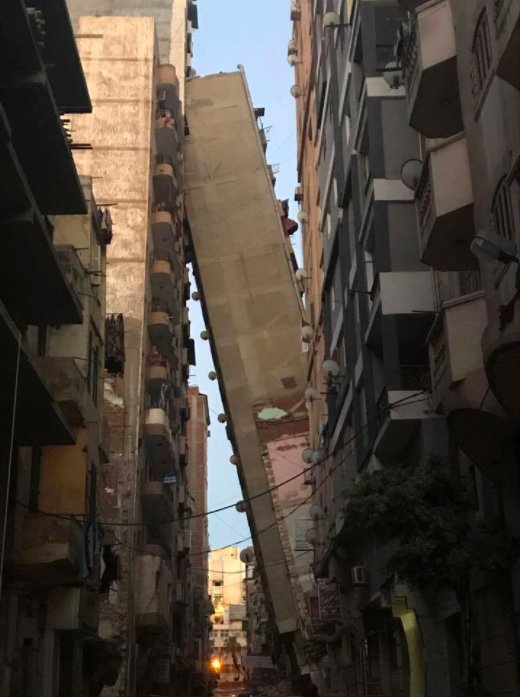
- Leaning tower of Alexandria sparks state of emergency in Egypt
- Egypt evacuates toppling 13-floor building in Alexandria
- Egypt’s Al-Azhar admits Christian dental resident for first time
Main Headlines
Monday
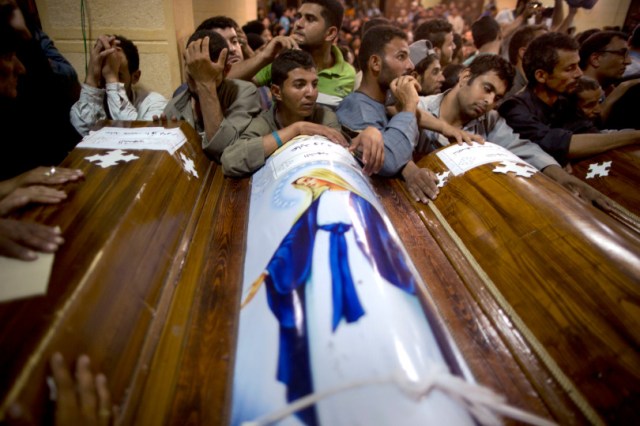
- Death toll from Egypt’s Minya attack climbs to 30
- Egypt launches fresh airstrikes on militia sites in Libya’s Derna
- Egypt transfers Minya security chief after attack on Christians
- Egypt’s cabinet approves $2.48 billion social aid program
- Cairo court postpones trial of Egyptian rights lawyer Khaled Ali to July 3
- Egypt cabinet approves raising minimum income tax threshold to LE 7,200
Tuesday
- Egypt’s airstrikes on Libyan terrorist targets are ongoing: Military spokesman
- Egypt’s Sisi gets briefed on latest updates in Minya attack, airstrikes on terrorist bases in Libya
- Sudan ratifies ban on Egyptian imports, fuelling tension
- Egypt receives first tourists to take tour recreating trip of the Holy Family
- 13-year-old Egyptian struck by stray bullet in Cairo dies
Wednesday
- Four army personnel killed during anti-terrorist campaign in Egypt’s Western Desert
- Egypt’s army chief-of-staff discusses military cooperation with NATO commander
- Vehicle loaded with explosives is seized in Ahmed Hamdy tunnel under the Suez Canal
- Egypt fixes customs exchange rate at EGP 16.5 for June against the US dollar
- Egypt says its embassy building ‘significantly’ damaged in Kabul blast
Thursday
- Egypt evacuates toppling 13-floor building in Alexandria
- An Egyptian criminal court handed a death sentence to a man accused of raping a 20-month old child
- Egypt and Sudan to hold consultations in Cairo
- Al-Azhar suspends charity advert “for undermining state’s efforts”
- Television host and Islamist researcher Islam El-Behery returns with a new show
Friday
- Leaning tower of Alexandria sparks state of emergency in Egypt
- Egypt’s Sisi ratifies new investment law
- Parliament to discuss a bill to exclude families with more than 3 children from state subsidy
- Al-Azhar uses Cairo Metro’s internal radio to practice preaching
Saturday
- Owner of Alexandria’s leaning building arrested is arrested
- Landslide causes traffic congestion in Cairo’s fifth settlement
Sunday
- Egypt, Saudi Arabia, Bahrain, the United Arab Emirates and Yemen have cut diplomatic ties with Qatar
- Egyptian closes its airspace and seaports for all Qatari transportation
- Hamas delegation is visiting Cairo for talks with Egyptian officials
- Egypt’s foreign reserves rise to $31 billion in May, the highest since 2011
- Despite strict measures, Arabic exam was leaked in Thanaweya Amma examinations
- Court issues 3 years sentences for protesting Tourah Cement company workers
- Egypt’s Al-Azhar admits a Christian dental resident for the first time
Good Reports
- Egypt’s answer to latest attack reflects despair, resolve. Hamza Hendawy
- Coptic Christians describe bus attack in Egypt: “even the little children were targets”. Heba farouk Mahfouz
- How I was recruited to join Ansar Al-Sharia in Libya’s Derna. Al-Bawaba
- Egypt’s Al-Azhar looks to “cafe preachers” to spread its message.Salwa Samir
- Egypt’s new law will crush civil society. HRW
- Libya’s militant groups: from Islamic State to Muslim Brotherhood. Taha Sakr
Good Read
- Egypt’s cyber dilemma: Technology, threats, and freedom. Ayman S. Ashour
From Twitter
https://twitter.com/Mokhtar_Awad/status/870384198753943554
Video
- ·Watch as a 13-storey apartment building in Egypt tilts across the street
Plus
- Eight Christians who make Egypt great make Egypt great
Finally here are Jayson Casper’s prayers for Egypt



 Nervana
Iran’s election: False hopes of a moderate path
( Iran’s Supreme Leader Khamenei –via The Guardian)
Last Friday, Iranians voted in the country’s presidential election, favoring current President Hassan Rouhani with 56.9% of the votes, defeating his hardliner rival Raisi, who scored only 38.5. Reformist candidates have also swept municipal elections in the Iranian capital, taking all 21 seats in Tehran. Following his victory, Rouhani pledged to open Iran to the world and deliver the freedom its people have yearned for. Rouhani’s re-election, however, will not inch the Islamic Republic towards a future moderate path.
The Islamic Republic has three major advantages over its Arab neighbours: It has no foreign patron; has never faced a humiliating military defeat; and its isolation has lowered the expectations of its citizens.
Iran has no foreign patron that demands or expects a softer stance. In fact, since the Mullahs ousted the late Shah of Iran, they have focused on being patrons of Shia minorities in the region. Moreover, being a patron in such a tough neighbourhood like the Middle East is itself a barrier to moderation. Those Shia followers will not stay loyal to the Mullahs if they sense any weakness in the Iranian handling of regional foes. Unlike the Saudis, who built their clout through spectacular summits and grooming global partnerships, the Mullahs prefer to work underground through complex webs of kinship and loyal groups. Breaking this complex network is almost suicidal for Tehran.
Never having faced a trauma such as defeat at the hands of Israel, the attributes of compromise and negotiation are virtually absent from the Mullahs’ psyche. Iran has the luxury of not having a direct border with Israel, which offers the Mullahs the opportunity of low cost, indirect skirmishes via its favourite proxy, the Lebanese group Hezbollah, but never a direct confrontation. Therefore, realistically, except for successful military airstrikes on Iran, which is, for geographical and political reasons, almost impossible, the Mullahs have no reason to abandon the country’s strategic pillars, namely its aggressive anti-Israel/American stance. Why should they?
Furthermore, although the Iranian leadership is keen to comply with its obligations stated in last year’s nuclear deal, to break the harsh sanctions imposed on the country, the Mullahs are not keen to embrace a full economic liberalization policy. Having watched its Arab neighbours, particularly Egypt, the Iranian regime fully understands how the open-door economic policies adopted by Egypt’s President Sadat in the Seventies eventually triggered huge social changes, increasing citizens’ expectations and demands, and igniting political and human rights aspirations. All are red lines for the Mullahs. Iranian citizens, on the other hand, after decades of harsh sanctions, are conditioned to be grateful for the little their masters offer. Isolation lowers the ceiling of expectations and mellows bolder demands.
In any election, the Mullahs are willing to offer the Iranians two shades of grey, one dark and one slightly lighter. However, the rulers in Tehran are not prepared to offer their people a bolder shade that opens the country completely to the global competitive market.
In short, as Karim Sadjadpour has written, four decades of Iranian presidential elections have had little impact on Iran’s major domestic and foreign policies. The Mullahs are skilled at tricking others to die fighting enemies of the Islamic Republic, but they are unwilling to commit suicide themselves. In its handling of both its citizens and international community, the Iranian regime prefers to construct well-managed waterways, while avoiding opening any floodgates. Such a state of affairs tempers any expectations that await the second term of Iran’s Rouhani.
Share this: