Egypt’s Football “Naksa”


Here is an English version of my latest piece in Al-Hurra, you can read the Arabic on here
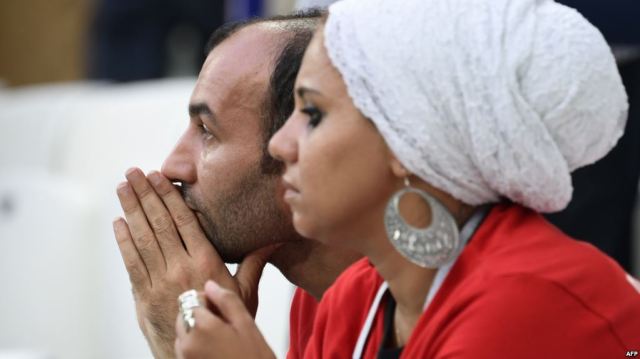
Egypt's Naksa photo


One cannot grow up in Egypt and not love football. The smiles of kids playing in the streets, their joy and passion, and their wild cheers after winning are all part of my childhood memories. But such scenes were not always upbeat and cheerful; I also remember the ugly bickering, yelling, and fights following defeat. Football in Egypt has always mirrored our society, with all its blessing and flaws. During the country’s World Cup journey, Egypt swung wildly between exuberant joy and equally ugly anger and depression. Every society has its own flaws, but in Egypt, our flows are toxic and destructive, enough to doom us to defeat even when we are desperate to win. Egypt’s football “Naksa” is cruel and painful, but it should be an opportunity for reflection and learning.

A popular Egyptian idiom says “an inch of good luck is better than an acre of hard work.” This very destructive idiom has created a collective backgammon mentality in Egypt, which makes us systematically rely on (or blame) luck for our successes (or failures). Luck may help once, but smart hard work is what leads to and, more importantly, maintains success.

Let’s go back to our October qualification match. Anyone with basic football knowledge can recognize that Egypt did not play well in that match. Without the last-minute penalty and Mohamed Salah’s beautiful goal, the team’s chance for qualification would be different.. It is baffling how anyone can believe that Egypt’s shaky performance against Congo could have so miraculously improved in just a few months—enough to beat stronger teams such as Russia and Uruguay.

Instead of acknowledging the modest standard of our team, we Egyptians were carried away with joy and wrongly assumed that our inch of luck would be enough to continue to secure us victory, as long as we had the talented Mohamed Salah.

A Story of Two Penalties

After our crushing defeat in Russia, many looked with nostalgia to Egypt’s last performance twenty-eight years ago in the 1990 World Cup, as if that Egyptian team was so much better. Such nostalgia is misplaced. The 1990s Egypt was no different except for its lack of a high-expectation mentality. Our expectations back then were not high, because we knew that our team’s modest skills. The result was a more relaxed performance—albeit modest, but not poor.

The difference between the two World Cup performances was in the timing of our penalties. In 1990, Egypt scored in the first match of the competition, giving us a moral boost. However, in 2018, our crucial penalty was in the last match of the qualifying stage, which only created misplaced high expectations and arguably complacency.

A One-Man Show

The focus on Salah’s qualifying goal, which coincided with his amazing performance in the English football Premier League, inappropriately skyrocketed our confidence and, more dangerously, created a Salah-dependent mentality. The rest of the team came to rely on Salah’s presence and performance. Although other football teams rely on one star (e.g., Ronaldo, Messi, and Neymar), the gap between those stars and other players on their respective teams is not usually as wide as what exists on the Egyptian team. This wide gap may have knocked down the confidence and the standard of other players, leading them to rely completely on Salah. Such dangerous reliance on Salah was rattled following his injury in the Championship League. Despite his recovery, the other players failed to regain their confidence.

Mental Preparation

I could not help but notice how Senegal and Nigeria players looked chilled, relaxed, and happy whereas our Egyptian players were tense, stiff, and almost miserable. The Egyptian team had almost no mental coaching. It arrived stressed and preoccupied with the uncertainty of Salah’s readiness for play after his injury. There is nothing more destructive for any player than distrusting his own ability.

Our collective enchantment with Salah was unhealthy and unproductive. Football is a group game and cannot be won by relying on one star. We have unnecessarily piled pressure on Salah and managed to turn the blessing of having a gifted player to a curse that ruined our collective ability to fight and win. That is certainly notSalah’s fault; it is ours—and ours alone—to rectify.

We can blame everyone from the coach and the football association to the overall climate of corruption and nepotism, but let’s be honest: We lost the World Cup long before our team played any match in Russia. Egypt can do better, but first we have to learn how to work as a team. We do not need luck, but we need acres of hard teamwork. Let’s try to enjoy football again.


Posted in Diary of Aak, Egypt | Tagged , , , | Leave a comment

This Week in Egypt: Week 26-2018 ( June 25-July 1)

Top Headlines

  • Egypt’s President Al-Sisi appoints Abbas Kamel as the country’s new chief of General Intelligence Service
  • Egypt’s Sisi, facing online backlash, says country is on “the right track”
  • Egypt’s national football coachis fired following disappointing World Cup campaign
  • Egypt refuses EU call for migrant reception centres
  • Egyptian police kill four member of Hasm terrorist group

 Main Headlines

 Monday

  • Egypt, Greece and Cyprus kick off joint military drills in the Mediterranean
  • Saudis add to Salah’s misery, beat Egypt 2-1 inin World Cup farewell
  • It was very difficult for us, but the future will be better, says Mohamed Salahafter Egypt’s World Cup defeat
  • Egypt’s goalkeeper El-Hadary makes history with World Cup record
  • Egypt’s interior minister says ‘good progress’ made in the country’s war on terrorism
  • Egypt’s total public debtreached EGP 3.4 trillion by end of 2017: Central bank
  • Egypt repaid$30 billion in due bonds, foreign debt during 2017: Ministry of Finance
  • President Sisi ratifies law regulating Uber, Careem, and other ride-hailing services

Tuesday

Wednesday

Thursday

Friday

Saturday

Sunday

  • Egypt to start building a nuclear plantin the next two years
  • Egyptian security service prevented the Sudanese opposition National Umma Party (NUP) leader Sadiq al-Mahdi from entering Cairo
  • Egypt refusesEU call for migrant reception centers

 Good Reports

Good Read 

 From Twitter

https://twitter.com/MHChehade/status/1011349932375265281


https://twitter.com/spectatorindex/status/1012051863548526592

https://twitter.com/spectatorindex/status/1013474817675128833


https://twitter.com/spectatorindex/status/1012051863548526592

https://twitter.com/spectatorindex/status/1013474817675128833

Plus

Posted in Diary of Aak, Egypt | Tagged , , , , , , , , | Leave a comment

This Week in Egypt: Week 25-2018 (June 18-23)

Top Headlines

  • Egypt appoints new Air Force commander
  • Egypt extends state of emergency for another 3 months
  • Egypt strongly condemns assassination attempt on Ethiopian PM
  • Egypt’s Sisi discusses peace process with White House advisor Jared Kushner
  • Army kills 32 militants in a sweeping operation inside North Sinai
  • Students to return to Arish University for first time since February
  • Sources: Salah considering is retiring from national team

 Main Headlines

 Monday

Tuesday

Wednesday

Thursday

Friday

Saturday

Sunday

Good Reports

Good Read

  • Over a decade ago I made legal history in Egypt,but to fight for women’s rights we need to change the culture, not just the laws.’ Hind El-Hinnawy
  • The new media and press law in Egypt: The end of social media by law. Zeinobia
  • Will the comprehensive pperation achieve it’s target to eliminate terrorism in Sinai? Mahmoud Gamal

From Twitter

https://twitter.com/HosamDakhakhni/status/1010583040240816129

Sports

  • Swimmer Farida Osmanwins new silver medal for Egypt in Mediterranean Games, after winning Gold one

Plus

Posted in Diary of Aak, Egypt | Tagged , , | Leave a comment

This week in Egypt: Week 24-2018 ( June 11-17)

Top Headlines

  • Egypt replaces Minsters of Interior and Defence in a surprise move
  • Fuel, cooking gas prices, and public transport surge In Egypt
  • Sisi calls on Egyptians to endure challenges on back of fresh subsidy cuts 
  • Suez canal reports record high $5.585 billion annual revenue
  • Brave Egypt concede late goal to lose to Uruguay in World Cup opener
  • Poll: Egypt is safer than US and UK

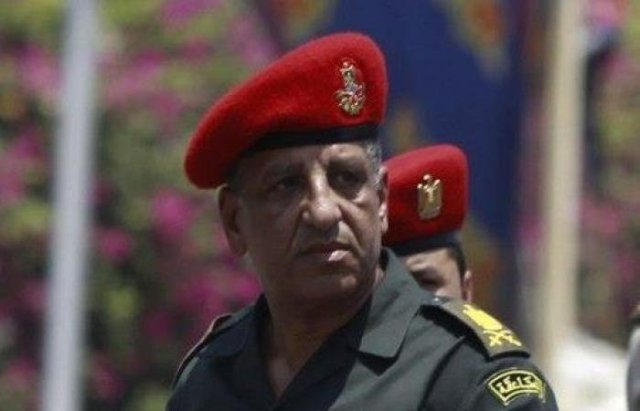
Egypt's New Defense Minister

Egypt’s New Defense Minister Lt. Gen. Mohamed Ahmed Zaki,

Main Headlines

 Monday

Tuesday

  • Egypt’s minister of electricity announces rateshikes in electricity billsfor fiscal year 2018/2019
  • Sisi calls on Egyptians to endure challengeson back of fresh subsidy cuts
  • Sisi says Egypt will continue its efforts to halt deteriorating situation in Syria
  • Censorship Boardrevokes decision to ban film hours after announcing it
  • Thanaweya Amma English exam leaker is identifiedby student’s digital bar code: Egypt’s education ministry

Wednesday

  • U.S. Homeland Security Secretary inspects Israel’s border with Egypt for Mexico wall ideas
  • An Egyptian court says it has no jurisdiction to shut down BBC’s Cairo officeover controversial report
  • Mohamed Salah joins the Egyptian team training session
  • Archaeologists unearth 3,500-year-old rock art depicting bulls, donkeys and sheep in Egypt

Thursday

Friday

Saturday

Sunday

Good Reports

From Twitter


https://twitter.com/spectatorindex/status/1006930806848176128?s=21

Sport

Poll

Plus

Posted in Diary of Aak, Egypt | Tagged , , , , , | 1 Comment

The myth of “the deal of the century”

Here is an English version of my latest Arabic piece in Al-Hurra on how imaginative plots have been weaponised and used to demonise certain Arab countries, particularly Saudi Arabia, United Arab Emirates, and Egypt.


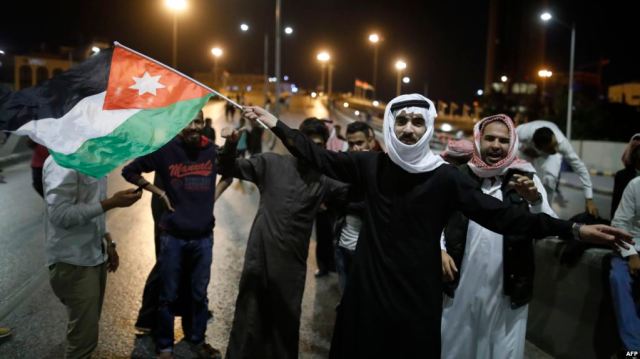
Jordan protests

Photo from latest protests in Jordan- via Al-Hurra


In July 2017, columnist Abdul Al-Hamid Al-Majjali wrote in the Jordanian daily Al-Dustourthat the Arabs believe in conspiracymore than any other people in the world. He highlighted how many in the Arab world see events as foreign plots hatched in dark chambers in the West. Almost a year later, protests erupted in Jordan against IMF-backed austerity measures. Like all crises in the Arab world, Jordan’s protests attracted another conspiracy theory –the deal of the century.” But unlike previous conspiracies, the new one does not only blame the West, but also certain Arab countries, mainly Saudi Arabia and its allies. Precisely why, is dangerous and destructive.

The term “deal of the century” was circulated more than a year ago, when American President Donald Trump expressed his desire to achieve a comprehensive resolution to the Israeli-Palestinian conflict. Trump’s good relationship with Israel’s government and with key Arab states have raised hopes of reviving 2002’s Arab Peace Initiativeof recognising Israel in return for a Palestinian State with borders such as those that existed before the 1967 war.

Trump’s interest has ignited a vociferous debate about whether such a deal is feasible, even in the absence of any specific details about Trump’s initiative, specifically when he met the Palestinian president in Bethlehem in May 2017.

But the American president did not need to say anything; many Arabs have decided to articulate their own versions of the “deal of the century.” Over the past 12 months, I have heard head-spinning scenarios being projected around this elusive deal, on both social and mainstream media. Ordinary Arabs, revolutionary activists, and even analysts and journalists have postulated about the details of such a dubious deal. Outlandish scenarios, such as Jordan as the new Palestine or Sinai as an extension of Gaza, were circulated.

The latest wave of protests in Jordan came as a gift to advocates of this alleged plot. “They want to destroy Jordan, because it refused to fulfil their deal of the century,” was a mantra that became almost synonymous with news of the protests in the streets of Jordanian cities. What has been consistent in all the various scenarios is the implication of certain Arab countries, particularly Saudi Arabia, the UAE, and Egyptin such plots, and the portrayal of those states as traitors to the Palestinian cause.

Traditional enemies, such as America and Israel, and all the valid reasons that Al-Majjali rightly explained, are not the sole explanations. After decades of enshrining conspiracies in the Arab psyche, imaginative plots have been weaponised and used to demonise certain Arab countries. Welcome to stage II of the conspiracy, in which Arabs are the neo-traitors.

Unlike other conspiracies, the “deal of the century” is gaining traction and appeal among many, not just because of the century-old mistrust of Western motives or the Trump administration’s warm relations with Israel, but because it serves the interests of certain countries and alliances in the region.

Two events that indirectly helped rumours of the “deal of the century” plot flourish were the Qatar crisis and the US withdrawal from the Iran deal. In March 2002, there was hardly any criticism against the late Saudi King Abdullah when he unveiled the Arab Peace Initiative. But that was before the Arab Spring, and Saudi Arabia was almost immune from criticism.

In the post-Arab Spring era, however, the political map of the region has been re-drawn. Three camps have emerged, two Islamists, the Iranian camp and the Qatari-Muslim Brotherhood ones; a new Saudi-quartet coalition that divorced Islamism and is seen as more pragmatic towards Israel.  The so-called “deal of the century” has become a convenient tool in the hands of those whose mission it is to discredit the Saudi camp. In the alleged plot, Egypt’s buffer zone in North Sinai is portrayed, not as a counter-terrorism measure as Egypt has asserted, but as a preparation for the future relocation of Palestinians. Jordan’s dwindling aid is also portrayed as a deliberate tactic, particularly by Saudi Arabia and the UAE, allegedly aimed to help Israel to create Palestine in Jordan, instead of the West Bank.

Here in Al-Hurra, Joyce Karam explained the reality in Jordan and how the protests had nothing to do with any foreign conspiracy or deal. I also wrote before countering the myth of Sisi’s Sinai proposal  But how can logic win when religion and national identiy are used to boost certain camps in the region?

Advocates of the ‘deal of the century” myth exploits two conflicting attitudes in the Middl East: The first is a dogmatic one that suggests Palestinians will be the ultimate losers from any peace deal with Israel. The second is a pragmatic attitude, driven by the fear that the status quo will ultimately harm the Palestinian cause, and that a deal with Israel is needed.

People are entitled to disagree with pragmatism, but they have no right to blur the differences between pragmatism and betrayal.

Posted in Egypt, Israel, Jordan, Middle East, Palestine, Saudi Arabia, Sinai, UAE | Tagged , , , , , | Leave a comment

This Week in Egypt: Week 23- 2018 (June 4-10)

Top Headlines

  • President Sisi appoints Mostafa Madbouly, former housing minister, as new prime minister
  • Egypt, Ethiopia agree to settle differences over Nile mega-dam
  • Libya’s army air raid kills Egyptian al-Qaeda leader in Derna
  • Egypt unveils pay rises ahead of fresh subsidy cut
  • Egypt’s annual urban consumer price inflation decreases to 11.4 percent in May


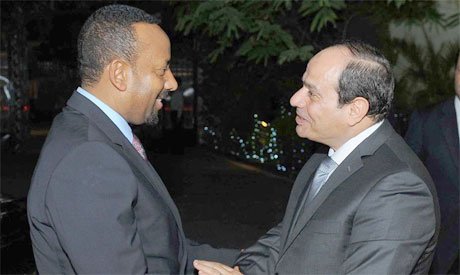
Sisi and Ethiopian PM

 Main Headlines

 Monday

Tuesday

Wednesday

Thursday

 Friday

Saturday

Sunday

 Good Reports

Good Read

From Twitter

https://twitter.com/BTelawy/status/1005487658259374080

https://twitter.com/ShirazMaher/status/1005508501706366976

https://twitter.com/WorIdCupUpdates/status/1005519608806338560

https://twitter.com/AnfieldExpress/status/1005864575156277249

Sport

  • Egypt’s ageless goalkeeperEssam El-Hadary aiming to pull out all stops in Russia
  • Egypt’s Salah makes fun of Ramos’ comment about continuing Champions League final with injury

Plus

  • Guide to Egyptian Parliament’s new feesfor mobile phone lines, passports and driving licenses
  • Egypt’s Nasser-era broadcaster Ahmed Said dies at 93
Posted in Diary of Aak, Egypt | Tagged , , , | 1 Comment

This Week in Egypt: Week 22 ( May 28-June 3)

Top Headlines 

  • Egypt’s Sisi sworn in for second term with vow to fight terrorism
  • Egypt’s Sisi to visit Sudan in October amid tensions
  • Liverpool officially announces Salah’s participation in 2018 FIFA World Cup
  • Lebanese tourist is referred to criminal trial for insulting Egypt n Facebook
  • Egypt’s top court bans Social Solidarity Minister from dissolving NGOs


Sisi inaguration BBC 

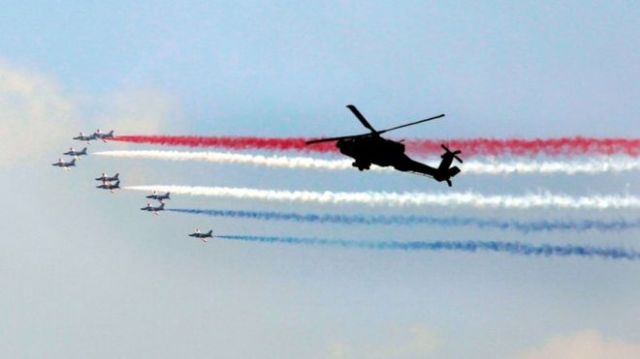
Jets accompaning the presidential swearing-in cermony  in Cairo

Main Headlines

 Monday

  • Egypt police find body of Muslim Brotherhood fugitive after raid in Giza
  • Top prosecutor tasks antiquities ministry with confirming authenticity of artefacts that was seized in Italy
  • Egypt’s Mohamed Salah to continue treatment for injured shoulder in Spain
  • An Egyptian lawyer files $1.2 billion lawsuit against Sergio Ramos for injuring Mohamed Salah in Champions League final

Tuesday

Wednesday

Thursday

Friday

  • Egypt’s Sisi: Attempts to sow strife between Egypt and Saudi Arabia will not succeed:
  • Egypt’s rejection of Russian wheat over ergot creates latest supply snag
  • Egyptsecurity arrests Lebanese woman for insulting Egyptians and political leadership in a Facebook video
  • Egypt hold Colombia to 0-0 draw in penultimate World Cup warm up

Saturday

Sunday 

Good Report

From Twitter

https://twitter.com/mahmouedgamal44/status/1003350666432143360

https://twitter.com/worIdcupfan/status/1002640542977708033

https://twitter.com/Pharaohs/status/1002349586248359936

https://twitter.com/TeamFA/status/1001782522894675969

Plus

Finally here are Jayson Casper’s prayers for Egypt


Posted in Diary of Aak, Egypt | Tagged , , , , , , | Leave a comment

Why the Qatar crisis will not end soon

Here an English version of my last for Al-Hurra


Qatar crisis after a year photo


It has been a year since the start of the Qatar diplomatic crisis, when the Saudi-led coalition imposed a trade embargo on the country.  For Saudi Arabia, the UAE, Bahrain, and Egypt, however, it is a reminder of the dangerous impacts of Qatar’s love affair with cultish Islamism. The dispute with Qatar may not be the most dramatic in our region, which is already saturated with bloodshed and misery, but it represents a crucial battle for the post-Arab Spring order, one that will shape the Gulf states and the region for generations.

The conflict may seem perplexing. Amidst the fog of misinformation, lobbying, leaks, and rumors, it is hard to understand why the dispute has not been resolved yet. However, there appear to be three important elements behind its continuation:

First, a question of identity

For years, the Gulf States have preferred the “khaleeji” identity – a collective identity under the umbrella of the Gulf Cooperation Council (GCC). They hoped common cultural values, social integration, and inter-marriage would harmonize the Gulf State societies and yield a united political vision. But just like its bigger brother, the Arab league, the GCC has proved to be a fragile union. Social and cultural commonalities alone do not necessarily lead to a successful political unity. In fact, the dispute with Qatar has exposed how conflicting, and often confused, national identities can sow the seeds of divisions.

While Qatar has opted to merge cultish Brotherhood Islam with its own national identity, the United Arab Emirates has adopted a bolder reformative religious discourse that openly opposes Islamism as an ideology. The Qatar crisis reflects how individual Gulf identities (Saudi, Emiratis, Kuwaiti, Bahraini, Omani, and Qatari) are still evolving, struggling to weave religion within their distinctive national identities. This struggle may take years to resolve.

Second, a battle for public image

Although both sides of the conflict have used mainstream and social media to pursue their agendas, the Qataris have arguably been ahead of their opponents. The Saudi-led coalition has started to catch up, but is still way behind Qatar in the battle to win hearts and minds, especially in various Western capitals.

A quick scan of the Western media’s published reports and opinion pieces on the crisis clearly shows that the majority of them favor Qatar’s position.

Explaining such a discrepancy is not easy. Perhaps Qatar has indirectly benefitted from the plethora of Western reporters and pundits who have developed a strong anti-Saudi Arabia stance, especially since the collapse of the Arab Spring revolts.

Since 2011, the Qataris fully understood modern warfare and made a strategic decision: For their tiny state to win, they had to align themselves with anti-state forces in the region, particularly the Islamist ones, and portray their regime as a supporter of freedom and rights.

Furthermore, Qatar has developed a dual approach. In the Western media Qatar portrays itself as a victim facing an unfair blockade from its neighbors. In the Arabic media, however, Qatar represents itself as the defiant underdog, an image that appeals to the Arab public, particularly those who are still buying Islamism’s resistance narrative.

On social media, a ghastly war of attrition has erupted between the two sides. Even football was not exempted. For example, pro-Qatar accounts flirted with conspiracy theoryby suggesting Saudi Arabia may be behind Egyptian player Mohamed Salah’s injuries during the Champion League Final to orchestrate an easy win over Egypt in the upcoming World Cup.

This ugly media war has ruptured any remaining bonds between Qatar and its neighbors, and made reconciliation virtually impossible.

Third, the American role

Initially, U.S. President Donald Trump accused the government of Qatar of funding extremism. Last month, however, the U.S. Secretary of State, Mike Pompeo,advocated a more conciliatory tone, and told Saudi Foreign Minister Adel al-Jubeir that the dispute needs to end.

Steven A. Cook, senior fellow at the Council on Foreign Relations, has explained the U.S.’s apparent U-turn by linking Trump’s desire for Gulf unity with his new approach on Iran. Indeed, a united Gulf stance may sound desirable in confronting Iran, but it does not exist in reality. In contrast to the enthusiastic reception from Saudi Arabia and the UAE to America’s decision to withdraw from the 2015 nuclear deal and reinstate sanctions against Iran, Qatar has taken a more cautious stance.The quest for Gulf unity has proved to be more elusive than many in Washington initially assumed. The endless lobbying of both sides in Washington has neither solved the crisis nor helped the U.S. achieve its goals.

On the first anniversary of the Qatari crisis, the distance between Doha and Riyadh is getting wider and wider. Qatar has survived the boycott, and scored a few points in the media war, but as I have written previously, Qatar has failed to drive a wedge between Saudi Arabia and the UAE  and failed to weaken the resolve of its opponents. In contrast, the Saudi coalition has adapted and recalibrated its tactics to the evolving new geostrategic realities.

In the presence of such a stalemate, the U.S. needs to focus on a more modest approach towards Gulf peace, but not necessarily unity. De-escalation and joint cooperation against Iran are more important to the U.S. than an unhappy marriage between rival Gulf States.

You can read the piece in Arabic here


Posted in Qatar, Saudi Arabia, UAE | Tagged , , , , , | Leave a comment

This Week in Egypt: Week 21 -2018 ( May 21-27)

Top Headlines

  • Future of Homeland party to form majority bloc in Egypt’s parliament
  • Qatar bans UAE, Saudi and Egyptian products as embargo anniversary approaches
  • Egypt’s top court orders temporary suspension of YouTube
  • Egyptian security forces detained prominent blogger and journalist Wael Abbas
  • Uncertainty about Ismail Alexandrani’s fate after Egyptian military denies issuing 10-year sentence
  • Egypt arrests opposition leader Hazim Abdelazim for publishing ‘false news’
  • Teary Salah goes off injured in Champions League final

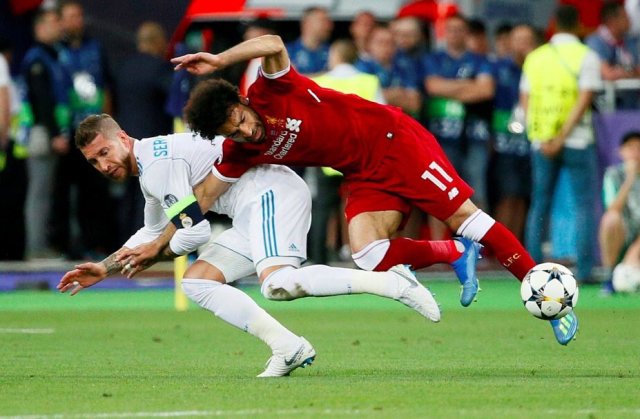
Salah Ramos

 Main Headlines

 Monday

  • Egypt, Russia to sign deal for 7 billion Russian Industrial Zone in Port Said
  • Egypt to launch two international bid rounds for oil and gas exploration in 2018
  • Rights group accuses Egypt of mass demolition of homes in Sinai

Tuesday

  • Egyptian military court sentences journalist who reported on the Sinai insurgency to 10 years in prison on terror-related charges
  • Egypt’s Ministry of Military Production companies do not aim to compete with private sector
  • Egypt, Algeria, and Tunisia stress importance of implementing UN plans in Libya
  • Free Egyptians Party faces mass resignations of MPs in the lastest internal crisis
  • Suez Canal revenues rise to $479.3 million in April

Wednesday

  • Egyptian security forces detained prominent blogger and journalist Wael Abbas
  • Army spokesperson quashes HRW report on random demolition to houses in Sinai
  • Preparations are underway for President El-Sisi’s swearing-in ceremony on June 2
  • Four railway workers are referred to criminal court in Beheira train collision case
  • Jordan’s King Abdullah II to meet Egypt’s Sisi in Cairo
  • Egypt’s tourism revenuesjumped 83.3 percent in the first quarter of 2018

Thursday

  • Egypt expects artifacts seized in Italy to be returned home
  • German ambassador praises Egypt’s economic reforms

Friday

  • Swedish diplomat denied entry at Cairo airport
  • Egyptian cabinet approves of Catholic Church in new administrative capital
  • Egypt still needs time to adapt before World Cup: Coach Cuper

Saturday

Sunday

  • Mohamed Salah said is confident that he will play with Egypt at next month’s World Cup
  • Sergio Ramos is slammed for laughing as Mohamed Salah left pitch with injury
  • Egypt’s President Sisi calls Salah to ask about health after Champions League final injury
  • Egypt arrests opposition leader Hazim Abdelazim for publishing “false news”
  • Uncertainty about researcher Ismail Alexandrani’s fate after military deny 10-year sentence
  • Egypt’s Sisi discusses developments in Libya with France’s Macron by phone
  • Qatar bans  UAE, Saudi and Egyptian products as embargo anniversary approaches

Good Reports

  • Egypt opens a door and Gaza residentsrush for the exist. Abu Bakr Bashirand Jared Malsin
  • Egypt and Ethiopia fail to reach breakthrough in dam negotiations. Ayah Aman
  • Champions League final: Egyptians furious at Mo Salah injury. Sergio Ramos  is not popular in Egypt right now. BBC Monitoring

From Twitter


https://twitter.com/fqadi/status/1000501905993412608

https://twitter.com/spectatorindex/status/1000436409734320128

https://twitter.com/Fabian__LH/status/1000755773780189184

Video

  • UK Embassy’s officials wander Islamic Cairo using tuk-tuk

 Plus

Finally here are Jayson Casper’s prayers for Egypt


Posted in Diary of Aak, Egypt | Tagged , , , , , | Leave a comment

This Week in Egypt: Week 20- 2018 ( May 14-20)

Top Headlines

  • Egypt, Sudan and Ethiopia reach agreement on next steps for dam technical studies
  • Egypt’s Sisi orders Gaza border opened throughout the month of Ramadan
  • Egypt opens four North Sinai hospitals to the rising number of Palestinian protesters wounded by Israeli forces in Gaza
  • Sudan has summoned Egypt’s ambassador to complain about a TV series
  • ‘Sinai Province’ set up underground camps in Ismailia to train foreign militants
  • Egypt’s Sisi pardons 332 prisoners including youths and poor health conditions
  • Coptic Orthodox Archbishop of London gives prayer at UK’s royal wedding

 Main Headlines

Monday

Tuesday

Wednesday

Thursday

Friday

Saturday

 Sunday

Good Reports

Good Read

From Twitter

https://twitter.com/spectatorindex/status/996544223435374592

https://twitter.com/Pharaohs/status/996686783961354240

Sports

Plus

Finally here are Jayson Casper’s prayers for Egypt

Posted in Uncategorized | Leave a comment