Morsy’s stepchildren

Tahrir A

I wrote this piece for the  Daily News Egypt just before yesterday protest in front of  the presidential palace. The way President Morsy ignored the crowd yesterday reaffirm my views. 

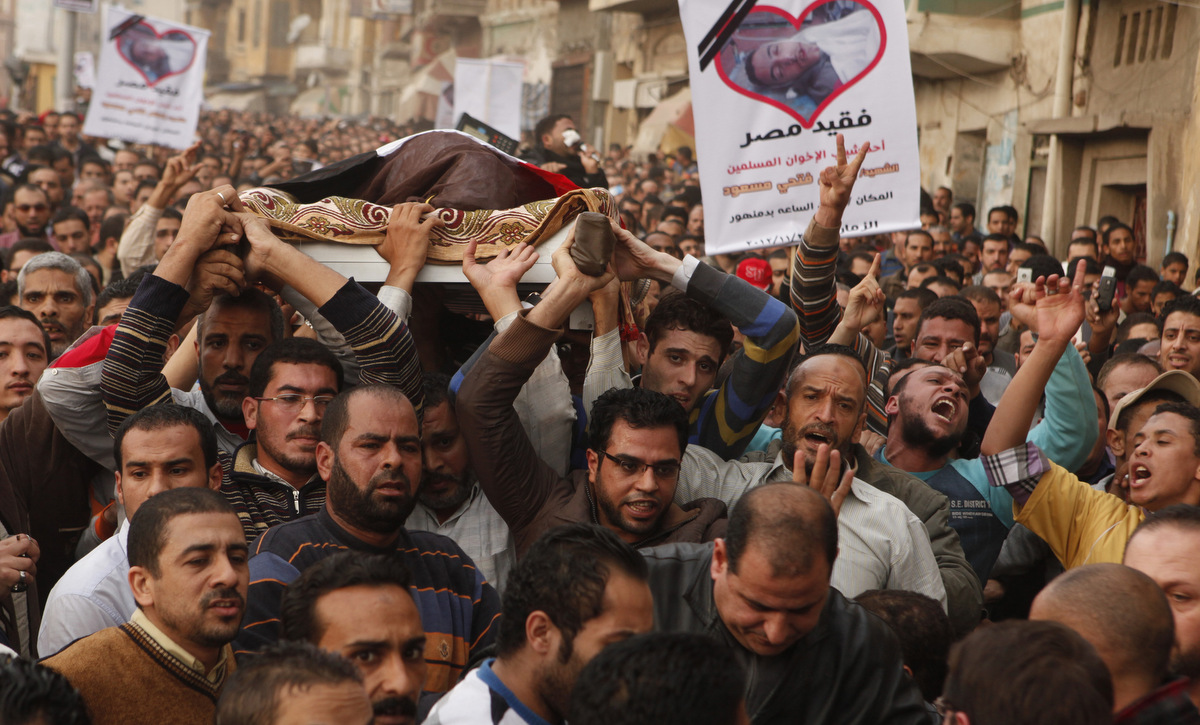
They went out in the thousands; Egyptians from every walk of life and almost all political affiliations protested in Tahrir against President Morsy’s latest decree and the draft of the new constitution.

However, they were not the only ones protesting. Islamist groups, mainly the Muslim Brotherhood and the Salafis, protested too, but in support of the president and the new constitution, which, in their eyes, is Islamic and consistent with the “core” values of Egyptian society. They proclaimed their protest to be a “true million-man march,” labelling the Tahrir protestors as un-Islamic, the secular minority, infiltrated by the ex-regime and even funded from abroad.
The Muslim Brotherhood is waging a war of perception, not just for domestic consumption but for a western audience, too. Perception is crucial for two reasons: To defeat non-Islamist opponents, who may lose faith quickly when watching the endless number of pro-Morsy protestors in comparison to their relatively lower number in Tahrir and, secondly, to convince western nations that Islamists are the only reliable, powerful force in Egypt and that they are backed by the “majority” of Egyptians.

Eighty years of a mushrooming underground within Egyptian society has resulted in deep mistrust of mainstream establishments. Islamists view members of these establishments and other non-Islamist forces with deep suspicion and consider them elitist, anti-religious snobs. The strict, rules that govern the Brotherhood’s internal structure were partly introduced to protect the group from outside “corruption.”

This combination plus simmering resentment and years of grievance have finally exploded in the recent crisis in Egypt, and it partly explains the abrupt, odd way that Morsy has chosen to deal with it.

Moreover, Morsy, who likes to address Egyptians as his “brothers and children,” clearly feels at ease only among his brothers and children within his party, but he seems to struggle with dealing with “others’ brothers and children,” whom he has inherited as part of the whole package of ruling Egypt. He, it seems, despises everything the others stand for; their individuality, their boldness, and their persistent scrutiny.

No wonder he chose to explain his decree by addressing his supporters in front of the presidential palace, and he ignored those in Tahrir as if they were his “stepchildren,” an inconvenience that he is hoping he can overcome. Their protests were not part of his curriculum and have pushed him to revert, even more, to his own natural tendency of defiance and autocracy.

Rather than suppressing his opponents by force, Morsy has decided to snooker them. By calling for a referendum on his proposed constitution, he has put his opponents in an extremely difficult situation. He is banking on his supporters to deliver a clear yes vote, which would reinforce his claim that the majority of Egyptians are backing him up. He also has managed to secure legal backup, as Egyptian judges are divided between being anti- and pro-Morsy.

While the judges Club, the largest representative organisation of judges in Egypt, has issued a recommendation to its members not to oversee the referendum, the Supreme Judiciary Council has agreed to delegate judges and members of the prosecution to assume that responsibility.

Tired, drained, and divided, the Egyptian opposition now has two painful choices: Either boycott or participate in the referendum and vote no. Boycotting is not the better option; if the government imposes a fine for skipping the vote, many Egyptians (who are already struggling economically) will ignore the boycott campaign.

This overlooks the fact that boycotting is never a good idea; Islamists are ready to mobilise their supporters just to turn up and a voter turnout of 30 per cent or less is all that is needed for the result to be viewed as legitimate.

On the other hand, participating in the referendum is not without risk. If the majority votes yes, it will be a victory in Morsy’s war of perception and non-Islamists will definitely look like the minority. However, if the majority votes no, then Morsy is almost certain to stick to his decree that protects him and grants him full power, until a new constitution can be drafted. A very clever game of snooker from Morsy.

It is time for cool heads and clear plans for non-Islamists if they are to win this round of the legitimacy war. Protesting against Morsy will always help, but it is not enough. It is time for aggressive campaigning to explain the pitfalls of the new constitution and how it can negatively affect the general public.

Fighting autocracy is not the war of the elite; it is the war of the oppressed who have suffered for decades under the junta’s police state. A smart campaign to expose the flaws of this shambolic constitution may attract a big section of Egyptian society. It is not too late to fight smartly and campaign in every trade union, syndicate, and university in Egypt. It is the only way to strike the back at Morsy and force him to understand that the non-Islamists are not stepchildren, but legitimate sons and daughters whom he must take seriously.
Posted in Egypt | Tagged , , , , , , | 4 Comments

Morsi’s Power Grab Should Be No Surprise

I wrote this  piece for Al-Monitor. Hope you like it. 

(Photo: Reuters)

Following his recent edict granting himself unprecedented powers, President Mohammed Morsi addressed his supporters in front of the presidential palace — the place originally chosen by Mubarak to serve as the formal presidential building — declaring that he would “cure Egypt from the woodworms.” This particular remark sums up his attitude toward the current crisis: the president and his ruling party view their opponents as woodworm beetles in need of removal.

For anyone who is following closely and understands the history of the country and the ruling party, the Muslim Brotherhood, the recent events should not come as a huge surprise. It should be seen as an inevitable outcome in a country that is still seduced by selfish politics that aim for dominance rather than unity. Although the Brotherhood has undergone many changes to recast their image as “moderates” who support a democratic society, the group did not embrace any serious transformation of their way of thinking. The concept that “It is either me or them” is entrenched inside their mindset. There are some basic rules that have continued to govern its decision-making processes:

To continue reading click here: Al-Monitor

Posted in Egypt | Tagged , , , | 1 Comment

The Era of Sadat

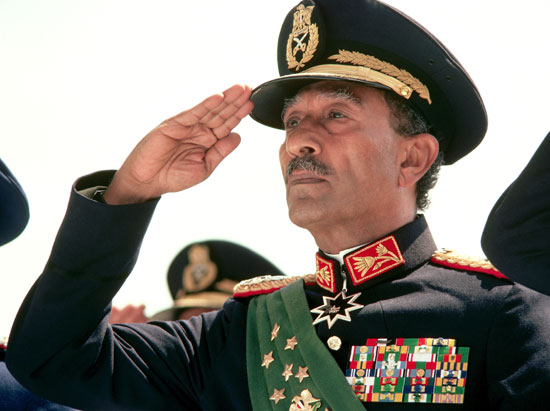
Jerusalem, 20th of November, 1977:  After prayers at the Al Aqsa mosque in Jerusalem and visits to the Church of the Holy Sepulchre, Egyptian President Sadat addressed a special session of the Knesset. President Sadat spoke in Arabic: “If God Almighty has made it my fate to assume the responsibility on behalf of the Egyptian People and to share in the fate-determining responsibility of the Arab Nation and the Palestinian People, the main duty dictated by this responsibility is to exhaust all and every means in a bid to save my Egyptian Arab People and the entire Arab Nation the horrors of new, shocking and destructive wars, the dimensions of which are foreseen by no other than God himself.”

Sadat belonged to a different era, the era of monochromic politics, when men fought in wars but had the courage to seek peace. It was an era when war had clear objectives, and more importantly, a clear end-point—when leaders took responsibility when defeated and worked harder to earn victory.

Following the tragic death of Sadat, the region began to catch up with more colorful politics, yet the colors were not bright and certainly not peaceful. The Middle East excelled in inventing endless shades of grey. Militant organisations took charge and transformed battles into more dirty fights with open-ended outcome. Resistance became victory and hiding somehow became honorable.

For its part, Israel started to indulge its air power and abuse it accordingly. Why not, if it saves the lives of its soldiers? Never mind if innocent civilians lost their lives as a result.  The narratives have gradually transformed into teasing Israel, provoking escalation, followed by air strikes, civilian casualties, limited ground operation, and then, at the end, a ceasefire. The militant goes home boasting of their defiance while Israeli officials claim they “deterred” their enemies.  Still, another round of hostilities will flare up at a later date, depending on regional dynamics.

The current Gaza war is one example; not just of the futility of the whole episode but of the predictability of it. Now, the Palestinians know exactly how the Israelis will respond: through a series of target assassinations and air strikes that initially began restrained, then gradually become wild, with higher civilian death toll. A ground operation may or may not happen but it would always be limited. They can also predict how it would be conducted: Israeli forces would infiltrate Gaza from the North and the middle of the impoverished strip, and then camp at previous Jewish settlements in the Gaza strip and start to bulldoze housed and destroy tunnels while trying to minimize casualties and avoid the kidnapping of their soldiers without a clear end-point. Just a staged operation until ceasefire agreed. The military established are ruled by weak politicians pursuing cheap glory. In this round, Netanyahu’s behavior is no different than that of Olmert. The king of Israel in his first war has offered nothing authentic or new.

Confrontations have become increasingly like a reproduction of the same movie with different cast, but with the same script. Frankly, it has become boring, disgusting and nauseating—a lose-lose situation. Israel lost its ability to surprise or impress, while Arabs have begun to enjoy their victimhood and consider as an asset.

There was something deeply unsettling in watching the Hamas leader Khalid Meshaal (in a Cairo press conference) claiming defiance and victory, while innocents are still been targeted by Israel. He did not even ask for a minute silence to honor the victims. As for his military commands, they are releasing video claiming defiance while hiding their face (clearly to avoid being assassinated by Israel). What kind of defiance is that?

The Middle East is currently the land of no hope and no glory. It is the land of warlords and fake kings. The Arab springs have changed the dynamics but did not change the mindsets.  Many rightly want to support Gaza, yet very few are willing to criticise Hamas’ tactics and exploitation of the Gaza population. The only mental games around are old-fashioned deterrence versus old-fashioned populism. No wonder the painful saga never ends.

Sadat always claimed that the 1973 war (Yum Kippur) between Egypt and Israel would be the last war in the region. In a way, he was right; it was the last honorable war in the region when soldiers died while fighting like men, not hiding like boys. In watching Gaza now—the rockets and airstrikes, both meaningless, both reckless—I cannot help but to miss Sadat’s era so much.


Posted in Egypt, Gaza, Israel | Tagged , , , , , | 5 Comments

Escalation in Gaza: Update 2

The frantic diplomatic efforts are ongoing in Cairo and all players are present. From the Palestinian side, Meshaal and Abu-Marzook ( Hamas), Ramadan Shalah ( Islamic Jihad) and Nabil Shaath ( Fatah). Israeli TV channel two has announced that an Israeli envoy is also heading to Cairo. In addition, of course, are the “big three” leaders of Qatar, Turkey and Egypt.

Does that mean a ceasefire is near? That is what both Morsi and Erdogan want us to believe, though I would take their statement as a message for the domestic audience and not necessarily an indication of any progress. In Israel, Haartez editorial also think there would be no ground assault ( though Haaretz hardly reflect Netanyahu’s thoughts).

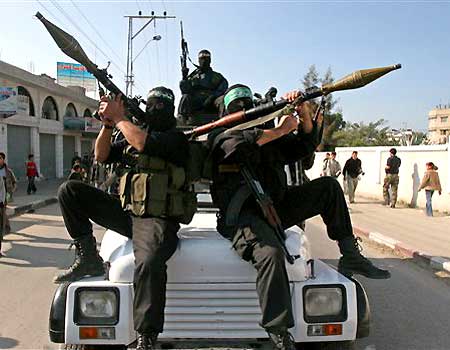
The Al-Qassam military brigade (the military wing of Hamas) has also released a video after a very defiant speech. The insolent, loud rhetoric was clearly aimed at the wider Arab public to garner support amid the local population. Their “surprise” video turns out to be a video of the launch of a Strela-like surface-to-air shoulder missile. This is nothing hugely surprising. There are also reports that Palestinian fighters fire most of their rockets by remote control, where rockets are hidden in trenches and camouflaged by trees.

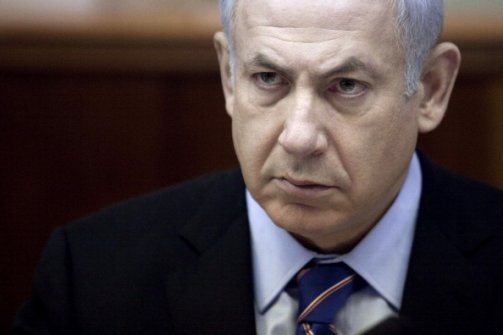
As for Israel, it seems that it designed a staged, step-by-step plan, yet it is unclear what their end game will be. It is also unclear whether Netanyahu is really willing to go to war or if he is just bluffing. Though his support inside Israel seems to be solid, many Arabs do not take him seriously after his previous empty threats against Iran. I guess the answer depends on what deal he would clinch from the three patrons of Hamas (Turkey, Qatar and Egypt). He has to remember that any deal would not be bad for Hamas but not necessarily good for him. Hamas—in the current Arab dynamics—had nothing to lose but has plenty to gain.

Many analysts are claiming that Hamas is desperate and lost most of its missile capabilities. I think we should be careful before we assume such a conclusion.  Four years of smuggling won’t be depleted easily. It seems to me, although I could be wrong, that Israel is not duly bothered by Hamas capabilities; however, it is aimed to achieve a long-term deal, not a truce or a lull but a concrete agreement. Netanyahu seems to be willing to give Hamas a favorable strategic position against Fatah in return for guaranteed stoppage of rocket launching and control of other smaller groups.

Regardless, I think we are heading for another day of negotiations and airstrikes.  May God be with the innocent civilians who are awaiting the results of the haggling in the political bazaar and the realization of how their leaders will roll the dice.


Posted in Egypt, Gaza, Israel | Tagged , , , , | Leave a comment

Escalation in Gaza: Update 1

In a previously undeclared summit, on Saturday Egypt’s President Mohamed Morsi will meet Qatari Emir Sheikh Hamad Bin Khalifa Al-Thani, Hamas leader Khaled Meshal and Turkish Prime Minister Recep Tayyip Erdogan in Cairo to discuss ways to manage the Gaza crisis. Sources are also suggesting that Palestinian President Abbas may attend the meeting.

The hasty meeting reflects how the pro-Hamas camp feels rattled by the recent escalation in Gaza. This heightened situation was not part of the plan. The new Islamist Crescent wanted to use Gaza as a tool to score some political victories, but not to add a long-term migraine. They are happy to financially support Hamas and raise the rhetoric against Israel, but to face a military escalation and possible ground invasion is not in their interests. That would potentially embarrass them in front of their public and expose their limitations.

Erdogan already has had a taste of the pitfalls of empty threats in Syria, and while the Qatari Emir may want to send messages to their Iranian neighbors, they are not willing to play Russian roulette with the situation. As for Morsi, the tragedy in Assiut, where 49 children died when a train ploughed into their school bus, served as a harsh reminder of the growing problems at Egypt’s domestic front.

There are three challenges facing the three leaders:

First there is Hamas: the organization is not in harmony. It is well known that there are tensions between the hawks and the doves. The outside leaders like Meshaal and those hardline militants inside  Gaza like Zahar, who surprisingly did not make any recent appearances, are representative of divisions that may not help the group to agree on a future plan.  It appears that some inside Hamas are after escalation, and they already have surprised Israel by their ability to hit Tel Aviv and Jerusalem. They may view ground invasion favorably as it would increase both Gaza civilian and Israel IDF casualties. This would help Hamas negotiate better terms in a ceasefire and claim victory based on defiance and restoration of a “balance of terror.”

Second come the other rebellious factions: there are numerous small parties that probably have strong links with Iran. They have a different agenda and ceasefire is not part of it. If Qatar used Gaza to send a message to Iran, the Islamic republic reciprocated and also replied through Gaza.

Third, there is Israel: Netanyahu is after deterrence. After a trail of target assassination and air bombardment, he is expecting “naughty” Hamas to say, “Ouch, sorry sir, we are scared now and we won’t do it again.” Therefore, short of a joint press conference of all Palestinian factions announcing an end to hostilities and a long-term commitment to a lull, he may struggle to sell this as a victory to his people.

Currently, the Head of  General Intelligence, Raafat Shehata, is mediating. His task is colossal, with limited cards in his hands. Each Palestinian militia will try to get out some benefit. Abbas attendance or absence may add another dimension to the already complex situation.

Can the Emir with his large, maroon-colored credit card convince tiny Palestinian factions to shift loyalties? Can Erdogan’s charm help to seal the deal? And most importantly, how far is Egypt willing to go in inheriting Gaza, which seems to be Hamas’ ultimate goal? It is important to remember that both Erdogan and Morsi’s cold relationship with Israel hamper their ability to negotiate with Netanyahu. As I wrote before, Morsi cannot be both a patron and mediator, and the same applies to Erdogan.

The challenges ahead of the 3 Caliphs of Arabia are enormous. Their Sunni crescent is challenged from both the East (Iran) and the West (Israel). The escalation in Gaza is a litmus test of their alliance and a huge test of their credibility. It will be interesting to see the outcome of their summit, apart from the loud rhetoric and bashing of Israel.


Posted in Egypt, Gaza, Israel, Palestine, Qatar, Turkey | Tagged , , , , , , , | Leave a comment

The End of Deterrence

I published this piece few days ago in The Daily Beast-Open Zion , only few hours before the recent escalation in Gaza. Now I added a postscript following the recent events. Hopefully Later I will write more about Gaza, Israel and Hamas.

Complete or incomplete, eroded or collapsed, it’s hard to follow analysis from Israel without hearing the old—yet appealing—term “deterrence.” Since the start of its conflicts, Israel built a deterrence-based strategy to deal with Arab neighbors. The core aim was simple: to discourage Arabs from initiating hostile actions. The strategy has worked to an extent and Israel gained a significant psychological advantage, as all wars were fought on Arab territories without direct threats to Israel’s mainland. This has always put Arabs aback, made them vulnerable and eager to avoid uncalculated escalation. Overall, the deterrence was perceived as adequate and, most importantly, cost-effective.

That was the past and  present tell different stories. The current escalation in Gaza and the barrage of rockets towards the south of Israel has brought the concept of deterrence back onto the agenda of Israeli military minds with suggestions like, let’s “re-format Gaza altogether.” In order to “re-format,” however, it is crucial to understand how formatting went wrong in the first place. It all started with a series of unilateral measures, namely the invasion of Lebanon in 1982 and the disengagement from Gaza in 2005. But the unilateral moves never worked.

By 2006, the collapse of deterrence was complete, with the surprise kidnapping of Israeli soldiers and the consequent war with Hezbollah. For the first time, Israel went to a full-scale war with a non-state player and the outcome was less decisive. Hezbollah managed to create a perception of invincibility. What worked against Hezbollah is the fact that it functions within a state—Lebanon—giving Israel the opportunity to retaliate and flex its muscle, forcing Hezbollah to accept terms to end the war. Nonetheless, Israel’s deterrence was severely eroded, persisting, but only just barely.

In Gaza though, Israel faced a non-state player that existed in a territory that was not within a formal state. The bold Palestinian militias started to learn and use Hezbollah’s tactics. The Winter 2008 and 2009 Gaza war—known as Operation Cast Lead—was not effective in restoring stability and it only created a sort of mini-deterrence that offered an interrupted, short-term break from hostility. As a result, Israel lost the initiative and became reactive, not proactive. There was now no victory, no deterrence, and plenty of condemnation.

Currently, as ideas about a “re-format” begin to gain support, many Israeli politicians are advocating a ground operation of some sort, although none of them have articulated a clear endpoint or explained how things this time would yield a better result than 2009. Without controlling the Philadelphia corridor between Sinai and Gaza and preventing arms smuggling, Cast Lead II would end up like Cast Lead I: a temporary break at a hefty price in terms of innocent loss of lives, international isolation, plus the new possibility of Egyptian retaliation, and even perhaps revocation of the Camp David accords.

Going to war, however, is not the only option. There is potential for a political out, as some analysts advocate, including Khalid Elgindy of Brookings. A smart move would address both elements of the problem: the lack of a state that Israel can deal with and the non-state players. The solution for Gaza is two-fold, a conditional acceptance of Mahmoud Abbas’s U.N. bid in return for demanding that the Egyptians reinstate the U.N.-recognized Abbas government in Gaza and empower his security team to run the Rafah border. In addition, Israel announces its willingness to engage with the emerging Sunni alliance—Turkey, Qatar, and Egypt—to formulate a plan to dismantle Gaza militants’ military capabilities in return for lifting the siege. Such a gambit could snooker Hamas supporters into either accepting the deal, offering alternatives, or a rejection, which would make them appear to be the opponents of a political solution.

It is time for the Israeli leadership to recondition their thinking process and adopt new pragmatic strategies towards Gaza. Any truce with Hamas would not be sustainable, and “re-formatting” would be a very costly option. The U.N. bid could be beneficial to Israel, an opportunity for Benjamin Netanyahu to change the stalemate and adopt a proactive approach that fits in with the current dynamic in the Middle East. But is he willing to take it?

Postscript:

In his piece in the Jerusalem Post, Yaakov Lapinn wrote, “ Hamas can accept deterrence or force IDF into ground offensive.” This message summarizes the current mindset of Israel strategists and the aim behind Operation Pillar of Defense. Hamas understands the Israeli mindset, and their game plan is simple — defiance; “We will not stop the rockets.”

Neither side seems to be interested in a long-term solution. The best outcome they are after, is a ceasefire that each side would translate as a victory. Netanyahu will tell the Israelis that they could finally sleep at night, while Hamas would convey to the people of Gaza that they did not surrender to the Israelis’ bullying.

However, ceasefire would not solve Gaza’s long-term problems. As I mentioned above, Gaza’s problems started with two unilateral steps: Israel disengagement and the Hamas coup against the Palestinian authority. This is precisely why Gaza is in desperate need of a political solution. This solution may sound unrealistic, but all bold steps  in the history of the conflict looked unimaginable at its time: Sadat’s trip to Jerusalem, and Arafat and Rabin shaking hands at the White House.  Currently, the big players are Israel and Egypt and The United States. Netanyahu should understand that it is time to reverse his alienation policy towards Abbas, while Egypt should stop favoring one side in the Palestinian arena. Today, Egyptian Prime Minister Qandil called for Palestinian unity — I hope he meant it. As I tweeted several times, I am not advocating the imposing of Abbas on Hamas; I think Hamas should embrace Abbas and his UN bid. Joint leadership in Gaza is the only way forward through the siege.

This is the solution if effective treatment is truly the ultimate goal, but I am realistic enough to admit that, in my part of the world, leaders don’t seek solutions; they only offer pain killers, and emotional manipulations in order to claim fake victories.

Tonight, it seems, a ground operation may happen soon, precisely because the era of deterrence has ended long time ago.

Posted in Egypt, Gaza, Israel | Tagged , , , , , | 3 Comments

Abu Mazen Pressured By New Hamas Alliances

I wrote this piece for AlMonitor. The Pulse of the Middle East

It may be subtle, it may be slow, but undoubtedly the uprisings in the Arab world — particularly in Egypt — have resulted in new dynamics on the Palestinian front. Hamas, whose members were once shunned and isolated by the Egyptian leadership under former President Hosni Mubarak, is now slowly gaining strength and support, not just from the Brotherhood in Egypt and Jordan, but also from Turkey and Qatar.

The visit of the Emir of Qatar to Gaza, and his planned business support projects, together with the declaration of the Turkish Prime Minister Erdogan of his intention to visit Gaza are just some of many examples of Hamas’s change of fortune.

The group that once was an example of cross-sectarian alliance, Sunni and Shia, within the “resistance camp” (Iran, Syria, and Hezbollah), is now solidly part of a newly emerging Sunni Islamist camp in the Middle East. Hamas, it seems, has chosen its side in the regional sectarian war playing out in the region. Palestinian President Mahmoud Abbas, who has continued to labor for peace with Israel and a state for Palestine, is now perceived as a man of a bygone era that does not fit with the Islamist agenda and rhetoric that has animated Hamas and its new patrons. To continue reading  click here

Posted in Gaza, Israel, Jordan, Palestine | Tagged , , , , , , , | Leave a comment

Will Bombing Iran Help Arab States?

This piece was intially published in The Daily Beast 

In an interview with the French magazine Paris Match, Israeli Prime Minister Netanyahu said, “A military strike on Iran and neutralizing its nuclear threat would benefit the Arab states in the Middle East and ease tension throughout the region.” To be fair, Netanyahu raised a valid point: a tense and ugly war already exists in the Middle East between political Shiism, represented by Iran, and reactionary Salafism, a school of Sunni Islam supported by some elements in Gulf Arab states. Therefore, weakening one side could stabilize the region. Many media reports also  indicate that some Gulf States have been hawkish on Iran and would probably secretly welcome an Israeli strike. Does this mean that Netanyahu is correct and that a strike on Iran would ease tensions in our troubled region? I’m not so sure.

The rivalry between Iran and many Arab states has centuries-old, sectarian roots that have nothing to do with the Islamic Republic’s nuclear ambitions. Gulf Arab states may initially enjoy watching the Iranian leadership’s defeat, but realities on the ground—particularly among their own restive Shia minorities—could give them a very rude awakening and turn their secret joy into public unease and even panic. A strike would inflame, not subdue, these existing tensions.

Second, Israel’s repeatedly public threats to Iran have abolished any elements of surprise: the shock that followed the bombing of the Iraqi nuclear site in 1981 and Syria in 2007 have been replaced with a cautious anticipation. Iran’s ruling clerics are likely preparing for the day after; stabilizing the region is certainly not one of their plans. Nuclear capability is not the Islamic Republic’s only card; they have many others, including allies in Iraq and Syria, well-trained militias like Hezbollah in Lebanon, and even the Islamic Jihad group in Gaza. The Iranians could retaliate with relative ease. Fomenting instability is a relatively low-cost exercise, and funding terror campaigns would not be a huge obstacle to Iran’s leadership. True, the regime is weakened after years of sanctions, yet their support groups have the infrastructures, logistics, and weapons already in place.

I doubt that these possibilities did not cross Netanyahu’s mind, but let’s face it, “the benefit of the Arab states” is probably priority Z on Netanyahu’s list while the bombing of Iran is his top target regardless of the outcome and impact on the Arab states. Israel’s paranoia about Iran’s nuclear capability is preventing its leadership from rationally assessing the situation in the Middle East, where the rise of radical Salafism is the real danger For many inside Israel, it does not matter: they would rather deal with one enemy at time. Such shortsightedness is dangerous and even reckless. In a post-Arab uprising era, when volatility, polarization, and fogginess are the main themes, it is dangerous to embark upon an uncalculated adventure that may or may not be rewarding. Israel is currently enjoying an unprecedented level of security despite the sporadic eruption of attacks from Gaza. Ayatollah Khamenei could end that by unleashing havoc throughout the region.

Posted in Iran, Israel, Uncategorized | Tagged , , , | Leave a comment

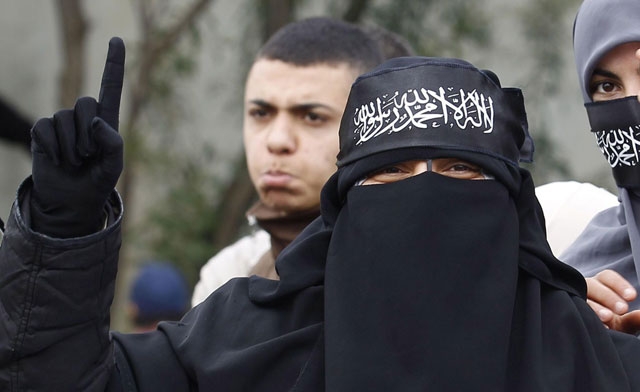
Is Turkey immune from radical Salafism?

This piece initially published in The Daily News Egypt

Turkey is a unique Muslim nation with a distinct history, geography, and political progression. It has never been occupied, and its contemporary path has evolved differently than that of its Muslim neighbors. Turkey has a strong secular establishment and is mostly governed by secular laws. Turks are proud, moderate Muslims who follow the relatively lenient Hanafi School of theology and maintain a strong Sufi tradition. That is why, for many, Turkey is immune from Salafism and radicalism. I beg to differ; I think Turkey is unprepared and fails to appreciate the risk of Salafism that is knocking on its door.

Radical Salafism is now a global phenomenon that has spread across five continents, and no country has found it easy to stop its spread. The path toward Salafism, or literal Islam, is not necessarily linked to vulnerability, poor economic conditions, or political uncertainty, like many believe. The first step is exposure to the ideology without counter interpretation or opposing argument that can dispute and discourage its adoption. This simple fact, sadly, is ignored even by the most articulate thin-tanks that specialise in studying radical Islamic groups.

Turkey is slowly gaining involvement in Middle Eastern countries. Syria is not the only example; Somalia, Libya, Gaza, and Egypt are also included. The closer the link with these countries, the wider the exposure to other ideologies and schools of thought. Ideology is just like physical materials, spread by osmosis from a region of higher concentration to one of lower concentration. It starts with simple contacts related to business, travel, and work and ends with cultural influence and beliefs. The fake image that associates Salafism with poverty and instability is very deceptive.

Many Salafis are well-educated middle class Muslims. Most of the leading Salafi scholars are rich and enjoy a comfortable life; many present regular TV programs on prominent Gulf channels, and some of them already criticise the perceived decadent way of life portrayed in many Turkish soap operas, even though – ironically – these soap operas broadcast on the same TV channels.

Abdulhamit Bilici asked a very important question in his piece in Today Zaman a few months ago, “is Turkey now ambivalent between the politicised Shiism in the new Middle East and the reactionary Salafism?” I think the answer is definitely yes. During his visit to Somalia, the Turkish Prime Minister Erdogan was loud and clear in his criticism of the West, but he didn’t spare a single word of criticism for the radical Al-Shabab group and how it is contributing to the destruction of the country. Prime Minister Erdogan was also quiet when radical groups destroyed several Sufi shrines in Libya, despite the popularity of Sufism in Turkey.

Some may argue that those countries are distant and their impact on the domestic dynamics in Turkey is minimal, but what about Syria? Unlike Iraq, where the Kurdish region shelters Turkey from radical Islamic groups based in other regions, the ongoing revolt in Syria has brought many Salafi groups with various degrees of radicalism right to Turkey’s doorstep. They are here to stay, regardless of the outcome of the ongoing conflict.

In fact, even the best-case scenario − a post-Assad Syria that is unified and stable − may actually be equally bad for Turkey. If there were no jihad, Salafists would focus on preaching. It is simplistic to think that they will somehow abandon their ideology once the conflict ends. Will McCants rightly argued, “Salafis preferred scholasticism, political quietism, and social programs to pressure groups and vocal dissent.” Just as in Egypt, the victory of the Salafi Nour party did not just happen overnight, it was a result of slow, creeping, social growth over decades.

I recently saw on Twitter a video from the Turkistan Islamic party addressing the Turkish people urging financial support for their “Jihad.” That means the Middle East is not the only front that can export radicals to Turkey. Asking for money is always a start; it is usually followed by “nice,” placid, bearded guys selling “Islamic” books and preaching the “right” path. These groups usually avoid big vibrant cities, and trendy beach towns, and focus on conservative rural areas where passion for religious study is high. How will Turkey deal with them? Arrest them like Mubarak did in Egypt, allowing many to sympathise with their cause, or turn a blind eye and hope for the best?

Furthermore, the tension during this year’s Republic Day celebration reflects Turkey’s unease with its identity, a country that is still struggling to find the right balance among secularism, liberalism, democracy, and religion. It also indicates that the current government in Turkey is still preoccupied with the past and views Kemalism as its main enemy. This is why it banned gathering at the first parliament building, which is associated with Ataturk, the founder of the republic.

The secularism that is usually perceived as Turkey’s defense barrier against radicalism is slowly eroding under the current government’s authoritarian tendency. That should not be the case; Turkey cannot afford to fail in its liberal experiment and turn to illiberal democracy under an Islamic slogan. Instead, the Turkish leadership should act as the guardian of liberal Islam, an Islam that does not just tolerate Western-style secularism, but also articulates its own version of “Islamic secularism.” In that version, faith would be protected from secular tyranny, and also from being used and abused for political gain. This is the only defense against radicalism that can truly work in Turkey and in the wider Muslim world.

As Turkey develops to become closer to its neighbors, where borders are not walls (as Foreign Minister Davutoglu always says), where there is full movement of people, goods, and ideas, it needs to remember that, by hugging friends, it may smell their scent, but it can also catch their bugs. Rather than undermining its secularism, Turkey should focus on strengthening its domestic front. It also must change its ambivalent attitude toward Salafism, and start to help its neighbors fight radical Salafism before it the phenomenon starts to knock on its the country’s door and spread slowly inside its own Turkey’s own territory.

Posted in Turkey | Tagged , , , , , | 4 Comments

Qatar and Gaza between Perception and Reality

Image credit AFP

In politics, perception is reality, a simple basic rule that is hard to evade or abolish. No country understands that concept better than Qatar. The monarchy, with wide ambitions that defy both history and geography, is working to create new perceptions of power and influence that extend beyond its borders.

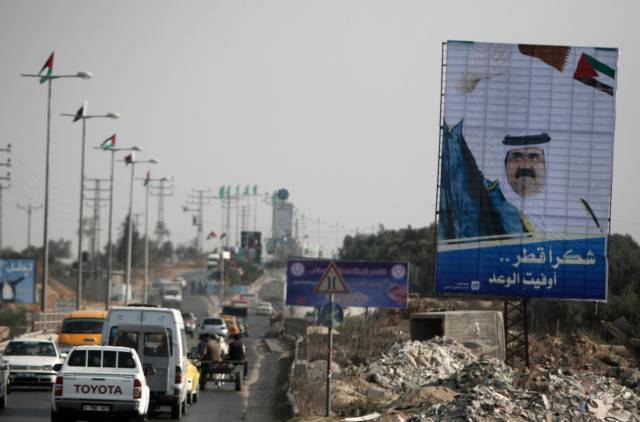
One of Qatar’s target playgrounds is Gaza; the recent visit of Emir Hamad to the impoverished strip is a perfect example of the power of perception. Through the visit, Qatar became the patron of the Islamic movements, the “therapist” that aimed to rehabilitate Hamas, and the power that stands against Iranian influence in the region. Other players on the Gaza front – Hamas, Egypt, and Israel– joined in; each wanted to create a novel perception. Hamas wanted to assert the image of a strong Palestinian group, fully in control of Gaza, that managed to break the siege imposed by Israel. Egypt’s Morsi wanted to look as if Egypt had departed from the anti-Hamas Mubarak policy. Israel – in a way – was happy to play the party betrayed by the Qatari Emir who threw peace under the bus

On the ground, the reality could not be any more different. It was interesting to see the Emir hastily end his visit without attending a planned rally at the Palestine stadium, only for escalation to follow between Israel and militants in Gaza with the reactivation of the ongoing RRT cycle – rockets, retaliation, and then a fragile truce. Gaza is not just Hamas; there are other groups in Gaza, each with a different agenda.  One of these groups, Islamic Jihad, still maintains close links with Iran, the country that Qatar aims to challenge. The myth of breaking the siege on Gaza did not actually play out on the ground. The siege was partially lifted, although Egypt still has not fulfilled its promise to open the Rafah border for trade despite a Hamas request. The unsolved security situation in Sinai does not help the relationship between Morsi and the Hamas leadership and could cast its shadow for a long time. As for Israel, despite a formal statement, many Israelis have expressed satisfaction with the visit, including the former Israeli National Security Advisor, retired Major General Giora Eiland who wrote that: “maintaining the West Bank and Gaza as one political entity is a Palestinian interest, but not an Israeli one.”

A new future reality?

 Three basic tenants are crucial for politicians to guarantee the long-term success of any newly launched perception: perfect understanding of the current reality, avoidance of over-selling the new perception, and ability to change reality to fit the new perception.

If we rewound the clock to 18 years ago, in the spring of 1994, we would see another “significant visit” to Gaza and Egypt by the late Palestinian leader Yasser Arafat.  At that time, peace was the new perception, and Arafat was the “rehabilitated leader” who endorsed peace; he headed to Gaza to symbolically endorse “Gaza-Jericho,” the first stage of the Oslo peace agreement. Arafat fully understood the fragility of the Palestinian people, with their two separate territories well apart from each other. Precisely why Jericho had to be combined with Gaza in one step.  Despite these efforts, things did not work out according to plan, and the Oslo agreement failed to produce a Palestinian state for reasons beyond the scope of this piece. The perception of “peace around the corner” has failed miserably to materialize.

For the Qatari visit to achieve what Arafat failed to achieve, far more than a mere visit was needed; it would require a coordinated plan between the three players: Qatar, Egypt, and Hamas. The plan would not just relate to Gaza; Hamas’ ultimate goal and dream is to control both the West Bank and Gaza. The militant group –  still dedicated to destroying Israel – is very patient and willing to play out the RRT cycle (rockets, retaliation, truce) for a long time, waiting for Abbas’ self-harm and reckless weakness to eventually lead to the collapse of Fatah control of the West Bank. It also awaits a possible “spring” in Jordan that may alter the entire equation favorably on its side ( precisely why Giora ‘s views are risky).

However, many “ifs” and “buts” can ruin this plan and prevent it from materializing on the ground.  Can Qatar bring stability to Gaza? Would the US continue its endorsement of Qatar’s “humanitarian efforts” in Gaza? Would Hamas succeed in controlling the other groups in Gaza and help Egypt secure Sinai? Would Hamas succeed in emulating the Gaza experience in the West Bank?  Would Israel stand by Abbas or leave him to sink on his own? How would Israel deal with Hamas in the future?  Would Qatar embark on playing the “supporting the Islamists” game in Jordan and undermine an Arab monarchy for the first time?

These questions are difficult to answer now, but they are crucial for the survival of Qatar’s newly launched power perception.  So far, Arab politicians have a long, miserable, unsuccessful record in narrowing the gap between perception and reality. They launch a very ambitious perception, spice it up with emotional rhetoric, then lose sight of the current reality and eventually fail to create a new reality that fits with their desired perception. The result is despair and confusion among the Arab people, who end up adopting conspiracy theories to explain what went wrong. Will the Qataris learn from their predecessors and avoid their mistakes?

Postscript:

Following the Emir of Qatar’s visit to Gaza, there are news of a possible second royal visit, this time by the Bahraini king.  According to Egyptian Shorouk news, he is due to visit Gaza next Thursday. If true, this signals how the perception of success is contagious and how it usually followed by copycat activities. The Saudi-Bahraini camp (a rival to Qatar) within the GCC is now on alert and views Gaza as an opportunity. Breaking the siege is a theme that can win hearts and minds and send a strong message to the enemies, mainly the Iranian regime.

Interestingly, Turkish Prime Minister Erdogan also signalled a desire to visit Gaza in the past, but has never yet done so. It seems likely that he received a redline from Israel and the US. Erdogan was defiant towards Israel, unlike the Arab monarchs who are viewed as benign or even useful due to their “humanitarian efforts.” I also think that Eiland’s views are more popular than many think. The road to a one state solution – Israeli style – will require Gaza to be a viable entity completely divorced from the Palestinian authority in Ramallah. That is why many inside Israel started to view a strengthening of Hamas as an advantage. This is bad news to the Palestinian unity, however; money can break the siege, but can never buy a state.

I later heard reports that  the Foreign Minister of Bahrain denied the news of a possible visit of the King to Gaza on Twitter. I guess we have to wait and see.

Posted in Gaza, Qatar | Tagged , , , , , | 3 Comments