Reblog: Can Palestinians be wrong? Hussain Abdul-Hussain

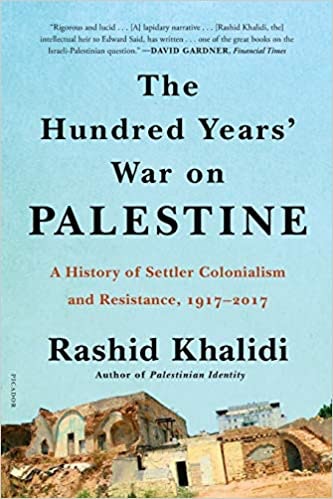
This superb piece by Hussain Abdul-Hussain ( originally published here) highlights important flaws of Khalidi’s book, The Hundred Years’ War on Palestine, and how it suffers logical fallacies, absence of key events, and inadequate understanding of global affairs. Enjoy…

I first read Rashid Khalidi in college. The professor who assigned us the text was a Palestinian who often became emotional in class. “They told us the Iraqi army was coming to beat the Israelis and we left Haifa for the summer expecting to be back,” our professor said. “But we never went back.”

That assignment introduced me to Khalidi as a historian who was several notches above the average Palestinian intellectual, and certainly above American Progressives whose books on Palestine read like activism pamphlets rather than intellectual work. But the Khalidi I once read quarried the data to offer a comprehensive account. Khalidi today demands scholarly work from authors on Palestine/Israel, but does not offer one himself. Instead, this Palestinian-American historian mixes a personal memoir with a roadmap for Palestinian activism recommended to destroy Israel. 

Khalidi’s book, The Hundred Years’ War on Palestine, suffers logical fallacies, absence of key events, and inadequate understanding of global affairs.

The author says that his great great uncle, Yusuf Dia Khalidi, sent a letter to the founder of Zionism, Theodor Herzel, describing Zionism as “natural, beautiful and just,” and adding that “who could contest the rights of Jews in Palestine? My God, historically it is your country!”

The younger Khalidi argues that Zionists often use this quote “in isolation from the rest of the letter,” in which the elder Khalidi warns “of the consequence of the Zionist project.” But here, the younger Khalidi commits a logical fallacy. Recognizing the right of the Zionists in Palestine is one thing, warning of the feasibility of their project is another. When Israelis cite the letter as Palestinian recognition of their right to the land of Palestine, they take nothing out of context. 

Then, when narrating historical events, Khalidi leaves out key details. When he mentions Amin Husseini, the Mufti of Jerusalem, he never hints at any association between Husseini and Nazi Germany, or Husseini’s meeting with Hitler. 

When Khalidi writes about the 1967 war, he describes it as a master plan to control all of mandate Palestine, while conveniently leaving out details, such as Egyptian President Gamal Abdul-Nasser closing the Straits of Tiran — through which Israel imported 90 percent of its energy — an act that led to war. He also leaves out Israeli Defense Minister Moshe Dayan’s statement that he expected Arab countries to call him to get their territory back, in return for peace. In response, Nasser convened the Arab League in Khartoum, and issued the famous “three No’s” statement that said “no (Arab) peace, no recognition, no reconciliation” with Israel. 

Khalidi says that shortly after the Oslo Peace Accord, Israel increased its checkpoints. No mention that, a month after signing Oslo, the Palestinians launched a suicide bombing, and that in 1994, five Palestinian suicide attacks killed 38 Israelis. In 1995, while implementing Oslo was in process, Palestinian suicide attacks killed 39 Israelis. Khalidi never mentions Yehya Ayyash, “the Engineer” who planned these bombings. Instead, Khalidi associates Palestinian suicide attacks with the Second Intifada, in 2002, and even then, says bombings came “as a result” of Ariel Sharon’s “provocation,” after his visit to the Dome of the Rock. 

Palestinian Hamas never gave peace a chance, and Arafat was either unable or unwilling to deliver security by stopping them, thus forcing Israel to forcefully escalate even while talking peace. 

Khalidi’s “errors” are not only about Israel. When talking about Hezbollah, he describes it as growing “out of the Lebanese maelstrom.” Notwithstanding Hezbollah’s leaders publicly saying that they work for Iran, or that every academic work considers the Lebanese party to be an Iranian tool, Khalidi throws in his claim, unsubstantiated. 

When talking about ethnic cleansing in Iraq and Syria, Khalidi keeps the culprit unknown: “Forcible transfers of population on a sectarian and ethnic basis have taken place in neighboring Iraq since its invasion by the United States and in Syria following its collapse into war and chaos.” A reader might think that America, not Iran and its militias, is responsible for Iraq’s ethnic cleansing, while in Syria, such atrocities just happen. Khalidi writes 250 pages about empathy, fairness and objectivity, but fails to mention war crimes by Iran and Assad. 

A reader might be willing to forgive Khalidi’s “errors,” perhaps they were an unintended “lapse of memory.” After all, Khalidi is not an objective academic, but an activist who was on the official Palestinian negotiating team with Israel and who had ties to Palestinian leaders. 

The book also shows inadequate Palestinian understanding of global affairs, past and present. In Khalidi’s mind, the Palestinian issue is clear and simple: An Arab majority once lived in mandate Palestine. Then alien Jews migrated en masse, expelled the Palestinians, and illegally constructed a sovereign state that they refuse to share with Palestinians.

But human history teaches us that an indigenous majority, in any land, does not always get the right to sovereignty. The Kurds in Iraq, Turkey and Iran are indigenous majorities in their defined territories, but never sovereign. The Arabs in Iran are also native, but their state (the size of Syria) was annexed by Iran in 1926, and their rights have been compromised since. Turkey annexed the Antioch Province (the size of the West Bank), in the 1930s, despite its Arab majority. 

Khalidi cites three examples of colonialism — South Africa, Ireland and the US — and thinks that if Palestinians can make a similar case to the world, they can beat Israel. But if the US model is what Khalidi is looking for, the indigenous are nowhere near recognition as sovereigns. At best, they either enjoy autonomy on reservations or pledge allegiance to the American republic. Palestinians are not willing to pledge allegiance to Israel. As for Ireland, the conflict ended up dividing the country. In South Africa, racism was horrible and incomparable to the Israeli-Palestinian situation, no matter how hard the Palestinian intelligentsia tries.

Conveniently, Khalidi leaves out indigenous populations whose separatism never worked, such as the Scots and the Welsh in the UK, or the Catalans and the Basque in Spain. 

Where Khalidi sounds misinformed the most is here: “The advantage that Israel has enjoyed in continuing its project rests on the fact that the basically colonial nature of the encounter in Palestine has not been visible to most Americans and many Europeans.” Hence, Khalidi says, “Dismantling this fallacy and making the true nature of the conflict evident is a necessary step if Palestinians and Israelis are to transition to a postcolonial future in which one people does not use external support to oppress and supplant the other.”

But this is not how global affairs go. Israel is not winning because Americans and Europeans have been duped, and, when told the truth, Israel will lose. Even if all Americans and Europeans believe the Palestinian narrative, sympathy alone does not influence global policy. Just look at Syria. All Americans and Europeans see the injustice befalling the Syrians because of their dictator, but none are willing to do anything about it because Syria is strategically unimportant. Similarly for the Palestinians. Even if their case is a slam dunk, why would America or Europe invest resources to change things?

If Khalidi can answer the above question, he will understand why global powers take Israel’s side. Israel has aligned itself with their interests as a reliable ally. Still, Western powers would not have been enough for the Israelis to win. America threw its weight behind its Iraqi allies, but these could never stand up. There is a crucial Israeli ingredient that Khalidi and most Palestinians never seem to notice: Democracy.

Since 1897, the Zionists have been electing their leaders like clockwork, with power always transferred peacefully and seamlessly. On the Palestinian side, Khalidi describes Arafat as “the head of Fatah [who] soon became chairman of the PLO Executive Committee, a post he retained, among others, until his death in 2004.” Thirty-seven years of Arafat’s undisputed leadership and failures, but Khalidi thinks that it is external bias toward Israel that enabled Israel to beat the Palestinians.

The final gem in Khalidi’s inadequate understanding of global affairs is his cheering for the rise of India and China. “Perhaps such changes will allow Palestinians… to craft a different trajectory than that of the oppression of one people by another.” If Khalidi thinks that Palestinian deliverance will be at the hands of China — with its genocide against the Uighur and veto against stopping Assad’s genocide in Syria — then, like generations of Palestinians, Khalidi still does not get it. And hence, Khalidi sounded perplexed: Why did his neighbor and colleague at the University of Chicago Barack Obama, who probably shares Khalidi’s view of Israel/Palestine, not enforce such view when he came president? Answer is that in foreign policy, national interests lead, and “the narrative” follows.

Palestinians will continue living in misery not because the world is misinformed, but because they fail to internalize the Greek wisdom, Know Thyself. Then, build a democratic movement that aligns Palestinian interests with bigger powers — including with Israel. That way, Palestinians will get a state, instead of spending the coming century, like the last, authoring books of frustration. Salam Fayyad tried it, but could not do it alone. Perhaps that is why Fayyad is not in Khalidi’s book, who prefers instead to hang on to words like colonialism, indigenous, Apartheid and Edward Said — words that make their authors feel good, but that will keep Palestinians living in misery.

Posted in Israel, Middle East, Palestine | Tagged , , | Leave a comment

This Week in Egypt: Week 9-2021 ( March 1-7)

Top Headlines

  • Egypt’s president Sisi visited Sudan amid rapprochement between the two countries  
  • Egypt, Sudan call for international mediation to reach legally binding agreement on GERD
  • African Union holds talks with Ethiopia, Egypt, and Sudan on Ethiopian Dam
  • Turkey says it may negotiate maritime demarcation with Egypt
  • Egyptian’s Sisi and Greece’s PM discuss East Mediterranean cooperation
  • Qatar, Egypt foreign ministers meet in Cairo after end of row
  • Egypt begins vaccine rollout to wider population

Main Headlines

Monday

  • 68,000 Egyptians signed up for coronavirus vaccine during first 24 hours of registration
  • Egyptian parliament approves postponing controversial Real Estate Registration Law to 2023
  • Al-Azhar grand imam calls for release of school girls abducted in Nigeria

Tuesday

  • Egypt and Sudan urge more outside support to revive negotiations over Ethiopian dam
  • Turkey says it may negotiate maritime demarcation with Egypt

Wednesday

Thursday

Friday

  • The African Development Bank signs agreements worth €109 million to transform sewage coverage in rural areas in Egypt
  • Egypt is working to produce three COVID vaccination within coming period 

Saturday

  • Egypt’s Sisi visits Sudan amid rapprochement
  • Turkey’s Defense Minister said his country shared common values with Egypt
  • Egypt prepares 40 Vaccination Centers, plans for more
  • Egypt is renovating Arish Port in North Sinai to reach international standards

Sunday

  • Egypt’s Sharm El-Sheikh airport receives its first ever Lithuania ‘s Avion Express flight
  • Egypt’s state security prosecution releases journalist Mostafa Sakr under precautionary measures
  • Egypt’s Pope Tawadros II leads Nativity of Christ Cathedral’s 1st ordination mass in the New Administration Capital 
  • Egypt’s FM stresses to UN Special Envoy for Libya necessity of removing foreign troops, mercenaries
  • Egypt begins disbursing last tranche of financial aid to irregular workers hit by pandemic

Reports

Read 

From Twitter

Travel

Plus

Posted in Diary of Aak, Egypt | Tagged , , , , , , , | Leave a comment

This Week in Egypt: Week 8-2021 ( Feb 22-28)

Top Headlines

  • Biden administration says human rights will be ‘central’ to ties with Egypt
  • New draft personal status law sparks outrage in Egypt
  • Political parties reject amendments to Egypt’s real estate registration law
  • Egypt, Qatar hold first meeting since ending Gulf dispute

Main Headlines

Monday

Tuesday

  • U.S. raises human rights, Russia aircraft with Egypt – State Dept
  • Egypt receives second shipment of Chinese coronavirus vaccine
  • Higher oil prices push Saudi index up, while Egyptian index declines
  • Egyptian police arrests owner of sunken boat that killed nine
  • Egyptian and Qatar delegations meet in Kuwait to discuss future steps after reconciliation agreement

Wednesday

Thursday

Friday

Saturday

  • Universities across Egypt start mid-year exams under strict coronavirus measures
  • Egypt lifts ban on Ramadan’s Taraweeh prayers in some mosques amid strict coronavirus measures
  • Egypt opens first archaeological replicas factory to counter Chinese knockoffs

Sunday

 Reports

  • New draft personal status law sparks outrage in Egypt. Egyptian Streets
  • Egypt boosts ties with Burundi — with eye on Turkey. Mohammad Hanafi 
  • Egypt versus Turkey in 2021: who has the stronger military? via Egypt Independent 

Read

From Twitter

Video

Plus

  • It turns out that an ancient painting known as Egyptian Mona Lisa is actually depicts an extinct breed of goose  
Posted in Diary of Aak, Egypt | Tagged , , , | Leave a comment

Clubhouse and the Middle East

Echo chambers, trolling, attempts to hijack conversations, and coordinated efforts to de-platform certain people have all been part of my journey since I joined the invitation-only social networking app, Clubhouse. However, in spite of these strange experiences, I have been thrilled to be a member of this group.  

Unlike other social media platforms, Clubhouse offers a unique opportunity for audio social communication, which is more intimate and productive than other text-based social media platforms. 

Because I yearn for smart discussions, mature debates, and building bridges amidst the current depolarised atmosphere, joining Clubhouse was like a dream come true. As I moved from room to room, I encountered good discussions on various topics with refreshing respect, although content can sometimes be of average quality.  

But my honeymoon on clubhouse did not last more than a week. Unlike others who preferred to stay as listeners and refrained from contributing to debates, I decided to immerse myself fully in Clubhouse and engage in various debates; I even hosted small rooms to discuss hot topics. Unfortunately, it did not take long to discover that there were many pitfalls. I once moderated a room in Arabic, but failed to spot some derogatory insults in a certain Gulf accent against another Gulf State. However, I eventually handled the incident and expelled the troll.  

Challenges in the moderating room:

In real life, there is unwritten etiquette among attendants of any symposiums or webinars to respect each other and, more importantly, to respect the moderators. Sometimes such etiquette vanishes, especially in heated discussions, and especially in discussions on tricky Middle-Eastern topics, like the situation in Iran and the Israeli-Palestinian conflict. I watched a supporter of the Mullah regime bullying an Iranian moderator in a most ugly manner. Moreover, this supporter (who enjoys life in a Western country) opened a Twitter account solely for the purpose of accusing the moderator of “spreading misinformation” about Iran. In other rooms, discussing the Israeli-Palestine conflict, it was hard not to notice an organised group of pro-Palestine activists who skilfully put pressure on moderators, regardless of the actual topic posed, to steer the arguments towards past grievances and to stop any discussion on practical future solutions. In one room, for example, an anti-Zionist Jew claimed that I have no right to speak on Jewish issues because “I am not a Jew.” 

The trap of deplatforming

Alarmingly, I encountered an ugly incident where a group of Egyptians reported a certain speaker “for insulting Islam’s holy book” after he casually joked about a verse in the Quran.  I fear this trap could happen again and again, especially after many Muslim Brotherhood supporters and many regime supporters have joined Clubhouse.

Evolving echo chambers  

Perhaps the greatest risk of Clubhouse, whether from Middle East observers or other participants, is the danger of creating convenient echo chambers that silence opposing voices either overtly by bullying them or subtly by not allowing them a chance to speak and express their views. 

There is a genuine risk that Clubhouse will descend from its current valuable audio-communication offerings and instead become a target of trolling and harassment in which obnoxious speakers dominate conversations, turning them into terrible listening experiences. 

That said, I have had many positive experiences on Clubhouse, especially in my efforts to build bridges. It was inspiring and refreshing to hear about a Jewish journalist who helped his Gaza-based Palestinian friend during Israeli attacks, an Egyptian expat who befriended a Jewish Egyptian in New York City, and an Egyptian Muslim who understood the concept of a homeland for the Jewish people after meeting a German holocaust survivor and her family.  

Because of those refreshing encounters, I still believe Clubhouse offers the opportunity to engage in unique and enriching human interactions and that its members should be supported and protected from the divisive bullying of social media saboteurs.  

Posted in Middle East, Uncategorized | 1 Comment

This Week in Egypt: Week 7-2021 ( Feb 15-21)

Top Headlines

  • US stops Trump’s aid freeze to Ethiopia over dam dispute
  • US approves sale of new military equipment to Egypt 
  • Egypt’s el-Sisi offers support to Libya’s new prime minister
  • Israel to link Leviathan gas field to Egyptian LNG plants
  • Egypt announces citizens can register for coronavirus vaccine next week
  • Egyptian delegation arrives in Tripoli to discuss reopening embassy, consulate in Libya
  • Sudan recalls envoy to Ethiopia as tensions high

Main Headlines

Monday

  • Egyptian army destroys four smuggling tunnels in North Sinai and thwarts illegal migration attempts
  • Egyptian delegation arrives in Tripoli to discuss reopening embassy, consulate in Libya
  • Pakistani FM  to start three-day visit to Egypt on Tuesday
  • Presidential Palace in Cairo to host its first concert to public soon 
  • Egypt is re-elected as rapporteur of UN special peacekeeping operations committee
  • MPs ask former parliament speaker Ali Abdel-Aal to attend meetings or resign

Tuesday

  • US Department of State approves the sell of new military equipment to Egypt
  • Egypt injects EGP 846 million to upgrade ambulance system
  • An annual population growth rate of 400,000 would allow Egyptians to enjoy fruits of development, says Sisi
  • Egypt’s Sisi pays tribute to healthcare workers who ‘sacrifice to protect Egyptians amid pandemic’

Wednesday

  • Egypt considering reopening its embassy and consulate in Libya
  • Sudan recalls envoy to Ethiopia as tensions high
  • Saudi Arabia seeks to see resolution to Ethiopian Dam crisis

Thursday

Friday

  • US stops Trump’s aid freeze to Ethiopia over dam dispute over dam dispute
  • Egypt’s el-Sisi offers support to Libya’s new PM
  • ‘Treasure trove’ of Christian manuscripts ‘never included in Bible’ found in a church in Egypt
  • TV anchor show is suspended over ‘offensive’ comments against Upper Egyptian parents

Saturday

  • Sudan and Ethiopia trade accusations in escalating border conflict
  • Egypt’s Minister of Defence to attend International Defence Exhibition and Conference (IDEX) in Abu Dhabi
  • Egypt urges self-restraint in Somalia following violence outbreak
  • Egypt reports another 610 new coronavirus cases and 49 deaths

Sunday

Reports

  • Egypt boosts investment in Congo, hoping to secure support in Nile dam crisis. Mohamed Saied
  • Egypt’s richest man Naguib Sawiris is joining the rush to explore the nation’s untapped gold deposits.  National News
  • How Egypt-Gulf consensus can advance peace in Yemen. Mohammad Hanafi
  • East Mediterranean : Friendship forum. Doaa El-Bey

In Photo

From Twitter

Plus

  • Promo of Egyptian famous puppet Abla Fahita’s first Netflix series ‘Drama Queen’ is released
Posted in Diary of Aak, Egypt | Tagged , , , , , | Leave a comment

This Week in Egypt: Week 6-2021 ( Feb 8-14)

Top Headlines

  • Egypt opens Rafah crossing with Gaza until further notice
  • Cairo hosts intra-Palestinian reconciliation dialogue
  • Philia Forum of European, Arab FMs to Be Held in Athens
  • Egypt’s FM says ties with US ‘close, strategic’ over 4 decades 
  • World’s ‘oldest brewery’ uncovered at ancient Egyptian city of Abydos
  • Mayar Sherif writes history after becoming 1st Egyptian woman ever to win a main draw game at a Tennis Grand Slam
World’s Oldest Brewery

Main Headlines

Monday

Tuesday

Wednesday

Thursday

  • Philia Forum countries seek balanced relations, condemn foreign interference in Arab countries: Egypt FM
  • Ankara slams anti-Turkey alliance meeting in Athens
  • Egypt is urged to remove activists from ‘terrorist’ list

Friday

  • Egypt, Greece, Cyprus urge full withdrawal of foreign forces and mercenaries from Libya
  • Easy Jet to commence Luton services to Egypt, Greece and Cyprus
  • Egypt considers new waste scheme

Saturday

  • Egypt’s FM describes ties with the United States  as ‘close, strategic’ over 4 decades  
  • IDF soldier lightly hurt by stray fire in exchange between Egypt army, smugglers
  • Egypt’s Public Prosecution releases former MP MP El-Hariri on bail in election bribes inquiry
  • Egypt extends mid-year vacation for one week over coronavirus concerns

 Sunday

Reports

  • Egypt back as ringmaster as Palestine talks progress. Daoud Kuttab
  • Nigeria deepens security ties with Egypt to battle Boko Haram. George Mikhail
  • Amid human rights and foreign policy concerns, Egypt scrambling to reinforce US ties under Biden. Mada Masr
  • Between the wheel and the bridge. Nesmahar Sayed 
  • Philia Forum put Greece in the center of new transcontinental geopolitical order. Paul Antonopouos

From Twitter

Sports

  • Tennis: Mayar Sherif writes history after becoming 1st Egyptian woman ever to win a main draw game at a Grand Slam

Photo Essay 

Posted in Diary of Aak, Egypt | Tagged , , , , , , | Leave a comment

This Week in Egypt: Week 5-2021 ( Feb 1-7 )

Top Headlines

  • Egypt’s president says he supports interim Libya government
  • Egypt has freed Al-Jazeera journalist Mahmoud Hussein
  • COVID-19: Egypt targets 35 million people in 1st vaccine roll-out
  • Egypt targets 35 million people in 1st Covid -19 vaccine rollout
  • Ancient mummies with golden tongues unearthed in Egypt
  • Egypt honours healthcare workers’ fight against coronavirus with new coins

Main Headlines

Monday

Tuesday

Wednesday

  • Sisi stresses to Lebanon’s Saad Al-Hariri Egypt’s support for the aspirations of the Lebanese people

Thursday

Friday

 Saturday

  • Egypt frees Al Jazeera journalist Mahmoud Hussein
  • Sudan: Further GERD filling ‘direct threat’ to national security
  • Egypt records lowest daily coronavirus cases in weeks  

Sunday

 Reports

  • US citizen’s torture suit to test Egypt relations under Biden. Elizabeth Hagedorn
  • Sudan and Egypt draw closer over GERD. Doaa El-Bey
  • In Egypt, a push to get more orphans families, fight stigma. Mariam Fam
  • Egypt and Sudan to have a joint industrial zone for Khartoum. Baher Al-Kady

 Podcast

Read

From Twitter

Posted in Diary of Aak, Egypt | Tagged , , , , | Leave a comment

Khamenei: Biden’s Preferred Dictator?

Within less than a month of his inauguration, the new American president Joe Biden has taken several actions with one theme in common____ they all, directly or indirectly, serve the interests of the Iranian regime. 

First, it was the appointment of Robert Malley, the new envoy on Iran, who is seen as controversial by many observers for his past friendly rapprochement with the Mullahs’ regime in Iran and their allies in the region. Then came the US State Department’s statement on the murder of the vocal anti-Iran and Hezbollah figure Lokman Slim, which lacked any mention of Hezbollah despite the group’s potential involvement in his murder. Soon after, news emerged that the American president is moving to revoke the designation of another Iran proxy, Yemen’s Houthis, as a foreign terrorist group.

I understand the approach. In his quest to reverse Trump’s policies, President Biden aims to  “revive the nuclear deal”with Iran to limit Iran’s nuclear capabilities, respects Lebanon’s judiciary without citing blame, and aims to mitigate one of the humanitarian disasters in Yemen. All are motivated by good intentions. Apart from hard-core supporters of the Mullahs’ regime, the majority of people in the Middle East (Arabs, Israelis, and Kurds) would agree with the American president’s goals. They want to stop Iran’s nuclear ambitions, end the suffering in Yemen, and bring the killers of intellectuals like Lokman Slim to justice. The question is how, and at what price? 

What President Biden’s policy advisors fail to grasp is that the initial nuclear deal with Iran didn’t fail just because the ex-president Trump withdrew from it, but because the Mullahs want more from the deal than just lifting the sanctions; they want full normalisation with the Western world, a deal that increases their value and prestige among youth across the whole region, and they want to continue to erode the pillars of many regional states like Lebanon and Yemen.

The hasty decision to revoke the Houthis’ designation as a foreign terrorist group and the lack of any deterrence of Iran’s proxy Hezbollah are problematic. The Biden administration has already offered the Mullahs unwarranted gifts in the hope they will reciprocate and negotiate in good faith. This hope, however, is nothing but a charade. 

Iran’s Foreign Minister Javad Zarif may dazzle Robert Malley with hugs and smiles; however, sensing American desperation for results, he will offer few concessions on any front, just like any good Persian merchant aiming to con foreign tourists. 

On the Yemen front, one can accept the revocation of the Houthis’ designation if it will indeed result in an end to the brutal civil war. However, as Yemeni scholar Nadwa Dawsari highlighted in a Twitter thread, revocation could have been used as leverage on the Houthis to deliver something in return. Biden’s gift to the Houthis under current conditions will only embolden this brutal terror group and empower them militarily and politically. They are a minority that hold the majority of Yemenis under siege, which is not a recipe for peace. Without outside pressure, the Houthis have no incentive to compromise, but Biden’s advisors sadly fail to see that.  

In Lebanon, as adjunct professor Firas Maqsad highlighted, Hezbollah is at its weakest. This should encourage the American president to apply more pressure to this Iranian proxy group that destroyed Lebanon, not let it get away with murder. What message does America send to non-sectarian liberal Arab intellectuals if it allows the murder of Lokman Slim to go unpunished? 

It is baffling for many Middle Easterners to see the American president handing the keys of the region to an Iranian regime at the peak of its weakness. Many of us wonder why a progressive American administration is rushing to empower a ruthless Islamic regime while alienating Arab states that firmly stand against Islamism? Months ago, Joe Biden mocked his predecessor Trump for having a “favorite dictator”. Regardless of the American assessment of any Arab regime, it may surprise President Biden, but they are many Iranians who envy us Egyptians for not falling into the same Islamist trap as they did. 

In his eagerness to erase his predecessor’s legacies, President Biden risks creating a much weaker regional order than is already in place, with Iran’s Khamenei claiming victory over his enemies. 

Good intentions can have perilous consequences, not just to the people of the Middle East, but for President Biden as well. The newly elected American president still has four years to reap the dividends of his decisions, which will haunt him at the end of his first term in office if they should fail. The last thing President Biden needs is to create the perception that Iran’s Khamenei is his preferred dictator. 

Posted in Iran, Lebanon, Middle East, Yemen | Tagged , , , , , , , | Leave a comment

Twitter Thread: Prominent Hezbollah Critic Lokman Slim Shot Dead in Lebanon

Anti-Hezbollah publisher and documentary-maker, Lokman Slim, who predicted he would be mirdered by Hezbollah, found murdeed this morning in his car with gunshots to the head.

Here is a collection of tweets on this abhorrent crime.

Posted in Lebanon, Middle East, Twitter Thread | Tagged , , , | Leave a comment

This Week in Egypt: Week 4-2021 ( Jan 25-31)

Top Headlines

  • Egypt receives first batch of AstraZeneca vaccine 
  • 1,315 medical staff vaccinated against COVID in first four days of inoculation in Egypt
  • Egypt-Greece Cary out Naval Drills in the Mediterranean Sea
  • Egypt sends 31 tons of medical aid to Lebanon amid pandemic crisis
  • Egypt to reopen LNG plant in a push to be a major European supplier
  • Egypt places 50 Muslim Brotherhood leaders on terrorism list

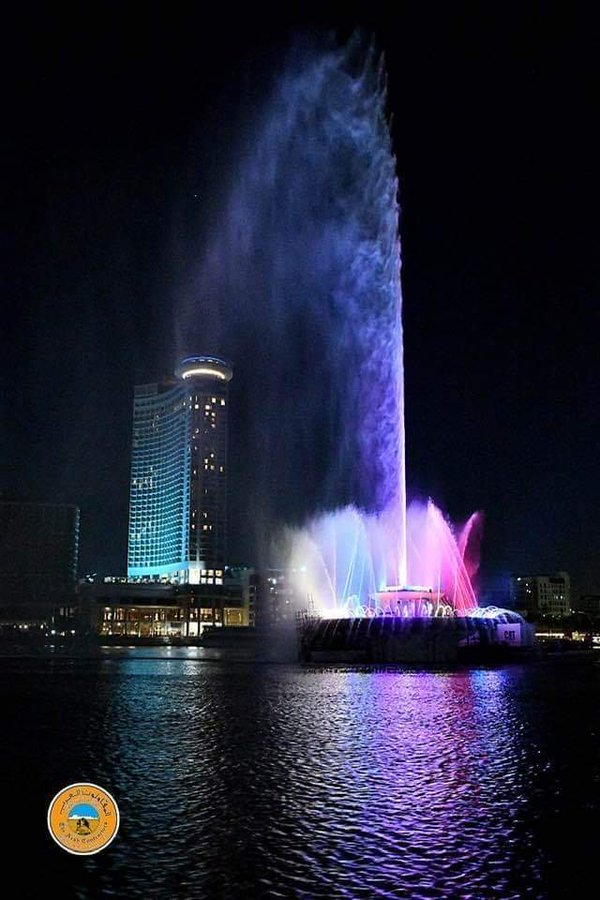
The iconic Nile Fountain is back after a 40-year hiatus 

Main Headlines

Monday

Tuesday

  • Ethiopia is acting unilaterally and intransigently in the GERD dispute: Egyptian FM
  • ‘No reports of serious side-effects from Chinese vaccine used in Egypt,’ says health ministry official
  • Egypt’s mega projects represent ‘a big opportunity’ for foreign companies, says Sisi

Wednesday

  • Handball: Brave Egypt suffers heart-breaking loss to Denmark in World Championship quarters 
  • Egypt’s prosecution detains dentist on sexually harassing male patients charges
  • Egypt court orders release of female TikTok influencer; renews detention of another in human trafficking case
  • Egypt cabinet approves contract with French RATP to manage Cairo’s  new electric train line

Thursday

Parliament member issues request for further studies into Cairo Eye project

Friday

Saturday

Sunday

  • Egypt receives the first 50,000 doses batch of AstraZeneca COVID-19 vaccine 
  • Egypt seeks to produce Covid-19 vaccines
  •  Egypt’s Sisi stresses need for binding deal on GERD in meeting with African Union commission head

Reports

 Read

Timeline 

From Twitter

Photo-Gallery

Plus

Posted in Diary of Aak, Egypt, Uncategorized | Tagged , , , , | Leave a comment