Qatar and the GCC rift

Here are three interesting pieces about the recent crisis in the Gulf, which I like to share with you. 

First: Bilal Saab, Foreign Affairs

 “The dispute between GCC members had been simmering for a while, and it was only a matter of time before it boiled over. In December, during a GCC Summit in Kuwait, Riyadh and Abu Dhabi had been close to singling out Qatar for its alleged financing of terrorism in Syria and elsewhere. But, at the last minute, the Saudis pulled the plug to avoid embarrassing their Kuwaiti hosts. They opted instead to give Doha a stern private warning. A couple of weeks before that, Saudi leaders scolded new Qatari Emir Sheikh Tamim during a meeting in Riyadh that was arranged by Kuwaiti leader Sheikh Sabah Al Ahmad.” 

Second by Michael Young, NOW.

“That sense of renewed confidence, coupled with recognition that the negotiations over Iran’s nuclear program will be arduous, may have prompted the diplomatic isolation of Qatar. With a new emir in Doha, the Saudis are flexing their muscles to push their own preferences in the region. Only time will tell whether the Qataris comply.”

Third by Abdulmajeed al-Buluwi, Al-Monitor

“It is illogical to think Qatar, Saudi Arabia, and the UAE can remain part of the same security organization when they have such divergent views about where their common danger lie. “

Posted in Middle East, Politics, Qatar, Saudi Arabia | Tagged , , , , | Leave a comment

Egyptian Aak 2014. week 10: ( Mar3-9)

Main Headlines

 Monday 

Tuesday

 Wednesday

Thursday

 Friday

Saturday

 Sunday

 Report on sit-ins dispersal

 Photo Gallery

 Timeline

 Good report

Good read

Finally, here are Jayson Casper’s prayers for Egypt


Posted in Diary of Aak, Egypt | Tagged , , , , | Leave a comment

The AKP’s Election Strategy: Controlling the Corruption Narrative

Great read to understand the current crisis in Turkey

aaronstein1's avatarTurkey Wonk: Nuclear and Political Musings in Turkey and Beyond

I am breaking my silence. I am still committed to finishing my dissertation before the end of this academic year, so I don’t expect to post many more blog posts before June. However, the recent corruption allegations have prompted me to take a break from my dissertation.

On 3 February 2014, Jeffrey Lewis, Melissa Hanham and Amber Lee published an article detailing how they used open source information to locate the primary facilities for North Korea’s ballistic missile transporter-erector-launchers (TELs) assembly. The availability  of open source information now allows for analysts to identify North Korean missile facilities, Iranian nuclear sites, Turkish nuclear weapon storage facilities, and to track the construction of villas in a remote bay on Turkey’s Aegean coast.

Hakan Fidan, the director of Turkey’s intelligence agency, wrote his PhD dissertation on the subject. He also happens to be one of the Prime Minister’s closest advisors. Thus, like in the case of Ahmet…

View original post 1,730 more words

Posted in Uncategorized | 2 Comments

Egypt and Gaza

This piece is published in Daily News Egypt

Last Friday, a small group of Palestinians protested near the Egyptian border demanding the opening of the Rafah border. Their congregation ended uneventfully, however, it highlights a brewing crisis between post-Morsi Egypt and the Hamas government in Gaza that can easily explode at any time soon. Moreover, Tony Blair, the special envoy of the Quartet on the Middle East arrived in Cairo on Monday in his second visit in 2014. The two events may not be directly related, but it is plausible that Gaza will be on the agenda of his meeting with the Egyptian officials.

In 2008, a group of Palestinians blew up the wall separating the Egyptian Rafah side from the Palestinian side in protest of the isolation of the Gaza strip. Thousands of Palestinians streamed into Sinai, and stayed for several days before the Egyptian authorities took control and closed the border again. The incident was embarrassing to the Mubarak regime. It highlighted the Egyptian contribution to the siege of Gaza following Hamas’s takeover of the strip, and also exposed the vulnerability of Sinai to any trouble from the other side of the border.

Mubarak had to back off and ease the siege “a bit,” and turned a blind eye to the growing network of tunnels underneath the border. He wanted Hamas to be confined within certain red lines, in return for some viable breathing space. His policy worked, but at a hefty price of chronic deterioration of the security situation in Sinai.

The countless tunnels underneath the border have also changed the culture and the mindset of the local residents after years of earning easy money from the illegal tunnel trade. Many of tribal leaders and homeowners near the Gaza border have vehemently rejected an offer from the government to relocate and accept compensation. According to Hossam Sweilam, a retired army general, Rafah’s homeowners earn at least 20 thousand Egyptian pounds daily. Whether his estimation is true or not, it is clear that the tunnel owners have created a rentier-microstate that struggles to comply with the roles of the parent Egyptian state.

Despite the rejection, the Egyptian army seems determined to create a buffer zone along the border with Gaza in Rafah that would extend 300 meters in populated areas and 500 meters in open areas. General Sweilam has even stated that the construction of the buffer zone may take three stages and cover areas up to 1.5 kilometers from the border. He also asserted that there is another option, with the creation of a water barrier from the sea along the entire border between Gaza and Sinai.

Will the Islamic movement sit idly by while watching the Egyptian authorities slowly suffocating its lifeline? Of course not, but what can Hamas do to force the Egyptian authorities to change their minds?

Option one: Appeasement

There are some reports of possible rapprochement between Hamas and its archenemy Mohamed Dahlan. In January, Hamas allowed three Fatah leaders loyal to Dahlan to return to Gaza. The Fatah returnees and Hamas officials allegedly formed a committee to oversee construction of a new Gaza town to be funded by the UAE. Hamas indeed, needs this Gulf support, but it also needs a Palestinian figure with a good relationship with Egypt’s army chief Sisi, and Dahlan could be that person.

If Dahlan is definitely back into the complex Gaza scene, then his goal will be to find a solution that stops the suffocation of Gaza, while satisfying the Egyptian authorities’ security interests. This task is not impossible; nonetheless it would be costly to the Palestinian militant group that has controlled Gaza since 2007. It remains to be seen if Hamas and their dance with Dahlan will be enough to appease the Egyptians, or will the old hostility ruin this ambitious move.

Option two: Provocation

Last Friday’s demonstration by the Egyptian border was small and peaceful. Hamas has the ability to orchestrate a bigger, and possibly violent, protest in the hope of forcing the Egyptian authorities to suspend the buffer zone project. In any future protests, any casualties among the Gazans or their supporters from the Sinai tribes would be the worst possible nightmare for the Egyptian army, and can force the Egyptian authorities to put their ambitious plan for a buffer zone on a hold.

However, it is a risky move, as the casualties from any confrontation will probably be on both sides. The death of Egyptian soldiers can turn the already hostile Egyptian public opinion further against Hamas. There is already a court case filed in Egypt to designate Hamas as a terrorist organization, and any clashes at the border will almost certainly make a yes verdict certain. This would close the door for any possible behind-the-door negotiations.

Furthermore, there are calls in Egypt, from generals like Swaleim, to go further and target radical groups inside Gaza. Swaleim does acknowledge, however, that the Egyptian army has no plan for such a hawkish move. Any deterioration at the border may backfire on Hamas and deepen the Egyptian army’s involvement in Gaza.

Hamas may also try a dual policy of appeasement and provocation in a cat-and-mouse game with the military-led authority in Egypt. The militant group understands its vulnerability, but will try its best to use all the cards available in its quest for self–preservation.

Regardless of Tony Blair’s input (if any) to the entire Gaza conundrum, it is interesting, and frankly alarming, that many in the corridors of power in Cairo seem to think that Egypt can get rid of Hamas at some minimal cost. Rather than crushing Hamas, Egypt can take some measures on its side of the border that eases the tension with Gaza. Egypt can work on two fronts: On one hand, to increase the opening hours of the formal border crossing between Egypt and Gaza and help with exporting more vital goods to the impoverished strip. And on the other hand, they can de-escalate and renegotiate with Sinai tribal leaders, to create a cohesive plan that includes damage compensation and a long-term supportive plan.

The years-old dystopian dynamics between Gaza and Sinai, with its corruption, radicalism, and rentier economy will not be reversed easily. Further, drastic security measures alone will not solve these chronic problems. There are other measures that Egypt can adopt to win the support of the communities on both sides of the border; hostility against Hamas, and/or relying on Dahlan is not one of them. Egypt needs to resist the temptation to become involved in Gaza’s political swamp.

Posted in Egypt, Gaza, Middle East, Palestine | Tagged , , , , , , | 2 Comments

Egyptian Aak 2014. Week 9 ( Feb 24- Mar2)

Main Headlines

 Monday

Tuesday

Wednesday

Thursday

Friday

 Saturday

 Sunday

Good report

Good read

Photo Gallery

Plus

Finally here are Jayson Casper’s prayers for Egypt 

Posted in Diary of Aak, Egypt | Tagged , , , , , | 1 Comment

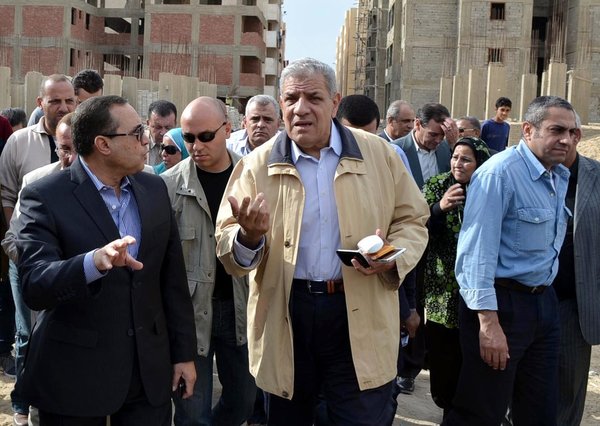
Egypt’s new buffer government

Ibrahim Mehlib

(Photo of Egypt’s new PM by Khaled Kandil / Associated Press / November 24, 2013)

The culture of rumors and speculations in Egypt can tempt us to abandon our logical thinking. Take, for example, the resignation of Beblawi’s government—this was a move that took many by surprise, but it shouldn’t have. The government resignation was inevitable; the timing may be intriguing, but the decision was not. Clarity and transparency are lacking commodities when it comes to Egypt’s political scene. We cannot know for sure why the government resigned (or forced to resign), nonetheless, there are contributing factors behind the departure of Beblawi’s government.

 Post-Morsi era

The Beblawi government appeared post-Morsi. It will always be associated with July 3 and the ousting of the Muslim Brotherhood from power. Whether the army chief, Marshal Sisi, intends to run for election or not, the Egyptian leadership needs a new government with fresh faces, commissioned with the crucial task of preparing for the future. The subsidence of the intense protests on the streets, together with the relative order that is now associated with Morsi’s trial, has seemingly convinced the authorities in Egypt that it has sufficiently weakened the Brotherhood and is now focusing on other goals and missions.

On the other hand, Egyptian Journalist Abdullah Kamal has explained through his Facebook account that many of Beblawi’s ministers have openly backed Sisi. While this is indeed true, it is probably a source of embarrassment for the Egyptian leadership. Sisi may be after power, but formal grooming is not ideal for the alleged democratic façade the leadership is trying to maintain. Moreover, the performance of most of Beblawi’s ministers was disappointing, even by local standards, and the calls for their departure came from several sources, including many of Sisi’s fans.

Business executive needed

In eras of uncertainty, digging for cash can help. Housing Minister Mehlib is a well-known technocrat and a career executive; his experience with the Arab Contractors Company is ideal for this role. In his first press interview, Mehlib declared his priorities to be encouraging investments and reviving tourism; in short, he is after money. Contractors are not just motivated to construct new projects, but also to recycle old stuff that is deemed a source of much-needed cash. I expect Mehlib to try to play the BBC’s program, “Cash in the Attic,” with the hopes of forging as many business deals as possible before the new president enters the Ittahdyia presidential palace. How is he going to do that is still unclear? Mehlib has probably learned a trick or two from his years of service with Mubarak. Selling lands, or commission deals with Arab businessmen is probably the way forward for a government that is desperate for cash.

Ending the various public sector strikes is another task the new government faces. Beblawi has failed to fulfill his pledge to set a minimum wage for workers, which has stirred up a wave of strikes. However, we must understand that workers are also smart; they know that their opportunity to get good deals from the government come before and not after the presidential election; therefore, they exert maximum pressure on the government. The workers’ mindset does not need a political scientist like Beblawi, but a business dealer like Mehleb, who spent most of his life negotiating and clinching deals.

The third task for Mehlib is to establish security and counter the growing wave of terrorist attacks in egypt, but again that is probably the only task that he may not be directly involved in. Again in his press conference, Mehlib hinted that individuals to fill the top ministerial jobs would be chosen by the interim leadership (and not him). The appointment of a new interior minister might be tricky. Dismissing the current Interior Minister Mohamed Ibrahim can be the most dignified way for the current interim leadership to wash their hands of all the bloodshed and violence of the last few months. However, Ibrahim is not the weak man that would happily assume all the post-July 3 sins. Ibrahim survived the ousting of Morsi and may survive the departure of Beblawi, but it is still unclear whether the hawks in the interior ministry would decide the fate of the current interior minister Mohamed Ibrahim or whether the army chief would override and pick a new face suitable for a new era. Securing Egypt is not an easy task; Mehlib will be powerless in saving the economy if the wave of terrorist attack continues with the current pace.

Much has been said to describe the army chief Sisi, but even his enemies agree about his shrewdness. He clearly likes to take his time and avoid rushing into a hasty decision. The Marshal’s understanding of his relative inexperience is probably behind the appointment of Mehlib’s government; a buffer government between the past and the future can allow Sisi to position himself at the centre of the political dynamics without owning to its mistakes and decisions. The army’s men can be rough, but Sisi likes to fashion his future career slowly, like a carpet weaver; he will not declare his plan until he has made the final touches, dots all the i’s and crosses the t’s. It remains to be seen whether Mehlib will help him in this task or if Mubrak’s man will create a greater mess for the Marshal.

Posted in Diary of Aak, Egypt | Tagged , , , , , | 3 Comments

Egyptian Aak 2014 Week 8 ( Feb17-23)

Monday

 Tuesday

Wednesday

 Thursday

Friday

Saturday

 Sunday

 Timeline

Photo gallery

 Profile

 Good Report

 Good read

Plus

Finally, here are Jayson Casper’s prayers  for Egypt

Posted in Diary of Aak, Egypt | Tagged , , , , , | 3 Comments

Egyptian Aak 2014. Week 7 ( Feb10-16)


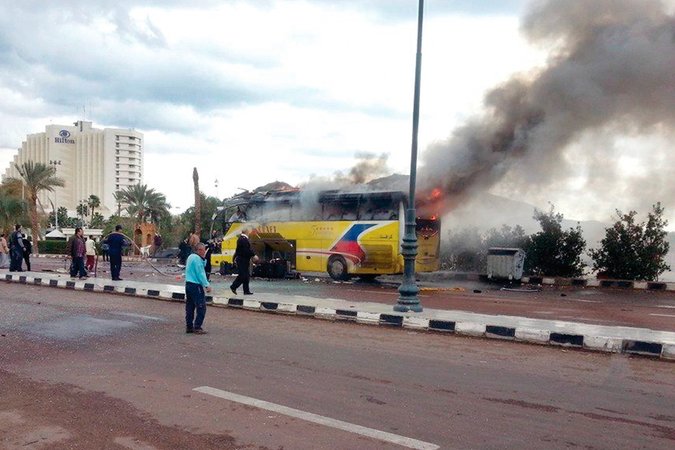
Taba 2

Photo of the Taba’s explosion via Reuters

Main headlines

Monday

 Tuesday

 Wednesday

Thursday

Friday

Saturday

 Sunday

Poll

  • Baseera: 27 Percent of Egyptians approve performance of Beblawy’s cabinet

Interview

 Good report

Good read

 Plus

  • Letter from the wife of a detainee: A visit to prison A visit to prison Hoda Mahmoud
  • “la Moakhza”: A fresh, unconventional take on discrimination in Egypt. Yasmine Zohdi

Finally here are Jayson Casper’s prayers for Egypt.

Posted in Diary of Aak, Egypt | Tagged , , , , , , | Leave a comment

On Egypt’s Abdel Moneim Abul Fotouh

Abdel_Moneim_Aboul_Fotouh_-_World_Economic_Forum_Annual_Meeting_2012

This piece is published in Al-Monitor

For former presidential candidate, Abdel-Mon’eim Abul-Fotouh, perhaps not running for president again was not a surprising decision. In an interview with the Egyptian newspaper Al-Ahram last Friday, he said that he wouldn’t engage in “political cosmetics,” a clear indication of how he viewed the current crisis in Egypt. He reaffirmed his opinion on Sunday by saying, “I won’t take part in deceiving people into believing we have a democratic path when we don’t.” Abul-Fotouh’s assessment is an accurate reflection of the current political atmosphere in Egypt, however, his decision is also an indirect admission that he stands no chance of winning the backing of Egyptian Islamists, and non-Islamists beyond his core supporters in Egypt Strong Party. Unlike in 2012, in which some Salafists and the young Muslim Brotherhood backed Abul-Fotouh, this scenario is no longer possible. In fact, even in a free and fair election, the chance of Abul-Fotouh garnering more votes is very slim.

Continue reading here


Posted in Diary of Aak, Egypt | Tagged , , , , , | 1 Comment

Egyptian Aak. Week 6 ( Feb 3-9)

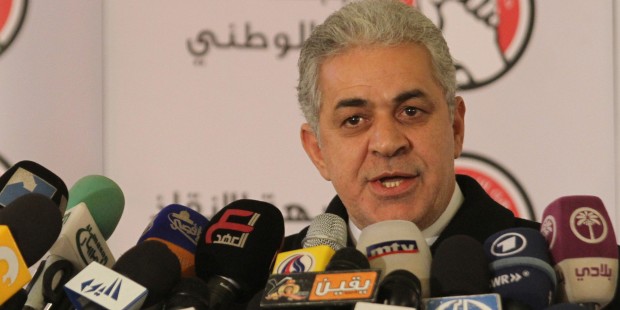
Hamdeen-Sabbahi-620x310

(Hamdeen Sabbahi, Egypt’s presidential candidate)

Main Headlines

Monday

Tuesday

Wednesday

Thursday

Friday 

Saturday

Sunday

Interview

  • Abul Fotouh: “I won’t engage in political cosmetics.” Dina Ezzat
  • Mohamed Hammouda: A benevolent dictator would consider human rights for respectful citizens:

Photo Gallery

  • Journalists protest Egypt jailing of Jazeera colleagues

 Good Reports

Good Read

 Plus:

Tribute

 Umm Kulthum left the building 39 years ago. The Middle East Institute

Finally, here are Jayson Casper’s prayers for Egypt

Posted in Diary of Aak, Egypt | Tagged , , , , , , , | 2 Comments