Egypt: The state, the army, and the future

Following months of speculation, leaks, and predictions, Egypt’s army chief Abdel Fattah el-Sisi has announced his resignation, paving the way for a long-awaited presidential campaign. Sisi’s resignation, speech, and candidacy are unique in the history of Egypt. Although the country witnessed a coup d’état in 1952, it has never witnessed a quest by a Minister of Defense to rule in such a way. However, the latest development is a clear indication of the spectacular deterioration of Egypt’s civil politics, which has ultimately paved the way for the increasing involvement of Egypt’s military in “fixing” the country’s chronic problems. Many compare Sisi with Nasser, Sadat, or both, but in fact, the ex-Field Marshal will only be himself, a new brand of autocrat, still polishing and updating his style and his plans for Egypt.

To understand Mr. Sisi’s thinking process, it is important first to look back at past state-building efforts in Egypt, and the complex relationship between the military and the state, which can be divided into three stages.

 Stage one: A growing army within a growing state (1952-1967)

 The genesis of the first Egyptian republic depended largely on Nasser’s efforts to establish control of the military, administrative, and economic pillars of the state. By widening the selection process of military recruitment, Nasser transformed the relatively elitist army into a huge melting pot that absorbed Egyptians from various religious and social backgrounds, but Nasser’s authoritarian system mismanaged the process and his ambitions exceeded his ability.

Stage two: A severely weakened army that drained the state (1967- 1979)

 The 1967 defeat not only revealed Israel’s military superiority, but also severely weakened the Egyptian military, which had become increasingly dependent on the civilian government for logistical and moral support. A special military public fund was established for Egyptian donations to support the army. Even the legendary singer Oum-Kalthoum toured the Arab world and France to promote donations. The state’s administrative and economic revenue was channeled to help the military bounce back, which, in turn, severely weakened central authority and limited its ability to maintain public services.

Stage three: Rebounding army strength in an increasingly weak state (1979-2011)

 The military bounced back, mainly due to diminished defense requirements following the peace treaty with Israel. Ex-president Mubarak encouraged the military’s expansion of its business empire under the pretext of achieving autonomy within the state. He did this for two reasons: a) To prevent the shambolic dependency of the army on civilian resources that had prevailed during the early Seventies; and b) to indirectly serve a wide group of civilian beneficiaries who had been relying on the army’s low-cost products. This became increasingly important, especially following Mubarak’s massive wave of privatization and his abolition of various subsidies. The outcome was a mini-domestic interlinked military empire, albeit independent from the state.

On the other hand, despite 30 years of peace, the much-anticipated era of prosperity did not follow and the Egyptian state failed to bounce back. In fact, the legacy of authoritarianism, inefficiency, corruption, nepotism, and widespread institutional weakness that had plagued Mubarak’s Egypt continued unchecked.

 Following Mubarak’s ousting after the January 2011 revolution, the military initially opted to court the revolution and negotiate with the civilian parties, including the Muslim Brotherhood. However, the turbulence of the past three years, the weakness of non-Islamists parties, and Morsi’s inept rule have changed the military mindset. Now the military wants to “fix,” but without taking direct responsibility for its mess by fielding one of their men, while securing their independence and exclusivity.

The military’s new attitude is popular among certain segments of Egyptian society. It is understandable that 30 years of Mubarak have destroyed any trust in the efficiency of Egypt’s civilian governing body. Framing the narratives solely on army domination of Egypt’s political scene ignores the extent to which Egyptians willfully accept this formula. We have to admit that many see nothing wrong with the infusion of well-disciplined army manners into the undisciplined central authority. They do not care about the army growing a business empire, as long as this empire benefits them too, directly or indirectly. In a TV telephone interview, actor Mohamed Sobhy explained how the army would find contractors who would offer cheaper offers, as well as disciplined laborers, which would hasten projects’ timelines.

It is easy to label someone like actor Mohamed Sobhy as part of Sisi’s new personality cult. That may or may not be true (I simply do not know). However, it is crucial not to underestimate the populace’s deep sense of defeat of the civil spirit in Egypt. Outside the social media bubble and the revolutionary circle, many ordinary Egyptians have lost faith in their ability to perform and save the state, and Sisi’s camp of admirers and backers is exploiting this defeatist attitude. Nonetheless, the origin of this sense of personal defeat springs from the much-confused Egyptian psyche, damaged by three years of turmoil.

As for presidential candidate Sisi, his moves from July 3 to date reflect a man who keeps editing his plan on a daily basis. He knows roughly what he is up against (mainly cultish Islamism), but he is unsure what he stands for, apart from a very basic patriotic vision. He is open to learning from all his predecessors’ experience, but he is also willing to discard their failed policies. Fashioning his new vision is probably his hardest task, one that makes his ousting of Morsi seem like a walk in the park.

Therefore, after nine months of upheaval, it is time for civilian forces to stop wasting time diagnosing the mess (we all know what is wrong with Egypt), or draw comparisons with the past. It is important to understand that the current military – civilian imbalance will never change through street mobilization or political agitation. In fact, these tactics justify the authorities’ ruthless crackdown in front of the apolitical public. As Amr Hamzawy wrote, we should realize that the transition from our current reality to a future without civil and human rights violations will take a long time. It is crucial for civilian forces to apply more rational measures to tame the current authoritarianism, and convince the future president to edit his plan in favor of more civilian empowerment. This is not an impossible task. Even candidate Sisi has not finished his final plan for Egypt yet, and growing, smart civilian pressure can make this plan less ugly than is currently anticipated.

Posted in Diary of Aak, Egypt, June30 | Tagged , , , , , , | 6 Comments

Is Something Rotten In Ankara’s Mayoral Election? A Very Preliminary Statistical Analysis

This is a very interesting piece about Turkey’s local election by Erik Meyersson. I think it is definitely worth reading

Erik's avatarErik Meyersson

Having today seen tweets on numerous alleged voting irregularities in Turkey and thanks to Twitter user @erenyanik I came across this CHP/STS dataset of voting data in the Greater Municipality of Ankara, one of the tightly contested (less than a percentage point in the vote share) mayor elections between Melih Gökçek and Mansur Yavaş. The dataset includes 12,230 ballot boxes across 1,682 voting locations in 25 districts in Ankara. I didn’t collect the data itself and therefore this analysis should be taken as highly preliminary.

It all started when @erenyanik posted this picture plotting ballot box level AKP and CHP vote shares against the turnout rate for the Ankara mayor race. Several of the ballot boxes revealed turnout rates above 100 percent, which is strange, but also that these tended to systematically favor the AKP.

I decided to create a couple of graphs myself, and per request am now typing this very basic analysis up.

View original post 853 more words

Posted in Uncategorized | Leave a comment

On Egypt’s Mass Death Sentences

I know it is a bit late, but here are my thoughts on Egypt’s latest Judicial fiasco……

Egypt _____, a court in Minya south of Egypt, sentenced five hundred and twenty-nine Muslim Brotherhood defendants to death for the murder of a deputy chief police of the town of Matay. Following the verdict, a display of brief anger among the relatives of the defendants soon ended and the crowd went home. This muted reaction is in stark comparison to a similar, albeit smaller case, on January 2013, when a Cairo court sentenced twenty-one men from the city of Port Said to death for their alleged role in the massacre of seventy-four Cairo football fans in February 2012. The sentencing sparked wild outrage that turned the city of Port Said into a war-zone. The sheer difference between the two cases symbolizes the constant change of the Egyptian psyche since the January 2011 revolution to date.

 The early success of the revolution tempted Egyptians to believe in the effectiveness affectivity of street mobilization. They viewed it not just as a release of their long-term suppressed anger, but also as a way to pressurize the authorities to listen to their demands. Ex-President Morsi tried to restore law and order in Port Said by imposing a curfew on the city, but to his surprise, the curfew was largely ignored and was lifted a few days after. The army played a very cautious game and declined to force any tough measures on civilians inside the city; they just secured major points in the city and ignored civilian neighborhoods. Nonetheless, the incident alerted the military to the importance of restoring the barrier of fear that they erected between themselves and ordinary Egyptians for over sixty years.

 Following the ousting of Morsi, the military worked slowly but surely on restoring what they always portrayed as “the prestige of the state,” a subtle, albeit elegant, way to describe the installation of fear. The first step was the forced end of two sit-ins (Rabaa and Nahda) by the supporters of the country’s ousted Islamist President, Mohamed Morsi; the result was more than 600 deaths, including sixty-four policemen. Such bloody crackdowns triggered a vicious cycle of revenge. Islamists in the south of the country attacked churches and police stations, including the one in Matay, and killed its deputy police chief in the holy month of Ramadan. His death was a violent, brutal one by a gang of very angry Islamists. His death, along with the wide spread chaos in the south, did not serve the Islamists very well. In fact, it whitewashed the police atrocities in the Rabaa sit-ins in the minds of many ordinary Egyptians. The so-called “prestige of the state” became a popular slogan. While the outside worldview of the Islamists is as victims and martyrs, Egyptians, with a lot of guided influence from the local media, resented the Islamists and viewed them as “terrorists.” Demands for speedy trials to restore law and order rose sharply, and unsurprisingly were warmly welcomed by the military-backed authority.

 At the heart of this crisis is Egypt’s judicial system. As Nathan Brown  has described, the most important official in Egypt’s legal system is the prosecutor general, who ultimately decides whom to investigate and prosecute and whom to ignore.  The Brotherhood understood that and appointed a prosecutor general loyal to them during Morsi’s era; he was later removed after the president’s ousting.  This office has played an important role in Egypt’s controversial court cases from the trial of Mubarak, to that of Al-Jazeera journalists, and now this current case in Minya. Following the shocking verdict, the prosecutor referred another 919 Morsi supporters to a mass trial before the same court. Such hasty, almost farcical justice’s goal is not the deaths of the defendants; as most of the men found guilty were sentenced in absentia, others who were in custody still have a chance in the appeals court. However, the main goal is obviously as I mentioned earlier the installation of fear and acceptance of the authoritarian role.

One important point to remember is that such legal farce is not new to Egypt. Nasser set speedy trials during his tenure following the alleged attempt to murder him in 1954 and then later in the 1960s. Among those who were sentenced to death was Sayyid Qutb, the father of modern fundamentalism. Sadat and Mubarak would never hesitate to do the same, if they faced with similar challenges.

The risk now for Egypt is whether the policy of installing fear will produce only shallow, short-term results. Any brutal murder must be punished, nonetheless, without real justice for those defendants in the appeal court, the already tense communities, with easy access to smuggled arms (from Libya, and Sudan) can be transformed to insurgent groups willing to fight the central authority. The current calm in the south could very well be the calm before a strong, persistent storm. The relatives of the defendants may have quietly gone home after the court ruling, but in Upper Egypt revenge is a deeply rooted tradition.

Posted in Diary of Aak, Egypt | Tagged , , | 1 Comment

Egyptian Aak 2014- Week 13 ( March 24-30)


Main Headlines

Monday

 Tuesday

Wednesday

Thursday

Friday

Saturday

 Sunday

 Profile

Interview

 Poll:

 Good Reports

Good read

Book Review

 Plus:

Finally here are Jayson Casper’s prayers for Egypt

Posted in Diary of Aak, Egypt | Tagged , , , | 1 Comment

Timeline of the Current Turmoil in Turkey

Erdo 5

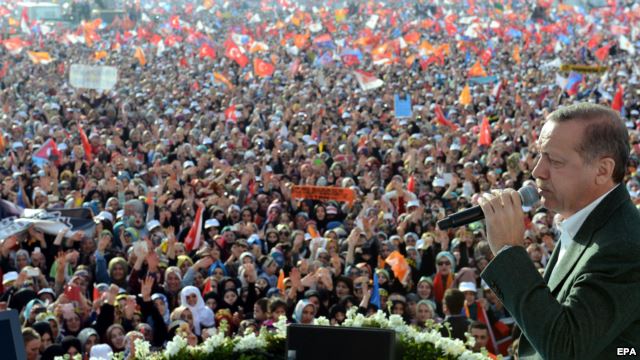
(Turkish PM Erdogan addresses supporters on March 23, photo via Radio Free Europe)

December 17

December 18

December 19

December 21

December 22

December 24

December 25

December 27

December 28

December 30

December 31

 January 1

 January 2

January 5

January 7

January 12

January 15

January 16

January 17

January 22

January 27

January 30

February 4

February 7

February 8

February 11

February 12

February 14

February 18 

February 21

February 24

February 26

February 27

  • Montage wars over leaked voice recordings incriminating PM and son of corruption

February 28

March 2

March 3

March 5

March 6 

March 7

March 9

March 10

March 11

March 12

March 14

 March 20

 March 21

 March 22

 March 23

Turkey becomes first country ever to ban Google DNS

 March 26

  • Twitter says challenging Turkish ban through local courts

 March 27

 March 28

 March 30

March 31

Posted in Turkey | Tagged , , , , | 1 Comment

Egyptian Aak 2014- Week 12 ( Mar 17-23)

Main Headlines

 Monday

Tuesday

Wednesday

Thursday

Friday

 Saturday

 Sunday

 Profile 

 Report

Good read

Photo Gallery

Poll

Finally, here are Jayson Casper’s prayers for Egypt 

Posted in Uncategorized | Tagged , , , , | 1 Comment

European Union ‘gravely concerned’ over Twitter ban in Turkey

I reblogged this good post by Yavuz Baydar on the ban of Twitter in Turkey.

yavuzbaydar's avatarTEMPORAL

Access to Twitter was blocked in Turkey on Thusday night, drawing harsh reactions around the world, especially from Europe which deems the move as an obvious blow to the freedom of expression.

EU Enlargement Commissioner Stefan Füle said on Friday he was “gravely concerned” by a block imposed on Twitter in Turkey as the government battles a corruption scandal days ahead of elections.

“Being free to communicate and freely choose the means to do it is (a) fundamental EU value,” Füle wrote on his Twitter account.

The vice-chairman of the Liberal Group in the European Parliament, German MEP Alexander Graf Lambsdorff, called for the suspension of accession talks following a Twitter ban in Turkey. Lambsdorff, who is also his group’s shadow rapporteur on Turkey, said that negotiation with Turkish Prime Minister Recep Tayyip Erdoğan is no longer necessary.

Speaking to Today’s Zaman, the German Liberal said: “I am asking for…

View original post 929 more words

Posted in Uncategorized | Leave a comment

Egyptian Aak 2014 – Week 11 (Mar 10-16)

Main Headlines

 Monday

Tuesday

 Wednesday

Thursday

Friday

 Saturday

 Sunday

 Good Report

 Good Read

 Plus:

Finally, here are Jayson Casper’s prayers  for Egypt.

Posted in Diary of Aak, Egypt | Tagged , , , , , | 2 Comments

ReBlog- Option Three: To Hell in A Handbasket

In here blog Kamil PashaJenny White aptly explains the polarizing situation in Turkey, and a potential nightmare scenario..   

Things are going to hell in a handbasket. So much has happened in the past month, much of it reported in detail by the foreign press and the few independent Turkish media outlets still operating. I’m relying more and more on my Twitter feed for information about what is happening on the ground. Let me recap:

Over the past few months, the AKP has pushed through parliament bills that have essentially erased important elements of the separation of powers in Turkey. The AKP government (by which is meant the singular involvement of PM Erdogan) has laid hands on the educational system, including the Academy of Sciences, the appointment of judges and prosecutors, the police, and other formerly independent institutions. It has nearly eradicated legitimate avenues of free speech (bought and bullied newspapers and television into submission, banned social media and legalized nearly unlimited spying on its citizens). I’m probably forgetting something, there have been so many wounds to the national body in such a short time. (See my prior posts for some of these.) The essential driver behind these is not, as some might believe, the Islamicization of society and the state. What do any of these have to do with Islam? No, it is for the PM and his circle to remain in power and to retain the immense profit of those positions.

PM Erdogan wishes to stay in power. And he wishes to continue as is, with the Turkish economy functioning as a profitability machine, churning out vast amounts of money for his massive infrastructural projects, which churn out vast amounts of money for his followers. Some of that money — many millions of dollars in cash, have been recently found in shoeboxes under a bank official’s bed and located, based on a conversation allegedly  wiretapped from the PM’s phone, in a safe in his son’s house. A 14-month long investigation into corruption high and low (netting a mayor in Fatih as well as the sons of ministers and the bank official) led prosecutors to issue arrest warrants and the police to bring them in to testify. Several ministers were forced to resign. One of them, on his way out the door, said on live television that the PM knew all about this, so HE should be the one to resign. Wiretapped conversations have been leaked through social media almost nightly. The “Daddy” tape is most insightful. In it, the PM apparently wakes up his son on the morning of the arrests and tells him to “zero out” what’s in his house. “But Daddy,” says the sleepy son, “there’s nothing in the house that would interest them except your money in the safe…” This is followed by an exasperated conversation, leading to a creative explosion of satire on social media about a father’s advice on which hunk of money should be delivered where.

The PM responded to the arrests by transferring or removing from their posts hundreds of prosecutors and thousands of police, then pushing through the bill that henceforth allows a government official to appoint judges and to require government notification before a case like this can be investigated.

He also set up a new villain — the familiar ‘inside enemy’ working at the behest of ‘outside enemy powers’ that had been the bugaboo of generations of Kemalist schoolchildren. This time, instead of the non-Muslim minorities, the blame was placed on AKP’s former ally, Fethullah Gulen’s Hizmet movement, ostensibly working at the behest of the CIA. The government has even looked favorably on a retrial of  the military officers jailed, some for life, in the Ergenekon trials, convicted of fomenting coups against the AKP government. Ah, it was all a misunderstanding. In fact, they claim, it was the Gulenists, not the AKP as everyone thought (and who took credit for pushing the army back into the barracks), that was behind the trial. Indeed, it was widely known that some of the evidence was faulty and even rigged against the generals. Now history is rewritten to show that the Gulenists were at fault for that. Some senior officers have just been released from jail (along with unsavory characters like Veli Kucuk, who is alleged to be behind numerous assassinations and has vowed to continue his “patriotic activities”). Perhaps the PM has decided he needs some friends in the army and others with special skills.

As a result, there is less and less “rule of law” in Turkey. The police don’t obey the prosecutors; prosecutors can be pulled off their jobs for unpopular investigations. The effect of this will trickle down into society. Already a whole series of people convicted of a variety of crimes have asked for a retrial, since clearly their trial procedure must have been tainted by the Gulenists. If the generals were victimized, why not them? Police act with impunity, with no fear of repercussions if they shoot teargas canisters directly at people (protesters, but also passers-by and in one recent photo a cameraman) just a few feet away.

Yesterday the funeral of a young boy killed by a blow to the head by a tear-gas canister that left him in a coma for months brought tens of thousands of people into the streets in solidarity. The boy, Berkin Elvan, was out buying bread during the Gezi protests almost a year ago. He had told his mother he would go to the grocery store because he didn’t want her to get hurt. A loaf of bread is a powerful symbol in Turkish society and many of the demonstrators at his funeral and at memorials across the country cried and clutched loaves bound in black or tied loaves to their front doors.

Another young man, Burak Can Karamanoglu, nephew of an AKP mayoral candidate, was killed yesterday during the protests surrounding Berkin Elvan’s death in a fight between demonstrators and a group of local AKP supporters carrying clubs and shouting religious slogans. Some in the media called it a fight between gangs of an outlawed far-left splinter group and “civil fascists”. While the PM has remained completely silent on Berkin Elvan’s death, he immediately blamed the “murder of our our brother” Burak  on CHP head Kilicdaroglu”s “illegal soldiers” (a play on “Ataturk’s soldiers”, a trope used by Kemalists).  Worse, Egemen Bagis, AKP’s former minister for EU affairs, said of the thousands of people in the streets mourning Berkin Elvan at his funeral that he couldn’t understand these “necrophiliacs”. The lack of respect and civility, much less humanity, is stunning. This has nothing to do with Islamic or any other kind of ethics. It is power and impunity run amok.

If everything can be put down to a conspiracy, then people can act with impunity. There is no need to fear repercussions from individual police brutality or blatant expressions of sectarian hatred. In a previous post, I described the new regulations banning hate speech — they appear limited to things like refusing someone a job because of their religious preference. Insulting Alevis, as the PM has done in public, seems to be allowed, just as “Armenian” is not infrequently used as an insult. But then, the regulations at this point mean nothing. There are no prosecutors to prosecute and no police to arrest anyone, except those on the wrong side of the newly blooded divide.

The PM’s “us versus them” discourse has been honed to a needle point, shearing open the only recently healed social wounds that divided Alevi  (Berkin and Kilicdaroglu) from Sunni (Burak), Kurd from non-Kurd, Muslim from Jew and Christian, and secular liberal from conservative pious. He is ripping apart the fabric of society and fanning the blood-lust that has so many times dragged Turkey down the path of sectarian violence.

It is such a shame for a Turkey that truly was on a remarkable path to peace and prosperity, most recently under AKP leadership. This is the part no one can understand — that the PM would undermine his own accomplishments over the past ten years, the legacy that he would have left to Turkey and to the world as a remarkable and astute, if pugnacious, leader. He is also creating problems within his own party, it is said,  physically beating his ministers if they displease him.

A feeble, corrupt and outmoded opposition with no new ideas is unable — just weeks before a crucial election — to capitalize on the fact that AKP is on the defensive by putting on display a better economic plan or showing themselves to be  less corrupt. As one working-class friend in Istanbul told me, AKP is the party of ‘Do it’, and CHP is the party of ‘Don’t do it’. Those who wish to jump the AKP ship, either as voters or politicians, have nowhere to jump to.

For the first time in my memory, people are worrying about whether or not the upcoming elections will be fair, given the new technologically advanced voting booths they expect to be employed and the huge stakes in the outcome. How easy is it to rig an election electronically? Are the continual wiretap leaks an attempt to illegally influence the election? People are asking whether foreign observers are needed. What happens afterwards if a substantial part of the population, on one side or the other, believes that the election results were rigged? It will add fuel to the vortex of rage already distending society, like lava rising beneath the soil of the nation.

Recently I have been talking to old friends about their experiences in the incredibly polarized and violent 1970s, a period of brutal street-violence that embraced the entire Turkish nation in its decade-long death-grip (and which I witnessed first-hand), but that has essentially been wiped from Turkish memory. It is as if history began in 1980 with the coup, which is now often rewritten as a plot by outsiders to weaken Turkey, not as a response to a failed government and economy and a society exhausted by continual death and destruction. Not a few of my friends anxiously noted parallels with the present situation.

It is said that PM Erdogan has on several occasions suggested that the answer to situations like Gezi and the protests has three steps. First you employ the police, then the army, then, if that doesn’t work, you put your own people on the street. It is questionable whether the weakened army in Turkey would step in against its own citizens on the street. So we go straight to Option Three, to hell in a handbasket. When PM Erdogan returned from a trade trip to Morocco during the Gezi riots, he was received at 2 AM at the Istanbul airport by an enormous crowd that chanted things like, “Just give us the word, we’ll take care of those Taksim people” and “Minority, beware.” He didn’t encourage “his people” to go out and take care of business, but after that there were disturbing incidents of gangs of men roving the streets with clubs and knives, some chanting Allahu Akbar, others chanting military marches, and others simply hailing insults along with blows on any demonstrator that came their way. What if PM Erdogan decides it’s time for Option Three and unleashes his supporters? This time, people will take out their guns and go after the relatively politically innocent young demonstrators. The parents of the Gezi youth, though, themselves survivors of the 1970s, will know what to do. And there we have a scenario of hell and an illustration of the adage that history that is unexamined is destined to repeat itself.

Let us hope that PM Erdogan has enough self-control not to go to Option Three, with which he will destroy all that his party has accomplished and possibly destroy the nation as well. Valdimir Putin reportedly once warned never to corner a rat because then it becomes the most dangerous animal on earth. It will do anything to survive, anything.

Posted in Middle East, Turkey | Tagged , | 1 Comment

The three phases of Egypt’s popular protests

The trends of Egypt’s crowd politics since Tahrir Square can also be seen in Ukraine, Syria and Libya. Published in  Al-Monitor

Behind every uprising are chronic frustrations from citizens betrayed by corrupt leaders, their repression, poor governance and a loss of hope in any political process that fulfills their aspiration for democracy, freedom and prosperity. Such events are always associated with frustration and cumulative anger that ultimately explode in the streets. The nature of street protests and their long-term impacts can vary depending on various dynamics in each country, and there are some alarming trends that were associated with the Arab uprisings that have resurfaced again with popular movements in other parts of the world.

First, romanticism:

Perhaps it is no surprise that the Egyptian Oscar-nominated film “The Square” was shown in Kiev. The ouster of Egypt’s Hosni Mubarak after years of tyranny has inspired many around the globe. It is doubtful, however, that the Ukrainian organizers have told their enthusiastic crowd about how the Egyptian uprising was struggling to fulfill its promises to the youth who congregated in Cairo’s Tahrir Square. Like many protest leaders, Ukrainian opposition figures were seemingly more preoccupied with toppling the corrupt Ukrainian president than with the day after his ouster. The film has done the job: Many were seemingly delighted to break with the past, but the Russian invasion of the Crimean region of the Ukraine was a rude awakening to many optimistic Ukrainians. Just as the Egyptians realized after their January 2011 revolution within a different context that the baggage of the past may continue to haunt them. Continue reading here

Posted in Egypt, Libya, Middle East, Syria | Tagged , , , , , | Leave a comment