Egyptian Aak 2015 – Week 28 ( July 6-12)

Top Headlines

  • Egypt’s Sisi approves new parliamentary election law. Thursday
  • The Egyptian-born actor Omar Sharif died on Friday at the age of 83. Friday
  • Car bombing at Italian Consulate in Cairo kills one. Saturday 
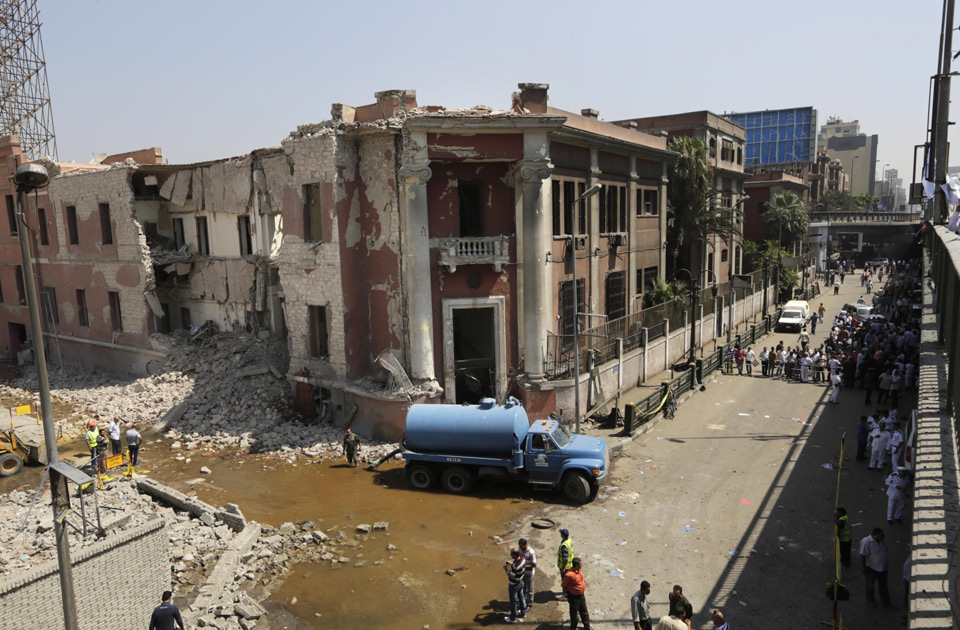
Italian consulate bombing

Main Headlines  

Monday

Tuesday

Wednesday

 Thursday

 Friday 

 Saturday

Sunday

Good Reports

Good Read

On Omar Sharif:

From Twitter

https://twitter.com/bbctrending/status/619552171105853440

Photo Gallery

 Plus

  • Egypt’s 1st information minister Abdel Kader Hatem dies at 93
  • Wikileaks: Saudi Arabia and Azhar on the ‘Shia encroachment’ in Egypt

Factbox:

Finally here are Jayson Casper’s prayers for Egypt
Posted in Uncategorized | 2 Comments

The Myth of the Muslim Brotherhood’s Gradualism in Power

Two years after the ousting of the Muslim Brotherhood’s President Mohamed Morsi, many still wonder how the Muslim Brotherhood failed in Egypt. Yesterday, Hudson Institute’s Senior Fellow Samuel Tadros  summarized what went wrong in few insightful tweets, which definitely worth sharing.

https://twitter.com/samueltadros/status/618159669945704448https://twitter.com/samueltadros/status/618159826879836160

One addition:

Reflecting on the past does not mean condoning current injustices, oppression, and death sentences.

There is an alarming tendency among some Muslim Brotherhood’s supporters to spin the past. Historical revisionism, however, is dangerous and will not help the Brotherhood in their struggle for survival. 

Posted in Diary of Aak, Egypt | Tagged , , | Leave a comment

Egyptian Aak 2015 – Week 27 ( June 29 – July 5)

Top Headlines

  • Car bomb kill Egypt’s public prosecutor (Monday)
  • Egyptian army counter a major attack by militants in Sinai (Wednesday)
  • Israel’s IDF has reportedly decided to grant all Egyptian requests to reinforce troops in Sinai
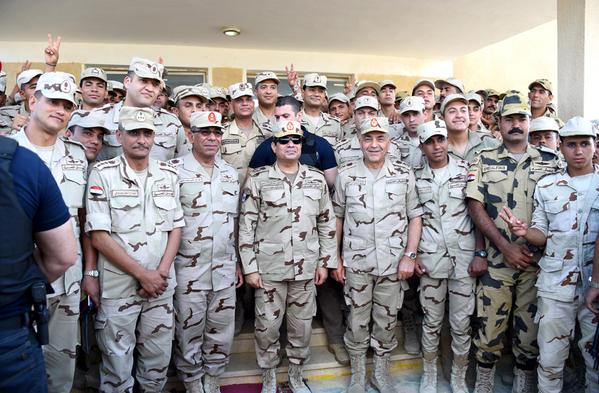
  • Egypt’s Sisi inspect security forces in Sinai in his military uniform. (Saturday)
  • New terrorism law could target journalists in Egypt. (Saturday)

 Sisi uniform

(Egypt’s Sisi in military uniform in North Sinai visit, via Ahram)

Main Headlines

 Monday

Tuesday

Wednesday

Thursday

 Friday

 Saturday

Sunday

Good Reports

Good Read

From Twitter

https://twitter.com/mostafa/status/616198810117795840

https://twitter.com/hahellyer/status/617345652939472900


Plus

Video

Photo Gallery

Venus Jupiter

Venus and Jupiter are coming closer in Cairo skies

Via Egypt Independent  

Finally here are Jayson Casper’s prayers for Egypt

Posted in Diary of Aak, Egypt | Tagged , , , , , , , | 2 Comments

Sinai’s Violence: A Timeline ( 2004 – 2015)

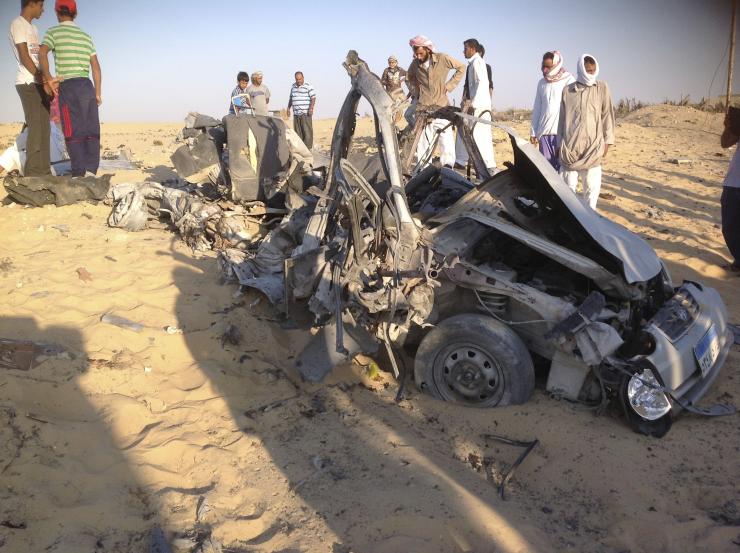
Following the recent terror attacks in Sinai, some tried to portray the violence as an armed insurgency in response to July 3 coup against Morsi. Sinai militancy, however, has been ongoing before Morsi, continued during his tenure, and after his ousting. Here is a summery of main events since 2004. 

Sinai violence

(photo via Reuters)

During Mubarak

 2004

  • Bomb blasts at Egyptian resorts in South Sinai, in which at least 28 people died.

2005

  • At least 88 people have been killed in bomb attacks in the Egyptian resort of Sharm al-Sheikh

2006

  • At least 23 people – including three foreigners – have been killed and 62 wounded in three blasts in the Egyptian resort town of Dahab

2010

  • Rocket attacks on Israel’s Eilat and Jordan’s Aqaba fired from Egypt’s Sinai

2011

  • Egyptian pipeline supplying gas to Israel near the Gaza Strip amid raging protests against Mubarak

After the revolution/ before Morsi (February 2011- June 2012) 

During Morsi’s tenure (July 2012- July 3 2013)

  • Two American tourists and their Egyptian guide who were abducted by a Bedouin were later released. July 2012
  • Gunmen killed about 15 Egyptian border guards and hijacked armoured vehicles to launch an attack across the Israeli border. August 2012
  • Egyptian army under Morsi launched Operation Sinai against militants in Sinai
  • Dozens of militants attack peacekeeper headquarters in Sinai, three wounded. September 2012
  • One Israeli soldier was killed and another was wounded morning in a battle with three men who stormed into Israel from Sinai. September 2012

After the ousting of Morsi

 2013

  • At least three people were killed when militants fired rocket-propelled grenades at a bus carrying factory workers in North Sinai. July 2013
  • At least 25 Egyptian soldiers were killed in a rocket-propelled grenade attack near Rafah August 2013
  • At least six soldiers have been killed in a double suicide bomb attack in Rafah. September 2013
  • An attack security headquarters in Sinai town of Al-Tor killed two, and injured 48. October 2013.
  • A car bomb exploded Saturday near an Egyptian military intelligence compound in the Suez Canal city of Ismailia. October 2013
  • A suicide bomber rammed his explosive-laden car into a convoy of buses carrying off-duty soldiers, between Rafah and al-Arish. November 2013

2014

During Sisi’s tenure

 From June 2014

2015

Posted in Diary of Aak, Egypt | Tagged , , , , , | 2 Comments

Violent Islamism: Our amazing disgrace

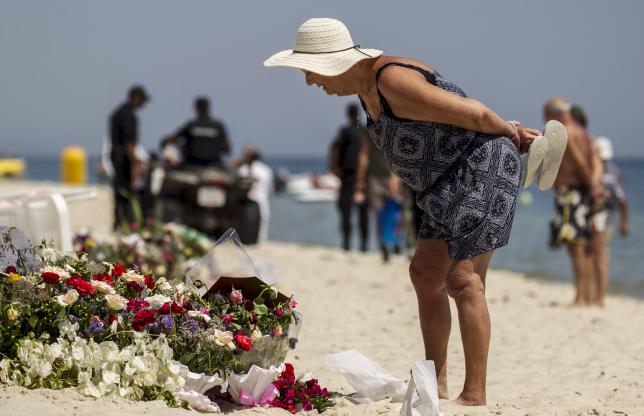
A tourist reads messages left at a makeshift memorial at the beach near the Imperial Marhaba resort, which was attacked by a gunman in Sousse, Tunisia, June 29, 2015. REUTERS/Zohra Bensemra

A tourist reads messages left at a makeshift memorial at the beach near the Imperial Marhaba resort, which was attacked by a gunman in Sousse, Tunisia, June 29, 2015. REUTERS/Zohra Bensemra

Initially published in Egypt’s Ahram

Friday’s carnage on three continents, in which scores of people died in Tunisia, Kuwait, and France has appalled the global community and reinforced international condemnation of the Islamic State (IS), which has claimed responsibility for them.

Yet in spite of the global horror over the sheer brutality and senselessness of these murders, deep differences exist among intellectuals concerning the causes of such terror and how to confront it. There is even disagreement over whether the term “Islamism” can be ascribed to the context of such acts of terror.

This lack of global consensus is one reason why such acts prevail, and is the simplest explanation for why groups like the Islamic State continue to gain ground in the Middle East. Barbarism that is countered by weak, unharmonious resistance is bound to spread with increasing brutality.

In France, according to a source involved in the police investigation, the man suspected of decapitating his boss and pinning his head to the gates of a gas factory posted a “selfie” showing him with the head he severed. In Kuwait, the killer stood among Shia worshippers during their prayers in a mosque before he murdered them. In Tunisia, peaceful sunbathers were butchered en masse in cold blood.

These three stories highlight not just the sheer ruthlessness of the murderers, but also how the reasons advanced for the rise of Jihadism are not necessarily applicable.

Some top pundits warned people against condemning the attacks without acknowledging that injustice, oppression, and marginalisation are root causes behind them. However, they conveniently ignores how Tunisia is not an autocracy as other Arab states are, and its Islamists are included in the government; the victims in France were not journalists who had published offensive cartoons, as in the case of the Charlie Hebdo massacre; and the Shia community of Kuwait has no record of revolting against Sunni rulers in order to trigger the anger of Sunni radicals.

All the classic justifications that have been used in the past to try to rationalise previous heinous crimes do not even exist this time.

The Islamic State recruits disenfranchised individuals who are struggling to cope with the injustices and burdens of our harsh, often cruel, lonely life. Nasser Weddady, who is preparing a research paper on combating extremist propaganda, gave his insights in a gripping New York Times piece by Rukmini Callimachi: “All of us have a natural firewall in our brain that keeps us from bad ideas. They look for weaknesses in the wall, and then they attack.”

Indeed, lack of democracy, oppression and authoritarianism are common reasons behind the alienation of many youths and they do make some young people easy targets for the Islamic State’s propaganda, but the group is happy to advance a variety of other reasons.

With the world map embossed on its newly minted coins, the Islamic State’s main ambition is clear. The group aspires to dominate the entire world, not just the Middle East. Bearing that context in mind, the group has to use conflicting justifications for the terror it uses to pursue its political aims.

In Egypt, the ousting of Islamists from power is used as a reason; in Tunisia, the inclusive democracy that allowed non-Islamists to rule is also used as a reason. Targeting the tourism industry is a sinister way of undermining the current government in Tunisia and the fragile democratic experience in the country. If tourists are the sole focus of IS, why the group did not attack Morocco for example? Let’s not forget that Tunisia has done nothing to provoke the Islamic State, and it has not participated in US airstrikes against IS in Syria or Iraq.

Without understanding that radicals detest non-Islamist democrats as much as they detest non-Islamist dictators, there is no hope of fighting extremism in the Middle East. A flourishing liberal democracy in the Middle East is, in fact, the radicals’ worst nightmare, because it deprives them of the victimisation they excel at using to serve their political ideology.

On the other hand, a closer look at Syria highlights how IS fought and killed other rebels, including Islamists who were not alien to them. The group disdains non-violent Islamists and does not hesitate to kill even the most conservative Muslims if they dare to challenge their authority.

The Islamic State represents a greater challenge to political Islam than autocracy and dictatorship. With its bloodshed, the Islamic State is killing the concept that Islamism can be civil and non-violent. The stake for moderate Islamists is much higher; hence, they need to realise the danger and join the fight, at least to prove they provide a viable alternative template to barbarism.

Furthermore, some countries, such as Turkey, have opted to ignore the security threat of the Islamic State, despite the fact that the group operates freely near its southern border. In fact, Turkey focuses instead on its fear of the Kurds near its borders. On the same day of last Friday’s carnage, President Erdogan openly stated he would not allow a Kurdish state in Syria. The Turkish president conveniently ignores the fact that the Kurds are not fighting Turkey, but fighting the Islamic State, which slaughtered many innocent civilians in the Syrian Kurdish town of Kobane near the Turkish border last Thursday.

In addition, conspiracy theories continue to gain currency in the Middle East. The classic response to IS’s atrocities is to blame Israel and America, and claim without reliable evidence that they back the group. Others focus their grievances on Ayaan Hirsi Ali and her views, which many Muslims consider Islamophobic, claiming that IS serves only right-wing Western fascists who hate Islam. A third group has ignored the carnage completely and focuses instead on other irrelevant matters. It was so unsettling to see the angry comments of so many Egyptians and Arabs streaming in on social media about the US sanctioning gay marriages following Friday’s terror wave. If America’s tolerance is more unsettling to some than intolerance of IS, then no wonder radicalism will continue to prevail.

The key to fighting IS effectively is to stop our own infighting. Watching different camps exchanging accusations is not the way forward. Postulating conspiracy theories, resenting minorities like the Kurds who bravely fight IS, and complaining about the rise of Islamophobia will not help either.

The defeat of the IS does not need an innovative approach; it needs the simple recognition that all of us have a stake in the battle, and we need to do our part to fight evil, instead of exchanging blame and pointing fingers. The Islamic State continues to win because of our collective “amazing disgrace.” If we fail to unite against barbarism, then the ripples of blood will drown us all.

Posted in Best Read, Middle East, Politics | Tagged , , , , , , , | 3 Comments

Egyptian Aak 2015 – Week 26 ( June 22 – 28)

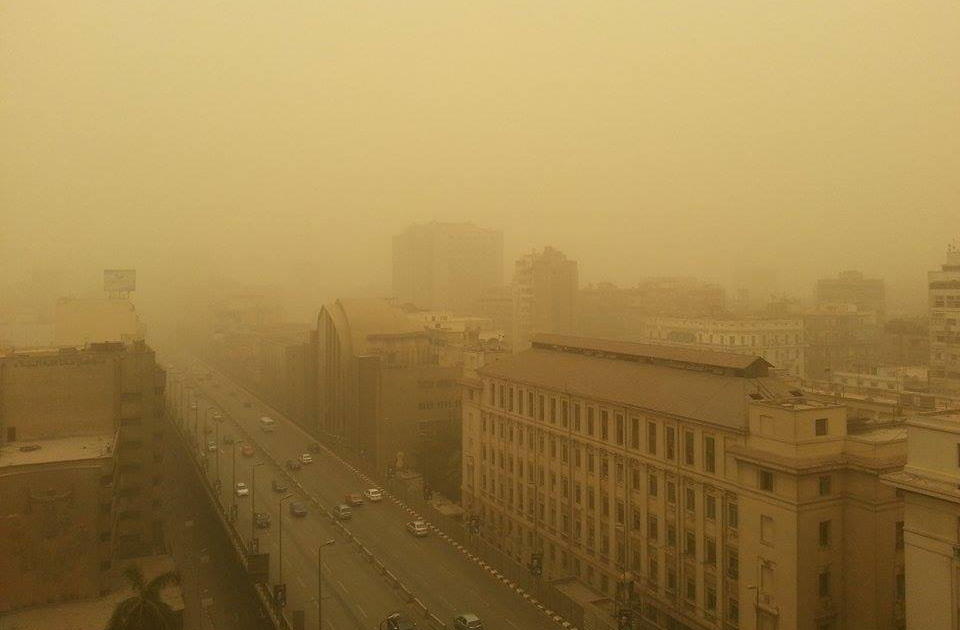
sandstorm

Sandstorm hits Egypt – Ahramonline

Top Headlines

  • Prominent Al Jazeera journalist and Muslim Brotherhood supporter Ahmed Mansour has been released by the German authorities (Monday)
  • Egypt opens Rafah border with Gaza for the third time in a month (Tuesday)
  • GCC is not expected to provide Egypt with additional aid during FY2015/2016 (Sunday) 

Main Headlines

 Monday

Tuesday

Wednesday

Thursday

Friday

 Saturday

Sunday

 Good reports

Good Read

From twitter

https://twitter.com/fqadi/status/615117569318612992

https://twitter.com/basildabh/status/613660228618428416

Interview

  • TV series about history of Egypt’s Jews misleading: Albert Arie. Dina Ezzat

Plus

Finally here are Jayson Casper’s prayers for Egypt
Posted in Diary of Aak, Egypt | Tagged , , , | 1 Comment

Israel and al-Nusra

Golan

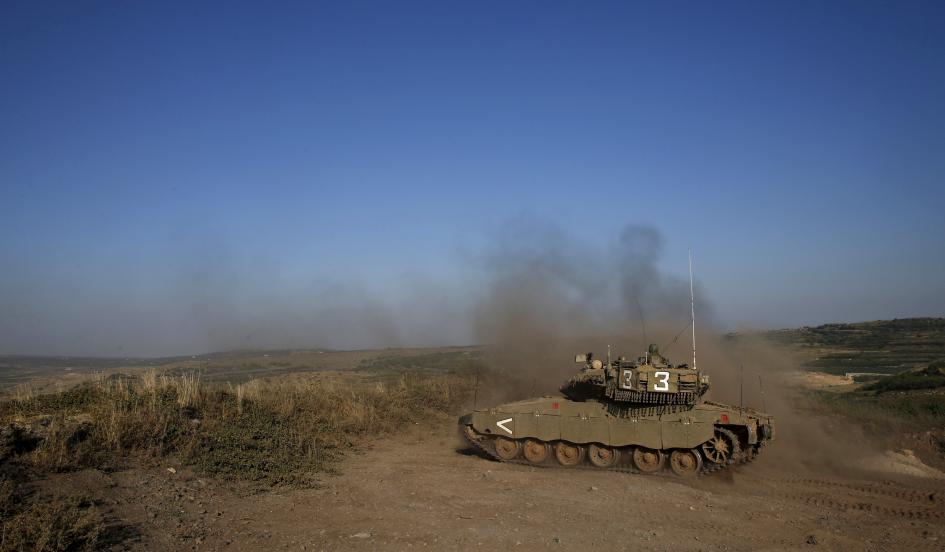
A tank on the Israeli side of the border in the Golan Heights, near Majdal Shams. BAZ RATNER/REUTERS

Until last week, against the backdrop of the ongoing civil war in Syria, the Israeli-annexed part of the Golan Heights had been usually quiet. All that changed last Monday, when dozens of Druze residents of Majdal Shams, a village in the Israeli-annexed Golan, attacked a military ambulance carrying two injured Syrians. The villagers beat one of the Syrians to death on suspicion that he was an Islamic militant. Two Israeli soldiers in the ambulance were also slightly wounded. The incident raises many questions about Israel’s involvement in Syria, particularly its alleged cooperation with the radical Islamist group, the al-Nusra Front, and the future implications of such involvement.

Former Foreign Minister Avigdor Liberman ridiculed suggestions that Israel was aiding al-Nusra. However, many reports indicate some sort of cooperation between Israel and Islamist Syrian rebels. In September 2014, al-Nusra Front jihadists took control of Syria’s side of the border crossing in Golan. In a UN report covering the period from March to May 2014, the United Nations Disengagement Observer Force (UNDOF) detected contact between rebels and the Israeli army across the Golan ceasefire line. A Syrian fighter gave more details of the alleged cooperation between Israel and al-Nusra in this detailed report by Al-Monitor.

Helping al-Nusra ____ even if Israel denies it ____ makes sense for good reasons:

First, the enemy of my enemy: Since January 2015, the Golan has been the main Israel-Hezbollah front. By fighting on the side of Assad, the Lebanese guerilla group poses a serious threat to both Israel and Sunni rebels, including the al-Nusra Front.

On January 19, Iran confirmed that a senior Iranian general, among other Hezbollah cadres, was killed Sunday in an alleged Israeli strike on the Syrian side of the Golan Heights. Preventing Hezbollah from controlling the Syrian side of the Golan Heights is probably Israel’s main goal in its secret support of al-Nusra. Israel does not want to face another south Lebanon on its border with Syria. As Islamists rebels have clearly had the upper hand against other supposedly moderate anti-Assad groups, it is logical for Israel to cooperate with the strongest group in Golan.

Second, helping those groups with logistics and medical aid may tame their animosity toward Israel. Will those who are treated in Israeli hospitals feel the urge to fight the Jewish State in future? Probably not; at least that is what Israel is hoping for. Israel may not necessarily earn more friends, but it may lessen its enemies in the Levant.

Finally, although the Assad regime has survived four long years of civil war, the areas under its control have shrunk and the possibility of the regime’s complete collapse may soon become a reality. Infiltrating groups such as Nusra offers Israel a rare opportunity to build its intelligence database with information about Syria’s future rulers. So in the future, Israel will not have to face an unknown enemy if al-Nusra turns hostile and tries to attack it.

The incident in Majdal Shams has given credibility to previous reports of cooperation between Israel and al-Nusra. Some within the Druze community in Majdal Shams have already made up their minds, and believe Israel and Nusra are indeed partners. They are clearly unhappy with that and are willing to stop this cooperation, even by violent means. Israel may have calculated that its links with al-Nusra are a harmless win-win formula, but the Majdal Shams incident has shattered this assumption.

There is a long history of antipathy between the Druze as a minority branch of Shia Islam and Sunni Islamism in the Middle East. This hostility has now been aggravated by fears of an impending massacre of the inhabitants of the Druze town of Khadr on the Syrian side of the border by anti-Assad Syrian militants. Majdal Shams has a clear Syrian identity, despite the Israeli annexation. Today, the village is divided between those who support Assad and those who back the rebels. Nonetheless, the fear of Islamist militants is evident, especially after al-Nusra Front killed at least 20 Druze villagers in Syria.

Even if Israel manages to calm the Druze’s fear, which is unlikely after Netanyahu’s pledge to track down Druze rioters, its involvement in Syria will continue to backfire. On the one hand, the incident in Magdal Shams clearly highlights that Hezbollah–Assad forces are still operative in Golan and able to inflict injuries among rebels. Israel may have succeeded in curtailing Hezbollah’s involvement, but not eradicating it. On the other hand, it is highly unlikely that al-Nusra will be less hostile to Syrian Druze community in return of Israel’ s assistance. In fact, al-Nusra will never acknowledge Israel’s help or be grateful for its support; the group may even spin its cooperation with Israel to portray itself as smart and manipulative.

Preoccupied by Iran, Sunni Islamism seems to have become Israel’s blind spot. If the allegations that Israel is helping al-Nusra are true, then Israel is repeating America’s mistake in Afghanistan, when it was lured into supporting the Islamist rebels while it was fighting the Soviets. It is one thing to help wounded Syrian civilians; it is another to get militarily involved in helping radical militants. The negative impacts will not just affect Israel, but the entire region.

Posted in Israel, Middle East, Syria | Tagged , , , | 2 Comments

Egyptian Aak 2015 – Week 25 ( June 15- 21)

Morsi in red

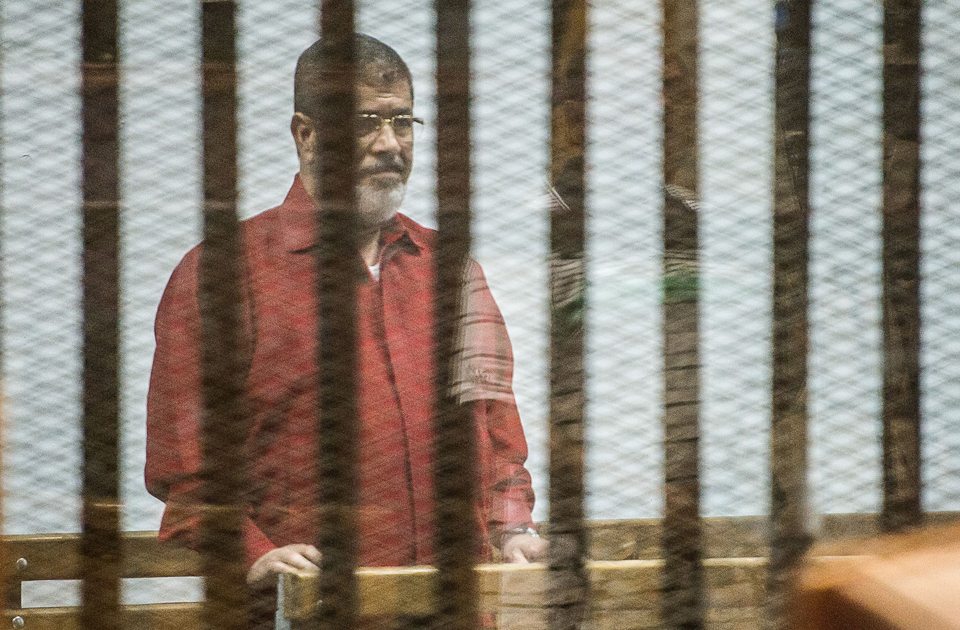
Egypt’s ousted president Morsi is seen for the first time wearing a red jumpsuit in court ( via Ahram-online)

Top Headlines

  • Egypt court confirms death sentence imposed on ex-President Mohammed Morsi (Tuesday)
  • Wikileaks began releasing leaked documents from Saudi Arabia’s Foreign Ministry  (Friday)
  • Al-Jazeera journalist Ahmed Mansour is detained in Germany at the request of  the Egyptian authorities ( Saturday) 

Main Headlines

 Monday

Tuesday

Wednesday

Thursday

Friday

 Saturday

Sunday

 Good Reports

Good read

Plus

Interview

From Twitter

https://twitter.com/zaidbenjamin/status/612378240590704640

Photo Essay

Finally here are Jayson Casper’s prayers for Egypt
Posted in Diary of Aak, Egypt | Tagged , , , , , , | 1 Comment

Egyptian Aak 2015 – Week 24 (June 8- 14)

Rafah border

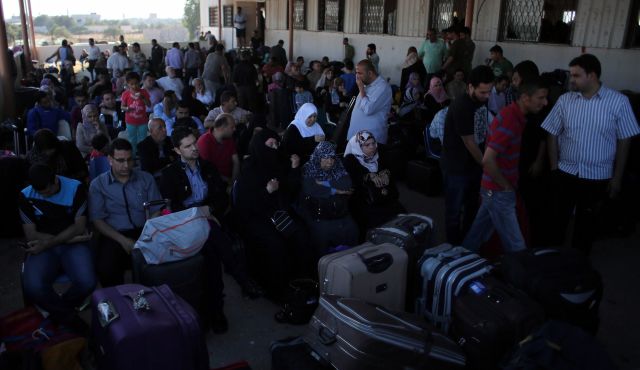
Palestinians gather at the Rafah border crossing in Gaza as they await permission to enter Egypt, June 13, 2015. Reuters

Top Headlines

  • Suicide attack outside Karnak Temple in Luxor (Wednesday)
  • Cairo policeman jailed for 15 years over the death of Shaimaa Sabbagh (Thursday)
  • Egypt allows two-way travel through Rafah (Saturday)
  • Ahmad Shafiq resigns from the Egyptian National Movement Party (Sunday)
  • Reports: Tunisia’s Ghannouchi seeks Egyptian government-Brotherhood settlement

Main Headlines

 Monday

Tuesday

Wednesday

Thursday

Friday

Saturday

Sunday

Good Reports

Good Read

From Twitter

Plus

 Photo Gallery

Finally here are Jayson Casper’s prayers for Egypt
Posted in Diary of Aak, Egypt | Tagged , , , | 1 Comment

The Arab World and Turkey

Erdogan

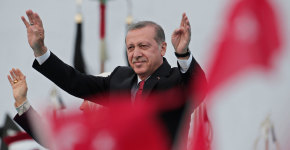
( President Erdogan- Photo via AP)

In a historic election, the Turkish government of Recep Tayyip Erdogan has lost its parliamentary majority. The consequences of these results are felt not just in Turkey, but also throughout the Arab world. Erdogan lost his bid to dominate Turkey through a new presidential system that he advocated; he further lost his unchallenged clout among his Egyptian and Arab admirers. The results have forced Arab Islamists to defend Erdogan instead of pursuing their usual grand celebrations that have become common after Turkish elections.

The fascination with Turkey is relatively new in the Arab world. At the university, I was mocked for reading about modern Turkish leaders like Turgut Ozal and Suleyman Demirel, which others, including Islamists, perceived as a waste of time. Indifference to Turkey was common, even among those most passionate about regional politics. However, following Erdogan’s rise in Turkey, the interest in the country surged, particularly among Islamists, to an unhealthy level.

As I wrote before, the relationship between Erdogan and his Arab Islamists is based on mutual exploitation. Erdogan engineers more domestic popularity for himself by harping on the misfortunes of Islamists while Arab Islamists market Erdogan’s success as proof of the soundness of their ideology. Erdogan’s non-Turkish Islamist fans have elevated him to a semi-sacred level, taking his Ottoman rhetoric literally. Egyptian and Arab Sunni Islamists have put all their eggs in one virtual Ottoman basket created by Erdogan’s charm, thereby linking their own success with his Turkish dominance. Indeed, they see him as the new prophet of modern Islamism.

Some Arab Islamists have argued that they have limited options. In their eyes, their support for Erdogan is out of necessity, not choice, because of the lack of successful Islamist leaders in the region. They have also argued that non-Islamists, not radical Islam, are the main obstacles preventing political Islam from dominating the Muslim World. They see no problem in embracing a foreign leader as a patron, ignoring Erdogan’s arrogance and desire for dominance, which are not exactly the model that will convince non-Islamists to embrace or even accept Islamism.

Furthermore, as I have argued before, Ottoman Islamists have no clear theory regarding the role of religion in political life. Their own experiences are mainly the slow introduction of religious teaching and symbols to replace the Kemalist doctrine. They have not developed a clear strategy to buttress against Islamic radicalism, as is subsequently proven in Syria in the murky relationship between Turkey and radical Islamists fighting Assad’s regime. Again, this is another reason why non-Islamists in the Arab world are not buying Erdogan’s “model” of Islamic democracy.

On the other hand, some non-Islamists have been fascinated with Turkey, albeit in a different way. When the Turkish assistant of my uncle (who used to work as a diplomat in the Egyptian Embassy in Ankara) visited Egypt, I was struck by her liberalism, which was so different and more open. The rest of Egypt and the Arab world started to get to know Turkey somewhat later, mainly through the television series invading many Arabic satellite channels that painted a very misplaced liberal, secular image of Turkey. Erdogan’s Turkey was initially happy to perpetuate this image as part of his marketing strategy to win as many Muslims as possible.

Eventually, the Ottoman image slowly started to emerge and flood the Arab TVs, particularly the popular television series “Magnificent Century.” The stunningly beautiful Ottoman women portrayed in the series fascinated many Arab men and women. The glorification of the Ottoman Empire initially worked. Later, however, one episode changed that perception: the killing of Mustafa, the Sultan’s eldest son, upon his father’s order, which is apparently not entirely fictional, as Mustafa’s tomb still exists in Turkey’s Bursa. This episode shattered the myth of the good Ottomans that Erdogan tried so hard to sell to the Arabs. Needless to say, Erdogan’s hostile views of Egypt after the ousting of Morsi dampened his popularity among Egyptians. His manufactured perception of Egypt’s complex political scene into a binary of good Islamists versus evil coup supporters was received with contempt by many, who saw how Erdogan purposefully used Egypt as tool in his domestic agenda.

Over the last decade, both Islamists and non-Islamists have learned to explore more about Turkey, the neighbor that once ruled them, then later drifted away. This knowledge was initially marred by misconceptions, and myths. Nevertheless—and despite Erdogan’s propaganda’s machine—both Islamist and non-Islamist Arabs have started to develop a clearer picture regarding Turkish politics and society.

The latest Turkish parliamentary election has generated unprecedented responses among Egyptians and Arabs. Undoubtedly, and regardless of the impact of the results on Turkey’s domestic politics, Erdogan has lost, at least part of his clout among Arabs. Islamists might defiantly claim that winning 40% of votes is not a bad result, but deep inside they acknowledge that this new Turkey will force Erdogan to look inward and could distract him from his grand Ottoman ambitions for the region. Their patron may not be capable of providing them with the support and help they desperately need. As for non-Islamist Muslims, who naturally reject political Islam as an ideology, they take the results of the Turkish election as the silver lining they have been looking for amidst the doom and gloom of their turbulent region. Turkey has finally provided them with the hope that they can prevail against political Islam without the help of authoritarian regimes and army generals.

Posted in Best Read, Turkey | Tagged , , | 2 Comments