Short Comments: Terrorism in Egypt

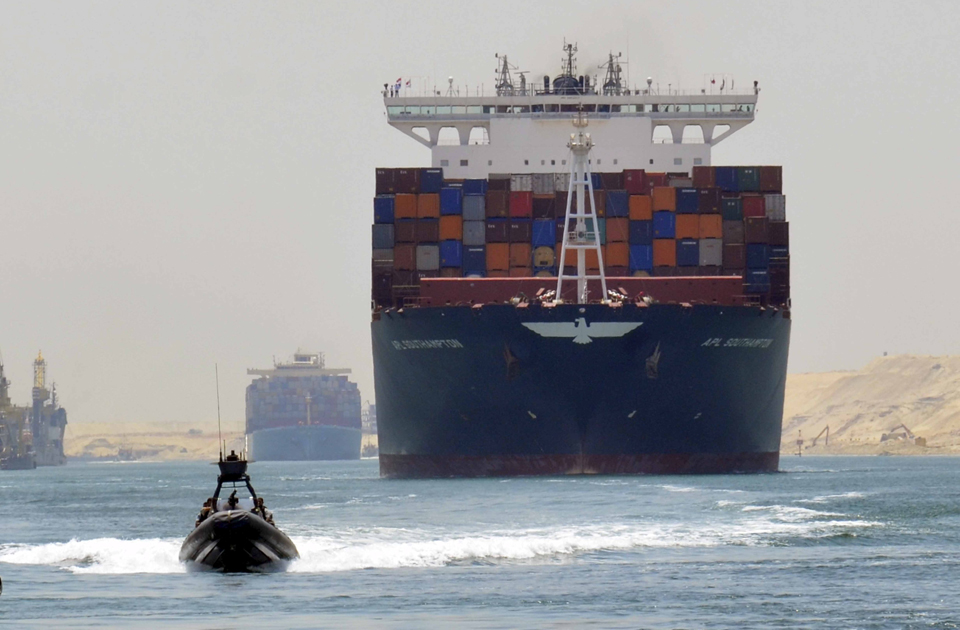
 In August, security was on very high alert in Egypt . Two events were particularly important: the inauguration of the Suez Canal on August 6, and the second anniversary of the forced dispersal of the sit-ins at Rabaa al-Adaweya and Nahda Square on August 14. Fortunately, both events were peaceful. The inauguration of the Suez Canal was full of hyper nationalism, but was uneventful from the security perspective. Moreover, on Rabaa’s anniversary, there were reports of a few small marches in Cairo, Giza, and Alexandria, but no large protests or associated security crackdowns took place. Does this mean Egypt has “succeeded” in fighting terrorism, as some local commentators have suggested? The answer is definitely no. Egypt may still face significant violence and terror attacks in the near future.

Despite the fact that the major events of the past two weeks took place without any major security threats, there were still sporadic incidents involving small-scale bombing and attacks against policemen around Egypt. I have covered these all in my weekly summary of news from Egypt here and from last week. The drop in the incidence of violence may be related to other factors – including the weather. Some Egyptians jokingly attributed the relative calm to the scorching heat, which “put everyone off, even the terrorists. The most alarming sign, in my opinion, was last week, when the Islamic State’s affiliate in Egypt’s Sinai province has circulated an image online that purports to show the beheaded body of a Croatian man abducted in the desert hinterland of Cairo in July. Without delving into this incident in detail, the idea of targeting foreigners in Egypt is scary. 

On August 13, a military aircraft crashed near the border with Libya because of a technical failure while on a counter-terrorism mission. The spokesman of Egypt’s armed forces has later added that the Egyptian military has been carrying out more operations near the Libyan border. Today, Egyptian forces near the border with Libya issued a high-level alert after Libyan security forces based at the Musaid border crossing disappeared a few days ago

 Moreover, an online statement attributed to a group calling itself the Tahrir Brigade, whose members are said to be defected officers, has claimed responsibility for the assassination of Hisham Barakat last month. However, as researcher Mokhtar Awad has stated on Twitter, this kind of statement is unconfirmed and there is no solid evidence that this “Tahrir Brigade” exists.

 Furthermore, BBC Arabic reported on Sunday, August 16, that a military court in Egypt has sent 26 military officers and four retired colonels to prison for planning a coup. Some Egyptians on Twitter have suggested the case is not new, but happened in 2013.  BuzzFeed News has published a detailed English report about the case. Interestingly,Al Bawabah News quotes military source denying the case.

Meanwhile, Egypt’s President Sisi has passed an anti-terrorism law, which imposes hefty fines of between LE200,000 to LE500,000 (approximately $26,000 to $66,000) for “false” reporting on terrorism or counter terrorism. In future, we may not see reports, like the mentioned above, after the implementation of the new law. 

 To sum up, the “coup against the coup,” as some Islamists like to put it, may or may not be true, but even if it happened, the small “rebellion” was squashed at it’s early stage and had no impact on the unity of the Egyptian army. Nonetheless, Egyptians should remember that the Islamic State’s affiliates, and Al-Murabitoon group are alarming reality that cannot be ignored. The new anti-terrorism law, may deter reporters, but will not deter those who are firmly focused on sowing death and destruction.

Posted in Egypt, Short Comments | Tagged , , , | 1 Comment

Egyptian Aak 2015 – Week 33 ( August 10 – 16)

Top Headlines

  • President Sisi establishes economic zone around the Suez Canal. (Tuesday)
  • Islamic State’s Egyptian ally says it beheads a Croatian hostage. (Wednesday)
  • Egyptian military aircraft crashed near the border with Libya. (Thursday)
  • Minimal protests to mark Rabaa anniversary. (Friday)
  • Egyptian military sources deny BBC report on trial of 26 officers plotting a coup. (Sunday)

Main Headlines

 Monday

 Tuesday

Wednesday

Thursday

Friday

Saturday

Sunday

 Good Reports

Good Read

 Plus

  • Has the tomb of Queen Nefertiti finally been found?
  • Iconic Egyptian actor Nour El-Sherif leaves legacy spanning 4 decades
  • Egypt’s scorching heat wave kills orangutan at Giza’s Zoo
  • Egyptian swimmer Farida Osman eyes 100m butterfly glory at Rio Olympics
  • Guided tour of Al-Manial Palace and the Andalusian Garden in Cairo
  • Nahla El-Qodsy, wife of Egypt’s late iconic musician Mohamed Abdel-Wahab dies

From Twitter

Photo Gallery

Video

Finally, here are Jayson Casper’s prayers for Egypt
Posted in Uncategorized | 1 Comment

Anti-Suez Canal campaign: A belated exercise in popcorn politics

Initially published in Egypt’s Ahram

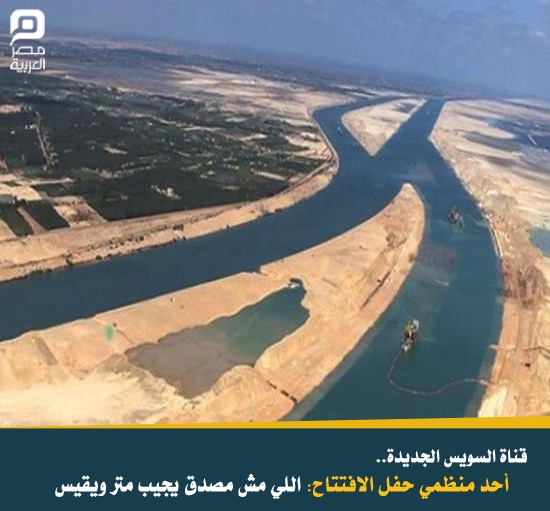
The New Suez Canal has been inaugurated amidst controversial scenes, ranging from the expression of public joy, to mocking, skepticism, and endless articles questioning its economic worth.

However, at the heart of the controversy is not whether the project is a “gift to the world” or a pointless waste of money. The real question is why did the opponents of the Suez Canal project wait until its completion to air their views? The fact that this opposition, vocalized loudly by some Egyptians and foreign observers, came only after the completion of the New Canal, and not before, is testimony to what is wrong in the handling of Egypt’s affairs.

The right time to voice concerns about the canal should have been August 2014. Exactly a year ago, Egyptian authorities announced that Egyptian pound-denominated Suez Canal certificates would be available locally and abroad.

If the project’s skeptics were not convinced about the feasibility of the government-projected gains from the certificates at the end of their five-year maturity period, why did they not step up their campaign to stop the fundraising through the six million certificates issued by Egypt’s central bank?

Some may assume that the lack of opposition was a result of the fear of oppression by the Egyptian authorities. However, opponents had an array of possibilities to explore if they were serious about trying to stop the project. A Facebook page against the project or even a Twitter hashtag may not be huge, but it would certainly have raised awareness among the weary, not-so-rich Egyptian public.

The only vocal opponents of the project were the Muslim Brotherhood, but it was part of their hyped approach to post-Morsi’s Egypt and not a rational stand that would attract Egypt’s apolitical public. Before the inauguration of the New Canal few people bothered to review the project’s advantages/disadvantages, a trend that was reversed only after completion of the project, when a huge number of opinion pieces saturated the media, questioning the project’s alleged benefits.

There are a few possible reasons that could explain the baffling initial apathy toward the project and the late fervor. Either those opposed to the project were not truly serious about stopping it, or they assumed the project would not be completed; hence, in their view, it was pointless to waste energy opposing it.

That is likely the real reason; it is a kind of popcorn approach to politics, a quiet wait-and-see initial phase, followed by an over-excited rant against the project, once finalized. Such an approach is fundamentally flawed as it indicates how the anti-Al-Sisi elite are politically lazy and incapable of forward thinking.

Regardless, the whole matter reflects why the Egyptian public does not take opponents of Al-Sisi’s leadership seriously. It is unfortunate that opponents of the project have mistimed their moves, and opted for a late show of discontent.

It is no good for an average Egyptian who invested his or her savings in the Suez Canal project to hear skepticism about the project, a year down the line. The idea of the public turning against Al-Sisi after the inauguration of the canal is ludicrous. Would the public ignore the visual impact of the new two-way canal, and consider instead belated articles drumming doom and gloom? Unlikely.

The campaign against the Suez Canal may have raised good questions about the project, and whether it will double revenues in five years as projected. However, its mistiming is its biggest failure. A late alarm button is a failed alarm system. A change in Egypt’s political and economic discourse needs a proactive opposition, not a few late, sarcastic voices on social media.

If chess is a good metaphor to describe political scenes, Egypt’s dynamics can be described as two simultaneous games. One is a serious chess game by Al-Sisi, initiating various gambits to achieve some incremental gain.

The other, however, is a parody chess game played by his opponents; full of noise, rants, and dubious gambits that aim only to attract attention, but fail to change anything. The Egyptian president got his canal, his legacy, and a crucial nod of approval from his Gulf allies, in addition to the potential economic gain.

The publicity accorded to the project, even if negative, is not necessarily bad news for him; he cemented the perception of the reliability of his leadership. His opponents, on the other hand, got nothing.

The problem in Egypt is not Al-Sisi and his potentially “dubious” grandiose projects, but in his opponents’ spectacular mediocrity that consistently fails to convince Egyptians that they are a better alternative.

Post Script

I would like to thank those who re-blogged my piece. I am also grateful to everyone who commented on it, whether positively or negatively; your feedback is important to me. Here are few extra thoughts on the topic:

  • In my opinion, the Suez Canal project was a missed opportunity by Egyptian opposition and activists to resurrect Egypt’s current frozen politics, particularly in terms of its political economy. In Egypt, business awareness simply does not exist. Egyptians would benefit from a campaign to raise awareness about the commercial feasibility of any mega project. it would also help to establish a pattern; to set a policy that must be followed in future cases.
  • Some commenters accused me of being lazy and not doing enough research about early articles doubting the benefits of the New Suez Canal. I did in fact review many of these articles and acknowledged in the original piece how few had raised concerns about the project. Nonetheless, most of those reports were produced by journalists or academics, but  failed to garner wider circulation among Egyptian activists and observers. Only a few activists, for whom I have tremendous respect for their courage, spoke out against the project in its early days. Meanwhile, articles published after the inauguration of the Suez Canal went viral on social media. Such a discrepancy is unfortunate.
  • It is important to differentiate between political campaigning against Sisi’s regime and questioning his business plans. The average Egyptian who bought the Suez Canal certificate may (or may not) love Sisi, but think would twice before investing in an allegedly a dodgy project—assuming Egyptians had the opportunity to read about the project’s commercial feasibility. Sadly, they did not.
  • Other critics shifted the argument and claimed that any campaign against the canal would fail. However, in my view, an orchestrated campaign against the canal’s project, if backed by testimonies from economic experts from inside and outside Egypt, could have a good chance to succeed. If the Egyptian leadership would allow it, it might have a chance to reach ordinary Egyptians, but if not, then the opposition would have their smoking gun that the government is indeed hiding something. Comparing such a calm business style campaign with protests for political demands and arrest of activists is a non sequitur.
  • Even if all those efforts failed to achieve anything, I would have rather seen a campaign to raise business awareness among Egyptians while the regime was still in a vulnerable phase in 2014, only a year after the ousting of Morsi, than a belated criticism in 2015, after the regime has cemented its success and legacy.

All my critics have painted a picture in which nothing could have been done against Sisi. Such total capitulation is deeply sad and disturbing. With all due respect, Egypt’s coup is not the end of the world. Turkey had had a long history of coups, from which it has emerged stronger. Such defeatism is shocking. Finally, I wish a fraction of the energy spent on attacking my article would have been channeled Loudly in 2014 against the project itself; if indeed its opponents believed that it was a bad choice for Egypt, maybe such efforts would have saved many Egyptians a lot of money.

Posted in Egypt | Leave a comment

Egyptian Aak 2015 – Week 32 ( Aug 3 – 9)

Top Headline

  • Egypt inaugurates a New Suez Canal. (Thursday)
  • Deadline passes for Croatian hostage held by ISIS militants. (Friday)
  • Ousted former president Morsi complains about prison food (Saturday)


image

( Photo and comment from Twitter)

Main Headlines  

Monday

Tuesday

 Wednesday

 Thursday

 Friday

 Saturday

 Sunday

 Good Reports/ Analyses

 On Egypt’s New Suez Canal

Other Good Reports

Other Good Read

Plus

 From Twitter

https://twitter.com/hahellyer/status/630395005018968064

https://twitter.com/hahellyer/status/630081357289508864

https://twitter.com/mokhtar_awad/status/630027762766622723

Photo Gallery

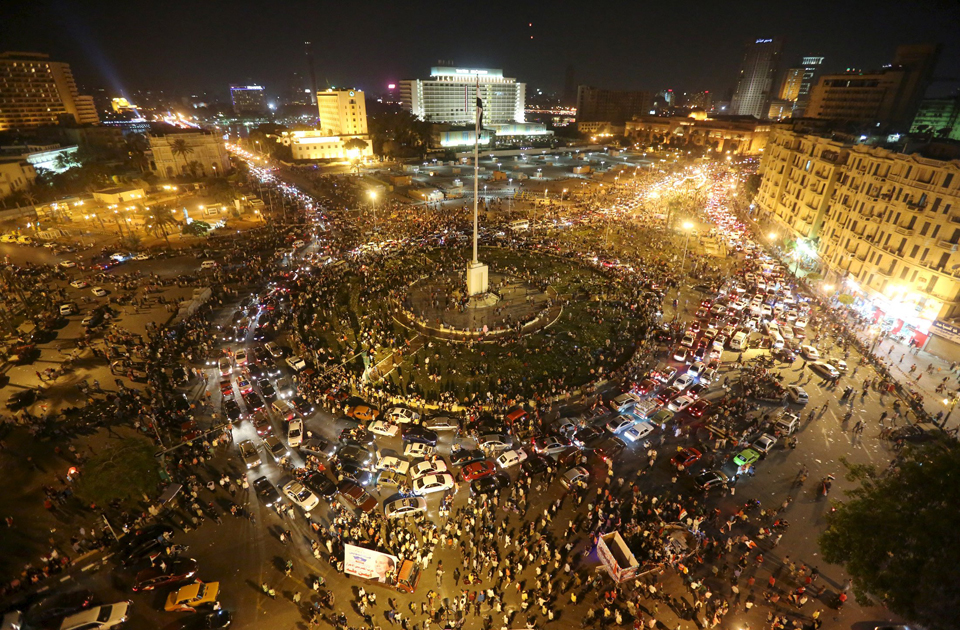
Tahrir Canal

Finally here are Jayson Casper’s prayers for Egypt
Posted in Diary of Aak, Egypt | Tagged , , , | Leave a comment

Short Comments: On Egypt and Saudi Arabia

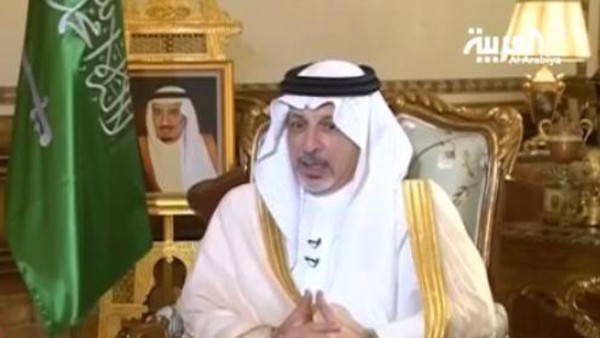
Saudi Ambassador

Saudi Arabia’s Ambassador to Egypt Ahmad Qattan  (Al Arabiya)

Saudi Arabia’s ambassador to Egypt, Ahmed Qattan, has played down media reports suggesting ties between both countries are strained, adding that bilateral relations are “at their best.” The Saudi Ambassador has also reaffirmed his comments in a telephone conversation with Al-Hayat TV, and added two interesting remarks. The first is that Saudi columnist Jamal Khashoggi, known for his leniency toward political Islam and his antipathy toward the Sisi leadership in Egypt, “does not represent the Saudis’ official stance toward Egypt.” Qattan’s second remark, directed at Egyptian writer Hassanein Heikal, who is known for his antipathy toward the Saudi leadership, said bluntly that Saudi Arabia would last, despite Heikal. Ambassador Qattan’s remarks came after Egyptian President Abdel Fattah El-Sisi and Saudi Defence Minister Mohammed Bin Salman issued what they named the “Cairo Declaration,” outlining six facets of cooperation between Egypt and Saudi Arabia, including “enhancing joint cooperation and investment between the two countries in the fields of energy, electricity, and transportation.” The ambassador’s comments also came after many Islamist figures visited the Kingdom in recent weeks. On top of the list is Hamas’s leader, Khalid Meshaal, Tunisia’s Rachid al-Ghannouchi, the Islah movement of Yemen’s Abdul Majeed al-Zindani, and Jordan’s Hammam Saeed, of the Muslim Brotherhood. Hussein Ibish attributed those visits to the change of the strategic landscape in the Middle East, following the Iran nuclear deal. In my opinion, this is only partly true. However, there are other aspects that may explain the Saudis’ behavior, particularly King Salman’s leadership style. Saudi Arabia under King Salman is keen to maintain a strong partnership with the Egyptian leadership; however, the King does not want this partnership to limit his diplomatic maneuvering in the region, which includes engagement with other groups Egypt considers hostile. In short, King Salman is aiming to build a strategic relationship that keeps his friends, allies, and enemies guessing about his intentions, goals, and tactics. That would help him stop his allies from taking Saudi Arabia for granted and would force his enemies to accept the Kingdom as a challenging opponent.

Posted in Short Comments | Tagged , , , , , | 1 Comment

Egyptian Aak 2015 – Week 31 ( July 27 – Aug 2)

Top Headlines 

  • Washington delivers F-16s to Egypt. (Thursday)
  • Saudi Arabia and Egypt sign “Cairo declaration.” (Friday)
  • Egypt extends military mandate in the Gulf and Red Sea for 6 months. (Saturday)
  • Schedule for Egypt’s parliamentary elections is expected to be announced next week. (Saturday)
  • Egypt-US Strategic Dialogue kicks off in Cairo. (Sunday)

F16 in Cairo

Egyptian air force celebrates the delivery of  new F-16 aircrafts from the United States ( Ahram 0n-line)

Main Headlines

 Monday

Tuesday

 Wednesday

Thursday

 Friday

 Saturday

Sunday

 Good Reports

Good Read

Timeline

Plus:

From Twitter

https://twitter.com/basildabh/status/627807360828985344

https://twitter.com/tcwittes/status/627162872557228032

Related to Egypt

  • Who’s fighting human trafficking? U.S. releases rankings

Photo Gallery

Finally here are Jayson Casper’s prayers for Egypt
Posted in Diary of Aak, Egypt | Tagged , , , | 2 Comments

A collection of posts on the recent Turkish move in Syria and Iraq

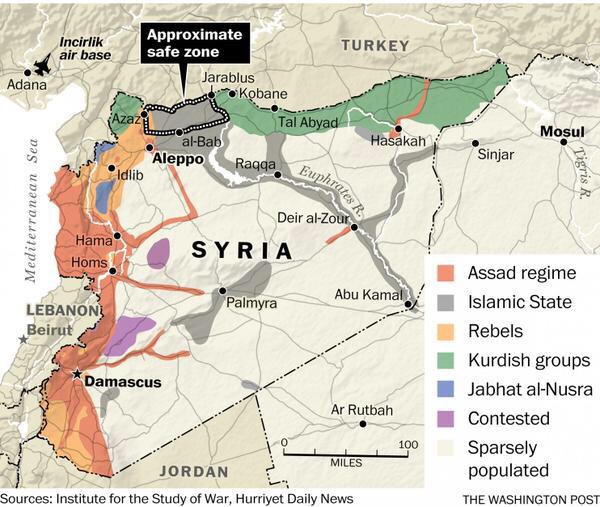
Here is a selection of articles on the recent Turkish decision to strike the Kurdish PKK and the Islamic State in Syria and Iraq.

image

First, this EDAM discussion paper articulates the possible rationale of the recent Turkish intervention:

“The rationale for Ankara’s intervention may be:

a) to repel ISIS and eliminate

the threat near Turkish borders and quell the criticisms for its lack of

Involvement.

b) to disallow Kurdish PYD (which many in Ankara see in line with

the PKK threat) to capture Jarablus and strengthen its bid for autonomy.

c) to create a buffer zone to host refugee waves.

d) to use the territory a logistical base for Syrian rebels for them to launch offensives against Assad regime’s remaining positions in Aleppo.

 In this post by Steven Cook discuses the risks of the American involvement 

“Ankara is a less potent ally in the fight against the Islamic State than the Kurds, it is no longer a significant player in the future of Iraq, and it maintains a wholly unrealistic view of what will happen in Syria if the Assad regime falls. The Middle East is hard and Syria is especially complex, but it is difficult to see what the United States gets out of the deal other than the runways of Incirlik. That is not going to solve either Syria or the problematic conditions that created the Islamic State, but it will pull Washington closer to war on Turkish terms. In Turkish it is called bataklık, or quagmire.”

Yavuz Baydar wrote about the domestic implications

“Does Obama even realize the immense risk that such calculations may drag Turkey into a swamp of violence? I have my strong doubts.

Abandoning the peace process and opening the ground for endless provocations at this stage promises only vendetta and bloodshed.

Let me end with the June 7 election results in the 12 mainly Kurdish provinces of Turkey, where the HDP emerged as the first party:

Kars (44 percent), Mardin (73.26), Şırnak (85.36), Hakkari (86.4), Diyarbakır (79.06), Batman (72.58), Siirt (65.81), Van (74.82), Muş (71.32), Bitlis (60.36), Ağrı (78.22) and Tunceli (60.91).

Does anyone have any idea where we should place this free vote and the will it represents in Parliament, in the ugly picture of war and mass arrests, targeting a “negotiating partner” and Kurds in general?”

On the Kurdish side, Mustafa Gurbuz wrote

“It is true that Demirtas is not so powerful to challenge PKK’s hegemony, but it is unwarranted to deny ongoing competition for the leadership within the Kurdish movement.

Attacks against the HDP have always been concurrent with attacks against Huda-Par, the legal party associated with the Kurdish Hizbullah.

Bombing HDP’s rally in Diyarbakir and the gathering in Suruc were followed by the murder of Huda-Par members, portrayed as “hate crimes” against ISIS militants in the news media.

Whoever is behind these attacks and whichever narrative one may believe, the gap between political parties is widening day by day and forming a strong coalition is becoming a remote possibility for Prime Minister Davutoglu.”

Finally, here is Senator McCain’s statement

“However, we are concerned about reports of Turkish forces shelling Kurdish villages inside Syria.  As the United States and Turkey enhance our cooperation against ISIL, we believe these mutual efforts will be most effective in collaboration with local forces on the ground, including the Kurds.

Posted in Turkey | Tagged , , , , , , | Leave a comment

Egyptian Aak 2015 – Week 30 ( July 20 – 26)

Top Headlines

  • France delivers first batch of Rafale fighter jets to Egypt. (Monday)
  • Egypt’s most wanted militant urges jihad against Sisi. (Wednesday)
  • Ships cross Egypt’s New Suez Canal in first test-run. (Saturday)
  • Egypt extends state of emergency in North Sinai by three months. (Sunday)

New Suez Canal

(First cargo ships passed through the new Suez Canal, via Ahram)

Main Headlines

Monday

 Tuesday

Wednesday

Thursday

 Friday

 Saturday

 Sunday

 Good Report

 On the fugitive officer Hisham el-Ashmawi:

Others:

Good Read

Plus

 From Twitter

https://twitter.com/basildabh/status/623603260927176707

Interview

 Photo Gallery

Posted in Diary of Aak, Egypt | Tagged , , , , , , | 2 Comments

Iran Deal: A potential kiss of death for liberalism in the Middle East

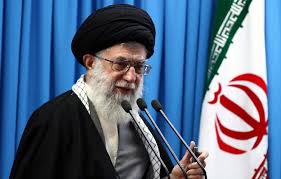
Iran Mullah

Initially published in Egypt’s Ahram.

After 12 years of diplomatic proposals and 20 months of tough negotiations, theocratic Iran and world powers have reached a nuclear deal that, regardless of its potential advantages, is undoubtedly a victory for smart illiberalism and a potential kiss of death for the prospect of liberal, pluralistic democracies in the Middle East.

Both illiberal Shia and Sunni Islamists and illiberal non-Islamist autocrats could receive an enormous boost from the deal.

A few years ago, against all advice, I visited the Islamic Republic of Iran. To my surprise, I found a vibrant nation, with many liberal youth yearning for freedom and democracy. Those youth may now celebrate the lifting of sanctions and the end of isolation, but it is doubtful the nuclear deal will bridge the deep divide between them and their theocratic rulers.

For the Iranian Mullahs, the nuclear deal is an indirect acknowledgment from the West that their anti-modernity model is viable and successful. US President Barack Obama may be genuine in his hopes that Iran will abandon its “path of violence and rigid ideology” following this “historic agreement,” but his hopes may turn out to be no more than wishful thinking.

The regime –now less isolated– has less incentive to couple its agreed abandonment of its nuclear program with an abandonment of what it sees as successful ideology than ever before.

Many commentators have pointed out that the deal could not have come at a worse time for the Arab world. With open sectarian tension in many Arab countries, a strong Islamic Iran will only inspire other political Islamic groups to try to match up to the Mullahs.

Iran’s regional influence in Lebanon, Iraq, Syria, and Yemen will only prompt a counter movement by forces that share an underlying belief in Islamism, but differ in its sectarian interpretation. Since 1979, Sunni Islamism has learned one important lesson from Iran: “Yes, we can” -– a slogan the Islamists touted quietly, long before Obama uttered those words in 2008.

Arab Islamists saw theocratic Iran as a perfect model for fulfilling their dream of ruling Muslim societies. The new nuclear deal will add two more lessons, and liberal democracy is not one of them– defiance and lobbying in Washington.

Last Saturday, Ahrar Al-Sham, an Islamist Sunni insurgent group fighting in Syria, published an article in the Washington Post  claiming to believe in “a moderate future for Syria.” Charles Lister, a visiting fellow at Brookings, scrutinized their claim: “Ahrar Al-Sham has been one of the most consistent military allies of Al-Qaeda affiliate Jabhat Al-Nusra.” The publication of the article in itself indicates how some people in the corridors of power in Washington are willing to buy Ahrar’s narrative.

The implication for Syria could not be more serious. Syria will continue to be torn between two mutually exclusive Sunni versus Shia forces; many of them are radical, ruthless, and undemocratic. Somehow, the Obama administration seems to see no problem in embracing both. As columnist Joyce Karam  has written, Obama’s choices for Iran should be coupled with a regional strategy for his administration. CNN’s Farid Zakaria thinks that Washington and others can talk to both sides of the divide to try to broker a reduction of tensions. However, tacitly embracing radical Shia militias’ fight against radical Sunni groups such as the Islamic State (ISIS), while pretending that other radicals such as Ahrar Al-Sham are moderate, does not seem to be a sound strategy.

In Egypt, neither the removal of Hosni Mubarak nor the ousting of Mohamed Morsi has produced a liberal democracy. Moreover, a significant section of the Muslim Brotherhood, despite its antipathy to Shia Islamism, has started to view the Iranian model as the way forward to regain power.

They wrongly attribute their failure to run the country during Morsi’s tenure to what they describe as their “reluctance to embrace “revolutionary politics.”  The Mullahs’ violent ejection of their opponents in 1979 is seen as “a model.” In addition, the Muslim Brotherhood and its supporters will continue to lobby in Washington, hoping that its projection of an Iranian–style defiance will convince the Obama Administration to exert pressure on the leadership in Cairo to change its posture toward the group.

On the other hand, many among President Abdel Fattah El-Sisi’s supporters will use Iran as a pretext to justify more crackdown on opponents, and argue that world powers, which are willing to lift sanctions against the Iranian regime, despite 36 years of ruthless rule, have no moral ground on which to judge Egypt.

In his speech in Cairo  in 2009, President Obama advocated tolerance, respect for minorities, and religious freedom. He also said elections alone do not constitute a true democracy.

Now, as Hisham Melhem, Bureau Chief of the Al Arabiya News Channel in Washington, has pointed out, “after almost six and a half years of trying to shape events in the Middle East, President Obama has very little to show for it except the nuclear deal with Iran.” More alarmingly, the American president seems to have lowered the bar, and is now willing to accept a softer definition of moderation to include any group, entity, or state willing to show pragmatism and cooperation with the United States, regardless of that state’s intolerant actions on the ground.

There are intrinsic reasons behind the metastasizing sectarian and ethnic conflicts that followed the failed Arab awakening. It is unreasonable to expect the United States to “fix” the region; however, it is dangerous for the US to empower illiberalism in a region that suffers mainly as a consequence of its illiberal players. It would be a pity if President Obama went down in the history books as the man who fumbled with the West’s anti-illiberalism alarm button, and embraced the enemies of liberalism in the Middle East.

Posted in Best Read, Iran, Middle East, Politics, Syria | Tagged , , , , , , , | 1 Comment

Egyptian Aak 2015 – Week 29 ( July 13- 19)

Top Headlines

  • Italy vows to help Egypt fight terrorism (Monday)
  • El-Sisi says Al-Azhar has failed to renew Islamic discourse (Tuesday)
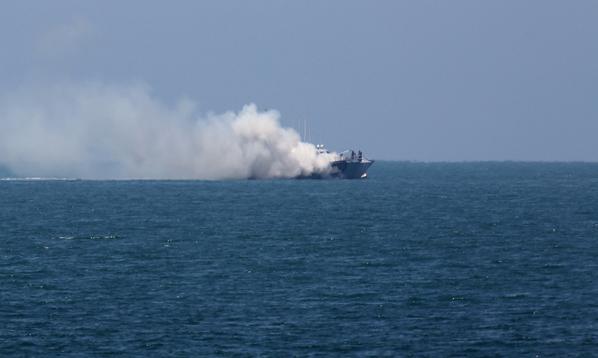
  • Egypt’s Islamic State affiliate claims rocket attack on naval boat (Thursday)
  • Islamic State claims attack on military checkpoint in North Sinai

Naval photo

ISIS ‘s missile attack against an Egyptian navy – Photo via Reuters

Main Headlines

 Monday

Tuesday

Wednesday

Thursday

Friday

Saturday

 Sunday

Good Reports

Good Read

Video

 Plus:

From Twitter

Photo Gallery

Anti Harassment police woman

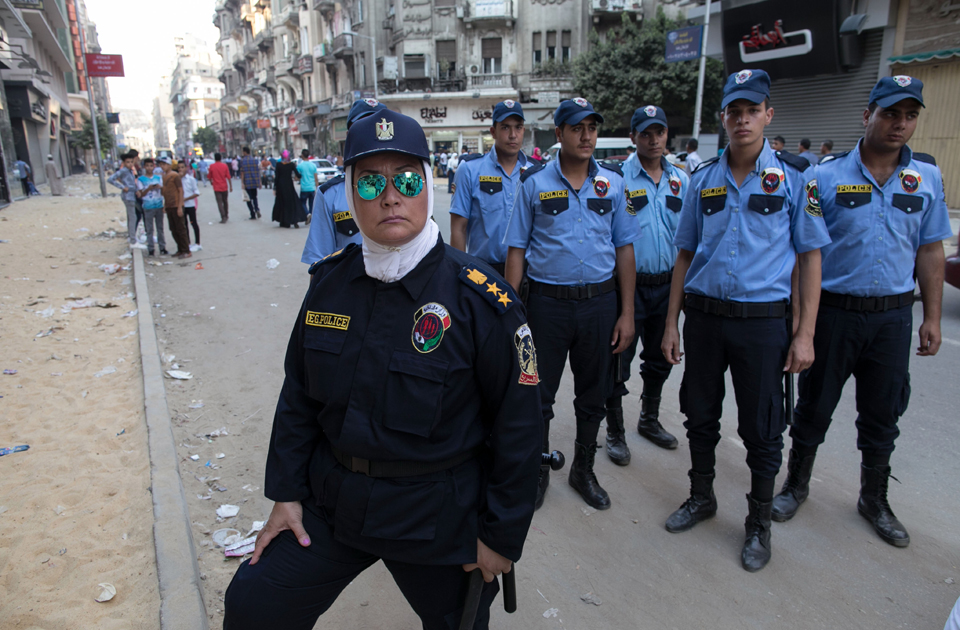
Anti-harassmant policewoman in Cairo- via Ahram

Finally here are Jayson Casper’s prayers for Egypt

Happy Eid

Posted in Diary of Aak, Egypt | Tagged , , , , , , , | 3 Comments