The cultural challenges of the Syrian refugee crisis

Initially published in Egypt’s Ahram

When refugees embark on the dangerous, often deadly, trip towards Europe, many of them are consciously aware that the price of settling in the Western world will include accepting different laws and ways of life.

The challenge of cultural differences, however, may not be a pressing issue for those desperate to survive the savagery of war zones.

Nonetheless, it is an essential part of what will shape their future success in their adoptive countries. Without a brave and honest assessment of the question of culture, those “lucky” refugees may not just be potential victims of racism and hatred; they could face an unsettling, unhappy future.

Historically, the dynamic of cultural expectations has always been reduced by both sides, the new settlers and the welcoming nations, to a few shallow cultural differences over relatively trivial aspects such as food habits and the exposure or concealment of women’s flesh. It is not.

The cultural divide involves far deeper issues, ranging from the subtlety of body language and eye contact to more overt actions, such as engaging with the local community and developing a sense of belonging.

“Miss Mahmoud, you are now a registered alien,” the female police officer with a masked face told me after giving me my police registration certificate. I was not a refugee or an asylum seeker. Still, I had to register with the police like all foreigners in the United Kingdom.

For months afterwards, the word “alien” preoccupied my thoughts. Although I was told it is a legal term that has nothing to do with ethnic, cultural, or religious differences, I still could not help but wonder how alien I would be in Britain.

I have always considered myself an Anglophile. I learned English at a very young age, read Shakespeare, Charles Dickens, W Somerset Maugham, and the Brontë family, and have listened to the BBC service religiously since my teenage years. None of these experiences has made my settlement in England easier.

Living in a country is a completely different experience than just reading a few books and watching a few programmes. Yes, I was alien, and I found England an alien place.

This sense of alienation eased off gradually, but only because I refused to remain alien. That does not mean I betrayed my native values and faith. Far from it, but I learned to weave them smoothly within the new fabric of my new society.

It is paramount to understand that the reasons and circumstances that compel anyone to move to a new country will only have short-term impacts on his/her future.

Those reasons will gradually become irrelevant to future success or failure; a part of the narratives that will always be recited in the past tense. The language barrier will also be solved in time.

The core issue for long-term survival and success, however, is the degree of alienation an immigrant feels in his/her newly adoptive community, and what he/she is willing to do to minimise it.

For every newcomer, the challenge is to strike a delicate balance between his/her own culture and the one of the adoptive country. This balance is tricky and may be difficult to achieve, but it is rewarding and offers long-term dividends.

First, it is important to understand that culture has never been a static phenomenon. The customs and social behaviour of a particular people or society are constantly changing.

Historically, Muslims in Andalucía were more cosmopolitan and more culturally open than other Muslim societies. In the modern era, cultures vary considerably in many Muslim countries. Customs and ways of life in Pakistan are different to those in Egypt, and both are different to the customs in Yemen, and so on. Even within the same countries, cultures have changed remarkably in recent decades.

The Middle East experienced a liberal era in the middle of the 20th century. For example, at the time, it was perfectly acceptable in many Muslim countries for women to uncover their hair, wear swimming costumes, and ride bikes.

Understanding the chronology of cultural diversity of one’s native country is the first step towards success in any host nation, as it protects against resenting or dismissing the local culture.

Second, there are big differences between Islam as a faith and Islam as a culture. Every Muslim society has its own traditions that some people wrongly consider as part of the faith.

For example, many male Muslims refuse to shake the hands of women (and vice versa). However, it is well known that Imam Abu-Hanifa, one of the founders of Islamic jurisdiction, sanctioned handshaking between men and women. Such a basic human greeting can build bridges between settling refugees and their local neighbours.

One article recounts the feelings of a female Syrian refugee in Brazil who has to explain why she doesn’t shake hands so people won’t get upset. Clearly, the practice is not right for her. The woman also feels awkward at the Brazilian tendency to hug each other. She admits that her greatest lament is loneliness.

This is not surprising, for if someone opts to embrace the strictest interpretation of Islam instead of the most lenient one, then disengagement from society and loneliness will indeed follow.

Islam as a faith has many liberal aspects that can help Muslims settling in Europe. It accepts diversity, welcomes non-Muslims, and tolerates non-practicing Muslims.

That was once the norm in many former Muslim societies, in Baghdad and Cordoba, and should be reinvigorated now among those newcomers to Europe.

Third, Muslims do not have to drink alcohol, eat pork, or change their dress code to fit in with the local community. Attitude is the core issue; not faith-related issues.

Another interesting story, this time from America, concerns a Muslim flight attendant who was suspended “for refusing to serve alcohol.” Charee Stanley, a Detroit-based flight attendant for ExpressJet, who filed a discrimination complaint, was not an immigrant, but a recent convert to Islam. Any newcomer to a Western country desperate to find a job could land up in a similar dilemma if the job involved serving alcohol.

The problem here is the flight attendant’s wrong expectations: she expected her colleagues to accept the extra work burden. Although the Muslim flight attendant had every right to refuse to serve alcohol, she should have sought a different job that did not include serving alcohol, instead of expecting her colleagues to bail her out.

It may be fair to describe those refugees who have been warmly welcomed in Germany as “lucky.” After all, they survived deadly cross-continental journeys to reach their destination. Nonetheless, this luck will not last, unless it is coupled with genuine efforts by them and their adoptive countries to help their integration in their local societies. Some of those refugees may try to “transplant” their native culture into their new homes and communities.

That approach may appear easier in the short term, but they will only achieve long-term success in their adoptive countries if they accept culture as a dynamic, evolving concept, and dig deeper within their faith for more liberal values that helped their ancestors to flourish in old Western communities such as Andalusia. Dogma and myopic conservatism will not help the refugees settling in Europe.



Posted in Islam, Politics, Syria | Tagged , , , , | Leave a comment

Egyptian Aak 2015 – Week 37 ( Sept 7- 13)

  1. Top Headlines
  • Outgoing agriculture minister detained pending investigation into corruption charges. (Monday)
  • Syria and Egypt agree on restoring ties. (Friday)
  • Egyptian prime minister and cabinet resign after a series of high-profile accusations of corruption. (Saturday)

 Main Headlines

 Monday

Tuesday

Wednesday

 Thursday

Friday

 Saturday

Sunday

 Good Report

And

  • TIMEP partners with Eshhad to launch sectarianism and minority rights tracking in Egypt.

Good Read

Profile

From Twitter

Video

Plus

Finally here are Jayson Casper’s prayers for Egypt

Posted in Diary of Aak, Egypt | Tagged , , , , , | 3 Comments

Egyptian Aak 2015 – Week 36 ( Aug 31- Sept 6)

Top Headlines:

  • Pentagon says 6 peacekeepers were injured in Sinai (Thursday)
  • Egypt refers Islamist cleric Qaradawi, dozens others to military trial. (Saturday)
  • Egyptian court releases full ruling in Al-Jazeera case. (Sunday)

 Main Headlines

 Monday

Tuesday

 Wednesday

 Thursday

 Friday

 Saturday

Sunday

 Good Reports

Good Read

From Twitter 


https://twitter.com/dannynis/status/640004513894522880

Plus

Finally, here are Jayson Casper’s prayers for Egypt.

Posted in Diary of Aak, Egypt | Tagged , , , , , | 2 Comments

Turkish police again detain foreign journalist

Alarming news from Turkey

heissenstat's avatarHuman Rights in Turkey

VICE journalist Mohammed Ismael Rasool continues to languish in pre-trial detention under terrorism charges that Amnesty’s Andrew Gardner has described as “unsubstantiated, outrageous and bizarre.” 

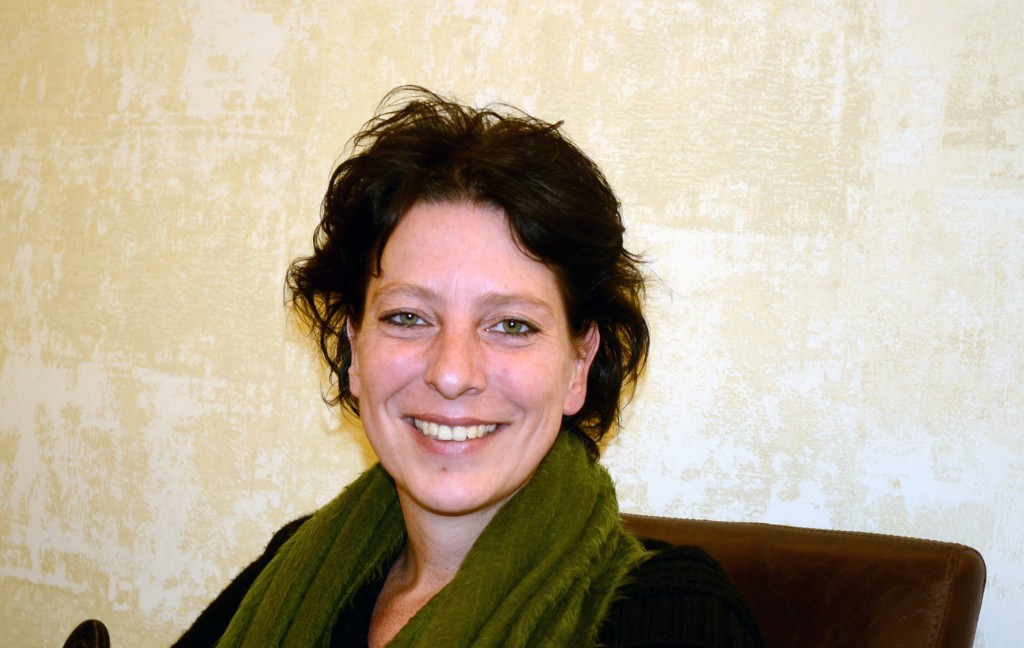
Meanwhile, we received word today that Dutch journalist Frederike Geerdink has also been detained by Turkish authorities. 

Fréderike Geerdink Fréderike Geerdink

View original post 219 more words

Posted in Uncategorized | Leave a comment

Egypt: Banning Salafist Nour Party may backfire

Initially published in Egypt’s Ahram

A popular campaign in Egypt has been launched advocating the disbanding of religiously oriented parties. The campaign started generating support and has already gathered 4,000 signatures.

The movement is now backed by Egypt’s Ministry of Endowments that released an official statement in support of the campaign. Meanwhile, a religious Salafi leader, Sameh Abdel-Hamid, is calling for the dissolution of “liberal” parties, which he considers “unconstitutional.”

In his opinion, they advocate the separation between the religious and the state, and accept “Western-style freedom,” which would allow gay marriage in Egypt.

The brewing tension between non-Islamist and Islamists camps is not surprising, particularly as both sides are gearing-up for the upcoming parliamentary elections.

The tension between Islamists and non-Islamists within the 30 June bloc that backed the ouster of the Muslim Brotherhood’s President Morsi in 2013 is not new.

They bickered considerably about the Egyptian constitution until they reached compromise, albeit non-secular, language. The preamble of the 2014 Constitution affirms that, “The principles of Islamic Sharia are the principal source of legislation, and that the reference for the interpretation of such principles lies in the body of the relevant Supreme Constitutional Court rulings.”

Article 74 of the constitution, meanwhile prohibits the establishment of parties on a religious basis. Nonetheless, last July, Egypt’s Supreme Administrative Court upheld an earlier verdict in which it turned down a petition demanding the dissolution of the Nour Party.

For its part, the Nour Party frequently reiterates that it does not adopt a religious reference and stresses its identity as a political party open to members of all faiths, including Copts, a matter that alarms the Coptic Church in Egypt.

Non-Islamists in Egypt have a strong case based on Article 74 of the constitution to campaign against religiously-based parties such as the Salafist Nour Party.

The Nour Party may have reinvented its look and opened membership to Copts, but it is still a hard-core political Islamist party. Non-Islamists are right to reject the mixing of religion with politics that has infested Egypt’s political life for decades.

They are also entitled to expose Islamists’ ugly propaganda against liberalism and their deliberate blurring of the differences between liberalism and decadence.

Nonetheless, the campaign to ban religiously-based parties may not succeed, and may even misfire.

On the one hand, imposing a hasty ban against the already squeezed Islamist movements will only trigger sympathy and victimhood among their traditional supporters, who already fear alienation and marginalisation.

On the other hand, the election law allocates the majority of seats in the coming parliament to independents, a move that may allow not just Salafists, but also the Muslim Brotherhood — as individuals — to win seats in the next parliament as independents. Major General Refaat Komsan, election affairs advisor to Prime Minister Ibrahim Mahlab, said in an interview that his committee cannot stop certain factions, presumably including the Muslim Brotherhood, from joining this year’s parliamentary elections.

Furthermore, many non-Islamist parties, including Wafd and Dostour, are marred by internal struggles that may impede their chances of success in the next election. Therefore, any ban on Islamist parties will not necessarily translate to votes for already unpopular, unconvincing non-Islamist parties; and instead it may only trigger apathy and low turnout among their core supporters.

Before advocating a ban of Islamists, non-Islamists in Egypt should first do their groundwork. They need to articulate a clearer vision that grasps what and how non-Islamism can work in Egypt and how it can appeal to the apolitical public. Blurring Islam and Islamism is one of the powerful weapons employed by political Islamists.

Non-Islamists, regardless of their political affiliation should unite to demystify that blurred image to the naturally conservative Egyptian public. They also need to educate the public about liberalism and secularism and how those concepts are not anti-Islam as political Islamists like to propagate. This battle is crucial in the quest to reclaim the soul of Egypt.

In short, Egypt needs to uproot Islamism organically; not via the pesticides of formal bans.

The popular campaign against religiously oriented parties may offer a good opportunity to raise awareness about the pitfalls of political Islam, and may improve the electoral culture in Egypt.

A formal ban of political Islamist parties, however, is not a healthy way forward. Non-Islamists need first to heal their internal rifts to stand a better chance of gaining more support among conservative Egyptians. It is a long road, but the campaign trails of the next parliamentary election could be a good start.

Posted in Best Read, Egypt, Islam | Tagged , , , | Leave a comment

Egyptian Aak 2015 – Week 35 ( Aug 24 -30)

Top Headlines

  • El-Sisi visits Russia (Tuesday)
  • Arab League postpones issuance of “unified military force” protocol (Wednesday)
  • Egypt sentences Al-Jazeera English journalists to 3 years in prison (Saturday)
  • Egypt summons UK ambassador over criticism of Al-Jazeera trial (Sunday)
  • Egypt to hold parliamentary election in autumn (Sunday)
  • Italian energy giant ENI announced the discovery of the “largest ever” natural gas field in the Mediterranean off the shores of Egypt (Sunday)

Al-Jazeera verdict

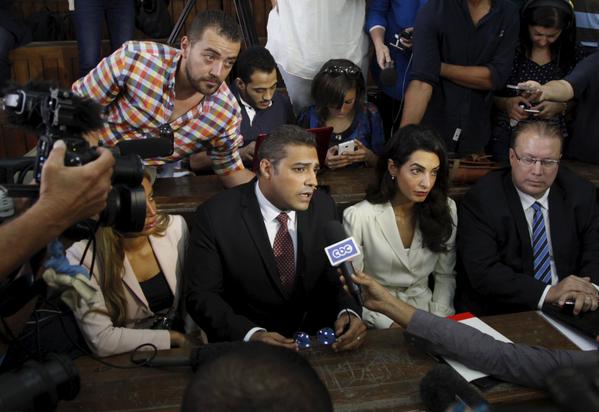
 (Photo of al-Jazeera trial, Amal Clooney with ex-Al-Jazeera Journal Mohamed Fahmy – via Twitter)

Main Headlines

 Monday

 Tuesday

Wednesday

Thursday

Friday

Saturday

Sunday

Good reports

Good Read

Timeline:

 Video

 From Twitter

Plus

Photo Gallery

Obituary:

  • Egyptian “Disney” artist Hany El-Masri dies at 64

Finally, here are Jayson Casper’s prayers for Egypt

Posted in Diary of Aak, Egypt | Tagged , , , , | 1 Comment

What Egypt can learn from Lebanon’s “You Stink” campaign

Lebanese young women take pictures as they hold placards before the start of an anti-government protest organised by a civil society frustrated with a political class they see as corrupt and incapable of providing basic services on August 29, 2015 at Beirut's iconic Martyrs Square. "Today, we're expecting more than 50,000 protesters," said Assaad Thebian of the "You Stink" which is stressing the non-partisan nature of the demonstration. The placards read "Akkar is not for sale (C and R) and "Game over you government of political trash"(L). AFP PHOTO / ANWAR AMRO

Lebanese young women take pictures as they hold placards before the start of an anti-government protest organised by a civil society frustrated with a political class they see as corrupt and incapable of providing basic services on August 29, 2015 at Beirut’s iconic Martyrs Square. “Today, we’re expecting more than 50,000 protesters,” said Assaad Thebian of the “You Stink” which is stressing the non-partisan nature of the demonstration. The placards read “Akkar is not for sale (C and R) and “Game over you government of political trash”(L). AFP PHOTO / ANWAR AMRO


As the Lebanese people poured onto the streets of Beirut protesting against their dysfunctional political scene, and their government’s continued inability to provide basic services such as garbage collection, media coverage of the protests in Egypt focused mainly on the beauty of Lebanese female protestors, and their “revealing” clothes. Other Egyptian observers on social media have trivialized the problem, suggesting it is nothing more than just some scattered garbage on the streets of Beirut. However, such reckless remarks reflect much deeper problems in Egypt.

Sexism and Sexual assaults

Esmat Samira Faour, one of the protesters in Lebanon, hit the nail on the head when she posted a video responding to such disgusting Egyptian comments, which were quoted in a report by Mada Masr. She said the narrow focus of Arab, and especially Egyptian, observers reflects their current political condition after facing difficulties in their own revolts. The Lebanese are proud that their protests lacked mass sexual assaults, Samira said, and that women have the freedom to wear what they want and not fear harassment.

Indeed, Lebanese women, regardless of their dress code, have felt safe protesting day or night on the streets of Beirut. This is in stark contrast to the malignant wave of sexual assaults in Egypt during and after the January 25 revolution. Assaults on women by men reflect the latter’s deep rejection of women’s right to equality and freedom, and their shallow assumption that dress codes portray women’s intellectual and religious status.

Political shallowness

 Some political commentators in Egypt are not just lazy and ignorant, they are happy to spread ignorance in their society. Only a few have done their homework and researched the backgrounds and motivations that triggered Lebanon’s “You Stink” campaign. Others, however, in a display of crass stupidity, opted to focus on the beautiful Lebanese women, clearly displaying their inability to cover the real story, and to fulfill the basic demands of their jobs as commentators: Knowledge, depth, insight, and objectivity.

Cynicism

Egypt’s failure to produce a liberal democratic transformation has created a cynical attitude in the society towards revolutionary activities in the rest of the Arab world. Subconsciously, many Egyptians think others cannot produce a better outcome than Egypt. There is indeed a lot to be learned from Egypt’s turbulence since Mubarak was ousted, but a prevailing element of snobbery and condescension among some Egyptians seems to pervade that society.

 Shallowness, and sexism have become endemic in Egypt since the Mubarak era. Rather than mocking Lebanese women, Egyptians should learn from Lebanon how to respect the freedom of their women. Prejudice, stereotypes, and lack of respect for women are ugly cancers in Egypt – one that are terminally afflicting the country’s quest for freedom. Moreover, shallowness, and cynicism have clearly impeded Egypt’s search for progress in the future. In 2011, Egypt inspired the rest of the Arab world; in 2015, Egypt may have to watch the “You Stink” campaign in Lebanon ___ regardless of its outcome, and learn a lesson or two about how to produce positive changes in the society. Importantly, Egypt has to understand that medieval gender attitudes and sexism towards women are inspired by narrow mindedness, and ignorance.

Posted in Egypt, Lebanon, Short Comments | Tagged , , , , | 2 Comments

Egyptian Aak 2015 – Week 34 ( Aug 17- 23)

Top Headlines

  • Islamic State claims Cairo’s courthouse bombing. (Thursday)
  • Four Palestinian Hamas militants were abducted in Sinai. (Thursday)
  • Egypt sentences Brotherhood leader to life imprisonment. (Saturday)
  • Egyptian security forces fire tear gas at striking police officers. (Sunday)

ISIS shubra kheima

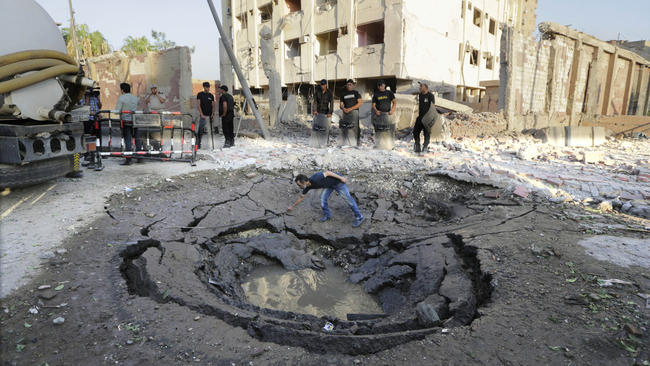
A bombing in Cairo that wounded dozens. Islamic State claimed responsibility. (Amr Nabil / Associated Press)

Main Headlines

 Monday

Tuesday

Wednesday

 Thursday

 Friday 

 Saturday

 Sunday

Good Reports

And worth reading

Good Read

Interview

From Twitter

https://twitter.com/intlspectator/status/635072468739227652

https://twitter.com/basildabh/status/635391960048664576

https://twitter.com/erinmcunningham/status/634370435845591040

Plus

 Photo Gallery

Finally, here are Jayson Casper’s prayers for Egypt.

Posted in Diary of Aak, Egypt | Tagged , , , | 3 Comments

How we learn about bombs in Cairo

Good blog by my friend Basil el-Dabh on how terror attack was reported in Egypt following the restrictive anti-terrorism law

basildabh's avatarendless transition

Late last night, people across Cairo woke up to the sound of a boom. It was heard across the capital by people in various neighborhoods spread across the city. This is nothing new (although the volume of the explosion was notable).

Confusion ensued among Twitter users as people awaited initial reports of the source and location of the sound.

https://twitter.com/TamerELG/status/634151196073304066

Translation: “The explosion heard in Maadi, Imbaba, Garden City, and Zamalek reminds me of the explosion at the Cairo Security Directorate– a muffled sound and light jolt.” 

Youm7 was one of the first outlets to publish a brief report about the blast.

Translation: “Breaking: echo of a huge explosion heard in…

View original post 1,002 more words

Posted in Uncategorized | Leave a comment

Children Should Not Wear Hijab in Egypt’s Schools


Early on Sunday, a report appeared in Egypt’s Youm 7 newspaper that Egypt’s Ministry of Education would ban children from wearing the Islamic headscarf  (hijab)  at school. The report was based on an interview with the Minister of Education Moheb El-Rafei on the Egyptian television show, Ten in the Evening. During the interview, hosted by Wael El-Ebrashy, the Minister said Islam does not call upon girls to wear the hijab until they reach puberty. “Imposing the Islamic headscarf on primary-level students by some people is unacceptable,” he said.

Later the same day, after vociferous debate around the topic on social media, Hany Kamal, the Education Ministry’s spokesperson, “clarified” the minister’s statements. Mr. Kamal said the minister’s comments on TV about the hijab were taken out of context, and any news of a hijab ban is unfounded. “There’s no such thing as a hijab ban; wearing the hijab or taking it off is a personal freedom,” Mr. Kamal told Ahram Online.

The debate around the hijab is not new in Egypt. It has been a hot topic, particularly since the rise of political Islam in the Seventies. The debate was reignited recently, however, as part of Egypt’s soul searching for its “moderate Islam,” particularly after the ousting of the Muslim Brotherhood’s President Morsi in 2013. The anti-Morsi coalition comprises unharmonious sub-groups, with various social and religious attitudes. For example, Egypt’s Al-Azhar scholar and ex-grand Mufti, Ali Gomaa, who raised many eyebrows when he asserted, “whoever obeys President Abdel Fattah al-Sisi obeys the Prophet, and whoever disobeys him disobeys the Prophet,” also has very harsh views towards non-hijabi women. In one TV interview, Sheikh Ali Gomaa said women who reject the hijab are “stupid, naive, and ignorant.” Later, in another interview, he asserted that women who do not wear the hijab have dropped their right not to be looked at by men, a comment that was widely interpreted as a subtle justification for harassment.

Others among Sisi’s supporters have more liberal views. Sheikh Mohamed Tantawi, head of Al-Azhar University, told a student to remove her niqab when he spotted her during a tour of an Al-Azhar affiliated school, the independent Al-Masry Al-Youm newspaper reported this week. His remarks have triggered angry responses, even a demand for his resignation.

I have written before that women with or without Islamic headscarves should be accepted and respected in Egypt. This freedom of choice is for adult women (or at least girls post puberty); however, imposing hijab on children is not freedom, but the despicable robbery of children’s rights to enjoy their childhood. It is already tough to be a girl in Egypt. Many girls are denied their basic rights to play and enjoy life.

If Egypt under Sisi is serious about finding middle ground in Islam, then it should not backtrack on wise decisions such as banning the hijab in primary school. The Egyptian leadership cannot ban political Islamist groups such as the Muslim Brotherhood while simultaneously allows semi-official salafism to flourish in society. If the government continues to do so, its war against extremism will be doomed to failure.

Posted in Diary of Aak, Egypt, Short Comments | Tagged , , , | 1 Comment