Reblog: The Decline and Fall of Ahmet Davutoğlu — Ottomans and Zionists

Great read by Michael Koplow on the latest drama in Turkey. Enjoy…


And just like that, he’s gone. After leading the AKP to victory in November and regaining the parliamentary majority that the party had failed to win a few months earlier, Prime Minister Ahmet Davutoğlu is being replaced upon the decree of President Erdoğan. A prime minister being ousted by the president outside of an election […]

via The Decline and Fall of Ahmet Davutoğlu — Ottomans and Zionists

Posted in Middle East, Turkey | Leave a comment

Remembering Islam El-Behery on his Birthday


Behery's photo Youm 7

Islam el-Behery

Via Youm 7 newspaper

“Today is Islam El-Behery’s birthday”____ Facebook has always been diligent in sending Birthdays notification, but this one was awkward. What is the point in writing a Facebook message to a man in prison? Like many unjustly imprisoned in Egypt, El-Behery has spend his birthday locked in a dark cell, not because he is a terrorist or regime opponent, but because he dared to think and challenge religious dogma.

In May 2015, Islam El-Behery, an Islamist Egyptian researcher, was sentenced to 5-year in prison, which later, in December, was reduced to one year after an appeal, over charges of “contempt of religion”. In February 2016, another motion to appeal the sentence was denied and Behery was sent to prison to serve his sentence.

El-Behery, a law graduate and Islamic researcher who turned hosted his own TV show challenging traditional Islamic thinking was considered “misinterpreting Quran” by Egypt’s highest religious authority Al-Azhar. In April 2015, El- Behery’s challenge to Al-Azhar reached its peak. In a heated religious debate, he challenged two mainstream Islamic scholars (including one from Al-Azhar), on TV. That episode triggered El-Behery’s current imprisonment. His candid views and biting criticism had pushed mainstream scholars out of their comfort zone. Instead of debating his views, the scholars focused heavily on El-Behery’s aggressive attitude and his choice of words, reducing the debate to a pedantic interpretation of the rules of Islamic jurisprudence. Ironically, Behery was trying to defend the prophet Mohamed from the accusation of pedophilia, by asserting that the Prophet’s wife wife Aicha was 18 when she married the Prophet, while Al-Azhar vehemently reject that and insisted that she was only 9.

Following the unfortunate debate, the privately owned satellite channel that used to host it stopped Behery’s show. But ending El-Behery’s career was not enough. Egypt’s Al-Azhar files complaint accusing TV show of twisting Islam; described his preaching as “a fierce and elusive campaign against the foundations of Islam and Islamic legacy,”____ a handy accusation that has successfully been used against anyone who dare to challenge Islamic thoughts.

The imprisonment of El-Behery has exposed the vulnerability of non-Islamists Muslims. Unlike others who have global supporting groups thet keep their suffering alive on global media, El-Behery, like many non-Islamists Muslims, is just an individual, not backed by a certain group or a lobby. Although his imprisonment has created widespread criticism, the attention to his case, however, has faded amidst Egypt’s never ending political upheaval. On his Birthday, only few followers have remembered him and wrote on his Facebook page wishing him freedom.

Therefore, it is crucial for us, non-Islamists Muslims, to keep El-Behery’s case alive. Egypt does not just need political freedom; the country is in desperate need for religious freedom and revolution of thoughts. Democracy will not thrive in Egypt without critical thinking and without a strong civil society that support those who dare to challenge orthodoxy and regression. Egypt ousted a Brotherhood’s president only to allow mainstream regression to flourish. Al-Azhar, although claim moderation and tolerance, is unwilling to support critical thinking. Instead, it has resorted to an introverted protectionism, to impose its own monopoly on religious thoughts.

It is not mercy or forgiveness that we should campaign for Islam El-Behery, but total freedom. He should be released and allowed to express his views freely. El-Behery and others researchers and thinkers need total abolition of the ugly blasphemy law. It is totally disgraceful to see Egypt turning a blind eye to Salafi clerics and their outrageous religious edicts, but throw religious tantrums when the like of Behery seeks more lenient interpretations.

The legal punishment against Behery was not just aimed to teach him a lesson, but also to deter others from following his path. Non-Islamists, however, should be united and continue to campaign for complete freedom of religious thoughts in Egypt. It is bad enough that our politics is in a mess; can we, at least, salvage our religion from tyranny?


Posted in Diary of Aak, Egypt, Islam, Short Comments | Tagged , , , , , | 1 Comment

Egyptian Aak 2016 – Week 17 April 25-May 1


April 25 Protests

Photo of anti-Sisi protests in Egypt – via Tahrir Institute

Top Headlines

  • Protests against President Fattah el-Sisi broken up with tear gas. Monday
  • Egypt puts on trial 237 activists for protests against Sis. Saturday
  • Egypt’s Nour Al-Sherbini becomes youngest ever-female squash world champion. Saturday
  • Egypt’s police arrest two journalists wanted “for incitement.” Sunday

 Main Headlines

 Monday

 Tuesday

Wednesday

 Thursday

Friday

  • Normalising Rome-Cairo relations depends on ‘serious Egypt collaboration’ on Regeni: Italian FM
  • The “Front to Defend Egyptian Protesters” states there have been more than 1,000 detentions between April 15-27
  • Egypt expresses ‘deep concern’ over civilian casualties in Syria
  • Lawyers Syndicate to represent protesters detained during recent protests
  • Egypt Air asks customers to arrive early at ports due to the postponement of daylight savings time in Egypt
  • Suez Canal industrial zone attracts 15 Russian companies
  • Egyptian central bank keeps key interest rates unchanged


Squah

 Egypt’s Nour El-Sherbini wins the 2016 World Squash Championship for Women 

Photo via Ahram

 Saturday

Sunday

 Good Reports

Good Read

From Twitter

https://twitter.com/jmalsin/status/724594134246391808


https://twitter.com/basildabh/status/724899087573737472


Interview

  • Leading rights activist Gamal Eid warns of unknown future for NGOs in Egypt. Amr Eltohamy for Al-Monitor

 Plus

Finally here are Jayson Casper’s prayers for Egypt


Posted in Diary of Aak, Egypt, Sinai, Uncategorized | Tagged , , , , | 5 Comments

Podcasts: the U.S. election and beyond

I am delighted to join Prof. Matt Sienkiewicz of Boston College in producing a series of podcasts discussing various media issues. Here is our first one on the U.S. election. Enjoy…..


Posted in Podcasts | Tagged , , | 1 Comment

Egypt and the land


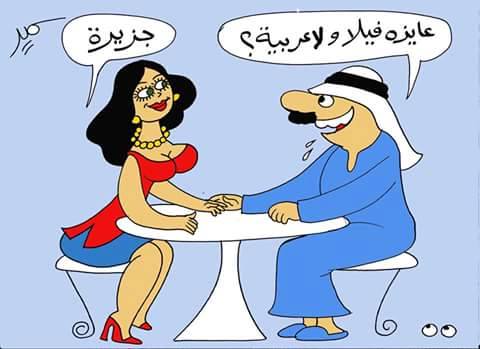
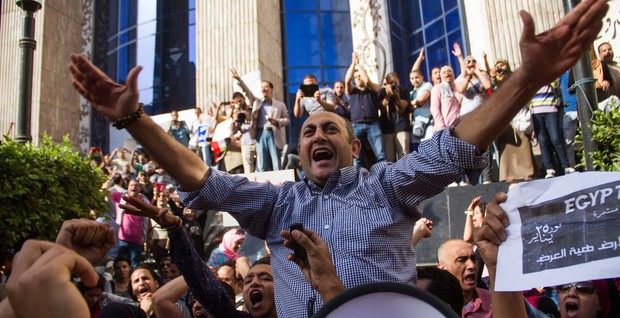
“Awad sold his land” is a slogan that surfaced in Egypt following president Abdel Fatah al-Sisi’s agreement with Saudi Arabia to transfer two Red Sea islands (Tiran and Sanafir) to Saudi sovereignty. Egypt has been controlling those strategically placed islands in the Strait of Tiran, near the Israeli border, directly for more than 60 years. Awad is the name of a farmer in an old Egyptian radio soap opera who sold his land. Last Friday, opponents of the Saudi deal resurrected Awad’s story in angry protests against relinquishing the two islands to Saudi Arabia. The idea that Tiran and Sanafir are not Egyptians is difficult to sell, especially for the many Egyptians who lived all their lives with the story of the Straits of Tiran and the 1967 war as an integral part of their memory.

The story of Awad and his land was part of Nasser’s remodeling project, aimed to embed a new nationalist identity in the minds of Egyptians. It started with a land “reform” project in 1952, when Nasser’s Free Officers passed Law 178, which limited land holdings to 200 feddans (84 hectares) per person. A new law in 1961 reduced the limit to 100 feddans per individual and 200 feddans per household. During Nasser’s tenure, media (radio, cinema, and books) was used to emphasize and assert the importance of Egyptian land for the Egyptian people. The film The Land, based on a popular novel by Abdel Rahman al-Sharqawi, is considered a classic of Egyptian cinema production. The storyline was aimed at asserting the bond between the land and the Egyptian people.

The “Awad sold his land” radio story was part of my mundane school summer holidays, when radio was the only entertainment tool available. These nationalist slogans and stories continued to be broadcast on Egyptian TV and radio during the tenures of Sadat and Mubarak—albeit less intensely and usually during off-peak hours. I loved the catchy tune, but not its mediocre plot where Awad sold his land to spend the money on a belly dancer who later dumps him. Instead of drawing attention to his misplaced trust in his lover, the story focused solely on how selling the land was a disgraceful act. In real life, however, such “disgraceful” acts and abuse of land are daily occurrences. It is the common practice of not just one reckless “Awad.”

Since childhood, I have witnessed the daily assault on Cairo’s beautiful buildings—not just by the government but also by private owners. There was the scandalous razing of the legendary Umm Khalthoum villa, sold by her relatives. Relatives of Egypt’s legendry singer Umm Khalthoum were not poor, but the lure of money seduced them to sell a landmark of modern Egypt. They were not the only ones: many of Egypt’s beautiful historic buildings have been systematically ruined or destroyed. The assault on Egyptian lands has not been confined to urban cities. The loss of prime agricultural lands to illegal urban encroachment has also been a problem in Egypt for many decades. After the 2011 revolution, there was a massive wave of construction on agricultural land in violation of the law and in light of lax enforcement. For years, Egypt’s countryside has been slowly changing into an ugly concrete jungle.

The appalling abuse of domestic land has always been coupled by numerous puzzling and often contradictory public responses to conflicts on Egypt’s external border frontiers. Nasser, the father of land honor, recklessly lost not just Tiran and Sanafir but the entire Sinai Peninsula to Israel in the 1967 Six-Day War. His hasty blockade of the Straits of Tiran to Israeli vessels was coupled by a foolish lack of preparation for an overall confrontation with Israel. The Egyptian response to Nasser’s catastrophic error of judgment was even more of an enigma. When Nasser tried to resign after such a devastating defeat, Egyptians poured into the streets within moments of his announcement, and demonstrations in his support broke out all over Cairo. Weeping people shouted, “We want Nasser!” It was perhaps the first major incident of collective irrationality in Egypt’s modern history.

This irrationality continued during Sadat’s tenure but in an opposite manner. First, many in Egypt protested and urged Sadat to go to war with Israel to liberate Sinai, which he did in 1973. Later, many Egyptians resented Sadat for forging a peace treaty with Israel and regaining all the land occupied in 1967. Egyptian pride could not tolerate a peace deal with the “Zionist enemy.” Unlike Nasser, who got away with failures, Sadat paid a hefty price for doing the right thing in regaining Egyptian lands: he was assassinated in 1981.

Later, when Mubarak regained Taba, the last disputed border point with Israel, the public received it with a muted celebration, probably due to their deep dissatisfaction with his tenure in general. In comparison, Mubarak and many in Egypt tolerated and even welcomed systematic encroachment by the Hamas group in Gaza on Sinai through its network of underground tunnels. The Palestinian conflict with Israel was given as an excuse for this clear exploitation of Egypt’s national security.

In sum, historically, Egypt’s autocratic leaders have maintained total control and ownership of vital strategic decisions, which, in turn, triggered chronic flip-flopping emotional public responses. Egyptians have a long record of an erratic relationship with their land. They forgave Nasser for losing Sinai and then punished Sadat for regaining Sinai. For years, they turned a blind eye to dangerous tunnels under the Gaza border but reacted with prompt outrage when the current leadership agreed to relinquish two disputed islands to Saudi Arabia.

The two Red Sea islands should be a wake-up call for everyone. It is about time for President Sisi to stop taking the public for granted and consult Egyptians before making major sovereignty decisions. It is crucial, however, for Egyptians to uncouple their love/hate affair with their leaders from attitudes about their land and borders. Whether Tiran and Sanafir belong to the Egyptians or Saudis should not be linked to whomever is in Egypt’s presidential palace. Finally, we cannot love Tiran and Sanafir, while continuing to abuse Cairo, Alexandria, Port Said, and other parts of Egypt. It may be that, in actuality, Awad and his story will continue to haunt us for years to come.
Posted in Diary of Aak, Egypt, Saudi Arabia | Tagged , , , , , | Leave a comment

Egyptian Aak 2016 – Week 16: April 18 – 24

Top Headlines

  • An Egyptian judge renews detention of 25 protesters against the Red Sea islands deal
  • An Egyptian policeman shot and killed a vendor. Tuesday
  • Egypt arrests dozens ahead of protests against the president. Friday
  • Egypt’s military deploys forces nationwide ahead of Monday’s protest. Sunday


Main Headlines

 Monday

 Tuesday

Wednesday

Thursday

Friday

 Saturday

 Sunday

 Good Report

And:

This report from Reuters

 Together with those headlines:

Good Read

From Twitter

https://twitter.com/Mokhtar_Awad/status/723802481696727040


Photo Gallery 

Finally here are Jayson Casper’s prayers for Egypt


Posted in Diary of Aak, Egypt | Tagged , , , , , , , | Leave a comment

Egypt: A coup against the coup?

Gamal El-Gaml wrote an interesting article in Egypt’s Al-Masry Al-Youm.  He claimed that weeks ago he received detailed information on what he described as arrangements for a “manufactured popular revolt” against the Egyptian president Abdel Fattah Al-Sisi. He claimed, according to the information he received, that there is a division between Sisi’s leadership and the rest of Egypt’s “deep state.”

Al-Gaml claims that he dismissed the above scenario, but he later heard similar themes with even more details of  an alleged “magic recipe” of public anger, money, weapons, and support from certain parts of the ruling establishment. According to Al-Gaml, those scenarios became louder after the controversial relinquish of the Red Sea islands Tiran and Sanafir to Saudi Arabia that some see as Sisi’s major strategic error, and could end his tenure. Al-Gamal claims that he heard the possibility that a major army cadre could replace Sisi. He also highlighted how President Sisi has hinted before about “internal plots.”

El-Gaml said that he opposes Sisi’s policies and management style, but also asserted that he refuses removing Sisi without a massive public revolt similar to what happened in June 30, 2013. Al Gaml rejected conspiracies and suggested that the aim behind the above leaks could be to test the public’s response; he added that he opted to share the information he received as warning call for everyone, including President Sisi.

Al-Gaml’s article was widely circulated on social media with varied responses. Some agreed with him, while others accuse him of inciting against Sisi. In short, both the article and the responses to the writer’s views sum up the huge collective distress that Egypt is currently witnessing.

As the third anniversary of the ousting of the Muslim Brotherhood president Morsi is looming, nearly all Egyptians are on the edge and fear the unknown. There are serious divisions among Sisi’s supporters about his decision to relinquish the two Red Sea islands Tiran and Sanafir to Saudi Arabia. Many agree with Gamal al-Gaml’s views that this is Sisi’s biggest strategic error since the start of his tenure; others disagree. The question is, however, is this disagreement confined to the public and media or is it also ongoing, albeit behind the scenes, within Egypt’s military establishment? Some of Sisi’s opponents see divisions within the senior military ranks as the only way they can push him out of power, and they feel that the current anger could unhinge the military establishment and trigger another coup in Egypt.

Many compared Sisi with Nasser, but I see Sisi as another Sadat, daring, pragmatic, and extremely controversial. Egypt 2016 has become increasingly similar to Egypt 1981, but with bold revolting youth, and vulnerable weaker state pillars. There is indeed an unhealthy paranoid climate in Egypt; however, I doubt it will materialize into any substantial threat to Sisi’s leadership. I have always doubted the concept of “deep state” in Egypt. Yes, there can be divisions among seniors within the country’s main ruling pillars, but a coordinated deep establishment that works with or against the president is unlikely.

Furthermore, I am not sure that the public has any appetite to march in millions to oust Sisi. Thousands may march in the next planned protest on April 25, which may please many of Egypt’s observers who are desperate to see another revolution in Egypt, just to prove them right. However, those few thousands who want to remove Sisi have not struck the right cord with the rest of the apolitical Egyptians.

To be clear, old faces like ex-presidential candidate Ahmed Shafiq, or retired Army Lieutenant General Sami Anan will not win the Egyptian public—it’s almost impossible. The public also will not warm up easily to any new name from the political establishment. Copy-cat July 2013 will fail drastically in Egypt and will only lead to dark days ahead.

The last turbulent five years have shown how ruling Egypt is a curse, not a blessing. Sisi, however, can diffuse the tension and save the country from collective destruction by learning from Sadat’s mistakes and stop handing his enemies weapons with which to attack him.

Posted in Diary of Aak, Egypt, Middle East, Short Comments | Tagged , , , | 3 Comments

Egyptian Aak 2016- Week 15 (April 11-17)

Top Headlines

  • Thousands of Egyptian protested against Egypt ceding two Red Sea islands to Saudi Arabia. Friday
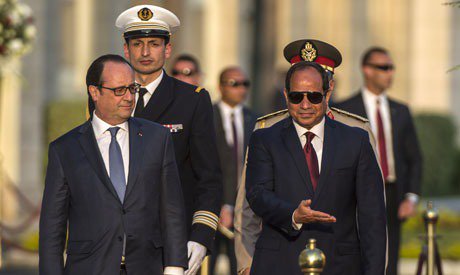
  • French president recieved by Egypt’s Sisi. Sunday
  • Sisi deflects criticism over human rights record, says ‘evil powers’aim to isolate Egypt. Sunday


France Hollande in Egypt

French President in Cairo – Via Ahram


Main headlines

 Monday 

 Tuesday

 Wednesday

Thursday

Friday

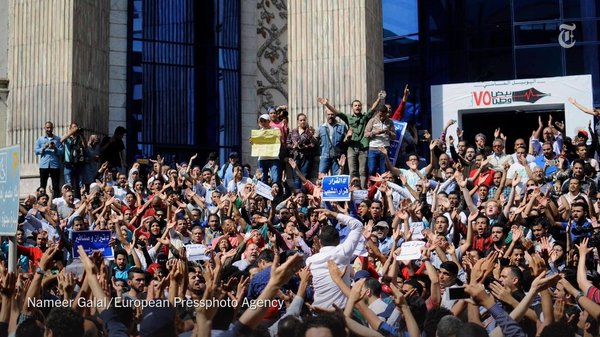
  • Several thousand protest in central Cairo against ceding two Red Sea islands to Saudi Arabia
  • Police have fired tear gas at crowds in Cairo at a protest against a controversial deal to hand two islands to Saudi Arabia
  • Egypt police fire tear gas to disperse protesters at press syndicate
  • At least 100 ‪arrested in 9 provinces in Egypt


Friday Protest

Friday protest in Cairo – Via AP

Saturday

 Sunday

Good Reports 

Good Read

From Twitter

https://twitter.com/hahellyer/status/720280467602210816

https://twitter.com/intlspectator/status/721322575075225600

Photo Gallery

 Plus

  • ‘Owning the streets’ once again: Cairo Runners’ fourth half marathon draws thousands

Finally here are Jayson Casper’s prayers for Egypt


Posted in Uncategorized | 1 Comment

Islands of Trouble

Re-blog this piece on the reactions to Egypt’s transfer of the Red Sea islands of Tiran and Sanafir to Saudi Arabia by Maged Atiya. Enjoy..

salamamoussa's avatarsalamamoussa

Cf2qCD-WQAAzUlf

Reactions to Egypt’s transfer of the Red Sea islands of Tiran and Sanafir to Saudi Arabia have generally ranged from the factually inaccurate to the emotionally febrile. The merits of the case (likely to favor Saudi Arabia) and the long negotiations leading up to it made hardly a dent in the public attitudes. In fact these attitudes, especially the Egyptian ones, shed a harsh light on a dark picture.

Egypt has never recovered from Nasser’s capitulation to King Faisal in Khartoum in August 1967. During that conference of Arab leaders Nasser issued “3 Nos” to Israel and a “Yes” to Saudi Arabia by withdrawing from Yemen, which Egypt had secured for the republican cause and had nearly pacified. In subsequent years the “Nos” to Israel became “Perhaps” and finally “Yes” at Camp David. The “Yes” to Saudi Arabia became “Yes, Sir”. Although few Egyptians now fully understand the history of…

View original post 245 more words

Posted in Uncategorized | Leave a comment

Egyptian Aak 2016- Week 14 (Apr 4-10)

Top Headlines

  • Italy recalls its ambassador from Egypt for consultations over Italian student murdered in Cairo. Friday
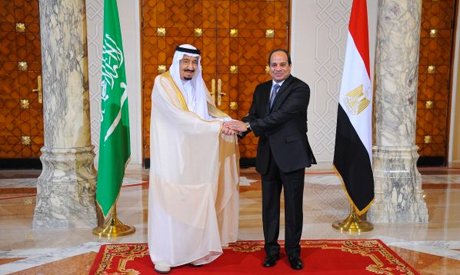
  • Saudi King Salman starts Egypt Thursday
  • Saudi Arabia and Egypt agree to build a bridge over the Red Sea. Saturday
  • Egypt and Saudi Arabia signed an agreement on maritime border demarcation. Sunday
  • Egyptians blast Sisi for ‘selling Egypt’ in exchange for Saudi money. Sunday


Salman in Cairo

King Salman in Cairo- via Ahram


Main Headlines

 Monday

Tuesday

Wednesday 

Thursday

Friday

Saturday

Sunday

Good Reports

Good Read

From Twitter


https://twitter.com/BTelawy/status/719095862522195968


https://twitter.com/BTelawy/status/718165588137345024

https://twitter.com/intlspectator/status/718835884586455040

https://twitter.com/PeopIe/status/719266032641126400


Photo Gallery

  • Highlights from Saudi King Salman’s visit to Egypt

Plus


Finally here are Jayson Casper’s prayers for Egypt

Posted in Diary of Aak, Egypt | Tagged , , , , , , , , | 1 Comment