Egyptian Aak 2015 – Week 51 ( Dec 14-20)

Top Headlines

  • Egypt to appoint international firm to review airport security. Monday
  • UK report recommends no ban of Muslim Brotherhood, but warns of possible extremist links. Thursday
  • Major general Moahmed Sharway will be replacing Major general Salah Hegazy as new head for National Security. Saturday
  • Egyptian court releases amateur photographer Israa al-Taweel for her health conditions. Saturday

 Main Headlines

 Monday

Tuesday

Wednesday

 Thursday

 Friday

 Saturday

 Sunday

 Good Reports

Good Read

From Twitter

https://twitter.com/KristenMcTighe/status/678202460398215168

https://twitter.com/hahellyer/status/678523134811774976


Plus

Video


Posted in Diary of Aak, Egypt | Tagged , , , | 2 Comments

The Islamic State Was Coming Without the Invasion of Iraq

This post is a must read for those among the progressive liberals and leftists in the US and UK who assert that the Islamic State is the result of the Iraq war.
The invasion of Iraq was wrong for many reasons, but the the rise of the Islamic State is not one of them.

KyleWOrton's avatarKyle Orton's Blog

By Kyle Orton (@KyleWOrton) on December 12, 2015

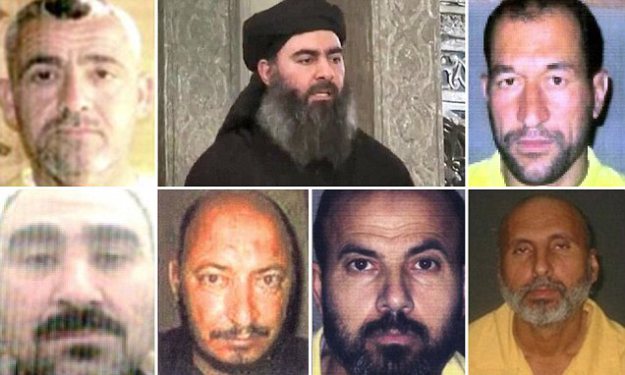
From top left clockwise: Fadel al-Hiyali, Ibrahim al-Badri (Abu Bakr al-Baghdadi), Adnan al-Bilawi, Samir al-Khlifawi (Haji Bakr), Adnan as-Suwaydawi (Abu Ayman al-Iraqi), Hamid az-Zawi (Abu Omar al-Baghdadi), Abu Hajr as-Sufi From top left clockwise: Fadel al-Hiyali, Ibrahim al-Badri (Abu Bakr al-Baghdadi), Adnan al-Bilawi, Samir al-Khlifawi (Haji Bakr), Adnan as-Suwaydawi (Abu Ayman al-Iraqi), Hamid az-Zawi (Abu Omar al-Baghdadi), Abu Hajr as-Sufi
Yesterday, Reuters had an article by Isabel Coles and Ned Parker entitled, “How Saddam’s men help Islamic State rule“. The article had a number of interesting points, but in its presentation of the movement of former (Saddam) regime elements (FREs) into the leadership structure of the Islamic State (IS) as a phenomenon of the last few years, it was a step backward: the press had seemed to be recognizing that the Salafization of the FREs within IS dates back to the Islamization of Saddam Hussein’s regime in its last fifteen years, notably in the 1990s after the onset of the Faith Campaign.

View original post 3,137 more words

Posted in Uncategorized | Leave a comment

Egyptian Aak 2015- Week 50 (Dec 7-13)

Top Headlines

  • Bomb attack kills four security personnel in North Sinai. Tuesday
  • Formation of pro-Sisi majority bloc underway in the Egyptian parliament. Wednesday
  • Israeli imprisoned as spy in Egypt freed is freed after 15 years in prison. Thursday
  • A court in Egypt has given five-year jail terms to two policemen convicted of torturing lawyer to death. Saturday
  • Egyptian judge postpones trial of 739 as the courtroom cage is too small. Saturday
  • Egypt’s best-selling author says government trying to silence him. Sunday


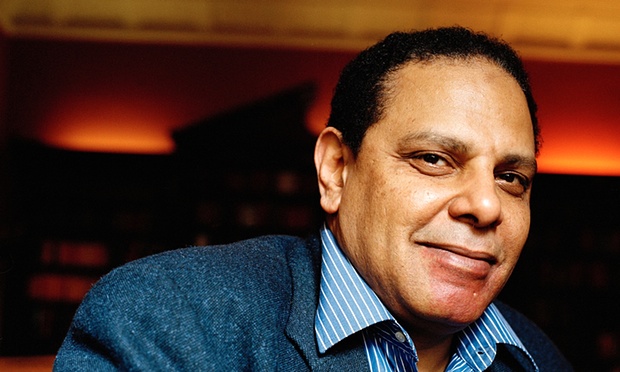
Alaa al-Aswany

Alaa al-Aswany: ‘Freedom of expression is at its lowest point, worse than in the days of Mubarak.’

Photograph: Eamonn McCabe for the Guardian

Main Headlines

 Monday

Tuesday

Wednesday

Thursday

Friday

Saturday

 Sunday

 Good Reports

Good Read

From Twitter

https://twitter.com/Hayder_alKhoei/status/675940250028539905

https://twitter.com/evanchill/status/675701990219993088

https://twitter.com/eldahshan/status/675653115480248320

https://twitter.com/History_Pics/status/675638844553850880


Plus:

Finally here are Jayson Casper’s prayers for Egypt


Posted in Uncategorized | 1 Comment

Will Canada entice us to embrace liberal secularism?

Canada photo

Canada’s PM Justin Trudeau  personally welcome Syrian  refugees

via his Twitter’s account

This weekend, Canada has dominated my timelines on both Facebook and Twitter. The images of the Canadian PM warmly welcoming Syrian refugees arriving in his country are rightly shared and praised by many in the Arab world. Amidst conflicts, terrorism, and bigotry, Canada is standing as shining example of morality, human rights, and empathy, demonstrating that a secular, non-Muslim nation can welcome Muslims with a confidence unshaken by the politics of fear. Many in the Arab world urge and hope other Western nations will follow the Canadian example. But questions remain: Can the Canadian model be inspiring to those who praised it and celebrate it in the Muslim world? Will Canada entice us to embrace liberal secularism?

For decades, secularism has been considered a dirty word in the Arab world. Many view any separation of political, legal institutions, and religion as a dangerous threat to our nations. “Secular” has become an insult that can ruin political careers, as it has become synonymous with “anti-religion” autocracies. Examples like Ataturk in Turkey or Ben-Ali in Tunisia have repeatedly been framed as examples of how bad and oppressive secularism is.

Advocates for such claims blur the difference among oppressive, autocratic, and liberal secularism. Yet Canada has offered us a shining example of enlightened example that applies secularism’s basic tenets of equality and diversity, and reject the growing politics of fear in its neighbor America. Canadian secularism has protected, not suppressed, faith. One Quebec study found that even in this golden age of secularism, the vast majority of Canadians count themselves as members of a religion.

In contrast, throughout the 20th century, the Muslim world has failed to reconcile Islam with secular modernity. As a result, we have failed to produce any successful Muslim version of pluralism that allows all ethnic and religious sects to live together in harmony in our society. Many had high hopes that the Arab spring would heal the rifts between various Islamists and non-Islamist Muslims, but the current unfolding tragedies in Syria, Libya, Iraq and Egypt have dashed those hopes altogether.

Some, mainly within the Islamist camp, describe Canada’s open-door policy towards refugees as a humanitarian perspective that is irrelevant to the country’s secular system. However, this perception is inaccurate. Canada has gone a step further. Canadians’ “welcome to Canada” package for Muslims did not simply offer an indifferent shelter to a group of strangers; Canada is ultimately seeking to make the Muslims feel at home. In this video, Canadian children sang an Islamic song, “Talaa el Badr Alayna,” which was sung when the Prophet Mohamed arrived in Medinah. Can the Islamist camp reciprocate and let their children to sing a Christian song to welcome Christian (not to mention Hindu or atheist) refugees in their societies? Assuming, of course, that a religiously ruled country would welcome non-Muslim refugees to settle and practice their religions in the land of Islam.

Canadians who sang this song core to the Islamic religion did not do so out of a desire to convert to Islam or abandon Christianity; they did it as a welcoming gesture and with the immense confidence in themselves and their own faith that would not be shaken by singing a song from another faith. Liberal secularism, which respects all faiths without allowing any of them to dominate, is what ____ in my opinion_____ gave the families of those children the confidence to share and welcome others.

I hope my fellow Arabs who praised Canada’s Justin Trudeau for welcoming Syrian refugees stand up and advocate for secularism in their native countries. We cannot praise Trudeau when it suits us but reject his beliefs and policies of equality and diversity when it is not convenient; seek refuge in the secular West while advocating selectivity and inequality in our homeland; or reject the growing politics of fear in some Western countries, but embrace it in our societies. If we are truly impressed by Canada, then we should try to reflect and learn something from this graceful nation.


Posted in Islam, Middle East, Short Comments | Tagged , , , , | 1 Comment

The Islamic State’s Sovereign Wealth Fund

This is an important piece shedding new lights on how Isis finances its sick activities by dollar auctions. Definitely worth reading!

Nibras Kazimi's avatarTalisman Gate, Again

This is not a journalistic investigation. I am just sharing concerns that are circulating in Baghdad about the caliphate’s financing.

An Iraqi banking source has told me that the Islamic State (IS) is making a minimum of 25 million USD per month by participating in the Central Bank of Iraq’s (CBI) ‘dollar auction’. This adds up to approximately 300 million dollars a year, far outpacing how much IS is making off oil smuggling, according to some estimates.

How did it happen?

The US Treasury and the Federal Reserve launched an investigation into the CBI’s dollar auction, which prompted a temporary hold on sending dollars to Baghdad in the summer, according to a Nov. 3 front-page story that appeared in the Wall Street Journal. The investigation looked into whether IS was somehow benefiting from the flow of these large sums of money through the auction, that in the year 2015 amounted…

View original post 2,174 more words

Posted in Uncategorized | Leave a comment

San Bernardino and Gun Control

Farook: Malik .png

Photograph of Syed Farook and Tashfeen Malik- via  Breitbart.com

The horrific massacre in San Bernardino, California, that killed 14 people and wounded 21, has now been officially labeled as a terrorism investigation. The New York Times (NYT) Editorial Board appealed to end the gun epidemic in America. The NYT is absolutely right to campaign against the ease of access to guns and weapons in the United States. Nonetheless, linking the chronic debate about gun control with the California terrorist attack is problematic. It is one thing to highlight the clear advantages of gun control; it is another, to portray it as the bare-minimum step that will stop Islamist terrorism. It won’t.

A backlash against the NYT editorial has already started. National Review’s editorial argues that it is shallow and banal. Slate’s chief political correspondent argues that it cracking down on assault weapons and the no-fly list is wrong headed and unhelpful. Moreover, The editor of conservative blog RedState, Erick Erickson felt the editorial was full of holes, proceeded to shoot it full of holes. In his words, he “had seven bullets and made the most of it”.

I am not American, and I certainly have no intention to imbed myself in this domestic gun debate, which is clearly turning ugly. Nonetheless, let me highlight from my perspective outside of the US, and the perspective of many, what seems missing in the debate amongst Americans. There is nothing more entertaining to any Islamist terrorist group than watching the “infidels” bickering with each other.

There is much Islamist literature highlighting how a divided enemy is a defeated enemy. They emphasize how division was the number one factor behind most of the victories in all medieval Caliphates. The news of an intense gun debate in America will be viewed among Isis sympathizers as a sign of immanent victory for the Caliphate. This alone will be used by Isis propagandists on social media to recruit more home-grown Americans to join the group’s radical “Jihad”. Success begets success.

The U.S. public, media and government should be very cognizant that the San Bernardino massacre will be portrayed among Jihadists as the ash that broke the back of America’s veneer of unity, triggering a bitter domestic cultural war that will render the world’s leading super-power into a divided, weak, polarized society easily attacked by radical Islam.

Looking specifically at the San Bernardino case, the Federal Bureau of Investigation uncovered evidence that Mr. Farook communicated with extremists, domestically and abroad a few years ago. One contact was associated with Shabab, the Islamist militant movement in Somalia, and another with the Nusra Front, the wing of Al Qaeda in Syria. In all five cases, the investigations were closed and no charges were filed. Mr. Farook traveled to Saudi Arabia multiple times. In July 2014, he entered the United States from Saudi Arabia with Ms. Malik, who had a Pakistani passport, on a K-1 visa for fiancées. Investigators determined that Ms. Malik had recently pledged allegiance to ISIS on Facebook. The couple also stockpiled ammunition and left pipe bombs at the site of the shooting. The father of San Bernardino suspect told an Italian newspaper that his son expressed support for the Islamic State group and was obsessed with Israel.

Those alarming details are the harder to deal with than the access to weapons. Importantly, the focus should be on how to address scenarios like this, which is something more pertinent to future prevention of similar terrorist attacks.

Advocates of linking gun control with terrorism are very passionate ___ even ideological ___ about the idea. An American friend sent me an angry e-mail stating with unquestionable confidence how the US should not be making it easy for potential terrorists to have access to guns. This argument, albeit sound and convincing, is misleading. Gun control would not stop terrorists from making improvised devices and pipe bombs, which are commonly used by Middle East’s based terrorists, but are illegal to possess and illegal to manufacture in the United States.

What is missing from this theory is the crucial distinction between these assailants in the San Bernardino case, and previous crimes by the so-called “lone wolves.” Mr. Farook, and Ms. Malik were inspired by a completely different ideology that specifically glamorize death. “Infidel” laws and regulations mean absolutely nothing to them. This lack of concern for life emerged with the chilling details about the suspects who callously left behind a 6-month-old daughter. Persons who willing to abandon their own children will not think twice about smuggling weapons to kill others. If guns are banned, terrorists will use knives, arson, poison, or any other possible method to kill their victims, similar to what Isis has been doing to their victims in Iraq and Syria over the last few years.

Again, that is not a plea to keep guns ____ far from it. It’s just a perspective from outside of America, reminding our friends there that their domestic issue with gun control is truly separate from our most complex contemporary challenge_____ terrorism.

Gun control will continue in the near future to be a hotly contested US issue. The Obama administration has advocated it for years, but failed to reach a consensus for the required changes. However, in the world of counter-terrorism, limited access to guns means little in the colossal task of stopping terror. The arms warlords will be happy to step in, and supply wannabe Jihadis in America with their needs if guns are banned.

Although this is something “new” in the US, the unfortunate case of Mr. Farook is not rare. Many in the Middle East, including myself, have witnessed the social mutation of many young men and women from a peaceful Muslim to a radical Islamist that ultimately lead to terrorism and bloodshed.

As such, while fighting a gun epidemic is a noble goal, it should definitely not be portrayed as the holy grail of the US’s counter-terrorism strategy. America has to wake-up to a more awkward reality. The ugly social mutation toward radicalism is now not an exclusive phenomenon for the Middle East, or other failed States of the world. Even rich, affluent societies have educated, un-oppressed, employed youth that can be enticed into joining terror groups. How this happened, why, and how to tackle it without demonizing the local Muslim community is what should be discussed and addressed. The world and America, now more than ever, need to present a unified response to those who want to foment terror.


Posted in Politics, Terrorism | Tagged , , , , | 1 Comment

Egyptian Aak 2015 ( Week 49 Nov 30 – Dec 6)

Top Headlines

  • Egyptian journalist Alexandrani is arrested and charged with spreading false information. Tuesday
  • Egypt orders retrial for Muslim Brotherhood leaders including general guide Mohamed Badie. Thursday 
  • 28.3% turnout in both of both stages of Egypt’s parliamentary elections. Friday
  • Egypt arrests 9 policemen over beating to death of a detainee. Saturday
  • Arbitrator orders Egypt to pay Israeli company $1.76 billion for halting gas supplies. Sunday


Ismail Alexandrani

Egyptian researcher Ismail Alexandrani, detained in Egypt

Main Headlines

 Monday

 Tuesday

Wednesday

 Thursday

 Friday

 Saturday

 Sunday

 Good Reports

 Good Read

From Twitter

https://twitter.com/erinmcunningham/status/673102211375865857

https://twitter.com/khalidkhan787/status/672699592996163584


Interview

Statement

  • Wilson Center’s statement on the detention of former visiting scholar, Ismail Alexandrani

Plus

Finally here are Jayson Casper’s prayers for Egypt


Posted in Diary of Aak, Egypt, Uncategorized | Tagged , , , | 1 Comment

The Sad Affairs of the British Left


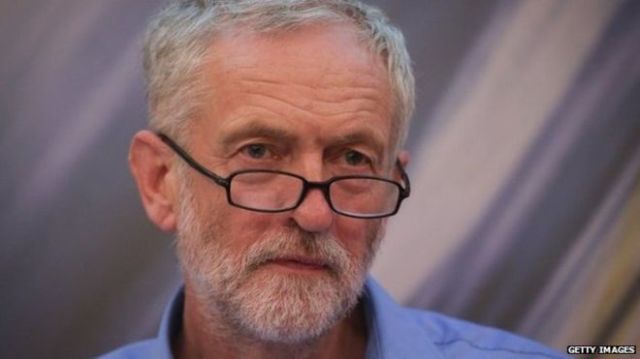
Corbyn

( Labour Leader Jeremy Corbyn  via BBC)


A stormy debate erupted when the British PM David Cameron announced his plans to join the anti-Isis coalition. While Mr. Cameron has passionately argued that Britain can no longer “sub-contract” its security to other countries, New Labour leader Jeremy Corbyn accused Cameron of rushing to war and appealed to those Labour lawmakers who favor the motion to “think again … and please cast your vote against supporting this government’s military endeavors in Syria.”

This debate, although full of articulate and interesting views, has nothing to do with Syria or with how to defeat the world’s most barbaric terror group ISIS, but is merely a reflection of the dismal state of British politics, particularly the British left. The radical left, and its anti-war camp, is indulging in a hungover state, still living in the shadow of a bygone era of the Iraq War while ignoring the growing threat of radical Islamism within Britain.

Once the intention to strike ISIS surfaced, the British left and the anti-war coalition launched a social media blitz using the hashtag “Do not bomb Syria”—I guess because a hashtag advocating “Do not bomb ISIS,” which is the actual mission suggested by the British PM, would look terribly silly. The Do-not-bomb-Syria slogan is more enticing; it gives a false connotation that the mission is about bombing a civilian population of a functioning country, á la Iraq, arousing the demons of the failed Iraq War!

Labour leader Jeremy Corbyn argued against airstrikes in Syria under the pretext that they can kill innocent civilians. In his interview on the Andrew Marr Show, Mr. Corbyn failed to mention Assad’s endless atrocities against his own people, which have been going on for four years in Syria. Mr. Corbyn instead focused on possible civilian casualties from the British airstrikes.

It seems that Mr. Corbyn has two tiers of civilians: The first tier includes those who could potentially be killed by British airstrikes and whom, in his view, should be saved by every possible means. The second tier includes civilians who are already the victims of ISIS barbarism and Assad ruthlessness, to whose suffering Mr. Corbyn is oblivious and not willing to offer anything to them except advocating for “a political settlement” in Syria. Mr. Corbyn offered no insights into how this elusive political settlement between a butcher like Assad and his victims can actually work, let alone eradicate barbaric terrorists like ISIS. Mr. Corbyn says France and the US should focus on peace—as if those who behead, crucify, and throw people alive from high buildings want or can be partners of peace.

Furthermore, Mr. Corbyn and his supporters conveniently ignore how the coalition airstrikes have stopped ISIS’s march towards Baghdad and other Iraqi cities. ISIS has transcended borders; if not stopped, it will continue to spread its bloodshed and anarchy throughout the region.

It is true that the British government and the anti-Isis coalition have not yet formulated a coherent plan against ISIS. Strikes can be an effective tool in bombing oil fields and transport trucks, but without an overall plan, strikes will not stop the ruthless terror group. Declining to fight against ISIS, however, is not and should not be the answer.

The Islamic state is a complex enemy that needs a multimodal counter-terrorism approach. As Anthony H. Cordesman of the Center for Strategic and International studies (CSIS) rightly highlights, air power is the primary weapon against ISIS’s ability to take more territory, massacre more minorities, raise funds, and create a growing force of foreign volunteers to threaten Europe. Hassan Hassan, author of one of the bestselling books on ISIS, explains that Britain’s greatest contribution to the fight on the ground would be to finesse the campaign. In his words, “Britain is better positioned than other countries to do so through its connections with Syrian forces as well as its alliance with the US.”

Britain has also maintained a good relationship with Turkey, and it can help convince Ankara to start seriously addressing ISIS’s smuggling empire. ISIS smuggles its oil by trucks; those trucks are not invisible, and they have to be stopped. In a suburb report by Buzz Feed published in November 2014, Mike Giglio reported from the Turkey–Syrian border on how ISIS smuggles oil into Turkey while the border guards close their eyes. A year later, it is highly unlikely that the reality at the Turkish border has changed much. Turkey may have started to tighten its borders, but controlling a vast 565-mile border is not an easy task, especially for Erdogan’s government, which openly backs certain players in the Syrian quagmire, like Islamist Ahrar al-Sham group and Turkmen rebels.

Hence, sealing the border completely is not viewed as a strategic priority in Ankara. A British presence within the anti-ISIS alliance will increase the pressure on Ankara.

Robert Fisk argues, “We [British] are not ‘at war’. ISIS can massacre our innocents, but it is not invading us.” He is wrong. ISIS already has a huge supportive network in Britain. In a study by Brooking Institute, 46,000 Twitter accounts support ISIS, with Britain is ranked the tenth on the list of country locations claimed in their profiles. Moreover, a 12-month undercover investigation revealed how a group of British women have been filmed urging other women and children to support and join ISIS. Mr. Fisk is wrong: ISIS has already invaded Britain, albeit on a small scale. Ignoring these homemade cells that are clearly linked with the parent group in Syria and Iraq is not like ignoring a new carcinogenic tumour just because it still has not spread widely. Mr. Fisk also argues that there aren’t 70,000 moderate fighters in Syria. With such logic, if all the anti-Assad fighters are radicals, how can Mr. Fisk and Mr. Corbyn expect a peace deal to be reached in Syria between the pro- and anti-Assad factions?

Moreover, the British left is alarmingly regurgitating the terrorist propaganda that airstrikes are the prime reasons behind their terrorist attacks on Western cities, conveniently ignoring how ISIS killed and raped Iraq’s Yazidis and killed innocents in Tunis despite Tunisia never attacking them. Perhaps leftist intellectuals and politicians think that barbaric groups like ISIS admire Western societies and will not attack them unless provoked?

Mr. Corbyn and his supporters are taking a high moral stance against their opponents and will continue to curse the war on ISIS regardless of the House of Common vote. It is time for the British left to wake up from its delirium and join the fight against the world’s most notorious terror group. There is no time for disingenuous moralism. The region’s dynamics have changed tremendously. Assad’s Syria is not Saddam’s Iraq. Fighting ISIS requires our unity, not an appeasement camp that seeks elusive peace with those who behead people to reinforce its brutal rule on its occupied territories. War is never an exercise in perfection, but an act of necessity.

Posted in Best Read, Middle East, Politics, Syria | Tagged , , , | 15 Comments

Egyptian Aak 2015 – Week 48 (Nov 21- 27)

Top Headlines

  • IS militants claim hotel attack that killed seven in Sinai. (Tuesday)
  • Egypt to buy advanced weapons from Moscow. (Wednesday)
  • Pope Tawadros II breaks with predecessor’s ban, flies to Jerusalem for bishop’s funeral. (Thursday)
  • Egypt cancels reservations on the African Charter of Child’s rights. (Friday)
  • IS affiliate in Egypt claims responsibility for killing 4 policemen in Giza. (Saturday)
  • Sisi inaugurate new Suez Canal industrial zone. (Sunday)

Main Headlines

 Monday

Tuesday

 Wednesday

 Thursday

 Friday

 Saturday

 Sunday

 Good Reports

Good Read

From Twitter

https://twitter.com/Cairotoday/status/670736177297801216


Graph:

 Breakdown of Egypt’s parliamentary results so far

 Interview

 Photo Gallery

  • Egyptians vote in second stage of Egypt’s parliamentary elections

Plus

  • Egypt says archaeologist found giant fence at site of ancient capital, more than 3,500 years old
  • ‘Well-preserved’ sarcophagus of 22nd dynasty nobleman unearthed in Luxor

Finally here are Jayson Casper’s prayers for Egypt


Posted in Diary of Aak, Egypt, Uncategorized | Tagged , , , , , | 2 Comments

The world’s failed war on terrorism

Initially published in Egypt’s Ahram


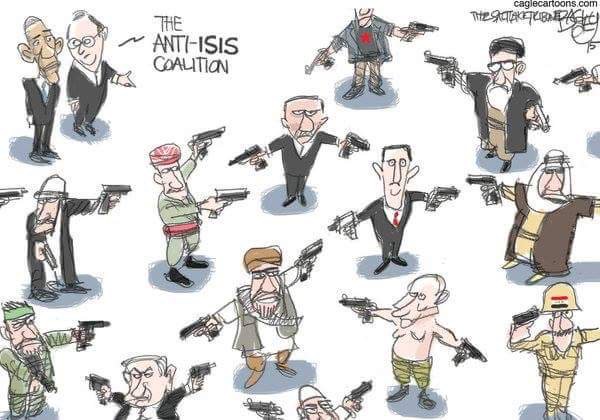
image

This Cartoon by Pat Bagley, Salt Lake Tribune

sums up my thoughts about our disunity in fighting terrorism


Sinai, Beirut, Paris, Bamako, and Tunis: the latest terror attacks across three continents are a rude reminder to our global community that vicious anti-modernity bullies continue to foment hatred and violence.

By slaughtering innocents, regressive radicals attempt to force brutal barbarism onto the world as a new norm. Are we ready to fight such ruthless evil? Judging by the array of responses to the recent terror attacks, the answer is undoubtedly ‘no.’

The global community is not united against terrorism. While we may be united in condemnation, we differ on everything else.

Whenever there is a major terrorist attack in a Western city, an updated version of Godwin’s law (as a discussion gets longer, inevitably someone will compare the situation to Hitler or Nazism) usually applies, in which the subject is Islam instead of Nazism.

In contemporary terror events, after the initial shock, a futile and mushrooming dialogue emerges, comprised of clashes, conflicting opinions, bitterness, victimhood, and finger pointing that eventually leads to Islam.

Two camps typically emerge. One defends Islam and is composed mainly of Muslims and leftist, liberal Westerners. A second cluster ruthlessly bashes and demonizes Muslims.

The overall result is a pointless zero-sum outcome that does not effectively confront terrorism or minimize the growing Islamophobia in various Western societies.

Our collective failure to fight terror effectively stems from our own inability to focus on the task. Instead, we engage in nonsensical bickering over semantics. Is it Islam or not? Is it politics or religion?

The futile judging of “Islam”

Unlike what many Muslims and the liberal western elite emphasize, contemporary terrorism undoubtedly has a religious element to it. It is frankly disingenuous to deny this reality. It is also futile, however, to judge Islam. Islam is not an entity, a specific institution, or a state.

Like other religions, Islam is not what is written in texts, but what people opt to apply in their life.

Radicals have simply resurrected older interpretations of Islamic texts and twisted such concepts in cynical farcical ways to validate their gruesome actions. Their behavior is actually a reflection of the broader cultural suicide of the Muslim world, and not on the Muslim faith per se.

It is about time to admit that we have failed to establish a modern Islamic culture that engages our youth and prevents them from drifting toward radicalism. Our Islam struggles to survive because various actors politicize Islam and become agents of death who sell the afterlife as the ultimate alternative.

Our current cultural bankruptcy has led even mainstream religious institutions to glamorize the past. Our text books have whitewashed the past–Andalucía, the Ottoman Empire, the Abbasid Caliphate, Salahdin, and many more–of all negative aspects.

Instead they offer fairytales to our youth. This results in a rise of escapism as an antidote to modern challenges. Our Islamic past has become an opiate for many Muslims aspiring to a better life. It is no wonder that ISIS and Co. attract many disenchanted youth, including losers like Salah Abdesalam, the mastermind of the Paris attacks, and his gang.

Some argue rightly, that Islamic teaching needs reform with more liberal interpretations. This is indeed true. Nonetheless, radicalism is not just about what is written in text, but also about one’s susceptibility toward accepting religious regression.

Without confronting our escapism to the past and glamorization of past figures, some youth will dismiss liberal interpretations and only dig deeper in search for past heroes.

Our Muslim communities urgently need a dose of realism about Islamic history. None of our Islamic heroes was an angel.

Islam teaches us that no human is perfect, so why do our scholars insist that our past leaders were perfect? Our youth need a clear mirror that highlights how our past included colonialism and imperialism that were neither fair nor just.

Our past wars were as savage as the current war in Syria—and even worse. Our ancestors were not perfect. Only with a clearer historical periscope can our youth reject the backwardness and medievalism promoted by the Islamic State and other radicals.

Abusing the war against terrorism for political reasons

With respect, I doubt that the right and left in the political sphere are giving the current terror attacks the seriousness they deserve. Decades after WWII, it seems we have lost our ability to appreciate global threats and instead constantly frame them within our narrow political interests.

In America for example, Obama is now more concerned about his own legacy than the impact of his timid foreign polices. In comparison, Republicans are demonizing Syrian refugees to look tough on terrorism.

The situation in Europe is not better. It was painful to read in July how Federica Mogherini, EU High Representative for Foreign Affairs and Security Policy, argued that the Iran agreement is a disaster for ISIS.

Events this November have proven how this opinion was merely wishful thinking. Many in the West are falling into the Islamists’ narrative that Muslims are one nation.

Sadly, we are not. A deal with Shia Iran only helped Sunni, Jihadi groups like ISIS. Such groups consider Shia as apostates and flourish among disfranchised Sunnis. These conflicting views have accelerated the on-going cold war in the Middle East between Iran and Saudi Arabia.

Another argument links political oppression against Islamists with the rise of radical Jihadists. Advocates of this argument conveniently ignore the repeated terror attacks in Tunisia, and claim that Islamist youth turn violent only because democratic channels are closed in their faces.

This argument may sound logical as the oppression of any group is counter-productive, but this perspective is problematic. It essentializes political Islam as an ideology that considers violence as its reflexive plan B to any conflict, and indirectly sanctions uncontrollable anger as the normal reaction to injustices. Both are wrong in Islam.

Islamic teaching asks Muslims to be patient and resist anger. Saber “patience” is a basic Islamic tenant. After his mistreatment in Mecca, the Prophet did not embark in a campaign of beheadings of his opponents and killing of innocents in Mecca. In fact, the prophet never adopted anger as his prime reaction. Ironically, Islamists and their Western supporters conveniently ignore this simple fact.

Moreover, some liberal and leftist pundits, and human rights advocates on both sides of the Atlantic, ignore the main task of how to fight ISIS and instead focus on judging how their political opponents will fight ISIS.

Our intellectual elite are comfortable to play the arbiters of the war on terror but are not willing to step down from their idealism to confront and handle the practicalities of a painful reality.

The Arab and Muslim world continue to send the West mixed signals. Syria is a glaring example. We denounce the West for not solving the mess (which is fundamentally ours, by the way), and then we curse foreign interventions citing the doomed Iraq war against Saddam Hussein. What, exactly, do we want? “The Perfect Intervention” may be an ideal computer game, but that is not real life.

Meanwhile, our quest for the perfect solution is paralyzing our thinking process even as we watch as our lives and freedom are hijacked by terrorists.

It’s about time to update our strategic software and start to triage a clear approach to the complex challenge of terrorism. Both the Muslim world and the Western world have to unite to face the challenge of terrorism. Currently, we are not fighting the terrorists; we are only fighting each other.

Posted in Best Read, Egypt, Islam, Middle East, Politics | Tagged , , , , | 4 Comments