Egypt’s New Terrorist Groups

I was planning to write something completely different this weekend, but the events in Egypt have dictated my choice.
 

adel-rajae

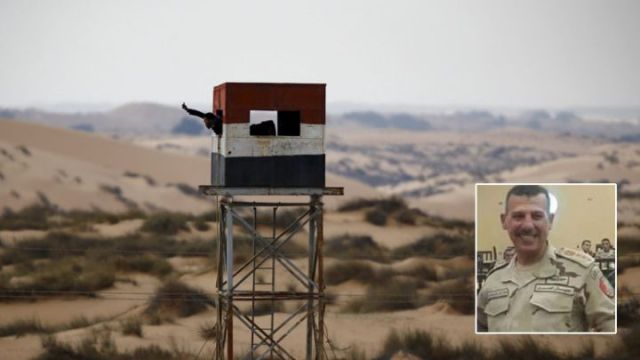
An Egyptian policeman gestures from an observation in the Sinai peninsula, February 10, 2016, and an undated photograph of Brig. Gen. Adel Rajaei.Amir Cohen, Reuters
via -Haaretz

Cairo—Brig. Gen. Adel Ragai, commander of the Egyptian Army’s Ninth Armored Division, was assassinated in broad daylight in Cairo. Brig. Gen. Adel Rajaei, 52, had commanded Egypt’s counterterrorism operations in Sinai, his brigade was also working to destroy smuggling tunnels that have been built under the Egyptian border with the Gaza Strip. This assassination came after last week’s murder of 12 Egyptian conscripts in an ISIS attack on security checkpoint in central Sinai, and three  Egyptian soldiers were killed this week.

A little known terrorist group Liwaa al-Thawra has claimed responsibility, highlighting an evolution of new terror groups, well trained and capable of targeting senior figures in Egypt’s powerful army. Although there have been several attacks in the last decades against Egypt’s police, attacks on army leaders are rare in Egypt. In fact, I have no recollection (although I stand to be corrected) of any attacks on army figures since the assassination of President Sadat in 1981.

Several new violent groups have emerged in Egypt since the ousting of Morsi in July 2013 and the rise of army leader and the current president Abdul Fattah el-Sisi—groups such as Molotov, Hazmoun, lone wolves, Helwan Brigade, and others.

Two groups, however, have captured the attention of media and antiterrorism observers by their upscale attacks: Hasm and Liwaa al-Thawra.

Hasm

Hasm, whose name means “decisiveness” in Arabic, emerged in October 2014. The group’s first statement claimed that it is committed to “creative peacefulness,” a term invented by some Muslim Brotherhood’s youth, and was backed, according to the Arabic version of Ahram, by many anti-coup Islamists figures, such as New York- based Egyptian American activist Ayat Oraby, Bassem Khafagi, a previous American Islamic CAIR group’s “community affairs director” and the previous owner of Sharq TV, and Moataz Matar, a TV presenter on the same channel, who was sentenced in Egypt for 10 years in jail in absentia.

The group also was believed to be behind the failed assassination attempt of Egypt’s former Grand Mufti Ali Gomaa last August. Later, in September, the group claimed responsibility for the attempted assassination of the assistant prosecutor general Zakaria Abdel Aziz who, along with his entourage, escaped unscathed. On October 19, 12 members of Hasm were arrested in Qalyubia Governorate, accused of belonging to an illegal group, according to Shorouk News.

Hasm also released a statement praises Adel Ragai’s assassination operation by Liwaa al-Thuwra. Moreover, according to Mokhtar Awad, a research fellow in the Program on Extremism at George Washington University, Hasm uses in its propaganda some of Hamas’s propaganda songs (Nasheed); further the group hinted in one of its videos that it has training camps, which, if true, would mean a huge upscale in the group’s skills and capabilities.

Liwaa al-Thawra

Last August saw the launch of Liwaa al-Thawra, “the Revolution Brigade,” which was, interestingly, by the Hasm group. The group claimed responsibility for an armed attack in the Nile Delta governorate of Al-Menoufiya, which killed two security personnel and injured five others, including two civilians.

On October 4, Egyptian security forces raided an apartment in Cairo’s southern Bassateen district and killed a senior Muslim Brotherhood leader Mohamed Kamal, 61, a member of the group’s top leadership council, and another Islamist Yasser Shehata. What is significant in Liwaa al-Thawra’s statement, claiming responsibility for the murder of Brig. Gen. Adel Ragai, is reference to late Brotherhood leader Mohamed Kamal. For the first time a new group made an open direct link between the Brotherhood as a group and the violence, i.e., target assassinations on the street of Egypt. The statement also makes a clear reference to Egypt’s destruction of the tunnels in Sinai near the border of Gaza. The significance of all those links were highlighted, again, by Researcher Mokhtar Awad in a string of insightful tweets.


https://twitter.com/Mokhtar_Awad/status/790018597808517120


https://twitter.com/Mokhtar_Awad/status/790019085408964608

https://twitter.com/Mokhtar_Awad/status/790019501085515776

https://twitter.com/Mokhtar_Awad/status/790052812784709632

Furthermore, other regime opponents such as international lawyer Mahmod Refaat (with 341 thousand followers on Twitter) claimed that the Sisi regime, in cooperation with Palestinian politician Mahmoud Dahlan, is behind the assassination of the army general. Such a ludicrous claim is not new from the anti-regime opponents camp, which always rush to a knee-jerk denial every time there is a major attack on any regime figure. Nonetheless, a closer look at many Islamist social media, the gloating and celebratory mood cannot be ignored.

The murder of army general Adel Ragai is a new turning point in the history of Egypt’s insurgency. Its slick professional finish suggests a high level of training. No wonder some Egyptians suggest that it could be an intelligence job from a foreign country and not just a small angry group of youth. The challenge now for the Egyptian authority is to bring the killers to justice and to prevent any future attacks, without looking desperate or paranoid. Fighting insurgencies can take decades and be tricky in a country with an ailing economy, weapons smuggling, limited freedom of expression, and many desperate angry youth.

Posted in Diary of Aak, Egypt, Gaza, Sinai, Terrorism | Tagged , , , , , , , | 1 Comment

Egyptian Aak 2016- Week 42 ( Oct 17-23)

Top Headlines

  • A senior Egyptian military official was shot dead outside his home on the outskirts of Cairo
  • Little-known group Liwa Al-Thawra claims responsibility for assassinating army’s 9th armour division head
  • Saudi ambassador returns to Cairo after recall to Riyadh
  • Sisi’s satisfaction rating among Egyptians falls to 68%: Baseera poll
  • Egyptian high court reverses14 death sentences against Islamists; Cassation Court upholds 20-year sentence for Morsi

 Main Headlines

 Monday

Tuesday

Wednesday

 Thursday

 Friday

 Saturday

 Sunday

 Good Reports

Good Read

 From Twitter

https://twitter.com/Mokhtar_Awad/status/789926034686742532

https://twitter.com/BTelawy/status/788682178699857920

https://twitter.com/btelawy/status/788105441687506944

Plus

Photo Gallery

  • Photo Gallery: Egypt’s parliament turns 150

Finally, here are Jason Casper’s prayers for Egypt


Posted in Diary of Aak, Egypt, Uncategorized | Tagged , , , , | Leave a comment

Iran, chess, and the psychological bullying of non-hijabi defiant women

A poisonous debate has erupted since Nazi Paikidze, a 22-year-old American champion chess player, announced her decision to boycott next year’s World Chess Championship competition in Iran. A stream of articles published criticism about her decision to boycott and her launch of an online petition to challenge the chess federation’s decision. Critics argued that a boycott is not the most appropriate way to go about this and that it would hurt women in Iran.

naz-chess

US women’s champion Nazi Paikidze

These attacks on Nazi Paikidze are not just absurd, they also reflect an attempt at psychological bullying that aims to force Paikidze and others to abandon their fight for basic freedom of choice. In today’s world, which sets increasingly high expectations for democratic nations and very low expectations from oppressive regimes such as Iran, Nazi Paikidze and her supporters have been labeled as “regressive” and “reductionist.” Iran’s mandatory hijab has been described as “a light headscarf and a modest outfit.”

To understand the absurdity of those accusations, let’s reverse the situation and ask: What would critics of Nazi Paikidze do if another country forced Muslim hijabi female competitors to remove their hijab during competitions? Would they stick to their argument and ask Muslim women to obey the rules by removing their “light headscarves” for the broader benefit of women in sport?

When images leaked to the media of French police allegedly forcing a Burkini wearing Muslim woman to undress, the images ____ rightly____ galvanized the entire world and united many in outrage until the French supreme court lifted the ban on Burkini, which was being enforced by some local regions in France. A similar reaction, perhaps with more ferocity and anger, would be expected to erupt if any country dared to mandate a dress code for a sports competition and force Muslim women to remove their veil. The hypocrisy is that critics want non-hijabi women to not make a fuss and instead show “solidarity” and “sympathy.”


Iranian journalist Masih Alinejad – Credit  -Alchetron

But what solidarity and sympathy are pro-Iran commentators talking about? Would attendance help Iranian women? I turned to one brave Iranian woman, journalist Masih Alinejad, whose ground-breaking Facebook page My Stealthy Freedom has encouraged Iranian women to discard their hijabs in public and enjoy a brief moment of freedom. She has earned the attention of hundreds of thousands of people globally. Alinejad told me of her delight that such a debate is taking place, because the controversy sheds light on the issue of the compulsory hijab and the justified fight against it.

She added, “There is no reason, legally or morally, to force non-Iranians to wear a compulsory hijab. Especially if they are athletes who can either submit to these unjust laws or miss out on their opportunity to compete at a world event. The Islamic Republic has no right to impose such restrictions. At the Rio Olympics, Muslim women competed in their Islamic dress, and no one forced them to change into other modes of dress.”

Furthermore, Alinejad confirmed my worst fear, stating that the Islamic Republic “could use the championship as a propaganda tool to tell Iranian women that even non-Iranians are comfortable with wearing the compulsory hijab.” She added, the “Islamic Republic is under huge internal pressure over the compulsory hijab, and such a championship would boost its efforts.”

Indeed, forcing non-hijabi women to wear the hijab would neither help them to compete nor help Iranian women in their quest for freedom. First, competing in an unfamiliar garment would be incredibly limiting to women unacquainted with this dress code, depriving them of the physical comfort they need while playing a mentally challenging game. Second, competing in Iran would not be of any general help to Iranian women fighting oppression. Instead, forcing the hijab on non-Muslim women would normalize the hijab in the eye of the world as natural and acceptable. It would easily be used as a propaganda tool for the regime, as Masih Alinejad rightly predicted.

Years ago, I decided to temporarily surrender my right to not wear the hijab when I visited the Iranian republic. It was to put it mildly, painful. Yes, it was no burqa, but it was still limiting and annoying. My only moments of freedom occurred in the foothills of the Alborz Mountains on my way to see the historic Almut [death] Castle of the Assassins (a feared medieval cult that dispatched killers to murder leading political figures). On my way, I met two Iranian ladies enjoying a walk in the hills. They encouraged me to take my scarf off. “No one would mind here,” they said with a warm smile.

It was rather ironic that I was only offered open freedom, albeit briefly, near the remains of a castle full of tales of oppression and injustice. On that day, I realized that outsiders will have no impact on the quest of Iranian women for freedom. As an outsider, I need their support, not the other way around. The same will be true for the participants of the chess championship. They would only have to rely on Iranian women for guidance regarding how to deal with the veil, and they would depart afterward, leaving Iran’s reality unchanged and unimproved.

Make no mistake; the Islamic headscarf is part and parcel of the Mullahs’ Islamist identity. The Mullahs may show pragmatism in politics, but they would never sacrifice an identity they have forged over the last 37 years. They simply cannot abandon it. They may ease some rules for women, allowing them a bit of freedom, but a total rejection of the headscarf would never be allowed by the Mullahs’ regime, despite the best intentions of any solidarity campaign.

It is about time to abandon wishful thinking and show respect to women like Nazi Paikidze, who dare to stand for freedom of choice. While some accept the Islamic veil, others reject it; the only way forward is to respect the right of both. Iran has a choice: it can either accept international rules, allow non-hijabi women to compete or choose not to host the championship. As for the women of Iran, they are stealthy fighters. One day they will prevail___ and it won’t be because some western women showed solidarity by wearing a hijab.

Posted in Best Read, Iran, Islam, women rights | Tagged , , , , , , | 23 Comments

Egyptian Aak 2016 – Week 41 ( Oct 10-16)

Top Headline

  • 12 Egyptian conscripts were killed in an Isis attack on security checkpoint in central Sinai
  • Egypt launches ‘revenge’ airstrikes on ISIS in Sinai
  • Russian paratroopers arrive in Egypt for “Friendship Defenders’ drills
  • In an unprecedented move: Egypt’s Cairo University removes religious identity field from all official paperwork
  • TV show goes on holiday following broadcast of continuous tuk-tuk video

 Main Headlines

 Monday

 Tuesday

Wednesday

 Thursday

Friday

 Saturday

 Sunday

Good reports

 Good read

From Twitter

Interview 

  • Sisi’s talks reform, calls for protest, and the army’s role in a lengthy interview
  • Part II: Sisi talks Egypt’s foreign policy, the importance of reform

Plus

Posted in Diary of Aak, Egypt, Sinai, Uncategorized | Tagged , , , , , , | 1 Comment

Egyptian Aak 2016- week 40 (Oct 3-9)

Top Headlines 

  • Speculation mounts as an American security alert sparks anger in Egypt
  • Lagarde Says Egypt Has More to Do to Seal $12 Billion Loan
  • Senior figure in Muslim Brotherhood’s armed wing killed in raid
  • Saudi Arabia: Egypt stance on Syria resolution ‘painful’


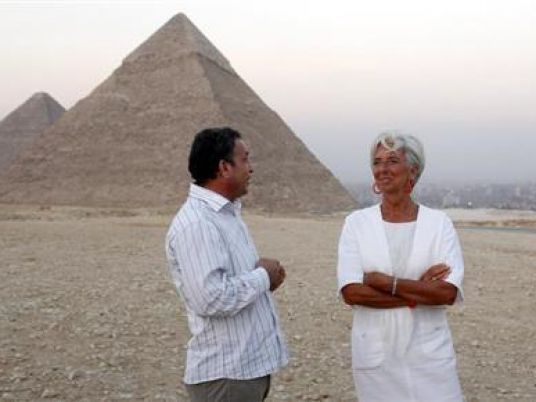
lagarde

IMF”s Lagarde during a visit to the Pyramids – via Reuters

Main Headlines

 Monday

Tuesday

Wednesday 

Thursday

 Friday

Saturday

 Sunday

Good Reports

Good Read

From Twitter

https://twitter.com/terror_monitor/status/783353125146996737

https://twitter.com/Brasco_Aad/status/785046540901576704

https://twitter.com/BTelawy/status/784505589103812608

https://twitter.com/orenkessler/status/783319710821715968

Photo Gallery

Plus

Posted in Diary of Aak, Egypt, Uncategorized | Tagged , , , , | 1 Comment

Egyptian Aak 2016- Week 39 ( Sept 26-Oct 2)

Top headlines

  • Senior Egyptian prosecutor survives car bomb assassination attempt
  • Falcon Group takes over security procedures at Sharm al-Sheikh airport
  • Egypt will float pound within hours – Beltone Financial  
  • Egypt court suspends block on island transfer to Saudi
  • Egypt court orders retrial for 2 policemen convicted of torturing lawyer to death
  • Roadside bomb kills 4 workers in Egypt’s Sinai in Sinai


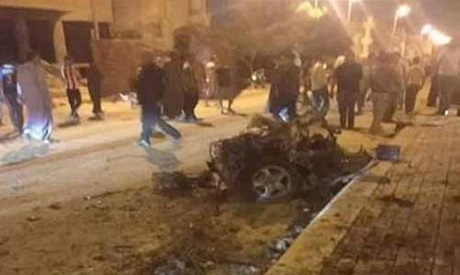
car-bomb-cairo

Scene following the detonation of a car bomb in New Cairo (Photo: Al-Ahram)

Main Headlines

Monday

Tuesday

 Wednesday

Thursday

Friday

 Saturday

 Sunday

 Good Reports

From Twitter

https://twitter.com/Terror_Monitor/status/781914822971502592

https://twitter.com/erictrager18/status/780398682579562496

https://twitter.com/yomnaelgerzawy1/status/780907299145678848

https://twitter.com/terror_monitor/status/778917889927557120

https://twitter.com/BTelawy/status/782254222469455872

Plus

Finally, here are Jayson Casper’s prayers for Egypt


Posted in Diary of Aak, Egypt, Uncategorized | Tagged , , , , | Leave a comment

Shimon Peres’s Funeral and the Arab World

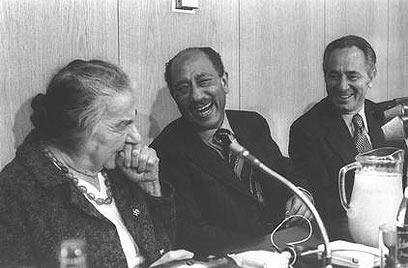
peres-sadat

Shimon Peres, one of the founders of Israel, has passed away. Many international dignitaries attended his funeral, although many Arab leaders from countries that officially signed peace treaties with Israel were absent. Furthermore, those who attended the funeral, such as Palestinian President Abbas and Egyptian Foreign Minister Sameh Shoukry, were mocked relentlessly on social media. This sad encounter epitomizes the overall state of affairs in the Middle East, where shallow populism prevails over grace and maturity.

Arab Knesset member Ayman Odeh summed up the feelings of many Arabs inside and outside of Israel, “Tomorrow we commemorate the events of October 2000.” He was referring to the deadly clashes between Arab protesters and the police in northern Israel. He said, “One of the victims was my wife’s younger brother. Will any of the cabinet ministers put flowers on the victims’ graves? Can anyone feel our pain, or doesn’t anyone care?”

Meanwhile, Al-Jazeera TV published a report on the role of Shimon Peres in many atrocities against Arabs, including the Qana massacre. It is understandable for Arabs to feel anguish and resentment; after all, the wounds from the ongoing 100 year-old -Arab-Israeli conflict are still fresh and painful. Indeed, victims continue to struggle and feel ignored.

What is not understandable, however, is that their hatred is directed at the man who tried, albeit unsuccessfully, to make peace with the Palestinians, while the record from Arab countries with the Palestinians is no less dark and ruthless.

Readers do not need to be reminded of older events. Let us just look at Syria and Assad forces that have ruthlessly bombed Palestinian camps, trapping thousands of children and starving others while claiming to be representing the “resistance camp” against Israel. Even Assad’s opponents did not stage a single protest in an Arab capital against his atrocities against his own people and against Palestinians living in Syria.

Off course, endless excuses and perspectives have been offered to justify disgraceful Arab mistreatment of the Palestinians. There is, however, one fact that cannot be denied: Peres fought his enemies and faithfully served his country, and never turned against his own people. Meanwhile, many Arab politicians have turned against their own Palestinian “brothers,” and shedding crocodile tears on Palestine.

For decades, Palestine has been the opium of the Arab world, used and abused to justify oppression, injustice, gambling, and failure. Ironically, those who actually tried to solve the Palestinian question were considered traitors, while those who did nothing but abuse the conflict for their own agenda have been systematically praised as faithful heroes.

It is easy to hate in my part of the world, but it is not so easy to fight for peace. Hatred is by far more popular and more rewarding, both politically and socially. Even at a personal level, the easiest way to gain respect is through hatred, while an open desire for peace and a firm belief in a two-state solution leads to aversion and accusations. What use is it to condemn the crimes of non-Arabs, but turn a blind–eye on the crimes of fellow Arabs? No one is without sin in the Middle East.

Many questions burst into my mind as I followed with dismay the endless mocking on social media.The tirades against Palestinian President Abbas and the Egyptian Foreign minister for attending Peres’s funeral were bewildering. Would both Abbas and Shoukry be blamed for attending the funeral of another Arab dictator? Let’s say for the example that Omar Bashir of Sudan passed away (although I do not wish death on anyone)? Would those who are nostalgic for Saddam Hussein, apologizing for Assad, and mute on the killing of civilians in Yemen have the courage to acknowledge their hypocrisy while ranting at Peres? Do Egyptians acknowledge that there is a price for peace?

I neither expect Arabs to love Peres (he was certainly no angel), nor would I want to force the two-state solution on them, but I would rather treat my enemies gracefully, rather than indulge in hatred while my leaders have their own hands full of the blood of their own people.


Posted in Best Read, Egypt, Israel, Middle East, Palestine, Politics, Uncategorized | Tagged , , , , | 4 Comments

Illegal immigration and the myth of easy life in the West

One hundred sixty-two people lost their lives off the Egyptian coast near the town of Rosetta on Friday. About 150 people are still unaccounted for after a boat carrying hundreds of illegal migrants capsized in the Mediterranean while attempting to head to Europe.

This tragedy, like many others in recent years, has obvious reasons, from apocalyptic wars to dire economics and suffocating political oppression. Tragedies in the midst of a search for a better life outside the Middle East, is not new. In fact, although little known, many victims of the 1912 sinking of the Titanic were Arabs. The difference between the Titanic tragedy and that in Rosetta, however, is not only in the numbers or circumstances, but also in the rationalization and mindsets. While early Arab immigrants calculated risks and tried as best as they could to prepare themselves for a life in the new world, current immigrants are fleeing based on a new level of desperation, such that they are willing to allow traffickers to exploit them.

“A boat that can take 200 had 450 or even 500 on board,” said Sarah Sirgany, in her report for CNN. Egyptians, Syrians, Sudanese and Eritreans joined together for the doomed trip. The Egyptian news portal, Al-Youm al-Sabei, published interviews with several survivors who said that before their journey the migrants had been “stored” for several days in chicken farms by the traffickers to evade police. Some of the interviewees said the traffickers asked for $6,250 per family to be given upon arrival in Italy.

Apart from the hapless political bickering between pro and anti-Egyptian president Sisi on the reasons behind illegal immigration in Egypt, we have to admit that there are also some farcical assumptions and delusions prevalent among many Egyptian youth and people that encourage them to embark on doomed trips toward the unknown.

First, the exotic dream.

Away from the cities, in rural Egypt, where radio and television is the main source of entertainment, fascinated youth watch Egyptian movies that glamorize life in the West. Take for example the film “Hamam in Amsterdam,” which describes a young, unemployed Egyptian who succeeded in building a life in the Netherlands, coming back with money and a blond wife. The film portrayed some struggles, but attributed most of the negative encounters to the “evil Zionists” who hated this Egyptian guy. These types of movies, with unchallenged narratives are enough to embed exotic dreams in youth and make the fantasy plausible in the minds of many.

Second, fatalism.

Calculating risk is generally absent from the Egyptian psyche. Even crossing the road can be an exercise in recklessness. The Arabic proverb, “Sit on a beehive and say this is fate” sums-up the mindset perfectly. Many pundits call this a backgammon mindset. Indeed Egyptians, particularly the many unemployed, do not just love to play backgammon, they have also adopted this game as a way of thinking, assuming that life is just up to one-stroke of luck. Moreover, there is a general unfounded perception among many Egyptians that success in the West can happen at a faster pace than in their native country. It makes many adopt a short-cut escalator-style mentality, wrongly assuming that all what they need is one opportunity to push them up the ladder.

Third, playing down the negative aspects of immigration.

There is a common theme prevalent among the handful of successful immigrants and the wannabe immigrants in Egypt. Both tend to paint rosy pictures about their success in the West. It is convenient and flattering to downplay the negative aspects of living in a new country. This down playing was almost non-existent in the writing of early immigrants such as by the poets Gibran Khalil Gibran and Elia Abu-Madi. Instead, they both wrote eloquently about the demoralizing impacts of immigration, and avoided giving false perceptions of an alleged paradise abroad. This trend has gradually vanished. Now, both legal and illegal immigrants, educated and uneducated tend, consciously or unconsciously, glamorize life in the West to please their own selfish ego.


The tragic deaths near the city of Rosetta should be a wake up call to everyone. The Egyptian leadership has the duty to provide youth with an incentive to stay and flourish in their homeland. Moreover, Egyptian society has to shake-up myths and assumptions about life in the Western world. Our youth must understand that handing over the live savings of their families to traffickers is a tragic waste of money and a huge risk to their life. The hope of easy sanctuary in the West is simply a mirage.


Posted in Egypt, Short Comments, Uncategorized | Tagged , , , , | 7 Comments

The Washington Post on the murder of Nahed Hattar, quoting my piece

In The Washington Post, Ishaan Tharoor wrote an excellent report on the murder of prominent Jordanian writer Nahed Hattar, and quoted my piece on the writer’s murder. In his post, Tharoor highlighted how an Egyptian TV host Hani Nahhas outrageously supported the killing of Hattar.

Here is a link to Washington Post’s report and also a link to the Middle East Media Research Institute MEMRI, which subtitled the Egyptian TV host’s disgraceful comments. I think both worth reading and watching……

Posted in Egypt, Islam, Jordan, Middle East, Uncategorized | Leave a comment

Egyptian Aak 2016-Week 38 ( Sept 19-25)

Top Headlines

  • Hundreds feared dead after a migrant boat capsized off the Egyptian coast
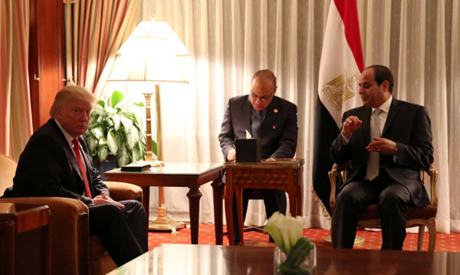
  • Egypt’s Sisi meets with Clinton, Trump in New York
  • Egypt cancels zero ergot wheat policy amid mounting pressure

 Main Headlines

 Monday


sisi-trump

Photo via AFP

Tuesday

 Wednesday

Thursday


migrant-boot

Photo via BBC

Friday

 Saturday

 Sunday

Good reports

  • Survivors of Egypt’s migrant boat tragedy tell their tales of heroism and loss. Sarah Sirgany
  • Egypt’s Coptic Church is facing criticism for its role in organizing rallies in support of President Sisi at the U.N. AP

Good Reading

From Twitter

https://twitter.com/intlspectator/status/779357314004332544

Plus

Finally, here are Jayson Casper’s prayers for Egypt


Posted in Diary of Aak, Egypt, Uncategorized | Tagged , , , | Leave a comment