Twitter Thread: Another church, another sad story from Turkey

Last month, the Turkish president Erdogan has converted two churches in Istanbul, Hagia Sophia and Chora church, to working mosques. Now Turkish officials have demolished an ancient Greek Orthodox church in the country’s northwestern province of Bursa, after the structure was abandoned for years by a state institution that manages the estates and restorations. I find this Twitter thread by Tugba Tanyeri-Erdemir explains the tragedy behind the demolishing.

Posted in Twitter Thread | Tagged , , , | Leave a comment

This Week in Egypt: Week 35-2020 ( Aug 24-31)

Top Headlines

  • Greek parliament ratifies maritime accord with Egypt 
  • Acting leader of Egypt’s Muslim Brotherhood arrested in Cairo
  • Egypt, Sudan, Ethiopia conclude GERD meeting without agreement
  • Egypt’s armed forces have killed 77 terrorist elements during various raids in the last few weeks
  • Egypt’s Sisi appoints new head of anti-corruption authority
  • Egypt’s Sisi says will deploy army to remove illegal buildings built on agricultural land if problem persists


Main Headlines

 Monday

  • Al-Azhar Grand Imam praises parliament for putting off vote on controversial bill regulating religious edicts body
  • Egypt receives 126,000 tourists, one suspected coronavirus case since 1 July
  • German foreign minister to discuss East Med row in Athens and Ankara
  • Russia may resume flights to seven more countries this week, including Egypt

Tuesday

Wednesday

Thursday

  • Greek Parliament ratifies maritime accord with Egypt
  • Egypt detains suspect in high-profile rape case
  • An Egyptian court upheld a one-year suspended sentence for the former chief auditor Hisham Geneina for spreading “false news”
  • Egyptian-American who killed his own daughters is arrested after 12 Years
  • Record floods cause deaths and widespread damage in Sudan

Friday

  • Acting leader of Egypt’s Muslim Brotherhood arrested in Cairo
  • EU set to sanction Turkey over ships in disputed east Med exploration area
  • Egypt’s coronavirus cases rise again as 237 new infections detected on Thursday
  • Worshippers flock to Egyptian mosques for return of Friday prayers with joy ‘like Eid’

Saturday

Sunday

  • Egypt’s armed forces have killed 77 terrorist elements during various raids in the last few weeks
  • Cairo supports truce, political settlement in Libya: Egypt’s FM tells UN envoy
  • Egypt detains second suspect in alleged rape case, three more held

 Reports

  • S. halts some foreign assistance funding to Ethiopia over dam dispute with Egypt, Sudan. Robbie Gramer
  • Egyptian cinema hit hard by pandemic. Menna Zaki

From Twitter

https://twitter.com/sudanpmhamdok/status/1298172794174414849?s=21


Plus

Posted in Diary of Aak, Egypt, Uncategorized | Tagged , , , , , | Leave a comment

This Week in Egypt: Week 34-2020 ( Aug 17-23)

Top Headlines

  • Egypt’s Sisi welcomes ceasefire calls by Libyan warring parties
  • Greece to ratify sea accord with Egypt on August 26
  • New Egyptian legislation aims to reduce Al-Azhar’s authority
  • Egypt brings new crude pipeline at al-Hamra port
  • Occupancy rates in Egypt’s major Red Sea resorts 20-40%

 Main Headlines

 Monday

Tuesday

Wednesday

  • ‪Egypt’s Sisi orders ‘highest level of preparedness’ in meeting with army chiefs
  • Egypt to require all those arriving to the country to present negative PCR test starting from September
  • Supporters of Egypt’s Sisi set to dominate newly created Senate

Thursday

Friday

Saturday 

 Sunday

Reports 

Read

Twitter

https://twitter.com/marwa_swf/status/1295651071965179904?s=21


Photo Gallery

  • Damietta’s Ras el-Bar, the enchanting coastal resort where the Nile meets the Mediterranean

 Plus

  • Researchers at a UK university have “digitally unwrapped” three mummified animals from ancient Egyptusing high-resolution 3D scans
Posted in Diary of Aak, Egypt | Tagged , , , | Leave a comment

This Week in Egypt: Week 33-2020 (Aug 10-16)

Top Headlines

  • Egypt’s Sisi welcomes UAE-Israel deal, halt to annexation of Palestinian lands
  • Egypt, Ethiopia, Sudan resume GERD negotiations
  • Pope Francis urges Egypt, Ethiopia, Sudan to continue talks over disputed dam
  • Senior Muslim Brotherhood figure Essam El-Erian dies in prison in Egypt
  • Egypt’s central bank keeps main interest rates steady
  • Head of Egypt’s General Intelligence Service in South Sudan for meetings with President Salva Kiir


Main Headlines

Including some relevant regional news

 Monday

  • ‪Egypt’s urban inflation declines to 4.2% in July
  • Egyptian FM urges global support for Lebanon at UN meeting
  • UK heatwave to be hotter than Cairo tomorrow with another 37C day
  • UK’s EasyJet to resume flights to Sharm El-Sheikh, Hurghada in September
  • GERD talks postponed for a week for consultations upon Sudan’s request

Tuesday

  • Egyptians vote for newly created Senate
  • In Beirut, Egypt’s Shoukry says Lebanon needs ‘new direction,’ pledges support
  • Turkey to issue Mediterranean exploration licences, raising tensions with Greece
  • Greece calls Turkey’s seismic survey in Mediterranean illegal
  • Egypt opens Rafah crossing to Palestinians for the first time since April
  • Egypt’s Mostaqbal Watan Party expected to dominate Senate elections

Wednesday

  • Head of Egypt’s General Intelligence Service in South Sudan for meetings with President Salva Kiir
  • Egypt to auction 600 million euros in euro-denominated T-bills

 Thursday

Friday

Saturday

Sunday

Reports

  • Diplomatic efforts for Libya for Libya. kamal Abdallah
  • Cautious hopes for slum dwellers relocated in Egypt housing project. Menna Farouk

Read

Interview

  • US ambassador to Libya speaks to Ahram Online about the prerequisites for a peace deal in Libya amid his current visit to Cairo

From Twitter

https:/twitter.com/afp/status/1293942210296193026?s=21

https://twitter.com/dailynewsegypt/status/1292837176850472960?s=21


Posted in Uncategorized | Leave a comment

Podcast: Arabs are wondering, is Erdogan all talk? – Nervana Mahmoud- Ahval

I recorded this podcast with Ahval’s editor David Lepeska that war is a real possibility in the eastern Mediterranean, that Turkey has taken all decision-making power away from Libya’s Tripoli-based Government of National Accord and that Turkish President Erdogan has lost significant support among Arabs in the past decade for failing to live up to his promises.

I highlighted how there are many weak states in the Arab region, and how Turkey’s Erdogan is exploiting such sad reality by playing the Ottoman card to flirt with Arabs.

I aloo highlighted how pliant Turkish Defense Minister Hulusi Akar is a sign of military decline in turkey. The Turkish military is bowing to Erdogan and embrace his ideological vision; it has become the military of a Sultan, and not a military of a Republic.


Hope you enjoyed it. You can listen at the link below.

https://t.co/uny5ttIV3u?amp=1


Posted in Middle East, Podcasts, Turkey | Tagged , , , , , | Leave a comment

This Week in Egypt: Week 32-2020 ( Aug 3-9)

Top Headlines  

  • Egypt and Greece sign agreement on exclusive economic zone
  • Turkey says Egypt-Greece deal falls in its continental shelf
  • Egypt has decided to withdrew from latest Nile dam talks for internal consultations
  • Egyptian-operated ship was unloading Ukrainian wheat in Beirut as port blast hit
  • Egypt sends second batch of aid to Lebanon; three Egyptians killed in Beirut blast 
  • For the seventh consecutive day Egypt reports less than 200 cases of coronavirus
  • Around 50,000 tourists visited Sharm El-Sheikh, Hurghada since 1 July

Main Headlines 

 Monday

Tuesday

  • ‪Egypt has decided to withdrew from latest Nile dam talks for internal consultations
  • Egypt lawmakers approve bill to protect sex assault victims’ identity
  • Centamin first-half earnings jump on strong gold prices and higher mine output in Egypt
  • Emirates to restart iconic A380 services to Cairo with four weekly flights from Dubai

Wednesday

Thursday

Friday

Saturday

Sunday

Reports

  • Egypt and Greece sign Maritime border deal in snub to Turkey. Abdel Latif Wahba
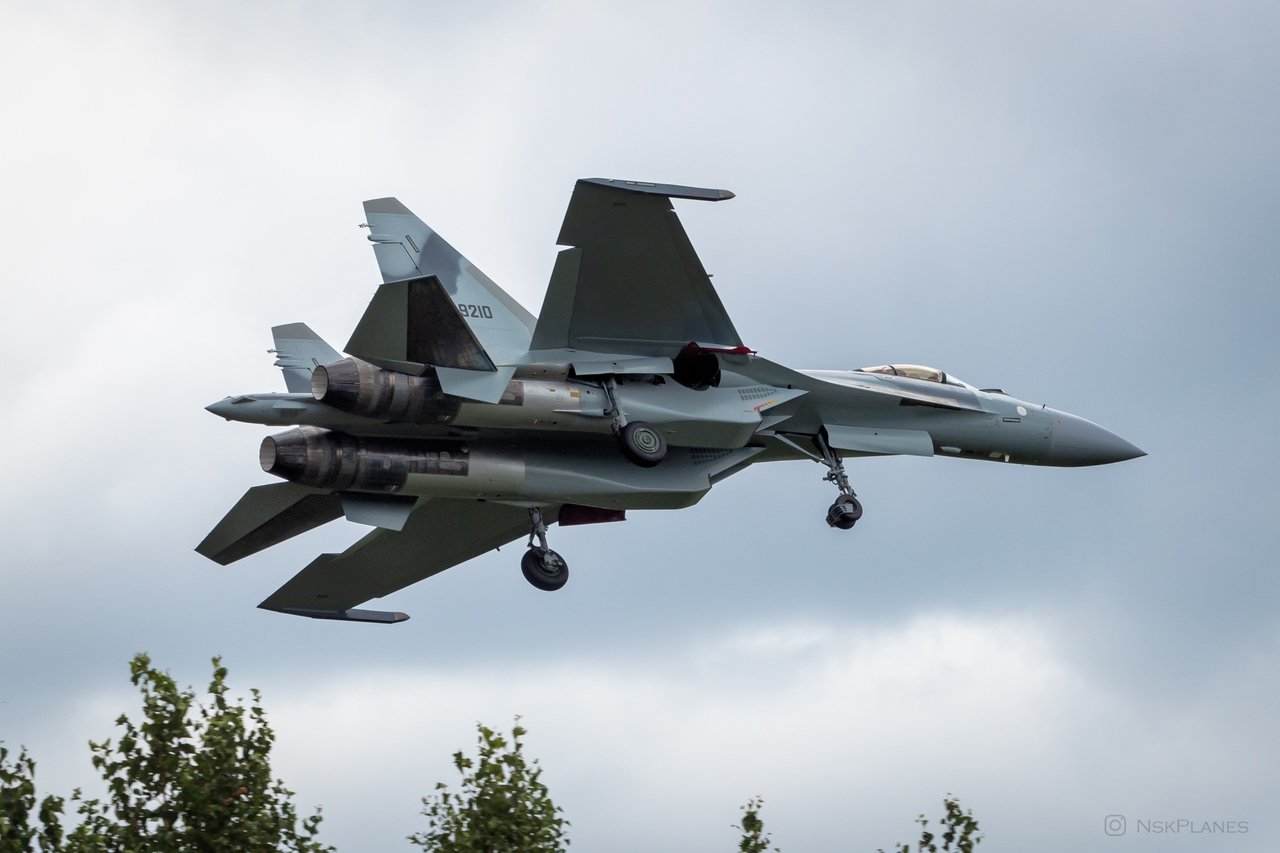
  • The first batch of the Russian Su-35 fighter jets is ready to be supplied to Egypt. ‪Hagar Hosny
  • Egypt’s sex assault accusations spotlight social stigmas. Reuters

Read

  • ‘EU’s inaction in East Mediterranean crisis is unsustainable. Ahval Forum
  • Amid new maritime deal with Egypt, Greece invites international court to settle sea dispute with Turkey. Joe Snell
  • The Muslim Brotherhood is believed to be the main driver of tension between Egyptian expats and the Kuwaitis. Ahmed Mostafa
  • Unfounded claims on GERD. Nader Nour El-Din
  • Failure to Resolve the GERD issue portends a global crisis and mass migration. Irina Tsukerman
  • Preserving the dead. Ahram

Interview

 From Twitter

https://twitter.com/nicathens/status/1291440665918922752?s=21

https://twitter.com/eldahshan/status/1290781791687782400?s=21


https://twitter.com/fareedomniya/status/1289903517725945858?s=21


Plus

  • Around 50,000 tourists visited Sharm El-Sheikh, Hurghada since 1 July: Tourism minister
  • Egypt hails appointment of LSE’s Egypt-born director to Britain’s House of Lords
Posted in Diary of Aak, Egypt | Tagged , , , , , | Leave a comment

Rebranding the caliphate –a never-ending dystopian myth

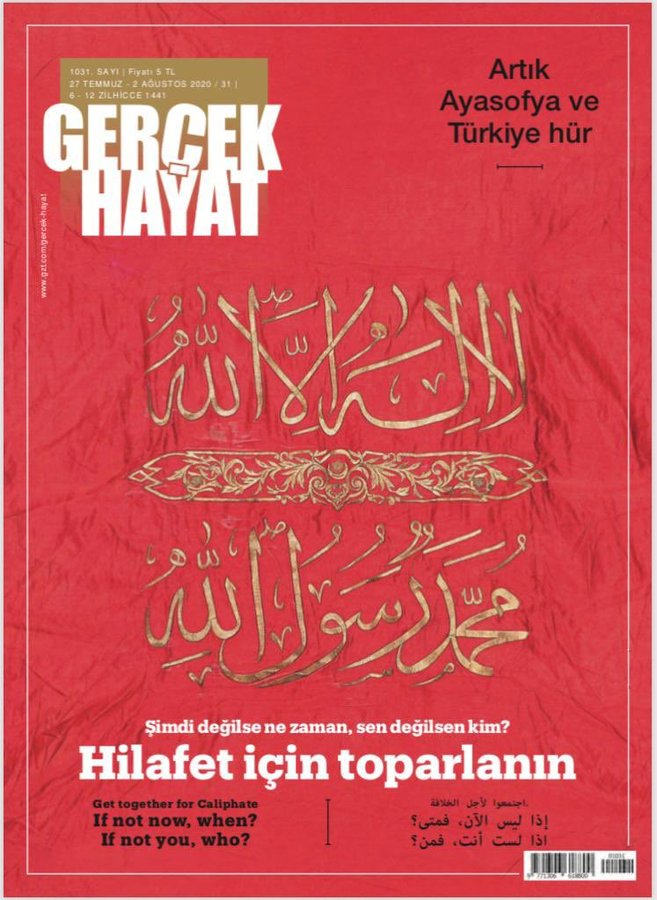
Call for Turkish Caliphate


If not now, when?   if not you, who?

With the image of pious Erdogan reciting the Quran in Hagia Sophia, and his head Mufti holding the sword of conquest it is no wonder that slogan appeared on social media.

The dream of an Islamic caliphate is not new. Ever since the birth of the mother group of political Islam, the Egyptian Muslim Brotherhood, the Quran and the sword have been used as logos symbolizing the dream of retrieving the caliphate. Watching the sword and the Quran live on TV from Hagia Sophia has rekindled the yearning for the caliphate within the Islamist social sphere, and portrayed it as a potential reality, not just a distant nostalgia.

But what kind of caliphate do the Islamists want?

Rather than providing a clear, detailed portfolio of their aspired project, most Islamists tend to indulge in selling their desired outcomes of Islamic rule, and reject the qualities of other modes of governance. In particular, all Islamists assert their rejection of what they see as “Un-Islamic aspects” of Western modernity and Western “imperialism.” Moreover, they also reject the already crushed ISIS Caliphate, as they see it as a cynical exploitation of the concept they cherish.

Turkish writer Yusuf Kaplan wrote in the staunchly pro-Erdogan newspaper, Yani Safak:  “A caliphate is a multilateral, multi-layered, multifunctional institution that not only has a political dimension but also an administrative, economic, cultural and intellectual one. From time to time, it takes on religious dimensions as well.”

Kaplan added a caveat to his Utopian fancy; he asserted that a caliphate has to be independent of the control of imperialist powers and “their puppets and satellites”. This is a cynical way to evade revealing the detail of his proposed project that fits with Erdogan’s opposition to declaring a caliphate, at least for now.

Kaplan is not alone. Most Islamist visionaries and thinkers have avoided delving into the thorny details of their caliphate project, and how their proposed “multilateral, multi-layered, multifunctional institution” will govern the Muslim world and provide its subjects with a fair and just Islamic doctrine. Will that happen via an absolute caliph? A constitutional caliphate? A symbolic caliph?

The idea of a modern caliphate is not new. Nostalgic Muslim thinkers in the late 19th and early 20th century contemplated the concept of a caliphate ruled by ​​a “fair, firm, pious Muslim tyrant,” who  could implement an administrative, political, and social system that unites all Islamic countries. The idea of ​​a fair tyrant was popular among some, for example through writings by Abdul Rahman Al-Kawakibi in his book (Natures of Despotism), Jamal El-Din al-Afghani, Muhammad Abdu, and others.

They interpret the idea of ​​tyranny as “firmness, strength, and justice” and claim it differs from the Western concept of tyranny, which means “exclusivity by rule.” And how firmness does not mean injustice and abuse. Later, those ideas inspired Arab nationalists like Nasser and Saddam Hussein, and we all know their disastrous outcomes. The idea that an Islamist caliph will and can perform better than those Arab nationalists is mere dystopia, as Islamists fail to set a clear mechanism that will prevent their caliphs from slipping into the path of injustice after they come to power.

In fact, if the history of Muslim caliphs is our guide, we can say with certainty how the Umayyad, Abbasid, or Ottoman Empire did not witness a single case in which the Muslim peoples were able to prevent unjust rule. On the contrary, everyone who revolted against the unjust ruler was branded a traitor and an apostate. This is the same method President Erdogan is now following with his political opponents, from Kurds to seculars.

The application of justice is also a major dilemma in the concept of the caliphate. The Islamists reduced the concept of justice in the application of Sharia rulings, but they ignored how Muslim societies were from the beginning, from the Umayyad era until the end of the Ottoman caliphate – class societies par excellence. In the history of the Muslim caliphs we have not heard about a blacksmith who came to power or a carpenter who managed the affairs of his city.

The problem of young Islamists is how they dream of societies in which they are the leaders, the rich and mighty people. But they do not consider what their situation would be if they became slaves or servants in the palaces of their dreamed caliphs.

To evade the thorny pitfalls of an absolute caliphate, many modern Islamists advocate a “constitutional caliphate” citing the early tenure of Sultan Abdul Hamid II when he established a general assembly. But they forget how Sultan Abdul Hamid disrupted the constitution and returned the country to absolute authoritarian rule later, and they decline to explain what would prevent any future successor from doing the same. How can Erdogan’s fans expect fairness and justice from their beloved leader, who cites Hitler’s rule as an example of effective government?

Facing such a tricky question, the Erdoganists have a ready-made answer: “Turkey is a democratic country.” This is a fallacious response that overlooks Erdogan’s authoritarianism; it also ignores how the current Turkish system is built on secular rather than religious foundations, and if the Justice and Development Party loses the upcoming elections, the next president will not adopt the caliphate doctrine.

In truth, the idea of ​​electing a caliph itself is a comical idea, because it takes away the doctrine of the caliphate from the basis of its establishment and turns it into a system that is not very different from any secular system.

This is precisely why most of Erdogan’s Turkish fans advocate a softer version of the caliphate, in which they see Turkey as a soft power, and other Muslim societies revolving in its orbit, connecting via strong cultural, economic, and political bonds.

Most of the advocates of Turkey’s soft power, however, vehemently reject Arab nationalism, but they have no problem with Turkish nationalism. They only pay lip service to equality of races within the Turkish sphere, but subtly consider the Turkish race as superior to others. Such superiority has triggered several revolts among Arabs and other citizens of the medieval Ottoman Caliphate against their past caliphs.

The concept of a Muslim Caliphate provides a valuable sense of historical continuity for those who believe Islam is a faith as well as a political system. Nevertheless, the branding of the caliphate is a project that will always be doomed to failure. For over a century Islamists have failed to formulate a clear framework and practical mechanisms to implement their dream into a workable  reality that could avoid its past pitfalls. It is easy to hold a sword from a bygone era, and blame Western imperialism; however, it is difficult to have the intellectual honesty to admit the many fallacies behind what this sword represents and what it can, or cannot, achieve.


Posted in Middle East, Turkey | Tagged , , , , | 3 Comments

This Week in Egypt: Week 31 ( July 27-Aug 2)

Top Headlines

  • Egypt says Turkish seismic survey plans could encroach on its waters
  • Eni, BP, Total hit gas at Bashrush prospect about 11 km offshore Egypt
  • Somaliland recognition quest is boosted By Ethiopia And Egypt scramble for Hargeisa
  • Egypt’s Sisi approves ban on retired army officers standing for election 
  • Egypt’s budget deficit falls to 7.8% in FY 2019/20
  • Kuwait says will review decision to suspend flights to Egypt


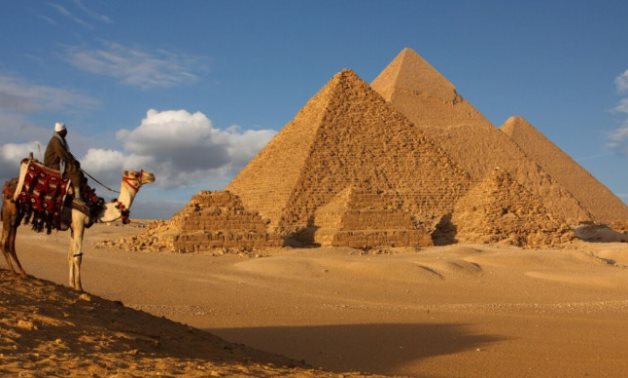
Pyramids

Main Headlines

 Monday

Tuesday

 Wednesday

Thursday

  • Egypt Shuqair-Mostorod crude oil pipeline resumed pumping
  • Egypt’s M2 money supply is up 47% year-on-year in June
  • No restrictions on travel to Egypt from UK

Friday

Saturday

  • Egypt says Turkish seismic survey plans could encroach on its waters
  • Kuwait bans flights to 31 ‘high risk’ countries due to coronavirus, including Egypt
  • Egypt reports lowest coronavirus daily figure since May 3
  • UAE official tells Turkey to stop meddling in Arab affairs over Libya

Sunday

Reports

  • Egypt grapples with women’s freedoms online as #MeToo re-emerges. Farid Farid
  • Nile dam row: Egypt fumes as Ethiopia celebrates. Magdi Abdelhadi
  • Cairo’s cafes that never sleep forced to close early. Nadeen Ebrahim
  • With ouster of priest accused of pedophilia, Coptic Church mobilizes against sexual abuse. Kuwait Nardine Saad
  • Qatari investments continued in Egypt despite political tensions. Mohamed Saied

From Twitter

https://twitter.com/Reem_Abdellatif/status/1290028884348420096?s=20


Plus

  • Egyptian public figures react to Elon Musk’s comment on pyramids built by aliens
  • Egypt invites Elon Musk to visit Giza Pyramids following controversial tweet
Posted in Diary of Aak, Egypt | Tagged , , , , | Leave a comment

This Week in Egypt: Week 30-2020 ( July 20-26)

Top Headlines

  • Egypt says Sisi and Trump agree on need to maintain Libya ceasefire 
  • Egypt and France conduct naval drill in Mediterranean
  • Egypt’s Sisi discuses Libya, East Mediterranean developments with Greek PM
  • Ethiopia wants non-binding agreement on GERD
  • Egypt rejects unilateralism compromising right to Nile water, Sisi tells South African counterpart
  • Egyptian military foils terrorist attack in North Sinai
  • Zero new coronavirus cases are recorded in Red Sea and South Sinai


Sukhoi

( First batch of the Egyptian air force Sukhoi Su-35 fighter jets)

Main Headlines

 Monday

  • ‪Egypt says Sisi and Trump agree on need to maintain Libya ceasefire
  • Egypt’s parliament unanimously gives a mandate for military intervention in Libya if necessarily
  • Turkey sent missiles used against Syrian Army to Libya for upcoming Sirte battle
  • Turkey: We are not seeking a confrontation with Egypt or France in Libya
  • Davutoglu: Confrontation With Egypt In Libya Will Not Be Good For Turkey

Tuesday

Wednesday

  • Ethiopia makes controversial statements on filling GERD one day after agreeing to continue AU-sponsored negotiations
  • Turkey says any Libya ceasefire deal requires Haftar withdrawal
  • Zero new coronavirus cases are recorded in Red Sea, South Sinai in the Last 24 Hours
  • Egypt extends operating hours of cafes, restaurants until midnight from July 26

Thursday

Friday

Saturday

  • Egypt rejects unilateralism compromising right to Nile water, Sisi tells South African counterpart
  • Egypt and France conduct naval drill in Mediterranean: Military spokesperson
  • Egypt’s Sisi, Ukraine’s Zelensky discuss Libyan crisis
  • Six defendants are referred to criminal court over sexual abuse of Egyptian TikTok teenager
  • Egypt’s South Sinai, Red Sea nature reserves to reopen with half-price tickets

Sunday

Read

Reports

From Twitter

https://twitter.com/mahmouedgamal44/status/1284165537203916805?s=20

https://twitter.com/irinatsukerman/status/1286383017573994496?s=21


Posted in Diary of Aak, Egypt, Uncategorized | Tagged , , , , | Leave a comment

Reblog: Erdoğan setting the stage for invalidating the Lausanne Treaty

This is a brilliant piece by Turkish writer Yavuz Baydar, published in, in Ahval, on Erdogan’s intention after converting Hagia Sophia to a mosque. Republished here with permission. 
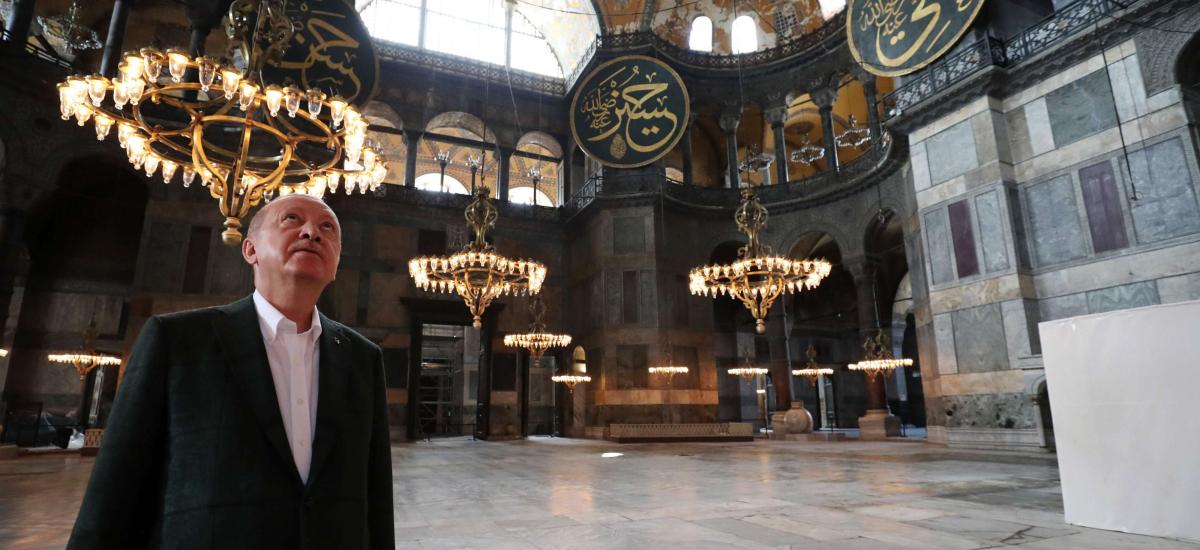
 

Erdogan hagia sophia

(Photo via Ahval)

A spectre is haunting Europe, the spectre of Turkish expansionism, set in motion by President Recep Tayyip Erdoğan’s Islamist government and its ultra-nationalist allies stakeholding his iron rule. All the powers of old Europe, with the exception of France, have entered into a holy alliance to duck this spectre:  the EU and ECB, Germany’s Angela Merkel and the U.K.’s Boris Johnson, Italy’s Giuseppe Conte and Spain’s Pedro Sanchez, The European Commission’s Ursula von de Leyen and the EU’s Josep Borrell, the Council of Europe, the European Court of Human Rights and NATO.

I have rephrased the famous introduction to Communist Manifesto, to underline the magnitude of the current and massively underestimated drama, of which Turkey is at the epicentre.

A militarised regime is taking shape in Anatolia as the world watches on at the expense of the well being of Turkish people. This regime is pursuing an expansionist order determined to stretch the country’s legal borders by means of a brute force.

If you think the recent reconversion of the Hagia Sophia into a mosque – a sad affair even in defiance of the verses of holy Quran – is just about the 6th century iconic site, think again.

The groundbreaking decision by the Erdoğan – Bahçeli alliance on the monument is only one major stone laid on the path to their plans pertaining to the centennial of Turkish Republic in 2023. Theirs is part of a major political choreography, based on bringing out of Pandora’s Box the ghosts of wars of the past. Let the borders of modern Turkey, drawn after the WWI go up for debate again and let the so-called National Pact (Misak-ı Milli), which is about reclaiming lands that now belong to Turkey’s southern and western neighbours, be brought to life, this alliance says.

The fact that the AKP cadres and pundits unleashed damnations and curses on the Lausanne Treaty even before the dust had settled on the Hagia Sophia reopening ceremony on Friday should be a wake up call for the world. That is if anyone is paying any attention to the constant escalation of the internal power rhetoric in Turkey.

It wasn’t a coincidence that Erdoğan and Bahçeli chose a specific date for the Hagia Sophia cemenony: The anniversary of the Lausanne Treaty, which was signed on July 24, 1923. So, it isn’t a puzzle anymore when Turks – in sympathy or opposition to the strongman of their country – kept hearing the phrase, ”a historic parenthesis that must be closed”. The parenthesis is the history of Turkish Republic, as envisioned and launched by its founding father, Mustafa Kemal Atatürk. Opening the gates of Hagia Sophia as a mosque at the same time paves the way for such a closure.

This path was already opened by the murky coup attempt of July 15, 2016,  followed by a massive coup by Erdoğan, the declaration of a state of emergency, five days later. Ever since then, the construction of the new regime has been taking place with an uninterrupted series of decrees, decisions, alliances and arbitrary rulings.

The rapid escalation of moves in foreign policy is also a major part of the grand design. Operations into Iraqi Kurdistan are aimed at establishing a permanent zone, with more bases. In Syria, the steady military build-up points to the same ambition. But the real push of the regime, including in the oil rich war-torn country of Libya, is visible within Ankara’s so-called Blue Homeland doctrine, now in the stage of determined implementation.

Deeply discontent with the EU’s foot-dragging on Turkey’s decade-long accession process, using the botched coup as a pretext for all thing anti-Western, and seeing a great window of opportunity in a world of disorder, Erdoğan and his partner, Bahçeli, apparently see the revisiting of the Lausanne Treaty as very timely. The geometrically growing rift with Greece and Cyprus over the hydrocarbon sources and naval borders must also be seen in that context, in order to be correctly understood.

Does history repeat itself? A comparison between the German resentment of the Versailles Treaty, that ended the WWI in 1919, and the Erdoğan government’s bullying push to create the same sort of sentiments among Turks across the political spectrum may sound far-fetched, but is actually quite accurate.

Many observers outside Turkey seem unable to see the big picture, and if they ever did, they would easily detect an identical myth-building taking shape in Turkey, like Germany’s ”dolchstosslegende,” stab-in-the-back myth.

Its first discreet missives are already in the air through social media and pro-government columns, as Hagia Sophia opens as a mosque.

According to the stab-in-the-back myth, the German right claimed that Germany actually did not lose WWI, but was betrayed at the table by the civilian leaders. Similarly in Turkey, we are bound to hear more and more that Turkey did not lose WW either. Just look at Gallipoli and the Liberation War between 1919-22 – it was the Turkish delegation guided by Atatürk, who fitted Turkey with ”the strait jacket called the Lausanne Treaty”.

The fact of the matter is that this notion, in a historically bizarre twist, unites Turkey’s Islamists, a large portion of secular nationalists hostile to the EU and the United States, the extreme-right and ”Grey Wolves”, Pan-Turanians, and ex-officers who once were Erdoğan’s sworn enemies and prisoners, who nowadays remain at his service through offering Blue Homeland doctrine.

One can see similarities with 1930’s Germany, whose mixed political constellations against the Versailles Treaty gave birth to Hitler and his monster regime.

So, we are faced with the spectre in Turkey today, but the European apathy to what is taking place in the country is astonishing. The main reason for what will surely develop into a new European folly is clear: Behind closed doors, major EU representatives agree that Erdoğan regime is lesser of two evils. If Erdoğan’s fall will wreak havoc in Turkey, they maintain, incomparable to what happened to the former Yugoslavia, causing millions of Turks to flee west on to EU soil.

So, the Erdoğan regime is considered ”fine,” as it offers stability, even though the entire country -(to quote the main opposition leader Kemal Kılıçdaroglu – is ”an open-air prison.”

Thus, let us remain paralysed, they say, while they continue to appease Erdoğan, pretending everything is just fine. And let us watch, as Turkish irredentism gets ready to challenge the international order in the Eastern Mediterranean through militarised foreign policy.

We know what the German resentment to Versailles Treaty did to the world, and it is now time to once again fasten our seatbelts.

Let us start studying what Lausanne Treaty was about, as we will need the information. Turkey’s political system is no longer on which we are familiar with. It has changed. Its motto ”peace at home peace abroad” is history, with the word ”peace” being replaced by ”war.” Just so you know.


Posted in Middle East, Turkey | Tagged , , , , | Leave a comment