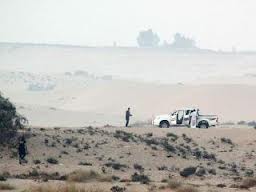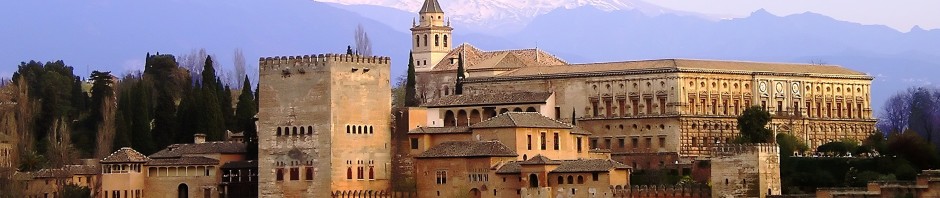
This is my photo essay: Jews in the Arab World which was initially published in -al-Monitor:
http://www.al-monitor.com/pulse/contents/articles/galleries/jews-in-the-arab-world.html
Wish all my Jewish Tweeps a blessed new year.? Shana Tova every one.
This is my photo essay: Jews in the Arab World which was initially published in -al-Monitor:
http://www.al-monitor.com/pulse/contents/articles/galleries/jews-in-the-arab-world.html
Wish all my Jewish Tweeps a blessed new year.? Shana Tova every one.
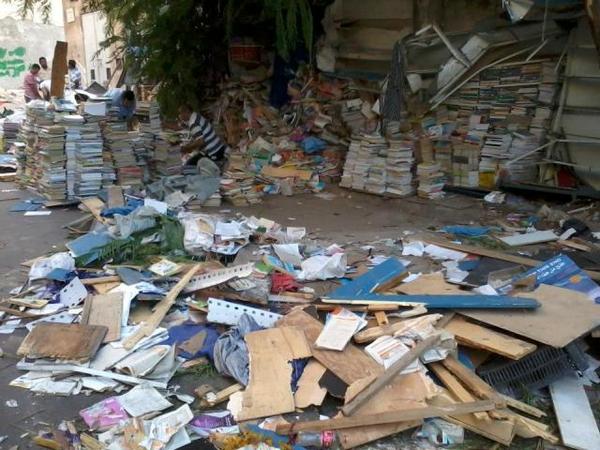
For the second time in the same week, I am addressing the subject of Nabi Daniel Street in Alexandria, first discussed its famous synagogue, and now I wish to write about its book market. As part of the cultural heritage of Egypt’s second largest city, this street was the subject of a vicious—and frankly barbaric—assault from the new Islamist governor. The Alexandria security service chose the early hours of Friday morning to carry out its assault on the old book market. The attackers did it in style, too; they destroyed the kiosks and threw the books savagely into piles of rubble in the street and then left without even providing an explanation to the distraught owners who depend solely on these kiosks to earn a living.
Incidents such as this remind me of several encounters during my childhood, one with the bearded man who advised my mother not to let her daughter read Western literature, as such books could be “corruptive,” and another with the guy who burned Ihsan Abdel Quddous’s novels because he viewed them as a “bad influence” on his sister. Then, during a recent incident, the book—a short history of modern Egypt—which I bought as a present for a teenage girl, was later returned by her mother, who expressed that the book was “not portraying Islamic history in the right way.”
For decades, books have lost their charm and appeal in Egypt and became considered a luxury that many cannot afford. Books on shelves that were once an essential part of any middle class family home were sold, mostly to bookstalls (like the one on Nabi Daniel Street), to allow room for extra bedrooms or lounge spaces or worse, were considered a threat to be avoided or even destroyed. The story of Nabi Daniel’s destroyed bookstalls involved many subtle yet crucial changes that have transformed Egyptian society over the last six decades from a nation of book lovers (even among the illiterates who respected books and wished they could read) to a polarized nation of either satellite TV fans or zealous opposers of both (books and other media), despite our shameful literacy rate of 66%.
However, there was still a minority that loved books, either posh elites who could afford expensive books or others who loved reading but could not afford to buy new books (like me). For the latter group, bookstalls in Cairo’s Azbakeya book market and Nabi Daniel in Alexandria were invaluable. My mother—who used to eat only once a day in order to afford to feed me three meals a day— encouraged me to develop a love for reading and to seek knowledge. She regularly took me to these stalls to buy wide varieties of books at a fraction of their original price. Old magazines had a market too; many families earned a living by buying old editions of fashion magazines and then designing and making low quality dresses to sell for a fraction of their regular price. Today, these customers have lost one of the few outlets through which they could obtain what they need. Not to mention the suffering of the owners of these stalls, whose source of living is simply destroyed by these destructive acts, acts that even a dictator like Mubarak has never dared to perform.
Recently, the disdain toward books has transformed to an active campaign of destruction, from Sufi shrines and libraries in Libya to Nabi Daniel in Alexandria. Rather than focusing on deteriorating security, pollution, and illegal building, the newly appointed governor choses to start his rule with assaults on the poor and their only access to knowledge. It seems that short-sightedness is not only a medical condition, but it can also be a political mindset.
It is no secret that there is no admiration for certain books among many Islamists, from works of major philosophy, history books, western literature, to romantic novels. For them, it can corrupt the mind of Muslims and distract them from pursuing religious studies. However, very few of them have actually bothered to write about what they dislike about western literature, and the few who did wrote very superficial, reactionary accounts that are not even worth reading.
From Naguib Mahfouz to Salman Rushdie, I have yet to found a well-written book to counter Rushdie’s claim or articulate what exactly is anti-Islamic about Mahfouz literature. I guess writing is by far a harder task when you can make the same statement through destruction and assassination attempts. In fact—even better—violence could achieve better results than intellectual discussion, as it terrorizes others and deters them from their quest for knowledge!
However, I prefer to allow the pundits to answer the question of why exactly Islamists hate books. The “experts” in Islam and Islamism who regularly defend illiberal democracy, Morsi’s theocratic tendencies, and his fairy-tale promises should let us know how the destroyed bookstalls fit in with the revolution. Why are these used books perceived as a threat by some? Is it a question of law and order (bookstalls permission) or there are other motives behind what happened?
Our clever pundits, who, thanks to books and literature, have earned various academic degrees and advise think tanks about the Arab world, did not devote even a tweet to the distraught owners of these bookstalls. Perhaps they are too busy dealing with far more pressing issues, such as redefining political terms, in which subtle theocracy is a civil state, backwardness is renaissance, and tyranny of the majority is the desired democracy. Therefore, and in that context, the destroyed bookstalls are simply irrelevant.
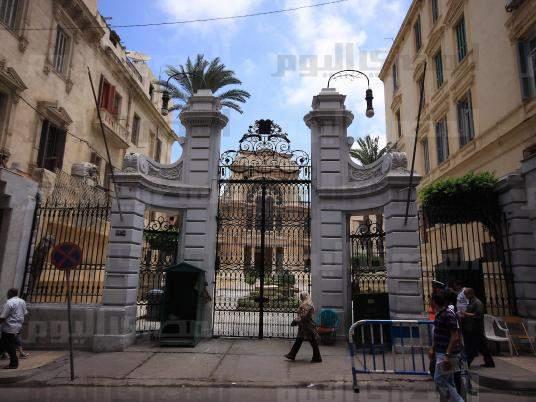
Synagogue—a strange word on the ears of many Egyptians. Many have forgotten—or chose to forget—that Jews have been living in Egypt since biblical times, where they have built synagogues and practiced their religion freely. One of these Synagogues is Eliyahu Hanavi Synagogue on Nabi Daniel Street in Alexandria. Built in 1354, then was later bombed by the French during the Egyptian expedition in 1798 and was re-built again in 1836, during Egypt’s golden time, the era of Muhammad Ali. The founder of Modern Egypt was a man of great vision; he was tolerant toward non-Muslims and abolished the Jizya law (extra-tax imposed on non-Muslims), marking a huge step toward the equality of all Egyptians in a modern civil state. later it was formally abolished in the entire Ottoman empire at 1855.
Currently, this beautiful synagogue is the only practicing synagogue in Egypt and is at risk of being turned into a mere antiquity. There are reports that Egyptian authorities have ordered the cancellation of Jewish New Year and Yom Kippur celebrations due to “security concerns.” The synagogue’s Rabbi Abraham Nino-Dayan told the BBC that there have been reports that several Israelis have already been denied permission to attend the festivals. If this true, it will be the first time since 1836 that the festivals will not take place. On the other hand, a security source has denied that there is has been any order to prevent the celebration in the Alexandrian synagogue. Like on many other subjects, it is difficult to get the facts right in Egypt these days.
During the Mubarak era, the Egyptian authority used to issue visas to Egyptian Israelis to enable them to visit Egypt during the religious festive season. Now things have changed, and if I were to venture a guess, I think this is the root of the problem; the authorities are likely reluctant to maintain the same practice.
To the average Egyptian, Jews are those evil people who are continuously “plotting” against them and their country, an image that is systematically reinforced by endless movies, soap operas, and programs deliberately blur the distinction between the Jewish and the Israelis. That is a debate for another time; for now, I just want Egyptians to remember that there are 18 elderly women who are clearly loyal to Egypt and choose to live and die on its soil rather than immigrating to Israel, and for their sake, we Egyptians should do our best to help them enjoy the freedom to practice their religion and celebrate their feast.
It is worth mentioning that the Jewish community in Alexandria has been reduced to 18 ladies and 4 men. According to Jewish religious customs, a viable celebration requires “minyan” (10 men). So without allowing visiting Jews from outside( yes from Israel), it would be difficult to conduct an orthodox religious ceremony.
Rosh Hashanah, the Jewish New Year, is one of the most important religious holidays for the Jews. Let’s not deny these tiny community a “proper” religious practice in the last working synagogue in Egypt; is that too much to ask?
One last request, please don’t bring Israel, Palestine and politics into this. Please!
Post script:
It is my understanding that Muhammed Ali has abolished the Jizya. However, others have pointed out that it was formally abolished during the ruling of his Saed Pasha like the rest of ottoman empire in 1855.
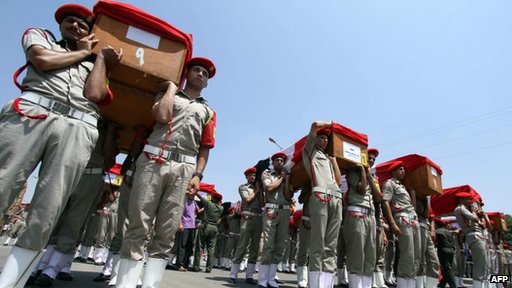
It is hard to describe what has happened in Sinai in the last few weeks, although “surreal” may be the only appropriate word. It started with a tragedy on the holy month of Ramadan, when 16 Egyptian soldiers lost their lives on the 5thof August to “Islamists” terrorists. The sequence of events following may sound illogical and incoherent to some: the ordered retirement of Tantawi and Annan; the tanks sent to Sinai; Operation Eagle, and the arrest and killing of alleged Jihadists; the promise to close “all tunnels” between Gaza and Egypt; the Salafi delegation to meet Sinai Jihadists; the opening of the Rafah border permanently between Gaza and Egypt; and finally, the quiet withdrawal some tanks from the military Zone C in Sinai (allegedly).
Make sense? The logic in these events depends on your perspective. If you are like me and want a solution for Sinai’s deteriorating security situation, then these events may look odd and bizarre. However, if you are following Egypt closely, then it all makes perfect sense. In simple terms, the best way to describe Morsi is as a man who likes to offer something to everyone, mainly to gain easy points in his conquest to solidify his power and build a new legacy. He is a man with much verbal punches but one who does not take risky gambles. His management of the Sinai crisis is just one example: in it, Morsi offered something to each player in the arena.
First, he rewarded himself by claiming credit (rightly or wrongly) for the soft coup inside the military. Regardless of what truly happened behind closed doors, Sinai was the catalyst that finished the career of arguably the strongest men of Egypt (Tantawi, Annan and Mowafi). Morsi emerged as the victorious leader who cleared the army from the symbols of the old regime and consolidated his powerful grip on the country.
Second, by sending tanks to Sinai (seemingly without coordination with Israel), he has effectively rendered the Camp David Treaty as null and invalid; this is great news for the Egyptian public, who despise the treaty and consistently demand for it to be revoked.
Third, opening the Rafah border was great news to Gaza and the Palestinians. Ending the siege of Gaza was always a popular demand. Now Hamas can claim a major political victory despite the economic setback from closing the underground tunnels (if indeed it is “all” closed).
Jihadists are clearly not that concerned; some were even happily interviewed by Arabic satellite channels. After all, their shelter in the Halal mountains seems safe and secure for now and they have had a recent visit from old comrades. There was even some news of a temporary ceasefire with the Egyptian army.
Even Israel received some comforting news in the whole episode: on one front, it has finally closed the Gaza siege file and it is highly unlikely there will be more embarrassing flotilla news. Hamas firmly reject any coordination with a “Zionist entity”; instead, the warlords of Gaza are looking southward for Egypt as their strategic depth. The withdrawal of Egyptian tanks from Zone C, near the border with Egypt, could also be some welcoming news—a message from Morsi that he is not after confrontation.
In short, the events in Sinai may look like a surreal movie, albeit with one twist: this is not a movie; it is reality and a harsh, tragic one where nothing has changed. The situation is exactly the same as before the 5thof August, with the exception of some cosmetic changes—Sinai is still a fertile ground for discontent
The lawlessness peninsula was always a favored playground for Egyptian leaders who enjoyed using and abusing it for political gains. Morsi’s Egypt is no different now, and if he continues with this same path in the near future, episode II of the surreal movie may soon follow; it will be just a matter of time.

Twice in one week, President Mohamed Morsi addressed Egyptians from a mosque. Each speech was more like a religious sermon than a political address. The following excerpts illustrate this point:
“Quran has everything for us, if we follow it, we would never need anything else.”
“God told us to rule people with what is ‘right’; not what they want.”
“it is the duty of everyone to advocate virtue.”
“God will accept your prayers only if you follow his order.”
For non-Islamists, it may look strange and puzzling to choose a place of worship as the site to address the public, particularly following his most significant political decision – dismissing top military command, Field Marshall Tantawi, among many other high rank army officers − but it is definitely a logical move, according to his Islamist grassroots supporters. With a state media under his control, Morsi’s aim was clearly to appeal to a wider section of Egyptian society. His target group is conservative Muslims who do not necessarily identify themselves as Islamists but who would be willing to listen to religious speeches because they have a natural affinity as “men of God.” To this group, Morsi delivered a clear unambiguous message: “I am a good man, and you should trust me.”
Some may argue that his is a benign, legitimate move aimed to inspire others and gain popularity. Indeed, he is not the first leader who has used religion to consolidate his vision; many world leaders have attended religious sermons, but I am not aware of any world leader that delivered his own religious sermon. Even in the Islamic Republic of Iran, Imam Khamenei is the supreme guide, and not the president.
What was particularly alarming about Morsi ‘s sermon was his interpretation of early Islam, the narratives reflected a man who believe in one “correct” interpretation of the Quran and Hadith, as the only way that could bring the success of the Umah (Islamic nation). The danger of this non-pluralistic vision should not be dismissed; Morsi is slowly paving the way to loyalty to one man and one vision policy. The hints of religious fatalism and emotional blackmail are also alarming − Morsi pointed out the responsibilities of Muslims to their society and emphasized their obligation to fulfill their Islamic duty before God can bless them with victory.
It was interesting to hear Morsi quoting Imam Ali: “People are four types: the knowledgeable who are aware of their knowledge, the knowledgeable who do not appreciate their knowledge, the ignorants who think they are knowledgeable, and the ignorants who admit their lack of knowledge.” Morsi, interestingly, highlighted that the third group is the most dangerous. Without trying to speculate his exact meaning, I rather put myself in the fourth category and asked the President some questions, and I sincerely hope he can give me clear answers. If Quran and Hadith are our “only” guides, then the following questions must be answered:
•How can the Quran guide us in solving Egypt’s crushing economic crisis? Do the Quran and the Prophet’s Hadith tell us the “correct” level of taxing, or the “correct” level of subsidy?
•What is the Quran’s stance on energy production? Which is the “correct” solar or nuclear energy? What is the “correct” path to address Cairo’s shantytowns, congestion, and transportation issues?
• What exactly is Morsi’s proof that his Nahda project is the “correct” project approved by God? Does God prefer an open market economy or a government controlled one? Is privatization in harmony with or against Islamic teaching?
It is not Morsi’s latest move toward the military establishment that bothers me; it is his religious rhetoric that I find deeply alarming. The overt hints in his speeches cannot be ignored, and the ramifications of it could be dangerous. Using religious text to justify his political moves is the first step toward a theocracy. Coupling faith with government policies is a risky move. Faith is designed to salvage our soul not to solve traffic congestion or stock market performance.
In my humble opinion, President Morsi must stop abusing places of worship for political gain. Did it not occur to him that frequent formal, live sermons in mosques could alienate Egypt’s Coptic community?
The president should serve as a figure for unity, not for dissent; he should bring people together, not push them apart. Needless to say, linking progression with piety is a dangerous move that can lead down a path toward hypocrisy, prejudice, and religious tyranny. Egypt elected a civil president, not a new grand Imam; the sooner President Morsi understands that, the better.
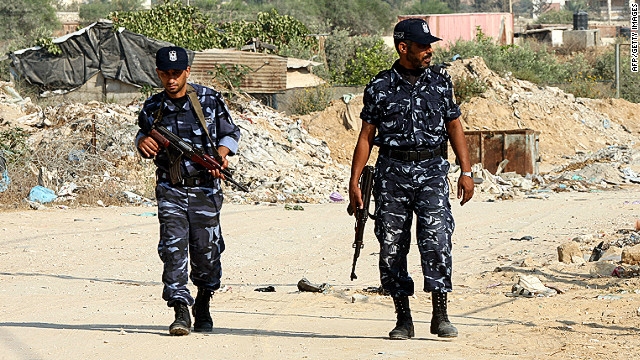
It is Sinai, again—the time bomb that has been ticking for the last 18 months. The bomb has finally exploded and the victims were 16 innocent Egyptian soldiers, who died for no particular reason other than doing their duty for their country by defending its border. They were killed in cold blood by terrorist groups who attacked the Egyptian checkpoint, killed the troops, then stole two of their vehicles and burst through the security fence into Israel.
Now is not the time to place blame or spin the facts for political gains. It is time to think of an action plan that will get Egypt out of this deep, troubled water. Here is my suggestion—a six-step action plan to save Sinai from another gloomy fate.
Step One—Acknowledgment
Thus far, there has been no formal admission from Egypt’s top officials that the situation in Sinai has reached crisis level. The current state of denial reflects a lack of desire to tackle the complex problem, simply because it involves Gaza, a sensitive and emotional subject for the newly-elected Islamic government. Blaming Israel is, by far, the easier solution but certainly not the right one.
Step Two—Public Engagement
For sixty years, ordinary Egyptians have been sidelined when it comes to Sinai. Truth was always in short supply; Egyptians received propaganda news, only to discover a part of what truly happened years after it occurred. Generations of Egyptians have grown up to believe that shared intelligence with Israel is blasphemous and Israel is the only threat to Egypt’s national security. This approach must change if Egypt is truly willing to tackle the root of the problem, a public outcry for new security arrangements is pivotal for success in this.
Step Three—Containing Gaza
As long as there is no viable political solution for the Gaza conundrum, Egypt should seriously start to think about how to contain Gaza without compromising its national security and without punishing the innocent Palestinians who live there. There needs to be a balance of dedication and creative thinking. For years, Mubarak blocked Gaza but turned a blind eye to the flourishing black market economy between the strip and north Sinai. Following the revolution, the border was re-opened but the tunnels continued as well. This simply has to stop, no matter what; Hamas government should choose between an open legal border and the illegal underground tunnels but it cannot have both. If Egypt continues to open the Rafah border, then tunnels have to be blocked: even if it means that the Egyptian army has to search each house across the border to identify entries and exists and block them. Of course, Hamas may declare their desire to co-operate with Egypt, but it is important to understand that Hamas’ cooperation is limited. Smuggling arms for them is a must and they cannot do it with closed tunnels. President Morsi should stand firm against Hamas’ emotional blackmail—there are many ways to help the Palestinians without endorsing Rafah’s black market economy.
Step Four—Change the Mindset
It is no secret that the Peace Treaty with Israel is unpopular among ordinary Egyptians, many advocate amending the treaty. Recently, the amendment camp has received boosted support from many U.S.and Israeli pundits who view the amendment as a solution for the lawlessness in the peninsula. Egyptians who support amending the treaty want the army to reach the border but in liaison with Israel, while Israel would never accept the army at its border without fully integrated open channels of communication between the two countries. This mindset needs to change. Egyptians need to swallow the bitter pill that is even “enemies” have some channels of communication.
Step Five—Logistics
It is increasingly clear that Egyptian army personnel need more training and security equipments. Isolated security posts in the middle of nowhere are clearly vulnerable and easy targets for terrorist groups. If this training comes from the U.S., then so be it. Ego should be no obstacle to seeking help.
Step Six—A Gaza fund
It is time for anti-Zionist revolutionaries to show that they love Palestine. A public campaign should start to collect donations in order to sponsor Palestinian and Egyptian families on both sides of the Rafah border, who will be directly affected by the closure of the tunnels. This fund would be a short-term solution until the pro-Palestine Egyptian government sets a long-term project to develop the impoverished area of north Sinai.
Now, I’ve outlined above what should happen but that does not mean it will. The current political dynamic in Egypt is not pro-realism, it is pro-fanaticism, and many in Egypt, not to mention Hamas in Gaza, were quick to point fingers and blame the Mossad for the killings in Sinai. In such, currently, there are two pro-conspiracy theory camps in Egypt:
Camp one—the anti-Zionists who cannot comprehend that Jihadi groups are willing to kill fellow Muslims to advance their cause, and who felt the urgency to conduct some sort of operation before Israel finishes building its barrier wall on its border with Egypt.
Camp two—the opportunists, many inside the brotherhood, who view what happened in Sinai as a golden opportunity to distract the public from the challenging domestic problems facing Egyptians at the moment (i.e., sectarianism, lack of electricity, rising food prices). Tension in Sinai could deflect attention towards Israel while the president has a break.
So far, we can only hear loud rhetoric and empty threats. It remains to be seen if both will materialize into some serious action to solve the chronic problems of the unfortunate peninsula. It is time for President Morsi to face Egyptians with some facts and some hard truth; otherwise, he should start to prepare for war, because it will come, and very soon. Yesterday, Israel shot the stolen tank in its territory; the next time, it could happen on Egyptian soil. Therefore, I suggest the legendary Abdel Halim Hafez’s song, “Hello battlefield,” as a starter course. It can bring back the atmosphere of the Six-Day War to the younger generations.
PostScript:
Some have argued out that Rafah border (which was always designated for people crossing and not for goods) was never properly re-opened following the revolution. It is true that the main supplies to Gaza come via Israel, and not Egypt. However, there were subtle, yet important changes that started to emerge following the revolution, in the form of new fuel and electricity supply. As far as I am aware, the issue of the illegal tunnels was never raised, at least publically with the Hamas government.
It is also important to remember that arm smuggling is vital to many armed groups in Gaza, they may have other routes but the bulk of Grad missiles are smuggled through the tunnels. Finally, many in Gaza benefit from the cheap prices of smuggled goods- taxed by Hamas- and it is not in their interest to stop this lucrative trade, that is why a joint economic projects between north Sinai and Gaza is a must plan for the future. The fund I suggested is a short–term solution. Long term, Gaza need a new political dynamics and long-term economical projects.
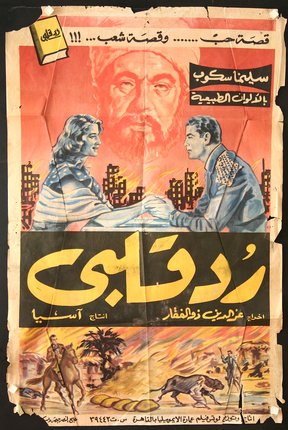
In 1954, the Egyptian novelist Youssef El-Sebai wrote his famous Arabic novel “Rudda Qalbi” (give me back my heart), a romantic story about the 1952 Egyptian revolution. Later, the novel was turned into a successful film that became synonymous with the revolution, a must-watch on Egyptian state TV every revolution anniversary. The hero of the story, Ali, resembled many Egyptians of his generation, an ambitious guy from a modest background who worked hard for a better life, and fell in love with the pretty, rich princess. Later, he becomes a prominent soldier who joined The Free Officers Movement and “liberated” his country from the corrupt king.
Over the last sixty years, there were countless movies and soap operas similar to Ruda Qalbi; the poor guy and the beautiful rich girl fighting against tyranny, which (surprise, surprise!) did not vanish following the revolution. The Free Officers were corrupted by power, and failed to fulfil the promises they made to their fellow Egyptians: bread, freedom and social justice. Egypt continued to produce shabby Royals and Pashas who continued to oppress their fellow Egyptians and committed the same crimes as their predecessors. Post-1952 Pashas were fond of wrong definitions, semi-truths and a dodgy education system; so the coup became a revolution, and dictatorship was considered the ultimate democracy and censored books were the only source of knowledge.
Unsurprisingly, Egypt continued to produce more “Ali’s”, with some subtle differences; the modern Ali is Islamo-nationalist, who thinks religion is the answer to Egypt’s troubles. He is also a pragmatic businessman, not interested in agricultural reform as his predecessor was, but keen on giant projects, grand malls, supermarkets, Islamic fashion and halal movies depicting the new Islamic “renaissance.”
Democracy for modern Ali is a tool to reach power and sideline the old officers; the tyranny of majority is halal and welcomed as long as the ballot box bring the “right” results. Currently, Ali is willing to put up with some degree of opposition, he still feels a bit vulnerable, and is willing to wait until he solidifies his gains before he turns against his opponents.
Modern Ali still wants to marry the rich beautiful girl, but do not expect romance from him though, the era of romance vanished a long time ago; the elegant, graceful Egypt has been replaced by a crowded, chaotic one. Instead, Ali will offer his new wife an expensive dowry provided she wears the hijab and follows Islamic tradition. Ali also likes to be ”moderate,” he will allow her to work if she wishes to do so, (in suitable jobs of course), and he will shake hands with her non-Muslim friends as a sign of openness. He also might consider a big halal tourist project, in which she and her friends can spend quality time on a segregated beach so they can swim and practice sports in a proper Islamic environment.
Modern Ali is not willing to reflect on the old one, he thinks he is smarter than the old one was and would not end up committing the same mistakes, but when you ask him why, he gets annoyed and changes the topic. Let’s hope he knows what he is doing!
As for Yousef El-Sebai, I doubt if he would be able to write the same novel in 2012. Even if he did write one, he would almost certainly give it a different name, something like “give me back my country.”
I wrote this piece few days ago and it is published today in The Telegraph
I think the upheaval in Syria and the attack in Bulgaria reinforce my argument. So please read and let me know what do you think.
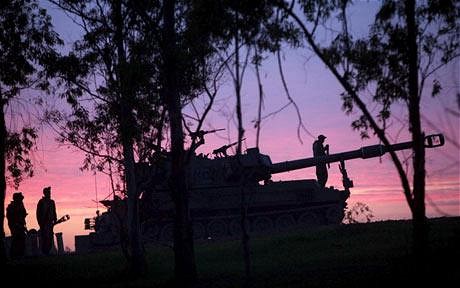
Throughout its history, the Arab-Israeli conflict has been shaped by two alternating approaches: a radical approach, wherein one or more parties attempt to resolve the conflict through war or peace, and a less radical approach aimed at sustaining the conflict without serious attempt to resolve it (mainly in the form of Arab resistance versus Israeli deterrence). During the last few years, however, the conflict has entered a new phase of complete paralysis in which no peace, no war, and no resistance exists.
The Arab Spring undoubtedly will affect this century-old conflict. Yet although its influence is unknown and difficult to predict, this “spring” is not likely to yield any blossoming dynamics that will help bring the conflict to an end for several reasons. First, the Arab countries are preoccupied with their self-determination and nation building. Crumbling dictatorships pose serious long-term challenges for countries like Egypt and Syria, and the region is full of jaded politicians and novice leaders struggling to come to terms with the new evolving reality. A second issue is impotent resistance: despite reports of increased arms smuggling to Gaza and South Lebanon, neither Hizbollah nor Hamas in Gaza is in any position to escalate their attacks against Israel. Both groups have ignored the basic rule for any paramilitary resistance: “Big is bad.”
In Gaza, Hamas is paying the price for its reckless takeover of the impoverished strip. Its members have learned the hard way that they simply cannot exist as a ruling party and a militant group simultaneously. Hamas also cannot survive on its own, which is precisely why it ends up accepting a ceasefire (or rather, lull) following every escalation of hostilities. Meanwhile, Hizbollah is facing daunting challenges: the rise of Salafists in Lebanon and the potential fall of Assad in Syria. These have refocused Hizbollah’s effort, Israel is no longer the number-one priority – at least for now.
This stalemate may not sound like a bad alternative; after all, the status quo can result in “stability” and prevent further bloodshed. However, history has repeatedly challenged this theory. In fact, every stalemate period within a conflict has ended with a nasty confrontation.
Several possibilities can help bring the current stalemate to an end. One is a third intifada, which has already been predicted by many (for example, Nathan Thrall in the New York Times) for countless reasons. Regardless of how and why, it is clear that Palestinian President Abbas’ leadership is in its twilight. Hamas and the new Islamist leadership in Egypt might not have a solution for the Gaza conundrum, but they agree (though not publicly) on the grounds of their antipathy toward Abbas. Sooner or later, the Palestinian Authority will fail in providing the security measures that have maintained calm within the territories. At that point, it will only be a matter of time before the next intifada. Hamas (and others) will be waiting in the wings.
A second possibility is the introduction of new players: this conflict has consistently produced new militant groups. Indeed, prior to 1967, Fatah was just a small group; before the invasion of Lebanon, Hizbollah did not exist. As the future of Syria remains unknown, the possibility of a failed state should not be discounted. Israel might end up facing a reverse Lebanon scenario, with calm in south Lebanon but escalation from new players based in the Golan Heights. This may not be a strong possibility, but it is not at all farfetched.
A final possibility is Sinai. Thus far, the battle between the Islamists and the generals in Egypt has been limited to street demonstrations and legal disputes. However, the longer the battle rages on, the greater the chance that the Sinai front will be used to garner public support. I doubt that President Morsi has a clear plan regarding the Gaza-Sinai conundrum, though in the future the “no plan” may actually become a plan, and any escalation could be a blessing in disguise. On one hand, it could be used against the generals to label them as weak and incompetent; on the other, it could be used as justification to cancel the peace treaty with the expectation that the international community will jump in to prevent a full-scale war.
I could be wrong. Perhaps none of these predictions will materialise, and the region may continue surviving in the current status quo. However, after years of observing the conflict as it unfolds, I have learned that our reality could be more dramatic than the product of our wildest imagination. I have also realised that the longer the conflict continues, the more it becomes like a Gordian knot: impossible to untie.
The Arab-Israeli conflict has become part of the norm in the Middle East. For years, the main players have continued to dodge opportunities for peace, and the resulting paralysis has become somehow desirable. We have also lowered our expectations, happily accepting a draw as a victory and defiance as success. Even more obscene is the way we have dealt with our leaders who sought peace and compromise. They have faced a more tragic fate than any of the warlords who brought about bloodshed and misery.
Many parties on both sides privately admit that the conflict will never be solved by war, yet they prefer to accept the stalemate rather than make serious compromises to achieve peace. Such an approach is a tragedy in itself; if compromises are humiliating, defeat and stalemate are not dignifying. It is time for all players to revisit their war and peace strategies and to work for a new approach to the conflict before it is too late.
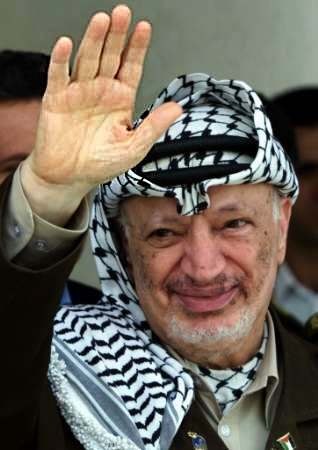
Today the Arabic news channel Al-Jazeera broadcast a program about the death of the Palestinian leader Yasser Arafat. The program claimed that in- depth investigation reveals high levels of radioactive polonium were found in Arafat’s personal belongings eight years after his death.
Arafat was a leader and a father for his people who fought hard for the rights of the Palestinians. Many would be interested to know “the truth” about his death.
But let’s put things in perspective:
I am not sure what exactly Al Jazeera was after and if it had an ulterior motives for its nine month long– mostly meaningless- investigation, and I don’t want to speculate. Still wonder, why now?
Yes, it would be interesting to know how Arafat died. However, it is far more crucial for the pro-Arab-Spring channel to move on from the past and focus on the future. What about promoting Palestinian unity for change? These rivalries and divisions are a political luxury that Palestinians cannot afford. The Arab world is in the post revolution era (Syria will hopefully join soon). This era needs a new strategy and progressive coverage from news channels.
So in summery, please Al-Jazeera move away from conspiracy theories. Enough!
This piece was originally published in The Telegraph
I hope you find it interesting and I look forward to read your comments and feedback
With Hosni Mubarak no longer in power, it seems inevitable that Egypt’s peace treaty with Israel will be scrutinised in the public domain. Mohammed Morsi’s victory in the presidential election has triggered both fear and speculation regarding the future of the Camp David peace treaty. Before making predictions, however, it is essential first to establish the facts.
First, there is an air of hostility in Egypt toward Israel; the public is in no mood to establish warm relationships with what many still describe as the “Zionist entity.” This description is widespread across society, from the leftists to the Muslim Brotherhood and the ultraconservative Salafists. Recent polls from the Pew Research Center have shown that most Egyptians favour overturning the 1979 peace treaty.
Second, the realities of governing stand in stark contrast to the dreams of what was once an underground opposition group aspiring to liberate Jerusalem and establish Caliphate rule. Morsi’s Egypt will have to address the enormous security challenges facing Sinai before it even contemplates anything else. The integration of Sinai into Egypt has always been problematic; consecutive Egyptian governments have failed in the attempt. Security was a concern even during Mubarak’s era, and his solution to the problem was to seal the border with Gaza, a decision that cost him dearly politically. The problem took a dangerous turn after the January 25th revolution, with endless reports of deterioration in security, the kidnapping of tourists, and the spread of militant groups in the peninsula.
Third, the initial treaty was between Egypt and Israel. However, its future would be potentially determined not in Cairo or Jerusalem and certainly not in Washington, but in the Gaza strip, by third parties − the various militant groups- that directly or indirectly contribute to the deteriorated security in Sinai. If these groups succeed in infiltrating Israel from Sinai and manage to cause wide spread casualties, they could drag the Egyptians and the Israelis into an undesired confrontation.
Since 1948, the relationship between Egypt and Israel has gone through several phases. Phase one: swinging between full and partial hostility when Egypt acted as a patron for the Palestinian cause. Phase two: cold peace when Egypt tried − mostly unsuccessfully − to act as a mediator between Palestinians and Israelis. Now both countries have entered phase three. Morsi’s Egypt will have two options:
Option one: it can establish a policy of positive, fair mediation between various Palestinian factions and Israel, which proved successful in the last eighteen months following Mubarak’s departure. It could also provide logistical and moral support to the Hamas government in Gaza, but with established red lines that prohibit infiltration through Sinai to Israel. It seems that this is the option currently preferred by the military, and Morsi will probably not change it much. However, this option would place the Muslim Brotherhood on a collision course with its “brothers” in Gaza. The Palestinians who cheered Morsi the Big Brother won’t be happy to see him turn a blind eye to the military crackdown on militants in Sinai or the arrest of infiltrators from Gaza. Even if Hamas agreed and understood the Brotherhood’s delicate situation, would the Islamic Jihad and other militant factions understand and appreciate it?
Option two: Morsi’s Egypt might try to regain its old patron status to meet the expectations of many Palestinian groups that won’t accept less from the new Egypt than what Syria onced offered them: financial and logistical support and even weapons supplies, a non-starter if Morsi wants to maintain the treaty. That would definitely lead to a direct confrontation with Israel.
The survival of the treaty would depend on how Morsi’s Egypt controls the security situation in Sinai, and how he will handle the “brothers” in Gaza, a conundrum for a group that built its reputation on the dream of liberating Jerusalem.
For now, Morsi will probably continue the mediation policy and if these efforts fail, he is likely to blame the military and security establishment. He also might use the situation in Gaza to turn the general public further and further against the junta. Another card, Morsi might play, involve subtle, hostile actions: freezing contact with Israeli officials, cutting the remaining economic links, and stopping Israeli tourists from entering Sinai without visa. However, this would be a dangerous game; on one hand, it might boost Morsi’s popularity and conceal his Mubarak-style approach to Gaza, but on the other hand, it would deteriorate the relationship with Israel, which in turn would limit Egypt’s ability as a mediator.
The peace treaty between Egypt and Israel has been in a critical condition for quite some time; it is crucial for President Morsi to think carefully before his next move. Under his rule, Egypt will have to choose between being a mediator or a patron, and it can’t be both. Flirting with subtle hostility is dangerous, even reckless, in a country keen to repair its damaged economy. Many in Egypt still remember the days of wartime rations and they don’t want to see those days again.
Stuck between their “utopian” dreams and the dystopian reality, the ruling Muslim Brotherhood may struggle to maintain the elusive treaty, a treaty it really doesn’t want, but must keep in force. Sooner or later, the Brotherhood may discover that it can’t operate under two contradictory policies at once, and it will be forced to choose between dreams and reality. It is unknown whether the treaty will survive, but what is certain is that even if Egypt under Morsi’s leadership can maintain the treaty, the peace is gone, and it won’t be back for a long time.

 Nervana